In this paper, we investigate the symmetry of equations for fields with zero and nonzero mass of quantum within the framework of an algebraic approach based on the space-time sedeons. This method allows one to significantly compactify all relations describing the fields, as well as to highlight the symmetries of these relations. We show that the field equations are invariant with respect to a certain class of transformations, which are reduced to the action of the sedeonic operators responsible for the specific rotation in the space of fields and sources. Additionally we generalize the conditions of gauge (gradient) invariance of potentials, field strengths and sources for a wider class of scalar and vector functions. The main attention is paid to the symmetry analysis of the dyon model for the massless fields and the quadron model for fields with nonzero mass of quantum.
We propose the generalized equations describing the fields with nonzero mass of quantum within algebraic approach based on the space-time sedeons. Performing the complete factorization of the Klein-Gordon operator in the wave equation for the field potentials we obtain the system of first-order Maxwell-type equations for the field intensities. In contrast to the well-known Proca equations following from the factorization of d'Alembert part in the Klein-Gordon operator, the obtained Maxwell-type equations are completely symmetric with respect to the field sources and do not contain field potentials. We show that in the case of partial factorization of the Klein-Gordon operator (only d'Alembert operator), the Schwinger dyon model is applicable to the field sources, which allows one to equally describe massive fields using either a symmetric or an asymmetric system of Proca equations. In the case of complete factorization of the Klein-Gordon operator in the generalized sedeonic wave equation, the system of Maxwell-type field equations contains four types of field sources. For this case, following Schwinger's idea, we propose a model of "quadrons" carrying four types of charges simultaneously. It is shown that within the framework of quadron model, massive fields are equally described either symmetrically or asymmetrically by means of modified Proca equations for scalar-vector fields.
In this paper, we propose a quaternion form of equations describing electromagnetic field in a homogeneous isotropic medium without dispersion. It is shown that by renormalizing the values of field inductions and sources, one can transform the asymmetrical Maxwell equations to a highly symmetric form. This provides a possibility to introduce the scalar and vector field potentials and represent the generalized equation for electromagnetic field in the form of a single second-order quaternionic wave equation. We demonstrate that this equation reduces to the system of ordinary hyperbolic wave equations for the field potentials and on the other hand, the same equation is equivalent to the system of Maxwell equations for renormalized field intensities. The symmetry of the renormalized Maxwell equations allows one to obtain the second-order relations for energy and momentum, as well as for Lorentz invariants of the renormalized fields, which formally have the same form as for the fields in a vacuum. In addition, the generalization of renormalized equations to the case of magnetic sources corresponding to the models of Dirac magnetic monopoles and Schwinger dyons is discussed.
Using non-commutative spacetime quaternion algebra, we represent the generalization of one-dimensional and three-dimensional telegraph equations, which are widely applied to consider the propagation of an electromagnetic signal in communication lines, as well as to describe particle diffusion and heat transfer. It is shown that the system of telegraph equations can be represented in compact form as a single quaternion equation taking into account the spacetime properties of physical quantities. The distinctive features of the one-dimensional and three-dimensional telegraph equations are discussed.
Temperature plays an essential role in a plant’s life. The current investigation reveals that photoreceptors, whose activity is affected by the geomagnetic field, are a critical element of its perception. This knowledge suggests that plants’ responses to temperature could shift in different geomagnetic conditions. To test this hypothesis, we studied the change in the growth response of the peat moss Sphagnum riparium to temperature with a gradual increase in the geomagnetic Kp index. Growth data for this species were collected from Karelian mires by detailed monitoring over eight full growing seasons. The growth of 209,490 shoots was measured and 1439 growth rates were obtained for this period. The analysis showed a strong positive dependence of sphagnum growth on temperature (r = 0.58; n = 1439; P = 1.7 × 10−119), which is strongest in the Kp range from 0.87 to 1.61 (r = 0.65; n = 464; P = 4.5 × 10−58). This Kp interval is clearer after removing the seasonal contributions from the growth rate and temperature and is preserved when diurnal temperature is used. Our results are consistent with the hypothesis and show the unknown contribution of the geomagnetic field to the temperature responses of plants.
The results of experimental studies and micromagnetic modeling of magnetic states in a one-dimensional array are presented. The array has the form of a chain of ferromagnetic disks coupled with a ferromagnetic nanowire made of the same material. The disks are located on opposite sides of the nanowire, which makes it possible to obtain distributions when the chiralities of the magnetic vortex shells in neighboring disks alternate, which can find application in vortex spin nanooscillators. By applying a magnetic field of an excited objective lens in situ and using Lorentz transmission electron microscopy, it is shown that in this system the chiralities of the shells of magnetic vortices can be controlled by magnetization in the sample plane along various azimuthal directions. When magnetized along the nanowire in disks located on opposite sides of it, vortex states with opposite chiralities are realized. An antivortex is formed in the nanowire itself at the boundary with the disk, since the local direction of magnetization in the wire and in the disk are anticollinear. When magnetized perpendicular to the nanowire, states with the same chirality are realized in all disks. In this case, two perpendicular domain walls are formed between the disks in the nanowire and the vortex in the disk is shifted to one of the edges along the nanowire.
The balance between photosynthetic carbon accumulation and respiratory loss in plants varies depending on temperature. This leads to a situation where the increased need for carbon is not met when a certain temperature threshold is reached. Over the last two decades, temperature thresholds in carbon metabolism in autotrophic systems have been widely studied. However, it remains unclear how these thresholds manifest themselves in the natural growth of individual plant species. To address this issue, we used data from an extensive monitoring of the growth of peat moss Sphagnum riparium over 9 years in mires in Karelia (Russia). We measured the growth of shoots in sample plots and obtained 1609 estimates of growth rates during the monitoring period. Investigating the relationship between growth rate and temperature, we identified two distinct intervals in response to temperature. These two intervals are separated by the temperature threshold of 13.2 °C. The first interval, which covers 42% of the growing season, exhibits a strong exponential dependence of growth rate on temperature, with a coefficient Q10 = 4.01. This indicates that growth is most sensitive to changes in temperature within this range. In contrast, the second interval (58% of the growing season) shows a weaker dependence, with a Q10 coefficient of 1.21, suggesting that growth is less responsive to changes within this temperature range. The temperature threshold was found to be negatively related to May (r = −0.76; p = 0.018) and September (r = −0.78; p = 0.012) temperatures of the previous growing season, and together they best explain (r = −0.91; p = 0.0007) the temperature threshold. Overall, our findings suggest that the temperature threshold does exist in the growth of S. riparium and can be identified in different years. The negative correlation between temperature threshold and May and September temperatures from the previous year indicates that intervals in the growing season with temperatures near the temperature threshold have an impact on subsequent carbon balance and are particularly significant for the further growth and development of Sphagnum mosses.
We propose a modified relation between heat flux and temperature gradient, which leads to a second-order equation describing the evolution of temperature in solids with finite rate of propagation. A comparison of the temperature field spreading in the framework of Fourier, Cattaneo-Vernotte (CV) and modified Cattaneo-Vernotte (MCV) equations is discussed. The comparative analysis of MCV and Fourier solutions is carried out on the example of simple one-dimensional problem of a plate cooling.
We present a theoretical model of plane turbulent flows based on the previously proposed equations, which take into account both the longitudinal motion and the vortex tube rotation. Using the simple model of eddy viscosity, we obtain the analytical expressions for the mean velocity profiles of stationary turbulent flows. In particular, we consider the near-wall flow over a flat plate in a wind tunnel as well as Couette and Poiseuille flows in rectangular channels. In all these cases, the calculated velocity profiles are in good agreement with experimental data and results of direct numerical simulations.
The growth of Sphagnum is influenced by the lunar cycle, which suggests a corresponding carbon (C) accumulation rhythm in peatlands. However, this rhythm can only occur if C accumulation from Sphagnum growth is not offset by its total losses through respiration and other processes. To address the uncertainty, through correlation-regression analysis we examine the influence of the lunar cycle on recent measurements of ecosystem (ER) and heterotrophic (Rh) respiration conducted by Järveoja and colleagues on the oligotrophic peatland of Degerö Stormyr. We found that ER and Rh accelerated near the full moon and slowed down near the new moon. The response of the hourly ER to the lunar cycle is significant from 22:00 to 8:00 and is not significant beyond this range. This response was concentrated in the initial and finished phases of the season, but during the middle of the season it disappeared. This behavior could potentially be caused by the high sensitivity of the Sphagnum cover to moonlight, as well as the sensitivity to the lunar cycle of only the nocturnal component ER. During most of the day, the lunar cycle had a significant effect on hourly Rh, with the highest impact observed between 5:00 and 10:00 and at 20:00. The greatest impact occurs during those hours when ER declines, and possibly Sphagnum photosynthetic productivity peaks. The findings suggest a circalunar rhythm of C accumulation in peatlands due to the opposite trends between C accumulation during Sphagnum growth and C losses with respiration during the lunar cycle.
We present the theoretical description of plane Couette flow based on the previously proposed equations of vortex fluid, which take into account both the longitudinal flow and the vortex tubes rotation. It is shown that the considered equations have several stationary solutions describing different types of laminar flow. We also discuss the simple model of turbulent flow consisting of vortex tubes, which are moving chaotically and simultaneously rotating with different phases. Using the Boussinesq approximation, we obtain an analytical expression for the stationary profile of mean velocity in turbulent Couette flow, which is in good agreement with experimental data and results of direct numerical simulations. Our model demonstrates that near-wall turbulence can be described by a coordinates-independent coefficient of eddy viscosity. In contrast to the viscosity of the fluid itself, this parameter characterizes the turbulent flow and depends on Reynolds number and roughness of the channel walls. Potentially, the proposed model can be considered as a theoretical basis for the experimental measurement of the eddy viscosity coefficient.
We discuss the application of quaternionic space-time algebra for the generalization of self-consistent equations describing the hydrodynamic two-fluid model of vortex plasma. It is shown that quaternionic formalism allows one to write the system of hydrodynamic equations in a compact form as one quaternion equation, which can be easy generalized to the case of damping plasma in an external electromagnetic field. As an illustration, we apply the proposed equations for the description of sound waves in electron–ion and electron–positron plasmas.
The results of systematic experimental studies of the magnetic state and crystal structure of multilayer films based on a ferromagnet/heavy metal pair (Co/Pt) by optical magnetometry, magnetic force microscopy, Lorentz and analytical transmission electron microscopy are presented. It is shown that with an increase in the number of Co/Pt periods in the films, an increase in the average size of crystal grains is observed, which leads to an increase in the dispersion of perpendicular anisotropy and, as a consequence, to a decrease in the size of magnetic domains and magnetization reversal fields. In addition, in films with n≥6 periods, the domain wall becomes hybrid; has an intermediate structure between the walls of the Neel and Bloch types.
The gyrotropic motion of vortex magnetization distributions in two coupled ferromagnetic disks has been experimentally studied and numerically simulated. The dependence of the resonant frequency of the collective gyrotropic oscillation mode of vortices on the distance between the centers of disks has been studied by magnetic resonance force spectroscopy. The energy of the interaction of magnetic vortices as a function of the distance between disks has been estimated from this dependence using solutions of the Thiele equation.
The low-frequency (gyrotropic) self-oscillations of the magnetic vortices in interacting ferromagnetic disks, which are caused by a spin-polarized current, are studied by numerical simulation. Various magnetization oscillation modes depending on the configuration of the magnetic state of the system are considered. The influence of the pumping current nonuniformity on the phase difference of the vortex gyration in neighboring disks is investigated. The overlap of the disks is shown to increase the interaction between the vortices and, hence, to decrease the dephasing of the vortex core oscillations. The prospects of using overlapping disks to ensure phase synchronization of arrays of spin-transfer vortex oscillators are discussed.
We present the study of vortex magnetic states in a system of two overlapping ferromagnetic disks by Lorenz microscopy (L-TEM) and micromagnetic modeling. It is shown that in the case of small overlaps in this system there are two magnetic configurations Vortex-Antivortex-Vortex (VAV) state and Vortex-Vortex (VV) state. They are promising for phase locking in vortex spin-transfer nanooscillators. However, our experiments show that the nucleation of VV and VAV states is random and, as a result, the arrays consisting of overlapping disks are inhomogeneous. To control the nucleation of vortices with a certain vorticity, we changed the shape of overlapping disks by cutting them off from different edges. Disks of one type have been cut at the same edge (SD), while disks of another type have been cut at different edges (AD). In situ L-TEM experiments showed that after the sample magnetizing in the magnetic field applied in the plane of disks, the VV states have been realized in both SD and AD arrays. On the other hand, when samples were magnetized in a perpendicular magnetic field, the VAV state was realized in SD array, while the VV state was still realized in the AD array. The peculiarities of vortex nucleation in SD and AD in an external magnetic field are analyzed by means of micromagnetic simulations. The proposed method for controlling the configuration of magnetic vortices can be applied to create large arrays of overlapping disks that are in the same magnetic state.
In this paper, we discuss the fields described by Dirac wave equation written in Clifford algebra based on Macfalane quaternions. It is shown that the strengths of these fields are nonzero only in the area of sources and the interaction of such fields occurs by overlapping. We consider both the simple spherically symmetric models of sources, which demonstrate attractive and repulsive interaction, and more complicated core-shell systems, which provide the bound states formation.
The influence of solar activity on plant growth has been studied for over 100 years, however, this phenomenon is still poorly understood on a daily scale. The data from extensive monitoring of the growth of peat moss Sphagnum riparium, which we are conducting in the mires of Karelia (Russia), may shed light on this issue. During the 6 years of observation, 161,190 shoots were measured, and 1075 growth rates were obtained. Considering together the growth rates with the sunspot number and involving data on seasonal temperature, we found previously unknown effects of daily-scale solar activity on plant growth. It was found that the sunspot number weakly but significantly inhibits the growth of Sphagnum. The extreme sunspot number in the 4 days before the growth rate values have a stronger influence. The involvement of temperature data showed that inhibition in growth is observed only in the temperature range from 6.7 degrees C to 15.3 degrees C and disappears beyond these limits. In addition, the data obtained showed that the influence of sunspot number on the growth of Sphagnum is progressively increasing along the gradient from the minimum to the maximum of the 11-year solar cycle. The study provides one of the first results on the effect of solar activity on plant growth on a daily scale. The results expand our knowledge of the biological effects of solar activity. Indirectly, they can also be useful to better our understanding of the ozone layer's involvement in this process.
Приводятся результаты исследования низкочастотного ферромагнитного резонанса в системе двух перекрывающихся пермаллоевых дисков методом магнитно-резонансной силовой спектроскопии. Показано, что резонансная частота гиротропной моды колебаний магнитных вихрей в данной системе существенно зависит от направления завихренности их оболочек. Экспериментальные зависимости резонансных частот различных состояний от внешнего магнитного поля качественно согласуются с результатами микромагнитного моделирования. Ключевые слова: ферромагнитный резонанс, магнито-резонансная силовая спектроскопия, магнитные вихри.
We propose a system of self-consistent equations for electron fluid in solids which describes both longitudinal vortex flows and frozen-in internal electromagnetic fields. It is shown that in the case of an ideal electron fluid, the proposed model describes the electrodynamics of the superconductor, and in the vortex-less case, it leads to modified London equations. In addition, the two-fluid model based on the proposed equations is applied to the description of an ideal electron-hole fluid in a semiconductor. The damping processes in a non-ideal electron fluid are described by modified equations, which take into account collisions with a crystal lattice and internal diffuse friction. The main peculiarities of the proposed equations are illustrated with the analysis of electron sound waves.
 Andrey Fraerman合作论文数41
 O. L. Ermolaeva合作论文数28
 E. V. Skorokhodov合作论文数27
 Boris Gribkov合作论文数26Sergey V. Mironov合作论文数24
 Roman Gorev合作论文数24
 Konstantin V. Muzalevskiy合作论文数23
 Sergey A Gusev合作论文数Russian Academy of Science;Institute for Physics of Microstructures;Institute for Physics of Microstructures, Russian Academy of Science22
 Pavel P. Bobrov合作论文数21SA Komarov合作论文数20Sv Gaponov合作论文数20
 Liudmila Kosolapova合作论文数19M. V. Sapozhnikov合作论文数16
 Igor V. Savin合作论文数15Sergey N. Vdovichev合作论文数15VN Kleshchenko合作论文数14Komarov, S.A.合作论文数12
 Valerii Petrovich Aksenov合作论文数12
 M. I. Epov合作论文数12
 V.V. Nosov合作论文数11
 A. Yu. Klimov合作论文数11Yu. I. Lukin合作论文数10S. I. Tuzova合作论文数10V M Buldakov合作论文数10Viktor A Banakh合作论文数V.E. Zuev Institute of Atmospheric Optics, Russian Academy of Sciences10M. S. Belen'kii合作论文数9
 E. V. Skorohodov合作论文数9D.G. Volgunov合作论文数9Va Banakh合作论文数8
 Dmitry Tatarskiy合作论文数Department of Magnetic Nanostructures, Institute for Physics of Microstructures RAS8
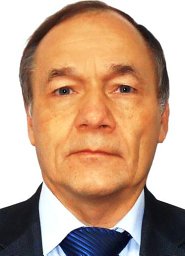 A. N. Romanov合作论文数Altai State Univ, Barnaul 656099, Russia8
 WIGNERON Jean-Pierre合作论文数Centre de Bordeaux Aquitaine, Institut National de Recherche Agronomiques;Bordeaux Remote Sensing Lab, INRAE8
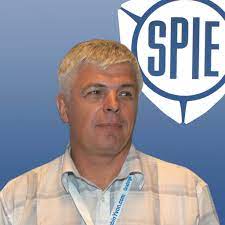 Vladimir Lukin合作论文数Division of Wave Propagation and Laser Ranging, V.E. Zuev Institute of Atmospheric Optics, Russian Academy of Sciences8V. V. Pokasov合作论文数8Joonyeon Chang合作论文数Nano Convergence Device Center, Korea Institute of Science and Technology8
 Francois Demontoux合作论文数LPIOM8V. V. Boronoev合作论文数7Anton a Biryukov合作论文数7
 V. V. Rogov合作论文数7N. Ts. Gomboev合作论文数7
 Nikita Sergeevich Gusev合作论文数7BA Gribkov合作论文数6S. V. Fomin合作论文数6BN CHEN合作论文数6A. S. Yashchenko合作论文数6
 Ilia Petrovich Molostov合作论文数6A. A. Gudkov合作论文数6A. I. Kon合作论文数6Mikhail S Belenkii合作论文数6




