The helicity structure of the diffractive electroproducti on of mesons, e+ p ! e+ + Y , is studied in a previously unexplored region of large four-m omentum transfer squared at the proton vertex,t: 0 < t < 3 G eV , wheret = jtj jtjm in . The data used are collected with the H1 detector at HERA in the kinematic domai n 2:5 < Q 2 < 60 G eV , 40 < W < 120 GeV. Notdependence of the r 00 spin density matrix element is found. A significanttdependent helicity non-conservation from the virtual phot on to the meson is observed for the spin density matrix element combination s r 00 + 2r 11 andr 00 + 2r 11 . Thesetdependences are consistently described by a perturbative Q CD model based on the exchange of two gluons. C. Adloff, V. Andreev, B. Andrieu, T. Anthonis, V. Arkadov, A. Astvatsatourov , A. Babaev, J. Bähr , P. Baranov , E. Barrelet , W. Bartel, J. Becker , A. Beglarian, O. Behnke, C. Beier, A. Belousov, Ch. Berger , T. Berndt, J.C. Bizot , J. Böhme, V. Boudry, W. Braunschweig , V. Brisson, H.-B. Bröker, D.P. Brown, W. Brückner , D. Bruncko, J. Bürger , F.W. Büsser , A. Bunyatyan, A. Burrage, G. Buschhorn , L. Bystritskaya, A.J. Campbell , J. Cao, S. Caron, F. Cassol-Brunner , D. Clarke, B. Clerbaux, C. Collard, J.G. Contreras , Y.R. Coppens , J.A. Coughlan, M.-C. Cousinou, B.E. Cox, G. Cozzika, J. Cvach, J.B. Dainton, W.D. Dau, K. Daum, M. Davidsson, B. Delcourt, N. Delerue, R. Demirchyan, A. De Roeck, E.A. De Wolf, C. Diaconu, J. Dingfelder , P. Dixon, V. Dodonov, J.D. Dowell, A. Droutskoi, A. Dubak, C. Duprel , G. Eckerlin, D. Eckstein, V. Efremenko, S. Egli, R. Eichler, F. Eisele, E. Eisenhandler , M. Ellerbrock, E. Elsen, M. Erdmann, W. Erdmann, P.J.W. Faulkner , L. Favart, A. Fedotov, R. Felst , J. Ferencei , S. Ferron, M. Fleischer , Y.H. Fleming, G. Flügge, A. Fomenko, I. Foresti , J. Formánek , G. Franke, E. Gabathuler , K. Gabathuler , J. Garvey, J. Gassner , J. Gayler , R. Gerhards , C. Gerlich, S. Ghazaryan , L. Goerlich, N. Gogitidze, C. Grab, V. Grabski , H. Grässler , T. Greenshaw, G. Grindhammer , T. Hadig, D. Haidt, L. Hajduk, J. Haller, W.J. Haynes , B. Heinemann, G. Heinzelmann , R.C.W. Henderson , S. Hengstmann , H. Henschel , R. Heremans , G. Herrera, I. Herynek, M. Hildebrandt , M. Hilgers, K.H. Hiller, J. Hladký, P. Höting, D. Hoffmann, R. Horisberger , A. Hovhannisyan , S. Hurling, M. Ibbotson, Ç. İşsever , M. Jacquet , M. Jaffre, L. Janauschek , X. Janssen , V. Jemanov, L. Jönsson , C. Johnson , D.P. Johnson , M.A.S. Jones , H. Jung, D. Kant, M. Kapichine, M. Karlsson, O. Karschnick, F. Keil, N. Keller, J. Kennedy, I.R. Kenyon, S. Kermiche, C. Kiesling, P. Kjellberg, M. Klein, C. Kleinwort, T. Kluge, G. Knies, B. Koblitz, S.D. Kolya, V. Korbel, P. Kostka, S.K. Kotelnikov, R. Koutouev, A. Koutov, H. Krehbiel , J. Kroseberg , K. Krüger, A. Küpper, T. Kuhr, T. Kurča, D. Lamb, M.P.J. Landon , W. Lange, T. Laštovička, P. Laycock, E. Lebailly, A. Lebedev, B. Leißner , R. Lemrani , V. Lendermann, S. Levonian, M. Lindstroem, B. List, E. Lobodzinska , B. Lobodzinski , A. Loginov, N. Loktionova, V. Lubimov, S. Lüders, D. Lüke, L. Lytkin, H. Mahlke-Krüger , N. Malden, E. Malinovski, I. Malinovski, R. Maraček, P. Marage, J. Marks, R. Marshall , H.-U. Martyn, J. Martyniak, S.J. Maxfield, D. Meer, A. Mehta, K. Meier, A.B. Meyer, H. Meyer, J. Meyer , P.-O. Meyer , S. Mikocki, D. Milstead, T. Mkrtchyan, R. Mohr, S. Mohrdieck, M.N. Mondragon, F. Moreau, A. Morozov, J.V. Morris, K. Müller, P. Murı́n, V. Nagovizin, B. Naroska, J. Naumann , Th. Naumann , G. Nellen, P.R. Newman , F. Niebergall , C. Niebuhr , O. Nix, G. Nowak, J.E. Olsson , D. Ozerov, V. Panassik , C. Pascaud , G.D. Patel , M. Peez, E. Perez , J.P. Phillips, D. Pitzl, R. Pöschl , I. Potachnikova, B. Povh, G. Rädel , J. Rauschenberger , P. Reimer , B. Reisert , D. Reyna, C. Risler, E. Rizvi, P. Robmann , R. Roosen, A. Rostovtsev , S. Rusakov , K. Rybicki, D.P.C. Sankey , S. Schätzel , J. Scheins , F.-P. Schilling, P. Schleper , D. Schmidt , D. Schmidt , S. Schmidt , S. Schmitt , M. Schneider , L. Schoeffel , A. Schöning, T. Schörner , V. Schröder , H.-C. Schultz-Coulon , C. Schwanenberger , K. Sedlák, F. Sefkow, V. Shekelyan, I. Sheviakov, L.N. Shtarkov, Y. Sirois, T. Sloan, P. Smirnov, Y. Soloviev, D. South, V. Spaskov, A. Specka, H. Spitzer ,
A measurement of the integrated luminosity at the ep collider HERA is presented, exploiting the elastic QED Compton process ep→eγp. The electron and the photon are detected in the backward calorimeter of the H1 experiment. The integrated luminosity of the data recorded in 2003 to 2007 is determined with a precision of 2.3 %. The measurement is found to be compatible with the corresponding result obtained using the Bethe–Heitler process.
Recently a two-Higgs-doublet model with maximal symmetry under generalised CP transformations, the MCPM, has been proposed. The theory features a unique fermion mass spectrum which, although not describing nature precisely, provides a good approximation. It also predicts the existence of five Higgs bosons with a particular signature. In this thesis I implemented the MCPM into the Monte-Carlo event generation package MadGraph, allowing the simulation of any MCPM tree-level process. The generated events are in a standardised format and can be used for further analysis with tools such as PYTHIA or GEANT, eventually leading to the comparison with experimental data and the exclusion or discovery of the theory. The implementation was successfully validated in different ways. It was then used for a first comparison of the MCPM signal events with the SM background and previous searches for new physics, hinting that the data expected at the LHC in the next years might provide exclusion limits or show signatures of this model.
Jet production in charged and neutral current events in the kinematic range of from 640 to 35 000 GeV is studied in deep-inelastic positron-proton scattering at HERA. The measured rate of multi-jet events and distributions of jet polar angle, transverse energy, dijet mass, and other dijet variables are presented. Using parton densities derived from inclusive DIS cross sections, perturbative QCD calculations in NLO are found to give a consistent description of both the neutral and charged current dijet production. A direct, model independent comparison of the jet distributions in charged and neutral current events confirms that the QCD dynamics of the hadronic final state is independent of the underlying electroweak scattering process. submitted to Eur. Phys. J. C C. Adloff , V. Andreev , B. Andrieu , V. Arkadov , A. Astvatsatourov , I. Ayyaz , A. Babaev , J. Bähr , P. Baranov , E. Barrelet , W. Bartel , U. Bassler , P. Bate , A. Beglarian , O. Behnke , C. Beier , A. Belousov , T. Benisch , Ch. Berger , G. Bernardi , T. Berndt , J.C. Bizot , K. Borras , V. Boudry , W. Braunschweig , V. Brisson , H.-B. Bröker , D.P. Brown , W. Brückner , P. Bruel , D. Bruncko , J. Bürger , F.W. Büsser , A. Bunyatyan , H. Burkhardt , A. Burrage , G. Buschhorn , A.J. Campbell , J. Cao , T. Carli , S. Caron , E. Chabert , D. Clarke , B. Clerbaux , C. Collard , J.G. Contreras , J.A. Coughlan , M.-C. Cousinou , B.E. Cox , G. Cozzika , J. Cvach , J.B. Dainton , W.D. Dau , K. Daum , M. David , M. Davidsson , B. Delcourt , N. Delerue , R. Demirchyan , A. De Roeck , E.A. De Wolf , C. Diaconu , P. Dixon , V. Dodonov , J.D. Dowell , A. Droutskoi , C. Duprel , G. Eckerlin , D. Eckstein , V. Efremenko , S. Egli , R. Eichler , F. Eisele , E. Eisenhandler , M. Ellerbrock , E. Elsen , M. Erdmann , W. Erdmann , P.J.W. Faulkner , L. Favart , A. Fedotov , R. Felst , J. Ferencei , S. Ferron , M. Fleischer , G. Flügge , A. Fomenko , I. Foresti , J. Formánek , J.M. Foster , G. Franke , E. Gabathuler , K. Gabathuler , J. Garvey , J. Gassner , J. Gayler , R. Gerhards , S. Ghazaryan , L. Goerlich , N. Gogitidze , M. Goldberg , C. Goodwin , C. Grab , H. Grässler , T. Greenshaw , G. Grindhammer , T. Hadig , D. Haidt , L. Hajduk , W.J. Haynes , B. Heinemann , G. Heinzelmann , R.C.W. Henderson , S. Hengstmann , H. Henschel , R. Heremans , G. Herrera , I. Herynek , M. Hilgers , K.H. Hiller , J. Hladký , P. Höting , D. Hoffmann , W. Hoprich , R. Horisberger , S. Hurling , M. Ibbotson , Ç. İşsever , M. Jacquet , M. Jaffre , L. Janauschek , D.M. Jansen , X. Janssen , V. Jemanov , L. Jönsson , D.P. Johnson , M.A.S. Jones , H. Jung , H.K. Kästli , D. Kant , M. Kapichine , M. Karlsson , O. Karschnick , O. Kaufmann , M. Kausch , F. Keil , N. Keller , J. Kennedy , I.R. Kenyon , S. Kermiche , C. Kiesling , M. Klein , C. Kleinwort , G. Knies , B. Koblitz , S.D. Kolya , V. Korbel , P. Kostka , S.K. Kotelnikov , M.W. Krasny , H. Krehbiel , J. Kroseberg , D. Krücker , K. Krüger , A. Küpper , T. Kuhr , T. Kurča , R. Kutuev , W. Lachnit , R. Lahmann , D. Lamb , M.P.J. Landon , W. Lange , T. Laštovička , A. Lebedev , B. Leißner , R. Lemrani , V. Lendermann , S. Levonian , M. Lindstroem , B. List , E. Lobodzinska , B. Lobodzinski , N. Loktionova , V. Lubimov , S. Lüders , D. Lüke , L. Lytkin , N. Magnussen , H. Mahlke-Krüger , N. Malden , E. Malinovski , I. Malinovski , R. Maraček , P. Marage , J. Marks , R. Marshall , H.-U. Martyn , J. Martyniak , S.J. Maxfield , A. Mehta , K. Meier , P. Merkel , F. Metlica , H. Meyer , J. Meyer , P.-O. Meyer , S. Mikocki , D. Milstead , T. Mkrtchyan , R. Mohr , S. Mohrdieck , M.N. Mondragon , F. Moreau , A. Morozov , J.V. Morris , K. Müller , P. Murı́n , V. Nagovizin , B. Naroska , J. Naumann , Th. Naumann , G. Nellen , P.R. Newman , T.C. Nicholls , F. Niebergall , C. Niebuhr , O. Nix , G. Nowak , T. Nunnemann , J.E. Olsson , D. Ozerov , V. Panassik , C. Pascaud , G.D. Patel , E. Perez , J.P. Phillips , D. Pitzl , R. Pöschl , I. Potachnikova , B. Povh , K. Rabbertz , G. Rädel , J. Rauschenberger , P. Reimer , B. Reisert , D. Reyna , S. Riess , E. Rizvi , P. Robmann , R. Roosen , A. Rostovtsev , C. Royon , S. Rusakov , K. Rybicki , D.P.C. Sankey , J. Scheins , F.-P. Schilling , P. Schleper , D. Schmidt , D. Schmidt , L. Schoeffel , A. Schöning , T. Schörner , V. Schröder , H.-C. Schultz-Coulon , K. Sedlák , F. Sefkow , V. Shekelyan , I. Sheviakov , L.N. Shtarkov , G. Siegmon , P. Sievers , Y. Sirois , T. Sloan , P. Smirnov , V. Solochenko , Y. Soloviev ,
Inclusive e ± p single and double differential cross sections for neutral and charged current deep inelastic scattering processes are measured with the H1 detector at HERA. The data were taken at a centre-of-mass energy of \( \sqrt {s} = {319} \) GeV with a total integrated luminosity of 333.7 pb−1 shared between two lepton beam charges and two longitudinal lepton polarisation modes. The differential cross sections are measured in the range of negative four-momentum transfer squared, Q 2, between 60 and 50 000 GeV2, and Bjorken x between 0.0008 and 0.65. The measurements are combined with earlier published unpolarised H1 data to improve statistical precision and used to determine the structure function \( xF_{3}^{{\gamma Z}} \). Ameasurementoftheneutralcurrentparityviolating structure function \( F_{2}^{{\gamma Z}} \) is presented for the first time. The polarisation dependence of the charged current total cross section is also measured. The new measurements are well described by a next-to-leading order QCD fit based on all published H1 inclusive cross section data which are used to extract the parton distribution functions of the proton.
A search for doubly charged Higgs bosons decaying to pairs of electrons and/or muons is presented. The search is performed using a data sample corresponding to an integrated luminosity of 4.7 fb−1 of pp collisions at \(\sqrt{s}\) = 7 TeV collected by the ATLAS detector at the LHC. Pairs of prompt, isolated, high-p T leptons with the same electric charge (e ± e ±, e ± μ ±, μ ± μ ±) are selected, and their invariant mass distribution is searched for a narrow resonance. No significant excess over Standard Model background expectations is observed, and limits are placed on the cross section times branching ratio for pair production of doubly charged Higgs bosons. The masses of doubly charged Higgs bosons are constrained depending on the branching ratio into these leptonic final states. Assuming pair production, coupling to left-handed fermions, and a branching ratio of 100 % for each final state, masses below 409 GeV, 375 GeV, and 398 GeV are excluded for e ± e ±, e ± μ ±, and μ ± μ ±, respectively.
Inclusive production of D* mesons in deep-inelastic ep scattering at HERA is studied in the range 5 < Q^2 <100 GeV^2 of the photon virtuality and 0.02 < y < 0.7 of the inelasticity of the scattering process. The observed phase space for the D* meson is p_T(D*) > 1.25 GeV and |eta(D*)| < 1.8. The data sample corresponds to an integrated luminosity of 348 pb^{-1} collected with the H1 detector. Single and double differential cross sections are measured and the charm contribution F_2^{ccbar} to the proton structure function F_2 is determined. The results are compared to perturbative QCD predictions at next-to-leading order implementing different schemes for the charm mass treatment and with Monte Carlo models based on leading order matrix elements with parton showers.
The diffractive process ep \rightarrow eXY, where Y denotes a proton or its low mass excitation with MY < 1.6 GeV, is studied with the H1 experiment at HERA. The analysis is restricted to the phase space region of the photon virtuality 3 \leq Q2 \leq 1600 GeV2, the square of the four-momentum transfer at the proton vertex |t| < 1.0 GeV2 and the longitudinal momentum fraction of the incident proton carried by the colourless exchange xIP < 0.05. Triple differential cross sections are measured as a function of xIP, Q2 and beta = x/xIP where x is the Bjorken scaling variable. These measurements are made after selecting diffractive events by demanding a large empty rapidity interval separating the final state hadronic systems X and Y . High statistics measurements covering the data taking periods 1999-2000 and 2004-2007 are combined with previously published results in order to provide a single set of diffractive cross sections from the H1 experiment using the large rapidity gap selection method. The combined data represent a factor between three and thirty increase in statistics with respect to the previously published results. The measurements are compared with predictions from NLO QCD calculations based on diffractive parton densities and from a dipole model. The proton vertex factorisation hypothesis is tested.
 Timothy John Greenshaw合作论文数Department of Physics, University of Liverpool135
 Jan Figiel合作论文数Institute of Nuclear Physics, Polish Academy of Sciences133D. Bruncko合作论文数132
 Paul Laycock合作论文数University of Geneva126D. P. C. Sankey合作论文数124K. H. Hiller合作论文数122T. Kluge合作论文数117
 J Bracinik合作论文数University of Birmingham116D. Hoffmann合作论文数114S. J. Maxfield合作论文数114
 Eram Rizvi合作论文数Department of Physics and Astronomy, School of Physical and Chemical Sciences, Queen Mary University of London113
 Murrough Landon合作论文数School of Physical and Chemical Sciences, Queen Mary University of London113A. Glazov合作论文数Deutsches Elektronen-Synchrotron111P. D. Thompson合作论文数108
 Jan Kretzschmar合作论文数108
 Gerhard Brandt合作论文数Bergische Universität Wuppertal108
 Paul Newman合作论文数Oxford Robotics Institute, Department of Engineering Science, University of Oxford;Oxbotica106Judith Katzy合作论文数105
 Hans-Christian Schultz-Coulon合作论文数Kirchhoff-Institut für Physik, Universität Heidelberg97Robert Henderson合作论文数95M. Kapichine合作论文数94
 Christoph Grab合作论文数Institute for Particle Physics and Astrophysics, Department of Physics, ETH Zurich94E. Barrelet合作论文数93V. Boudry合作论文数Ecole Polytechnique, IN2P3-CNRS93
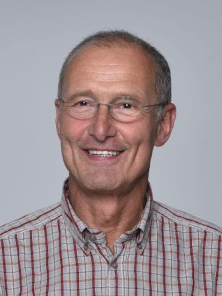 Thomas Naumann合作论文数Deutsches Elektronen-Synchrotron DESY92Jc Bizot合作论文数91V. Brisson合作论文数91
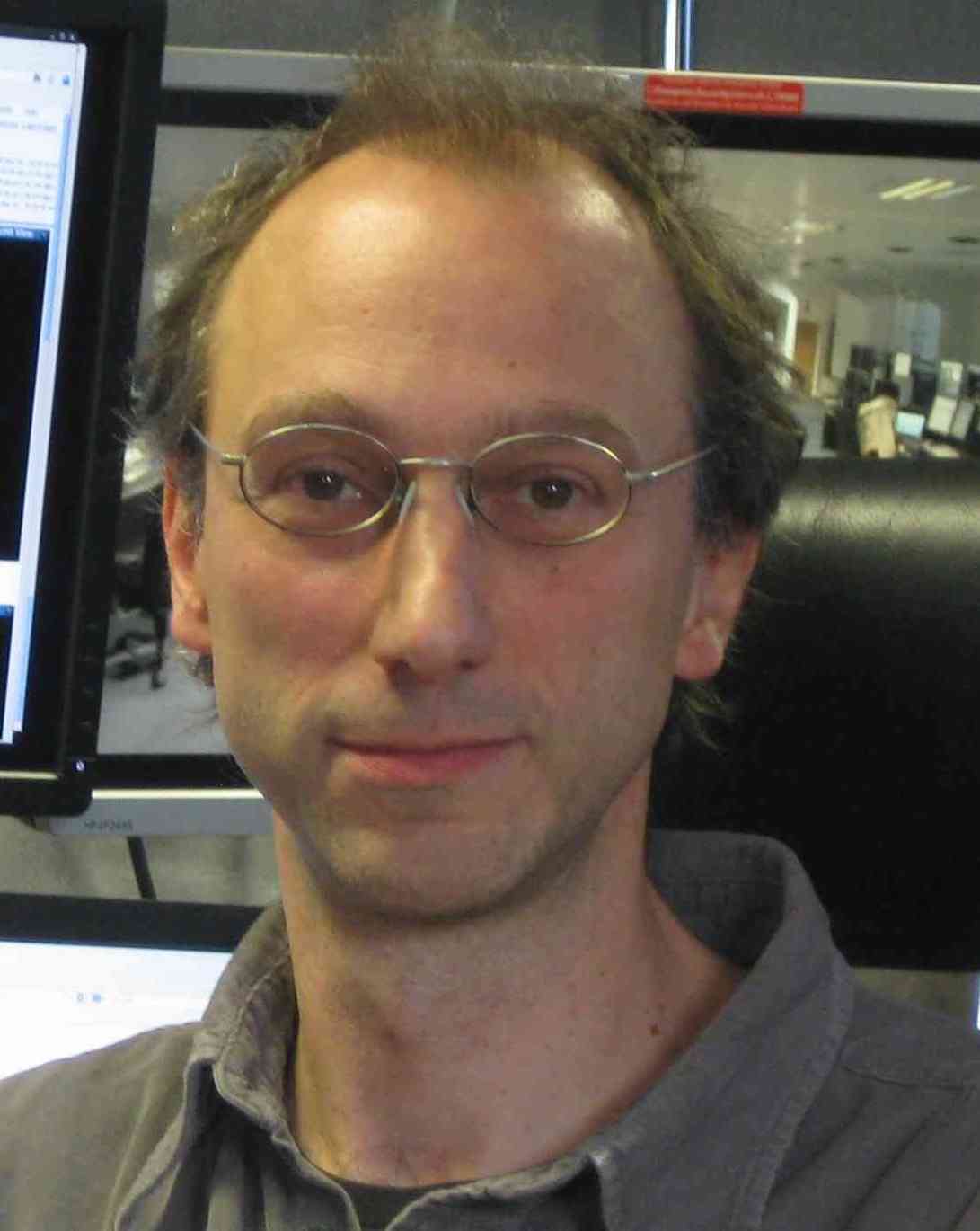 Laurent Favart合作论文数Faculté des Sciences, Université Libre de Bruxelles91V. Lubimov合作论文数91
 Calin Alexa合作论文数Horia Hulubei National Institute of Physics and Nuclear Engineering91C. Kleinwort合作论文数90B. Delcourt合作论文数90D. Haidt合作论文数90G. Grindhammer合作论文数90M. Fleischer合作论文数90
 Cristinel Diaconu合作论文数Centre de Physique des Particules de Marseille, Centre National de la Recherche Scientifique;Aix-Marseille Universite90
 Alexander V. Fedotov合作论文数90C. Pascaud合作论文数89S. Ghazaryan合作论文数89R. Felst合作论文数89
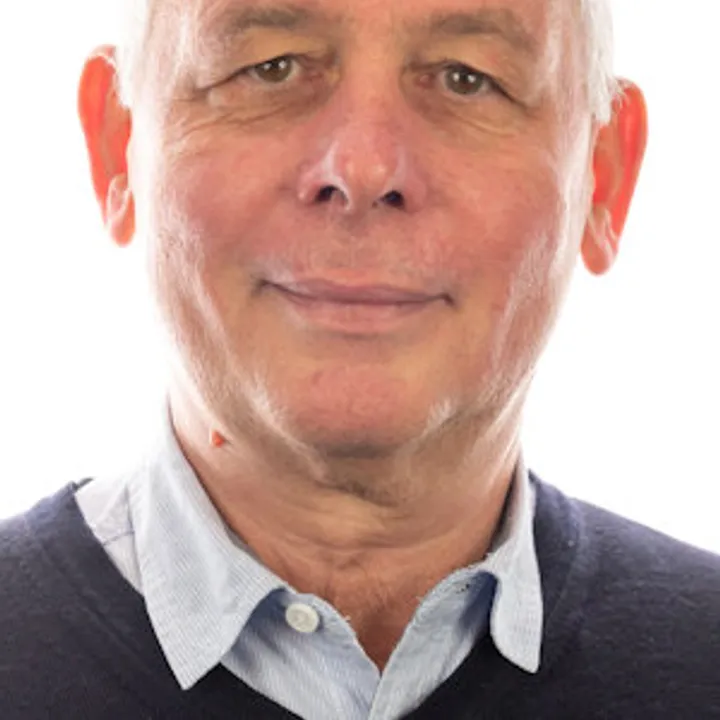 Max Klein合作论文数Department of Physics, School of Physical Sciences, Faculty of Science and Engineering, University of Liverpool89S. Mikocki合作论文数89
 Eddi De Wolf合作论文数Department of Physics, University of Antwerp89L. Goerlich合作论文数89
 Stephan Egli合作论文数89
 Karin Daum合作论文数89Natalia V Gogitidze合作论文数89E. Elsen合作论文数89M. Jacquet合作论文数89




