We present new viscosity measurements of a synthetic silicate system considered an analogue for the lava erupted on the surface of Mercury. In particular, we focus on the northern volcanic plains (NVP), which correspond to the largest lava flows on Mercury and possibly in the Solar System. High-temperature viscosity measurements were performed at both superliquidus (up to 1736K) and subliquidus conditions (1569-1502K) to constrain the viscosity variations as a function of crystallinity (from 0 to 28%) and shear rate (from 0.1 to 5s(-1)). Melt viscosity shows moderate variations (4-16Pas) in the temperature range of 1736-1600K. Experiments performed below the liquidus temperature show an increase in viscosity as shear rate decreases from 5 to 0.1s(-1), resulting in a shear thinning behavior, with a decrease in viscosity of similar to 1 log unit. The low viscosity of the studied composition may explain the ability of NVP lavas to cover long distances, on the order of hundreds of kilometers in a turbulent flow regime. Using our experimental data we estimate that lava flows with thickness of 1, 5, and 10m are likely to have velocities of 4.8, 6.5, and 7.2m/s, respectively, on a 5 degrees ground slope. Numerical modeling incorporating both the heat loss of the lavas and its possible crystallization during emplacement allows us to infer that high effusion rates (>10,000m(3)/s) are necessary to cover the large distances indicated by satellite data from the MErcury Surface, Space ENvironment, GEochemistry, and Ranging spacecraft.
Glass stability (GS) indicates the glass reluctance or ability to crystallise upon heating and it can be characterised by several methods and parameters. GS is frequently used to retrieve glass-forming ability (GFA) of corresponding liquids: the likelihood of obtaining a crystal-free glass through melt-quenching. In the present study, GS has been determined for the first time on six sub-alkaline glasses having complex (natural) compositions, the most widespread and abundant on Earth. The two end-members are a basalt and a rhyolite, B-100 and R-100, plus intermediate compounds B80R20, B60R40, B40R60, B20R80. Each glass was heated in a differential scanning calorimetry (DSC) at a rate of 10 degrees C/min (600 degrees C/h) to measure in-situ T-g (glass transition), T-x (onset of crystallization) and T-m (melting) temperatures, from ambient to their liquidus temperatures. The ex situ run-products quenched at T-m have been characterised by scanning electron microscope (SEM) and electron probe micro-analyzer (EPMA) techniques, in order to quantify textures and compositions of phases, respectively. R-100 and B20R80 do not shown any DSC peaks, whereas B40R60, E60R40, Esollao and B-100 thermograms display progressively more resolvable peaks. As SiO2 (wt%) in the melt increases from B-100 to B40R60, T-x linearly increases, Tm first decreases and then levels off, whereas Tg weakly changes. R-100 and B20R80 run-products are completely glassy, while from B-100 to B40R60 the amount of glass (gl) increases from 48.5 to 97 area%, counterbalanced by a decrease of clinopyroxene (cpx) content from 47.7 to 16 area%. The spinel (sp) content is constrained within a narrow range of 0.9-3.8 area%. Conversely, plagioclase (plg) crystallizes heterogeneously on the Al2O3 holders only in B-100 and B80R20 and at distance < 100 mu m from it R-100, B20R80, B40R60, and B60R40, ex-situ glasses exhibit chemistries very close to their starting compositions, according to the absence (or scarcity) of crystals formed during heating. Instead, B-100 and B80R20 glasses are enriched in Si, Al, and Na but depleted in Fe, Mg, and Ca due to internal crystallization of sp and mostly cpx. Specifically, the composition of cpx from B-100 is enriched in Ca-M2, Mg-M1, Fe-M2.M1, and Al-M1.T. The values of K-T, K-H, K-W, K-LL, and w(2) (as GS parameters) increase linearly and monotonically as a function of SiO2, showing high correlation coefficients (R-2 = 0.93-0.95). Moreover, T-x values and GS parameters highly correlate with GFA via R-c (critical cooling rate), as previously determined by ex-situ cooling-induced experiments. This leads to the conclusion that GS scales with GFA for natural silicate compositions. In addition, the in situ Re value of B-100 measured with DSC is > 45 degrees C/min ( > 2700 degrees C/h), corroborating the value of R-c of similar to 150 C/min (9000 degrees C/h) determined by ex-situ experiments. In turn, relevant solidification parameters on heating or cooling obtained by DSC investigations, also for chemically complex (natural) systems, extend the results from previous observations conducted on simple silicate systems. These outcomes are relevant for lavas or magmas that re-heat glass-bearing volcanic rocks, as well as for fabricating glass-ceramic materials with desirable texture and composition of phases starting from abundant and very cheap raw volcanic rocks.
The Canadian Arctic Islands expose a complex network of dykes and sills that belong to the High Arctic Large Igneous Province (HALIP), which intruded volatile‐rich sedimentary rocks of the Sverdrup Basin (shale, limestone, sandstone and evaporite) some 130 to 120 million years ago. There is thus great potential in studying the HALIP to learn how volatile‐rich sedimentary rocks respond to magmatic heating events during LIP emplacement. The HALIP remains, however, one of the least well known LIPs on the planet due to its remote location, short field season, and harsh climate. A Canadian–Swedish team of geologists set out in summer 2015 to further explore HALIP sills and their sedimentary host rocks, including the sampling of igneous and meta‐sedimentary rocks for subsequent geochemical analysis, and high pressure‐temperature petrological experiments to help define the actual processes and time‐scales of magma–sediment interaction. The research results will advance our understanding of how climate‐active volatiles such as CO2, SO2 and CH4 are mobilised during the magma–sediment interaction related to LIP events, a process which is hypothesised to have drastically affected Earth's carbon and sulphur cycles. In addition, assimilation of sulphate evaporites, for example, is anticipated to trigger sulphide immiscibility in the magma bodies and in so doing could promote the formation of Ni‐PGE ore bodies. Here we document the joys and challenges of ‘frontier arctic fieldwork’ and discuss some of our initial observations from the High Arctic Large Igneous Province.
We conducted quantitative textural analysis of vesicles in high temperature and pressure carbonate assimilation experiments (1200 °C, 0.5 GPa) to investigate CO2 generation and subsequent bubble migration from carbonate into magma. We employed Mt. Merapi (Indonesia) and Mt. Vesuvius (Italy) compositions as magmatic starting materials and present three experimental series using (1) a dry basaltic-andesite, (2) a hydrous basaltic-andesite (2 wt% H2O), and (3) a hydrous shoshonite (2 wt% H2O). The duration of the experiments was varied from 0 to 300 s, and carbonate assimilation produced a CO2-rich fluid and CaO-enriched melts in all cases. The rate of carbonate assimilation, however, changed as a function of melt viscosity, which affected the 2D vesicle number, vesicle volume, and vesicle size distribution within each experiment. Relatively low-viscosity melts (i.e. Vesuvius experiments) facilitated efficient removal of bubbles from the reaction site. This allowed carbonate assimilation to continue unhindered and large volumes of CO2 to be liberated, a scenario thought to fuel sustained CO2-driven eruptions at the surface. Conversely, at higher viscosity (i.e. Merapi experiments), bubble migration became progressively inhibited and bubble concentration at the reaction site caused localised volatile over-pressure that can eventually trigger short-lived explosive outbursts. Melt viscosity therefore exerts a fundamental control on carbonate assimilation rates and, by consequence, the style of CO2-fuelled eruptions.
Viscosity (η), glass transition (Tg) and heat capacity (Cp) of Etna trachybasalt and Fondo Riccio latite (Phlegrean Fields, Italy) were determined at low and high temperatures for dry, hydrous and CO2 bearing samples. High temperature experiments have been performed in the range of 1499 to 1700K by concentric cylinder measurements, while low temperature experiments were carried out in the interval between 633 and 1093K using the micropenetration technique. Glass transition temperature and glassy and liquid heat capacities were investigated using differential scanning calorimetry (DSC) up to 955K.The H2O content in the melts ranged from nominally dry to 6.32wt.%, while CO2 ranged from 229 to 1907ppm. We combined low- and high-temperature viscosities and parameterized them by the use of a modified Vogel–Fulcher–Tamman equation, which accommodates the non-Arrhenian temperature dependence of melt viscosity. Experimental measurements show that melt viscosity decreases with increasing temperature and water and CO2 contents. For latitic samples at 893K, the introduction of CO2 (up to 732ppm) decreases the liquid viscosity up to one order of magnitude with respect to the measured viscosity for H2O-bearing liquid. Moreover, the results of calorimetric measurements indicate that the glass transition temperature decreases with increasing volatile content (H2O+CO2). The glass transition temperature decreases by about 25K by adding up to 1907ppm of CO2 in the trachybasaltic samples. No appreciable effect on glassy [Cpg (Tg)] and liquid (Cpliq) heat capacities was observed with the addition of water and CO2. Structural and volcanological implications (i.e. volatile speciation and melt fragility) for water and CO2 dissolution in silicate melts are discussed in light of the presented results.
New experimental results show that when magma interacts with carbonate‐rich crustal rock, such as limestone, it rapidly liberates crustal CO 2 , with potentially devastating repercussions for explosive volcanic behaviour.
Viscosities of shoshonitic and latitic melts, relevant to the Campi Flegrei caldera magmas, have been experimentally determined at atmospheric pressure and 0.5GPa, temperatures between 840K and 1870K, and H2O contents from 0.02 to 3.30wt.%.The concentric cylinder technique was employed at atmospheric pressure to determine viscosity of nominally anhydrous melts in the viscosity range of 101.5−103Pas. The micropenetration technique was used to determine the viscosity of hydrous and anhydrous melts at atmospheric pressure in the high viscosity range (1010Pas). Falling sphere experiments were performed at 0.5GPa in the low viscosity range (from 100.35 to 102.79Pas) in order to obtain viscosity data of anhydrous and hydrous melts. The combination of data obtained from the three different techniques adopted permits a general description of viscosity as a function of temperature and water content using the following modified VFT equation:logη=−a+bT−c+dT−e⋅expg⋅wTwhere η is the viscosity in Pa·s, T the temperature in K, w the H2O content in wt.%, and a, b, c, d, e, and g are the VFT parameters. This model reproduces the experimental data (95 measurements) with a 1σ standard deviation of 0.19 and 0.22 log units for shoshonite and latite, respectively. The proposed model has been applied also to a more evolved composition (trachyte) from the same area in order to create a general model applicable to the whole compositional range of Campi Flegrei products.Moreover, speed data have been used to constrain the ascent velocity of latitic, shoshonitic, and trachytic melts within dikes. Using petrological data and volcanological information (geometrical parameters of the eruptive fissure and depth of magma storage), we estimate a time scale for the ascent of melt from 9km to 4km depth (where deep and shallow reservoirs, respectively, are located) in the order of few minutes. Such a rapid ascent should be taken into account for the hazard assessment in the Campi Flegrei area.
There is considerable evidence for continuing, late-stage interaction between the magmatic system at Merapi volcano, Indonesia, and local crustal carbonate (limestone). Calc-silicate xenoliths within Merapi basaltic-andesite eruptive rocks display textures indicative of intense interaction between magma and crustal carbonate, and Merapi feldspar phenocrysts frequently contain crustally contaminated cores and zones. To resolve the interaction processes between magma and limestone in detail we have performed a series of time-variable decarbonation experiments in silicate melt, at magmatic pressure and temperature, using a Merapi basaltic-andesite and local Javanese limestone as starting materials. We have used in situ analytical methods to determine the elemental and strontium isotope composition of the experimental products and to trace the textural, chemical, and isotopic evolution of carbonate assimilation. The major processes of magma-carbonate interaction identified are: (1) rapid decomposition and degassing of carbonate; (2) generation of a Ca-enriched, highly radiogenic strontium contaminant melt, distinct from the starting material composition; (3) intense CO2 vesiculation, particularly within the contaminated zones; (4) physical mingling between the contaminated and unaffected melt domains; (5) chemical mixing between melts. The experiments reproduce many of the features of magma-carbonate interaction observed in the natural Merapi xenoliths and feldspar phenocrysts. The Ca-rich, high Sr-87/Sr-86 contaminant melt produced in the experiments is considered as a precursor to the Ca-rich (often 'hyper-calcic') phases found in the xenoliths and the contaminated zones in Merapi feldspars. The xenoliths also exhibit micro-vesicular textures that can be linked to the CO2 liberation process seen in the experiments. This study, therefore, provides well-constrained petrological insights into the problem of crustal interaction at Merapi and points toward the substantial impact of such interaction on the volatile budget of the volcano.
The 5th April 2003 paroxysmal event was the strongest explosion that has occurred at Stromboli in the last 50 years. This event lasted only few minutes and was characterised by two violent explosions, followed by gas and pyroclast emission. In order to constrain models of the dynamics of the paroxystic event the viscosity of anhydrous and hydrous Stromboli high potassium (HK)-basaltic melts have been measured. Viscosity has been investigated in the low viscosity range with the falling sphere method at superliquidus temperatures (1423 to 1673 K) and 0.5 GPa and in the high viscosity range with micropenetration near the glass transition temperature (723 to 1035 K) at atmospheric pressure. Failing sphere experiments were performed in a piston cylinder apparatus with melts whose water content varies from nominally anhydrous (0.02 wt.% H2O) to 4.16 wt.% H2O. The combination of high- and low-viscosity data permits a general description of the viscosity as a function of temperature and water contentusing a modified Tamman-Vogel-Fulcher equation. Using these new viscosity data, an estimation of the flow regime and magma velocity is performed. Our data suggest that the ascent of magma from the 7-8 km deep reservoir to a shallower reservoir located at about 3 km of depth, may occur within minutes. Moreover, we infer a turbulent flow regime. Finally, our estimates of the ascent velocity agree qualitatively with results from petrological studies (e.g. [Bertagnini, A., Metrich. N., Landi, P., Rosi, M., 2003. Stromboli volcano (Aeolian Archipelago, Italy): an open window on the deep-feeding system of a steady state basaltic volcano. journal of Geophysical Research 108, 2336-2350.]), which indicate a turbulent flow regime and rapid ascent velocities such to inhibit volatile-loss-induced crystallization. We conclude that hazard evaluation at Stromboli Island should incorporate the likelihood of very rapid ascent of less-evolved melts from depth. (C) 2008 Elsevier B.V. All rights reserved.
Abstract Magma generation in the Ross Sea system is related to partial melting of strongly metasomatized mantle sources where amphibole most probably plays a crucial role. In this context, metasomatism induced by a mela-nephelinite melt in lithospheric mantle of the Mt. Melbourne Volcanic Province (northern Victoria Land (NVL), Antarctica) was investigated experimentally studying the effects of melt interaction with lherzolite at 1.5–2.0 GPa and T=975–1300 °C, and wehrlite at 1.0 GPa and T=1050–1250 °C. The experiments were designed to induce melt infiltration into the ultramafic rocks. The observed modifications in minerals are compared with those found in mantle xenoliths from NVL. The effects of metasomatic modifications are evaluated on the basis of run temperature, distance from the infiltrating melt and the diffusion rates of chemical components. Both in lherzolite and wehrlite, clinopyroxene exhibits large compositional variations ranging from primary diopside to high-Mg–Cr–(Na) augitic and omphacitic clinopyroxenes in lherzolite, and to low-Mg and high-Ti–Al–Fe–Na augites in wehrlite. Olivine (in wehrlite) and spinel (in lherzolite) are also compositionally modified: the former shows enrichment in Fe and the latter displays a higher Cr/(Cr+Al) ratio. The systematic variations in mineral compositions imply modifications of the chemistry of the infiltrating melt as recorded by the glass veinlets and patches observed in some charges. In experiments involving wehrlite paragenesis, the glass composition approaches that of melt patches associated with both amphibole-free and amphibole-bearing natural samples, and is related to olivine + clinopyroxene crystallization coupled with primary clinopyroxene dissolution at the contact between the metasomatizing melt and the solid matrix. Even if amphibole crystallization was not attained in the experiments, we were able to explain the occurrence of amphibole in the natural system considering that in this case a hot metasomatizing melt infiltrates a cooler matrix.
The low-pressure emplacement of a quartz diorite body in the metapelitic rocks of the Gennargentu Igneous Complex (Sardinia, Italy) produced a contact metamorphic aureole and resulted in migmatisation of part of the aureole through partial melting. The leucosome, formed by dehydration melting involving biotite, is characterised by granophyric intergrowth and abundant magnetite crystals. A large portion of the high temperature contact aureole shows petrographic features that are intermediate between quartz diorite and migmatite s.s. (i.e. hybrid rocks). A fluid inclusion study has been performed on quartz crystals from the quartz diorite and related contact aureole rocks, i.e. migmatite sensu stricto (s.s.) and hybrid rocks. Three types of fluid inclusions have been identified: I) monophase V inclusions, II) L + V, either L-rich or V-rich aqueous saline inclusions and III) multiphase V + L + S inclusions. Microthermometric data characterised the trapped fluid as a complex aqueous system varying from H2O–NaCl–CaCl2 in the quartz diorite to H2O–NaCl–CaCl2–FeCl2 in the migmatite and hybrid rocks. Fluid salinities range from high saline fluids (50 wt% NaCl eq.) to almost pure aqueous fluid. Liquid-vapour homogenisation temperatures range from 100 to over 400 °C with an average peak around 300 °C. Temperatures of melting of daughter minerals are between 300 and 500 °C. Highly saline liquid- and vapour-rich inclusions coexist with melt inclusions and have been interpreted as brine exsolved from the crystallising magma. Fluid inclusion data indicate the formation of fluid of high iron activity during the low-pressure partial melting and a fluid mixing process in the hybrid rocks.
 Carmela Freda合作论文数ISTITUTO NAZIONALE DI GEOFISICA E VULCANOLOGIA6
 Piergiorgio Scarlato合作论文数Istituto Nazionale di Geofisica e Vulcanologia, Via di Vigna Murata 605, 00143 Rome, Italy4
 Francesco Vetere合作论文数Institut für Mineralogie;Universität Hannover;Institut für Mineralogie, Universität Hannover4
 Frances Deegan合作论文数Department of Earth Sciences, Uppsala University4
 Valentin R. Troll合作论文数Department of Geology;University of Dublin;Trinity College;Trinity College, University of Dublin4
 A. Cavallo合作论文数3
 Annarita Mangiacapra合作论文数2J. P. Chadwick合作论文数2
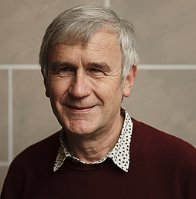 Harald Behrens合作论文数Institute of Mineralogy, Naturwissenschaftliche Fakultat, Leibniz University Hannover2
 Donald B. Dingwell合作论文数Department for Earth and Environmental Sciences, Ludwig-Maximilians-Universtität Muenchen2
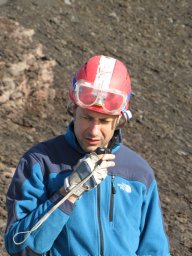 Jacopo Taddeucci合作论文数Istituto Nazionale di Geofisica e Vulcanologia, Via di Vigna Murata 605, 00143 Rome, Italy2Silvio Mollo合作论文数Dipartimento di Scienze Geologiche, Università degli Studi Roma Tre2C A Evenchick合作论文数1L. S. Blythe合作论文数1daniele borrini合作论文数1
 Olivier Namur合作论文数1JP Davidson合作论文数1C. Romano合作论文数1
 Harri Geiger合作论文数Uppsala Univ, Sect Mineral Petr & Tecton, Dept Earth Sci, Uppsala, Sweden1
 c l mcleod合作论文数Dept Geol & Environm Earth Sci, Miami Univ1
 Daniele Morgavi合作论文数University of Perugia1
 danilo di genova合作论文数Department für Geo- und UmweltwissenschaftenLudwig-Maximilians-Universität MünchenTheresienstrasse 41Munich80333Germany1
 Paolo Mancinelli合作论文数Corresponding author.1Marina Alletti合作论文数1
 Stefano Rossi合作论文数1
 Barbara Faccini合作论文数1
 Pietro Armienti合作论文数Dipartimento di Scienze della Terra via Santa Maria, University of Pisa1Francesca Tecce合作论文数1
 Steve Grasby合作论文数Department of Energy and Environment, Geological Survey of Canada1
 Guido Ventura合作论文数Senior Scientist, National Institute of Geophysics and Volcanology, Italy1Aida Maria Conte合作论文数Centro di Studio per gli Equilibri Sperimentali in Minerali e Rocce, C.N.R.1
 Jean H. Bédard合作论文数Geological Survey of Canada - Quebec Division, Natural Resources Canada1
 Andrea Orlando合作论文数Istituto di Geoscienze e Georisorse1
 Ester Muñoz Jolis合作论文数Posgrado en Ingeniería Sísmica, Universidad Politécnica de Cataluña1Mario Gaeta合作论文数1
 Matteo Masotta合作论文数Dipartimento di Scienze della Terra, Sapienza—Università di Roma1
 Keith Dewing合作论文数Geological Survey of Calgary1Cristina Pauselli合作论文数LESIA, Observatoire de Paris1
 Maurizio Petrelli合作论文数Department of Earth Sciences, University of Perugia1
 Diego Perugini合作论文数Department of Earth Sciences, University of Perugia1
 Pierdomenico (Piero) Del Gaudio合作论文数Istituto Nazionale di Geofisica e Vulcanologia, Roma, Italy1
 Sergio Vinciguerra合作论文数Istituto Nazionale di Geofisica e Vulcanologia via di Vigna Murata, Sezione di Romal1
 Cristina Perinelli合作论文数Dipartimento di Scienze della Terra, Universitá degli Studi di Pisa1




