For the first time the partial low spin (LS) - high spin (HS) state transition back, caused by trapped guest molecule release from the macrocyclic cavity of calix[4]arene ligand, decorated with salicylideneamine coordinating binding sites, was evidenced for new dinuclear [Fe-2(III)] diamond core cluster, displaying mixed cis-/trans-N2O4 coordination environment for metal centers. Such unique spin state transition behavior, triggered by the changing of calix[4]arene backbone conformation, giving rise to a new paradigm of fine-tuning spin-dependent functionality in materials design, was unambiguously established by the Fe-57 Mossbauer spectroscopy in combination with the single crystal X-ray diffraction, IR, TGA-DSC analysis.
During their stay at the surface of the Earth, meteorites undergo terrestrial weathering. In particular, the iron-nickel alloys and iron sulfides that are abundant in many types of meteorites transform into oxides and oxihydroxides (magnetite, maghemite, akaganeite, etc.). Mössbauer spectroscopy is a powerful tool to identify these weathering products. However, distinguishing signals from different phases summed up in the Fe3+ paramagnetic doublets in the central part of the spectrum remains challenging. This study focuses on a detailed investigation of meteorite weathering products to separate signals from different secondary minerals formed on Earth in a series of weathered meteorites. We carried out a room-temperature Mössbauer spectroscopy study on seventy ordinary chondrites collected in the Atacama Desert, Chile, in order to make a comparative qualitative analysis of the mineralogy of their terrestrial weathering products. Based on these results, three samples showing a variety of weathering products (Catalina 146, Catalina 535, and El Médano 070) were selected for a detailed study and two of them for low-temperature Mössbauer study. We found that, above 200 K, most meteorites exhibit superparamagnetic magnetization dynamics attributable to strong dispersed maghemite–magnetite phase formed as a weathering product. On the other hand, other iron-bearing weathering products (goethite, akaganeite, hematite) demonstrate line shapes of the corresponding partial components that are close to the shapes of the bulk samples. Only two of the 70 measured meteorites showed no superparamagnetic behavior at room temperature.
Two dinuclear double oxygen-bridged iron(III) complexes made of the Fe-2(mu(2)-OR)(2) diamond-core cluster resulting from the coordination between iron(III) cations with calix[4]arene ligands and bearing two lower-rim-appended salicylideneamine (4) or o-methoxy-salicylideneamine coordinating sites (5), connected to the macrocyclic platform via three methylene bridges and displaying a salen-type coordination pocket, were synthesized and characterized using single-crystal X-ray diffraction (SCXRD), powder X-ray diffraction (PXRD), high-resolution mass spectrometry (HRESI-MS), IR, TG-DSC and EA techniques. Independent of the presence of the o-methoxy group in the salicylideneamine moieties, the as-formed complexes contained two nonequivalent iron(III) atoms, both adopting a distorted octahedral coordination N2O4-environment but differing in the cis and trans positions of the nitrogen atoms within the metal coordination sphere, as attested by single-crystal X-ray diffraction and DFT-B3LYP calculations. The possible reason for the observed coordination mode of the macrocyclic ligands is their conformational behavior upon coordination with Fe(III) cations, as confirmed by DFT-B3LYP analysis. Fe-57 M & ouml;ssbauer spectroscopy study showed that both Fe(III) atoms were present in high spin states at room temperature and at 80 K in the studied coordination compounds. The methoxy groups located at the ortho position of the salicylideneamine coordinating fragments were observed to influence the energy of the frontier orbitals, resulting in an increase in the bandgap energy from 1.97 eV to 2.07 eV, as experimentally established by solid-state voltammetry study of 4(2)-Fe-2 exp and 5(2)-Fe-2 exp, respectively. The interplay between the steric and electronic factors, emerging from the o-methoxy group within coordinating salicylideneamine moieties, seemed to have a negligible effect on the electronic properties of the prepared clusters but significantly impacted the frontier orbital energy distribution, according to both experimental data and theoretical calculations.
The rare-earth manganites of Eu, La0.7−xEuxSr0.3MnO3 (x = 0.0–0.7) were investigated by the technique of electron paramagnetic resonance (EPR) in the temperature range from 30 to 500 K. They revealed the coexistence of two to three magnetic phases in the samples with different Eu concentrations. The corresponding Curie temperatures were estimated from the characteristics of the variable-temperature EPR spectra for the various samples. The EPR data indicated the presence of Griffiths phases for the samples La0.7−xEuxSr0.3MnO3, from which the respective Griffiths temperatures were determined. It was found that the structural disorder (σ2), caused by the presence of different sets of atoms in crystal cells, characterized by the distribution of the cation radius, increased as x increased from 0.1 to 0.3 and decreased as x increased from 0.3 to 0.7. This, in turn, resulted in the sample with the maximum structural disorder, i.e. the sample with x = 0.3, being characterized by the maximum activation temperature. The activation energies are estimated here from the EPR data using the hopping model. The EPR linewidth behavior is found to be consistent with that predicted by the bottlenecked spin relaxation model. The perovskite La0.5Eu0.2Sr0.3MnO3 is found to be potentially useful in the design of magnetocaloric refrigeration units as a working fluid, since its Curie temperature (TC) is close to the room temperature/ The different ferromagnetic components in the samples studied here have been resolved by the technique of EPR, not possible by other techniques.
The Europium rare-earth manganites, La0.7−xEuxSr0.3MnO3 (x = 0.0–0.7), were investigated by the technique of X-band electron paramagnetic resonance (EPR) in the temperature range from 30 to 500 K. As the temperature was lowered, the various samples made transitions from paramagnetic to ferromagnetic phases. Furthermore, coexistence of anywhere from two to three ferromagnetic phases in the various samples was found. The third ferromagnetic phase was observed only in the samples with x = 0.1, 0.2, 0.3. The Curie temperatures for the various samples were estimated from the characteristics of the variable-temperature EPR spectra. The EPR data indicated the presence of Griffiths phases in the samples with x = 0.2, 0.3, 0.4, 0.5, 0.6, from which the respective Griffiths temperatures were determined. The activation energies were estimated here from the EPR data using the hopping model. The EPR linewidth behavior is found to be consistent with that predicted by the bottlenecked spin-relaxation model. The perovskite La0.5Eu0.2Sr0.3MnO3 is potentially useful in the design of magnetocaloric refrigeration units as a working fluid, since its Curie temperature TC is found to be close to the room temperature. The various ferromagnetic components in the samples observed here have been resolved only by the technique of EPR, not possible by other techniques.
This paper examines the transformation of heavy oil composition in porous media of carbonate reservoir rocks under hydrothermal processes in the presence of transition metal sulfides, which form in-situ from the organic-soluble precursors. It was revealed that catalysts significantly promoted the destruction of asphaltenes. Its content was reduced from 15 wt.% to 12 wt.% in the presence of iron-based catalyst. The bimetallic catalyst based on nickel and iron with the mass ratio of 1:1 exhibited the best performance in terms of reducing heavy oil viscosity. Combination of two different metals allowed to involve the wide ranges of carbon-heteroatom bonds, which are mainly concentrated in resins and asphaltenes, into the hydrogenolysis reactions. Irreversible reduction of heavy oil viscosity in-place not only eases the further downstream processes such as pipeline transportation and refinery, but also decreases carbon footprints of the produced oil owing to the increase in the intensity of hydrogenation processes.
In this work, complexes of europium (III) based on 13-naphthol and phenol were synthesized and inves-tigated by the methods of M?ssbauer spectroscopy, NMR spectroscopy, thermogravimetry, mass spec-troscopy. It was found that the structure of the studied complexes determines the spin state of the central ion. The 13-naphthol-based complex exhibits diamagnetic properties (S = 0), and the complex, where the ligand is phenol-based azomethine, is paramagnetic (S = 3). It was shown that the studied complexes exhibit a broad spectral response upon excitation in the ultraviolet part of the spectrum. ? 2021 Published by Elsevier Ltd. In this work, complexes of europium (III) based on 13-naphthol and phenol were synthesized and investigated by the methods of M?ssbauer spectroscopy, NMR spectroscopy, thermogravimetry, mass spectroscopy. It was found that the structure of the studied complexes determines the spin state of the central ion. The 13-naphthol-based complex exhibits diamagnetic properties (S = 0), and the complex, where the ligand is phenol-based azomethine, is paramagnetic (S = 3). It was shown that the studied complexes exhibit a broad spectral response upon excitation in the ultraviolet part of the spectrum.
Mesoporous hydroxyapatite (HA) and iron(III)-doped HA (Fe-HA) are attractive materials for biomedical, catalytic, and environmental applications. In the present study, the nanopowders of HA and Fe-HA with a specific surface area up to 194.5 m2/g were synthesized by a simple precipitation route using iron oxalate as a source of Fe3+ cations. The influence of Fe3+ amount on the phase composition, powders morphology, Brunauer–Emmett–Teller (BET) specific surface area (S), and pore size distribution were investigated, as well as electron paramagnetic resonance and Mössbauer spectroscopy analysis were performed. According to obtained data, the Fe3+ ions were incorporated in the HA lattice, and also amorphous Fe oxides were formed contributed to the gradual increase in the S and pore volume of the powders. The Density Functional Theory calculations supported these findings and revealed Fe3+ inclusion in the crystalline region with the hybridization among Fe-3d and O-2p orbitals and a partly covalent bond formation, whilst the inclusion of Fe oxides assumed crystallinity damage and rather occurred in amorphous regions of HA nanomaterial. In vitro tests based on the MG-63 cell line demonstrated that the introduction of Fe3+ does not cause cytotoxicity and led to the enhanced cytocompatibility of HA.
The active form of an iron-containing catalyst, an Fe(II, III) mixed oxide, was studied by Mössbauer spectroscopy in order to identify the mechanism of formation of catalysts used for upgrading of heavy oil from Ashalchinsk field. The iron-oxide phase participates in the formation process by breaking carbon–heteroatom bonds in high-molecular-mass components (resins and asphaltenes) of heavy oil and reduces their molecular mass. Thus, the disperse iron oxides are enriched in a sulfur-containing phase. Mathematical processing of Mössbauer spectra obtained during the experiment was used to study the quantitative composition of the products of thermocatalytic action at 300°C. Magnetite (Fe 3 O 4 ), greigite (Fe 3 S 4 ), pyrite (FeS 2 ), and pyrrhotite (Fe 1–x S) were mainly detected in the isolated catalysts. The magnetite content decreased toward formation of iron sulfides (pyrite and pyrrhotite). Hydrogen sulfide and hydrocarbons were formed as a result of cracking, hydrolysis, and hydrogenolysis reactions at 300°C.
A partial spin transition stimulated by spontaneous symmetry breaking has been observed, for the first time, in the non-stoichiometric chalcogenide spinel FeCr2S4. A Fe2+ high spin - low spin transition HS-LS: S = 2 -> S = 0 is detected below the Neel temperature T-N in the magnetic subsystem corresponding to a part of the sample with deviations from stoichiometry. The fraction of diamagnetic Fe atoms increases with decreasing temperature. (C) 2019 Elsevier B.V. All rights reserved.
The active form of an iron-containing catalyst including mixed Fe(II, III) oxides for refi ning Ashal′cha heavy oil was investigated using Mossbauer spectroscopy to establish the formation mechanism. The iron-oxide phase is involved during the formation process in the cleavage of carbon-heteroatom bonds in asphaltene and resin fractions of heavy oil and decreases their molecular masses. The disperse iron oxides are enriched in a sulfur-containing phase. The conversion degree of the compounds increases as the duration of the experiment increases, which indicates that the disperse iron compounds participate multiple times in the cleavage of chemical bonds. Results of Mossbauer spectroscopy indicate that maghemite is reduced to magnetite when the iron oxides react with water vapor during the catalytic aquathermolysis of crude oil at 250°C.
Aquathermolysis process is one of the key technologies of reducing the viscosity and exploitation of huge deposits of heavy crude oil. That process combines thermal and catalytical effects in the presence of water. There are a lot of types of catalysts used in aquathermolysis process, such as water and oil soluble, heterogeneous catalysts and minerals. One of the type of heterogeneous catalysts are pillared clays that used in catalytic, sorption and separation processes. Pillared clays (PILC) are the class of two-dimensional micro-mesoporous materials that have a high specific surface area, constant porosity, developed texture and active compaunds in the structure, i.e. combine both the carrier and the catalyst. In this study the physico-chemical properties of Fe-pillared clays and its application in the "reconnaissance" heavy oil catalytic aquathermolysis experiments of has been investigated.
Results of structural, magnetic, and Mössbauer studies of quasi ordered alloys Fe 65 Al 35 − x M x ( M x = Ga, B; x = 0, 5 at %) are presented. The magnetic state of examined structurally–single-phase alloys at low temperatures is interpreted from the viewpoint of magnetic phase separation. An explanation is proposed for the observed behavior of magnetic characteristics of Fe 65 Al 35 and Fe 65 Al 30 Ga 5 in the framework of the model of two magnetic phases, a ferromagnetic-type one and a spin density wave. The boron-doped alloy Fe 65 Al 30 B 5 is shown to demonstrate behavior that is typical of materials with the ferromagnetic type of ordering.
We present the first results of electron magnetic resonance (EMR) and Mössbauer spectroscopy studies of γ-Fe(2)O(3) nanoparticles (NPs) incorporated into liquid-crystalline, second-generation dendrimers. The mean size of NPs formed in the dendrimers was around 2.5 nm. A temperature-driven transition from superparamagnetic to ferrimagnetic resonance was observed for the sample. Low-temperature blocking of the NP magnetic moments has been clearly evidenced in the integrated EMR line intensity and the blocking temperature was about 60 K. The physical parameters of magnetic NPs (magnetic moment, effective magnetic anisotropy) have been determined from analyses of the EMR data. The effective magnetic anisotropy constant is enhanced relative to bulk γ-Fe(2)O(3) and this enhanced value is associated with the influence of the surface and shape effects. The angular dependence of the EMR signal position for the field-freezing sample from liquid-crystalline phase showed that NPs possessed uniaxial anisotropy, in contrast to bulk γ-Fe(2)O(3). Mössbauer spectroscopy determined that fabricated NPs consisted of an α-Fe core and a γ-Fe(2)O(3) shell.
The structure and the magnetic state of ordered Fe65Al35-xMx (Mx = Ga, B; x = 0; 5 at.%) alloys are investigated using X-ray diffraction, Mössbauer spectroscopy, and magnetic measurements. The behavior of the magnetic characteristics and Mössbauer spectra of the binary alloy Fe65Al35 and the ternary alloy with gallium addition Fe65Al30Ga5 is explained in terms of the phase separation into two magnetic phases: a ferromagnetic one and a spin density wave. It is shown that the addition of boron to the initial binary alloy Fe65Al35 results in the ferromagnetic behavior of the ternary alloy.
The paper is devoted to the analysis of two genetically related groups of medieval traditional moulded ceramics, which in historical studies of the polyethnic Middle Volga and Kama region fulfil the function of an ethnocultural and chronological marker. Based on the data from Mössbauer studies of clays and archaeological ceramics, the identity of the raw materials and the constancy of ethnographic handicraft traditions in the production of artisanal moulded ceramics over the 9th–15th centuries are shown.
Samples of sphero-conical vessels found in mass quantities in the ancient settlement Bolgar were analyzed by Moessbauer spectroscopy. Wares with relatively low annealing temperatures <500°C and having a ratio Fepar/Fe2+ ≤ 1.11 in transmission spectra were differentiated from those with high ones. The detected value of \( {\mathrm{Fe}}_{\mathrm{par}}^{3+} \) /Fe2+ was considerably less than the value of 2.69 that was characteristic of raw materials for pottery production in the vicinity of the selected settlement. This indicated that other non-local sources of raw materials existed in the medieval handicraft center.
To understand the mechanism of highly efficient catalyst formation from precursors, the active form of an iron-containing catalyst and kerogen samples from the Bazhen formation are studied by Mössbauer spectroscopy and X-ray diffraction analysis. It is established that as a result of phase changes, the multicomponent precursors are transformed into mixed transition metal oxides. It is found that the thermocatalytic effect on pyrite-containing kerogen leads to the formation of pyrrhotite FeS1 − x and mixed oxides of iron.
The new spin-crossover dendrimeric iron(III) complex exhibiting mesogenic properties was studied by EPR, DC magnetic susceptibility and Mössbauer spectroscopy. EPR showed that the compound is magnetically inhomogeneous, consists of two magnetic sub-lattices, displays a partial spin crossover (S=5/2⇔1/2) of ∼25% of the Fe(III) molecules above 160K and undergoes the antiferromagnetic (AF) ordering below 10K. EPR also found the presence of the dynamical spin clusters (nano-regions with antiferromagnetically correlated spins) in the paramagnetic phase. Mössbauer spectroscopy is fully confirmed the EPR results. Below 60K, the Mössbauer spectra displayed the appearance of magnetic hyperfine structure, whose relaxation nature testifies the collective spin flips of small clusters in the material. The existence of AF ordering in the Fe(III) dendrimeric complex found at 5K.
Complexes Ln(TTA) 3 and [Ln(TTA) 3 · 1 ] (Ln = Eu, Gd; ТТА is thenoyltrifluoroacetyl-acetonate; 1 is 2-(5-chlorophenylene-2-hydroxy)-2-phenylethylene-bis(2-methoxy)phosphine oxide) in individual form, and as a part of a core of the polyelectrolyte stabilized colloids have been studied by Mössbauer spectroscopy and X-ray powder diffraction. The photophysical and colloidal characteristics of the solutions of polyelectrolyte nanoparticles were studied in water, artificial cerebrospinal fluid solution, solution of bovine serum albumin, and human blood serum. A stability of a luminescent response of the nanoparticles in solutions of bovine serum albumin and human blood serum at 37 °С for 2 hours has been revealed. This is a prerequisite for the potential application of studied nanoparticles for biovisualization.
 Natalia E. Domracheva合作论文数11R. A. Manapov合作论文数10Matvey Sergeevich Gruzdev合作论文数9E. V. Voronina合作论文数7
 Anna Ivanova合作论文数6
 Valerya Vorobeva合作论文数6Rushana M. Eremina合作论文数5i i fazlizhanov合作论文数4Alexey V. Vakhin合作论文数Department of Petroleum Engineering, Kazan Federal University4Ivan Vladimirovich Yatsyk合作论文数4Ulyana Chervonova合作论文数4E. K. Sadykov合作论文数4A. T. Gubaidullin合作论文数3
 светлана игоревна валиулина合作论文数3
 Irek I. Mukhamatdinov合作论文数Institute of Geology and Petroleum Technologies, Kazan Federal University3V. V. Parfenov合作论文数3A. R. Khaidarova合作论文数2R. D. Zaripova合作论文数2
 A. M. Kolker合作论文数2K. R. Sharipov合作论文数2D. V. Mamedov合作论文数2Iuliia V. Strelnikova合作论文数2I. I. Nig’matullina合作论文数2A. V. Korolev合作论文数2
 S.A. Sitnov合作论文数Dept Petr Engn, Kazan Fed Univ2А. Ф. Абдуллин合作论文数2
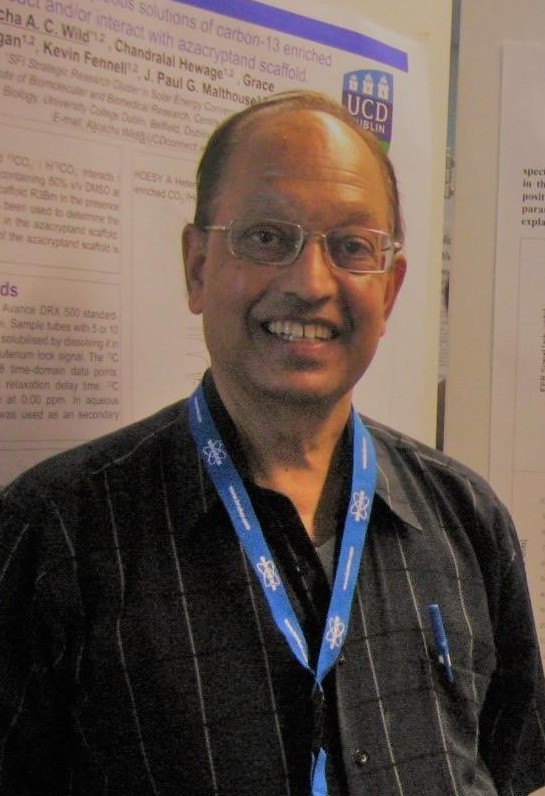 Sushil K. Misra合作论文数Department of Physics, Faculty of Arts and Science, Concordia University2
 Alois Loidl合作论文数Center for Electronic Correlations and Magnetism, University of Augsburg;Institute for Materials Research Management, University of Augsburg;Institute of Physics, Faculty of Mathematics, Natural Sciences, and Materials Engineering, University of Augsburg2
 Daut Islamov合作论文数2Ovsyannikov A合作论文数2Ya. M. Mukovskii合作论文数2
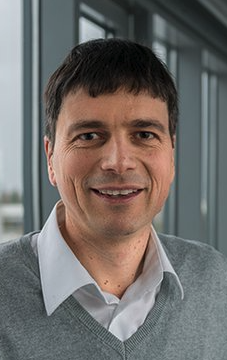 Hans-Albrecht Krug von Nidda合作论文数Institut für Physik, Mathematisch-Naturwissenschaftlich-Technische Fakultät, University of Augsburg2Vladimir A. Shestakov合作论文数2
 Ekaterina M. Zueva合作论文数Department of Inorganic Chemistry, Kazan State Technological University2Chistyakova Nataliya合作论文数2Svetlana E. Solovieva合作论文数2Igor S. Antipin合作论文数A. M. Butlerov Chemical Institute, Kazan State University2Anatoly Arzhnikov合作论文数2
 A. Chumakov合作论文数UCLA Department of Medicine, Los Angeles, CaliforniaUSA2
 Sergey Andronenko合作论文数Physics Department, Concordia University2
 Ruslan Nazipov合作论文数Kazan State University Kazan2Sh. Z. Ibragimov合作论文数2
 Kh. Roumaih合作论文数2Natalia S. Sergeeva合作论文数1D. K. Nurgaliev合作论文数1
 Igor Litvinov合作论文数1V. V. Arinin合作论文数1Georgi V. Sansiev合作论文数1Nikola Pascher合作论文数1




