The main objectives of the article are to trace different approaches to the study of quality of life and to analyze its essential objective and subjective characteristics. Conceptually, quality of life is defined as a set of conditions and opportunities provided by the environment and institutions for the material, social, and mental well-being of individuals and communities. Emphasis is on living standards and material well-being, with digitalization and AI contributing significantly to improvements in the material environment and access to public resources. Artificial intelligence and digital technologies can also enhance feelings of autonomy, control, and satisfaction, as well as facilitate access to information
Objectives: The article objectives are studying some of the ongoing transformations in the Bulgarian education with an emphasis on the rural context. The analysis outlines a general picture of the rural education in Bulgaria, referring to the declining number of schools, teachers and students, as well as discussing the phenomena of “small classes” and “co-classrooms”, leading to restructuring of rural school education, related to a change in the methods of teaching and training students. Materials and methods: The methods used in the analysis include document analysis, interviews with the teachers and the headmasters as participants in the educational process and a focus group with parents. The article is a secondary analysis of a field research conducted in 2016. The secondary analysis was made within the project “Quality of life and well-being in the context of the professional communities and their activity” КП-06-ПН80/2, funded by National Science Fund. Results: The main results of the article are aimed at evaluating the measures taken in formal education as specific responses to the decreasing number of students. Different perspectives of teachers and parents are shown in order to emphasize the views of the main actors in the rural school and their attitude towards the phenomenon of “co-classrooms”. Conclusions: The conclusion states that the implementation of unpopular decisions is aimed at preserving the quality of education and its effectiveness. It is emphasized that solutions and approaches are sought to preserve rural schools and maintain people’s educational values. Keywords: rural schools, school closure, small classes, “co-classrooms”, Bulgarian rural education
This paper traces the digital transformation occurring as a result of the application of computer information and communication technologies. Digital transformation is the digitization of the economy, complete change of the organization's structure, its relationships with the environment in which it operates, and the products and services it creates. Digitalization and related transformative processes lead to the creation of pervasive connectivity between people and institutions, diversification of activities, resources and data in the online space and parallel work in the digital and real worlds. The main goals of the paper are to show that the digital transformations enter all areas of the economy, social life, civil society, which also changes people's quality of life. Digital transformations enable people, businesses and governments to operate efficiently and at lower costs. This creates a huge potential for a large number of enterprises, banks, telecommunications companies, companies providing payment services; start-ups; retailers, as well as institutions in the fields of education, culture, healthcare, politics, etc. Today, even the smallest organization has the opportunity to function as a global one, carrying out cross-border activity in some form. The digital networks that connect everything and everyone span ever larger spaces, so companies, communities and individuals are challenged to rethink what it means to function globally connected. Digital networks are important for the development and promotion of business and communication both at work and in leisure. Therefore, their management is time-consuming and requires both technical and marketing knowledge.The analysis in this article was made within the framework of the project "Quality of Life and well-being in the context of professional communities and their activity" КП-06-ПН80/12, funded by the National Science Fund. The research work is theoretically based on already conducted empirical surveys that track the digital skills of employees in different economic sectors and professions. Five professional communities are studied - teachers; computer specialists and programmers; researchers and university lecturers; technical staff; people employed in trade and services. On the basis of nationally representative surveys for the respective professions, the level of basic and specific digital skills possessed by employees in these professions and the level that the current development of information and communication technologies and the needs of the respective profession require as necessary for the performance of professional activities were identified. On this basis, the need for up-skilling training and the importance of the company's training offerings for enhancing employees' digital skills is highlighted. The role of enhancing employees' digital skills in improving their quality of life is outlined in terms of creating better opportunities for professional and career development, higher incomes and achieving a better balance between work and leisure and work and family life. The article also traces the risks and prospects that digitization creates and that the economy and society face. The main conclusion is that digital technologies contribute to improving the quality of life, as well as to a more economical and efficient use of available resources.
Background: The concept of youth not in education, training, and employment (NEET) is a relatively new popular concept. Its popularity is largely due to the fact that it takes into consideration different vulnerabilities such as unemployment and early school leaving, which are common among young people. The complexity of labour markets due to digitalization and globalisation has led to increased vulnerability for young people, particularly those aged 25-29. Bulgarian social policy often overlooks this group, who entered the labour market after the 2008 financial crisis, leading to unemployment or unstable employment. Our study aims to contribute to the successful integration of NEETs aged 25-29 into the labour market through increasing knowledge of relevant employment initiatives that have been implemented in Bulgaria. Specifically, it focuses on how these services are provided to young people living in rural areas. The main research question guiding this study is: “How can Public Employment Services (PES) effectively address youth unemployment and support vulnerable youths and rural NEETs in Bulgaria?”Research methodology: The methodology is based on qualitative information gathered from public employment offices in rural areas and a survey of national PES offices in the country. We combined qualitative data thematic analysis with its quantitative examination (e.g. descriptive and reliability statistics; correspondence analysis) to identify similarity/difference patterns among studied cases.Conclusions: A key conclusion from our study concerning NEETs (especially those with vulnerable backgrounds) is that many young people in the country might not have trust in public institutions such as the PES. They often need face-to-face personal contact with a person who can speak in a more informal manner. This is why cooperation with other service providers is fundamental.
The article is focused on mapping different policies and programs aimed at the elderly population, as well as the incentive for inclusion in these programs. The review of different policies aimed to achieve harmonization and complement the opportunities for the conducting of personal careers, and better quality of life. The consequences of population aging in Bulgarian conditions lead to various changes in the labor market. In this context the policies themselves aim not only to include elderly people in the labor market but also to ensure economic growth, thereby creating the prerequisites for social support and assistance. The overall vision of the article is to provide an overview of the political map in which the various institutional practices stimulate the elderly population to increase their education and qualification as one of the ways of active living. The article uses the results of a representative survey of the 55+ population regarding its participation in various forms of continuing education and qualification. Our understanding is that labor market participation has two important consequences for older people. On the one hand, it is related to the provision of material income and good living conditions, and on the other hand, it has positive consequences affecting the psychological confidence and self-confidence of the elderly that they are useful to society. All this in its entirety shows various aspects related to the quality of life of people in the third age.
Subjective well-being is of paramount importance when support is offered to young individuals seeking employment and social inclusion in general. The present study looks at different dimensions of youth well-being and the growing demands for skills to enable labour market integration. Based on survey data, this article examines the relationships between the role of public employment services in providing support and their impact on the subjective well-being of youth. Specifically, 1,275 not in education, employment, or training (NEET) rural youths from Italy, Portugal, and Spain participated in the survey. Drawing upon Bronfenbrenner’s bioecological model, the current study sets up a model which includes different factors at the micro-, meso-, exo-, and macro-system levels. The results show that non-urban NEETs’ subjective well-being is associated positively with public employment services availability, while the relationship with public employment services interaction and public employment services support is non-significant. A positive and significant relationship emerged also with self-efficacy and social support. Some recommendations for policymakers are discussed.
AbstractFormal and non-formal education often constitute the first line of engagement in supporting Rural young people Not in Employment, nor in Education, or Training (NEET). However, it is not always the case that such interventions are widely documented. This chapter aims to uncover best practice interventions for the educational inclusion of rural NEETs building upon an emergent body of work in order to frame the identification of five case studies across Estonia, Italy, Latvia, Albania, Portugal. EU and non-EU member states were included to offer a diverse set of examples. Based on Bronfenbrenner’s bioecological model and data triangulation, elements that prevent rural youth from entering or staying in NEET status were identified. Our work shows that each formal or nonformal education learning intervention or reform mobilizes different levels of the bioecological framework and has an important function in shaping NEETs or at-risk youth support systems. Educational interventions that directly target young people can improve the likelihood of a positive outcome when they are context specific. In addition, these interventions make it possible to see the potential of different educational methods in supporting rural young people, when that contextualization stems directly from the young person’s perspectives and his/her perceived needs.
This article presents an analysis of the impact of disasters on the quality of life of local communities. Its empirical basis is collected field material within the framework of a study conducted by the Institute for Еthnology and Folklore Studies with the Ethnographic Museum at the Bulgarian Academy of Sciences as part of the project "Local Disasters and Quality of Life: Cultural Strategies in Overcoming Natural, Technological and Biological Catastrophes", funded from National Science Fund of the Ministry of Education and Science. The empirical data, on the basis of which the theoretical analysis is carried out, concern two natural disasters that occurred in Bulgaria - the earthquake in Pernik in 2012 and the flood in the Asparuhovo district in 2014. Research results show that the disaster affects, albeit to different degrees and in different ways, all components of the "quality of life" category, changing them at the moment or creating conditions for their later change. It has a powerful impact on the material and economic side of people's lives as the basis of their social well-being, which is entirely in a negative direction. Also negative is the impact of the disaster event on the affected person's physical and mental health, sense of security, tranquility, and mental balance. Unexpectedly, it turns out that disaster can also positively impact people's quality of life. This is most often in terms of their social connectedness and cohesion when the disaster event catalyzes social connections and support. Striving to restore the pre-disaster quality of life leads to social change that reflects the experience of survival through changes in local traditions and everyday life and the creation of new cultural memory and places of memory, thus building a new post-disaster model of social relations, accumulating gained experience and refracting it through the unique situation.
The present article examines the quality of life, its characteristics, and conditions of manifestation. Quality of life indicates the degree of well-being and satisfaction in individual and social terms. It relates to a set of factors representing well-being, physical condition, and health; material success and income; the social environment and contacts; emotional satisfaction; personal development. The article studies the professional community as one of the important prerequisites for quality of life because the profession and its related income, career, environment, and development opportunities a conditions for unfolding the objective and subjective dimensions of the quality of life in a personal and community plan. The professional community is also related to creating contacts and social capital, contributing to well-being. The analysis traces various types of inequalities that can reveal themselves in professional and social relationships and impact the quality of life. The article shows the activity environment as significant for the life characteristics of individuals and for their subjective evaluations and states, as well as for the perception of the quality of life as a complex variable measuring the status of individuals.
This article aims to present the specifics and characteristics of personality development during adolescence in light of the family’s influence on the adolescent’s self-esteem, self-perception, and behavior. Self-concept holds a particular importance in an individual’s psychological and social development and expression. Self-concept contributes to an individual’s communication, personal confidence, and independence. The objectives of the article are as follows: to trace some basic aspects of the influence of family on personality and its formation; to present concrete empirical dimensions of the Self-concept of students in a Bulgarian environment as well as their relationships with their parents; to show whether there are differences among the main ethnic groups in terms of their Self-concept and parental influence. The empirical analysis of the article is based on research conducted with secondary school students in 2018 within the framework of the “Modern Bulgarian Education: Status and Deficits” project, of which there were 130 Bulgarian, 70 Turk, and 70 Roma students aged 14–16 and of both sexes. The students were randomly selected from several Bulgarian secondary schools. To establish Self-images and the formation of various qualities, we used a method highlighting the types of personality tests used to register Self-concept profiles, including various personal qualities in different areas of personality expression. Students rate the qualities as real and as their desire to possess them on a five-degree scale from “1”—I do not possess at all to “5”—I completely possess the corresponding quality. The survey results showed that young people to a large extent tend to strive for the construction of their Self-image as open to sociability, contacts, and communication to attain affirmation among peers and autonomy. The article also analyzes assessments of parents’ involvement in children’s lives as well as the importance of family as a value. The main conclusion of the article is that upbringing in the family is key to the development of a child’s Self-concept and success, the value structure and emotional state, as well as overall personal activity.
This article aims to reveal the digitalization as an integral part of the society. Every process, phenomenon, community and relationship is related to digitalization and information technology. This analysis presents different forms of symbiosis between society and digitalization. The objectives of the paper are to show specific dimensions of the advent of digitization and the various technologies in the Bulgarian society. The main research questions are related to the performance of high-tech level of Bulgarian online environment and focus on the main features of online learning, which are identified as new educational activities. Methodology of this article is based on results obtained from an online survey conducted in March 2021 with people of different ages, occupations and education. The survey questionnaire included topics that directly relate to the digitalization of society, the use of various digital devices and the Internet, participation in online education and attitudes toward it. The results obtained are indicators that digitalization of society is a real fact as well as that online learning has a place in the Bulgarian educational system. This article focuses on peoples' reactions, their assessments and views on ongoing online learning and its formatting. The whole article and the survey carried out are under the national project “Digital Media Literacy in the context of “Knowledge Society”: state and challenges”, № КП–06–H25/4, funded by National Science Fund—Bulgaria.
The article is grounded in a 2021 national survey exploring the modern identity of Bulgarian citizens, undertaken as part of the National and European Dimensions of the Modern Identity of Bulgarian Citizens project, supported by the National Science Fund. It delves into the shifts occurring in the national identity of Bulgarians amid increased global mobility and communication between ethnicities and nations. This trend challenges traditional notions of national borders, eroding the insularity of national cultures and fostering a sense of supranational identity. Comparing two regions within Bulgaria—the Veliko Tarnovo district, predominantly inhabited by ethnic Bulgarians, and the Kardzhali district, characterized by an ethnically diverse populace, with a notable Turkish ethnic majority—the article examines the evolution of these processes. Despite signs suggesting a weakening of national identity and the emergence of supranational identities (such as European or global citizen) alongside indications of local identity formation, the research findings reveal that, presently, national identity remains the primary and guiding factor in the self-identification of Bulgarian citizens.
The article explores knowledge and curriculum creation as one of the key elements of the educational process. The types of knowledge, their hierarchical structuring and the social connotations behind this are presented. The main research questions of the article relate to how learning knowledge becomes a mediator of power relations and why and how knowledge itself changes over time. Basic principles that underlie the development of the curriculum are shown in the article, as well as various historical examples of the inclusion of new knowledge are discussed. Curriculum analysis and related patterns and practices draw attention to seemingly neutral knowledge, delineating important interactions with social relations and order, with institutional processes and, above all, with power and social control. The curriculum is actually a centrally directed social phenomenon organizing the process of personal development in education. Curriculum and knowledge, through which on the one hand a certain rules and values are imposed and legitimized as official, and on the other hand knowledge is stratified, means that certain specialties, schools or training are valued as more attractive and significant than others. The conclusion that knowledge is characterized by social and political determination within the limits of the specifically ongoing training, shows the need to connect the curriculum and training with an analysis of group consciousness and socialization.
The spread of the internet - the brightest symbol of digitalization and the introduction of newer and newer digital tools is turning its back on analog development. The internet has developed into a giant digital network, which has caused comprehensive transformations in the work environment, the created products, the interpersonal contacts, and the competitive relations of the organizations. Their double being and positioning - in the realities of the internet and physical reality brought out an abundance of critical scientific topics - the consequences of mixing realities and spaces, the trust in digital information, the directions of digital and analog developments, the educational effects. Some of the defended ideas are based on the results of a sociological survey conducted by the authors, and others on the analytical rethinking of the prevailing theoretical achievements. The thesis is launched that analog and digital developments should be interconnected. Keywords: Virtuality and reality Digital and analog developments Positive and negative effects of digitalization
This article focuses on the study of environmental education as important aspect of the modern society and actively engaged people. Ecological behavior and citizenship become an essential element of social activity and show the involvement of people of different ages in behavioral and intellectual commitment to nature and the protection of the world. The main thesis of the article is that the formation of skills, values and competencies for living in the community and building environmentally responsible behavior are directly related to the process of socialization of the individual and the role of education and digitalization in this process are indisputable. The analysis traces how the education contributes to gaining knowledge about natural and climate change, as well as the pro-ecological behavior of people around the ecosystems. The paper is based on empirical results from qualitative methods on the topic of environmental citizenship. Two main methods are used: document and policy analysis; this method examines the involvement of political actors with the environmental issue and especially of the Ministry of Education in a national context. The other methods used are also qualitative: interviews (19) with educational experts and students, as well as focus groups (3) with students from different universities. The methods used are aimed at showing the state of the environmental topic in education and digitalization. The main conclusion is the explication of environmental responsibility and behavior through the prism of the educational institution as a key actor of educational and training approaches to improve the interaction between people and the environment. Keywords: digitization; environmental education; digitization of education; environmental citizenship.
This article focuses on the importance of digitalization in the modern society. Following the National Statistical Institute data in regional and age aspects that presented different dimensions of digitalization and its entry in the society are analyzed. The digitalization of education is shown, following various policies and measures taken at the national level. An important element of the analysis is the data on online learning and arguments of different groups of parents about its place in the situation of the COVID-19 pandemic. The main conclusion of the article is that in Bulgarian society there is a relatively good digital environment that is an important prerequisite for the development of the digital skills in the modern societies.
This article aims to trace the dimensions of the digital transformation that is taking place in modern knowledge societies, to analyze the nature of the digital transformation and the ways in which it becomes possible. Education, university education in particular, is a specifi c environment of digital transformation; it, too, is changing under the infl uence of digitalization. The most active digital transformation in university education was dictated by the Covid-19 pandemic experienced in 2020 by the world community. In practice, all university education is being restructured according to the principles of digitalization and carried out in an online environment. This article focuses on the reactions of students, their assessments and views regarding the ongoing online learning and its formatting.
The article presents a primary analysis of the results of a sociological survey conducted by the authors to highlight the role of media in the management of the COVID-19 pandemic crisis in Bulgaria. The study's idea was provoked by the interest of researchers to study whether television successfully competes with other digital media during the pandemic crisis, threatening the fundamental human values—human life and health. It was assumed that the entry of many new digital media lost, albeit to varying degrees, the glory of media as a whole to be considered reliable sources of information due to the admission of unverified information by some of them, including fake news distributed in favor of specific political actors. It was also assumed that during the pandemic, there were severe changes in the socio-communicative and professional activities of the people, including serious economic and health problems, which presupposed increased interest in the media and hence for their ecological responsibility. Method: An individual online survey was the main method used along with secondary data analysis of already published sociological surveys on similar topics in Bulgaria and abroad in recent months. Nine hundred six adult citizens of Bulgaria were interviewed in April–May 2020.
 Boris Manov合作论文数16
 Dobrinka Peicheva合作论文数South-West University14Vladislava Lendzhova合作论文数13Albena Nakova合作论文数9Dilyana Keranova合作论文数9Svetlana D. Hristova合作论文数6
 Mario Marinov合作论文数4
 Georgi Apostolov合作论文数South West Univ Neofit Rilski3
 Pepka Boyadjieva合作论文数3Violeta Nikolova合作论文数2Diana Nenkova合作论文数2
 Antonella Rocca合作论文数Parthenope Univ Naples2
 Petkova Kristina合作论文数2
 Siyka Kovacheva合作论文数2Borislav Yurukov合作论文数1Alexandra Ovchinnikova合作论文数1Omeed Agahi合作论文数1Natalia Edisherashvili合作论文数1Tatyana Solovyeva合作论文数1Federica Pizzolante合作论文数1Ingrid Sivesind Mehlum合作论文数1Thomas Verlage合作论文数1
 Valentina Bodrug-Lungu合作论文数1
 Heidi Paabort合作论文数1
 Leyla Safta-Zecheria合作论文数Educ Sci Dept, West Univ Timisoara1
 Leonor Bettencourt合作论文数1
 Mihaela Mitescu Manea合作论文数Dept Teacher Educ, Univ Arts George Enescu Iasi1
 Ana Bela Ribeiro合作论文数Fac Psychol & Educ Sci, Univ Porto1Rumiana Stoilova合作论文数1
 Ruta Braziene合作论文数1
 Paul Flynn合作论文数Sch Educ, Natl Univ Ireland Galway1
 Petya Ilieva-Trichkova合作论文数Inst Philosophy & Sociol, Bulgarian Acad Sci1
 Bertina Kreshpaj合作论文数Department of Public Health, University of Copenhagen1
 Mai Beilmann合作论文数University of Tartu1
 Miriam Rosa合作论文数CIS IUL, Inst Univ Lisboa ISCTE IUL1
 Francisco Simoes合作论文数Ctr Social Res & Intervent CIS IUL, Unvers Inst Lisbon1
 Eszter Neumann合作论文数Ctr Social Sci1
 Deborah C Glass合作论文数School of Public Health and Preventive Medicine, Monash University1
 Barbara Bergbom合作论文数Finnish Institute of Occupational Health1
 Emine Aktas合作论文数1Òscar Prieto-Flores合作论文数1
 Niall O'Higgins合作论文数Department of Surgery, St Vincent’s University Hospital1
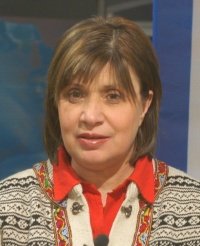 Lilia Raycheva合作论文数SOFIA UNIVERSITY1
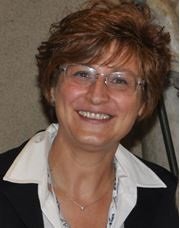 Elena Marta合作论文数Laboratorio di psicologia sociale applicata, Università Cattolica del Sacro Cuore di Milano1
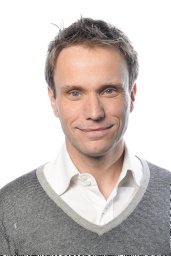 Lode Godderis合作论文数Idewe, External Service for Prevention and Protection at Work, Interleuvenlaan 58, B-3001 Heverlee, Belgium1Dana Mates合作论文数1Paolo Mazzocchi合作论文数1
 Damien M. Mcelvenny合作论文数Epidemiology and Medical Statistics Unit;Health and Safety Executive;Epidemiology and Medical Statistics Unit|Health and Safety Executive1
 Evangelia Nena合作论文数Laboratory of Social Medicine and Sociology, Department of Medicine, School of Health Science, Democritus University of Thrace1




