Quantum chemistry and materials science are among the most promising areas for demonstrating algorithmic quantum advantage and quantum utility due to their inherent quantum mechanical nature. Still, large-scale simulations of quantum circuits are essential for determining the problem size at which quantum solutions outperform classical methods. In this work, we present a novel hybrid simulation approach, forming a hybrid of a fullstate and a Clifford simulator, specifically designed to address the computational challenges associated with the time evolution of quantum chemistry Hamiltonians. Our method focuses on the efficient emulation of multi-qubit rotations, a critical component of Trotterized Hamiltonian evolution. By optimizing the representation and execution of multi-qubit operations leveraging the Pauli frame, our approach significantly reduces the computational cost of simulating quantum circuits, enabling more efficient simulations. Beyond its impact on chemistry applications, our emulation strategy has broad implications for any computational workload that relies heavily on multi-qubit rotations. By increasing the efficiency of quantum simulations, our method facilitates more accurate and cost-effective studies of complex quantum systems. We quantify the performance improvements and computational savings for this emulation strategy, and we obtain a speedup of a factor ≈ 18 (≈ 22 with MPI) for our evaluated chemistry Hamiltonians with 24 qubits. Thus, we evaluate our integration of this emulation strategy into the Intel Quantum SDK, further bridging the gap between theoretical algorithm development and practical quantum software implementations.
We introduce a modular quantum circuit primitive to model entanglement dynamics in QCD parton splitting and use it as a composable building block for data-driven, physics-consistent event generation. For the pure-gluon channel, we derive an analytic expression for the helicity entanglement generated at the splitting vertex, quantified via the concurrence, and construct a two-qubit circuit whose measurement outcomes encode the momentum shared between outgoing gluons while reproducing the QCD-predicted entanglement structure. Calibrating the circuit parameters to LHC jet substructure data maps, reconstructed momentum-sharing fractions are directly related to circuit rotation angles. Composing multiple splitting primitives yields multi-prong momentum-fraction distributions; we validate the three- and four-prong cases against experimental data and find good agreement. For the three-prong configuration, we execute the circuit on superconducting quantum hardware and obtain results consistent with simulation after standard quality cuts, enabled by the low qubit count and shallow circuit depth. This work provides a concrete framework for quantum-native parton-shower modules that encode quantum correlations at the level of splitting dynamics, and offers physics-informed ansätze for future quantum algorithms for QCD.
Hybrid quantum-classical workflows combine quantum processing units (QPUs) with classical hardware to address computational tasks that are challenging or infeasible for conventional systems alone. Coordinating these heterogeneous resources at scale demands robust orchestration, reproducibility, and observability. Even in the presence of fault-tolerant quantum devices, quantum computing will continue to operate within a broader hybrid ecosystem, where classical infrastructure plays a central role in task scheduling, data movement, error mitigation, and large-scale workflow coordination. In this work, we present a cloud-native framework for managing hybrid quantum-HPC pipelines using Kubernetes, Argo Workflows, and Kueue. Our system unifies CPUs, GPUs, and QPUs under a single orchestration layer, enabling multi-stage workflows with dynamic, resource-aware scheduling. We demonstrate the framework with a proof-of-concept implementation of distributed quantum circuit cutting, showcasing execution across heterogeneous nodes and integration of classical and quantum tasks. This approach highlights the potential for scalable, reproducible, and flexible hybrid quantum-classical computing in cloud-native environments.
The prospect of quantum computing with a potential exponential speed-up compared to classical computing identifies it as a promising method in the search for alternative future High Energy Physics (HEP) simulation approaches. HEP simulations, such as employed at the Large Hadron Collider at CERN, are extraordinarily complex and require an immense amount of computing resources in hardware and time. For some HEP simulations, classical machine learning models have already been successfully developed and tested, resulting in several orders of magnitude speed-up. In this research, we proceed to the next step and explore whether quantum computing can provide sufficient accuracy, and further improvements, suggesting it as an exciting direction of future investigations. With a small prototype model, we demonstrate a full quantum Generative Adversarial Network (GAN) model for generating downsized eight-pixel calorimeter shower images. The advantage over previous quantum models is that the model generates real individual images containing pixel energy values instead of simple probability distributions averaged over a test sample. To complete the picture, the results of the full quantum GAN model are compared to hybrid quantum-classical models using a classical discriminator neural network.
We present the results of the 'Fast Calorimeter Simulation Challenge 2022'-the CaloChallenge. We study state-of-the-art generative models on four calorimeter shower datasets of increasing dimensionality, ranging from a few hundred voxels to a few tens of thousand voxels. The 31 individual submissions span a wide range of current popular generative architectures, including variational autoencoders (VAEs), generative adversarial networks (GANs), normalizing flows, diffusion models, and models based on conditional flow matching. We compare all submissions in terms of quality of generated calorimeter showers, as well as shower generation time and model size. To assess the quality we use a broad range of different metrics including differences in one-dimensional histograms of observables, KPD/FPD scores, AUCs of binary classifiers, and the log-posterior of a multiclass classifier. The results of the CaloChallenge provide the most complete and comprehensive survey of cutting-edge approaches to calorimeter fast simulation to date. In addition, our work provides a uniquely detailed perspective on the important problem of how to evaluate generative models. As such, the results presented here should be applicable for other domains that use generative AI and require fast and faithful generation of samples in a large phase space.Report Numbers: HEPHY-ML-24-05, FERMILAB-PUB-24-0728-CMS, TTK-24-43.
Graph neural networks (GNNs) are effective for processing graph-structured data but face challenges with large graphs due to high memory requirements and inefficient sparse matrix operations on GPUs. Quantum computing offers a promising avenue to address these issues and inspires new algorithmic approaches. In particular, quantum GNNs (QGNNs) have been explored in recent literature. However, current quantum hardware limits the dimension of the data that can be effectively encoded. Existing approaches either simplify datasets manually or use artificial graph datasets. This work introduces the guided graph compression (GGC) framework, which uses a graph autoencoder to reduce both the number of nodes and the dimensionality of node features. The compression is guided to enhance the performance of a downstream classification task, which can be applied either with a quantum or a classical classifier. The framework is evaluated on the Jet Tagging task, a classification problem of fundamental importance in high energy physics that involves distinguishing particle jets initiated by quarks from those by gluons. We compare GGC to a model that uses the autoencoder as a preprocessing step and to a baseline classical GNN classifier. Our numerical results demonstrate that GGC outperforms both alternatives, while also facilitating the testing of novel QGNN ansatzes on realistic datasets.
The complexity of large-scale 6G-and-beyond networks demands innovative approaches for multi-objective optimization over vast search spaces, a task often intractable. Quantum computing (QC) emerges as a promising technology for efficient large-scale optimization. We present our vision of leveraging QC to tackle key classes of problems in future mobile networks. By analyzing and identifying common features, particularly their graph-centric representation, we propose a unified strategy involving QC algorithms. Specifically, we outline a methodology for optimization using quantum annealing as well as quantum reinforcement learning. Additionally, we discuss the main challenges that QC algorithms and hardware must overcome to effectively optimize future networks.
Some of the most astonishing and prominent properties of Quantum Mechanics, such as entanglement and Bell nonlocality, have only been studied extensively in dedicated low-energy laboratory setups. The feasibility of these studies in the high-energy regime explored by particle colliders was only recently shown, and has gathered the attention of the scientific community. For the range of particles and fundamental interactions involved, particle colliders provide a novel environment where quantum information theory can be probed, with energies exceeding by about 12 orders of magnitude those employed in dedicated laboratory setups. Furthermore, collider detectors have inherent advantages in performing certain quantum information measurements, and allow for the reconstruction of the state of the system under consideration via quantum state tomography. Here, we elaborate on the potential, challenges, and goals of this innovative and rapidly evolving line of research, and discuss its expected impact on both quantum information theory and high-energy physics.
This paper introduces a novel architecture for Quantum Graph Neural Networks, which is significantly different from previous approaches found in the literature. The proposed approach produces similar outcomes with respect to previous models but with fewer parameters, resulting in an extremely interpretable architecture rooted in the underlying physics of the problem. The architectural novelties arise from three pivotal aspects. Firstly, we employ an embedding updating method that is analogous to classical Graph Neural Networks, therefore bridging the classical-quantum gap. Secondly, each layer is devoted to capturing interactions of distinct orders, aligning with the physical properties of the system. Lastly, we harness SWAP gates to emulate the problem's inherent symmetry, a novel strategy not found currently in the literature. The obtained results in the considered experiments are encouraging to lay the foundation for continued research in this field.
The European Strategy for Particle Physics (ESPP) reflects the vision and presents concrete plans of the European particle physics community for advancing human knowledge in fundamental physics. The ESPP is updated every five-to-six years through a community-driven process. It commences with the submission of specific proposals and other input from the community at large, outlining projects envisioned for the near-, mid-, and long-term future. All submitted contributions are evaluated by the Physics Preparatory Group (PPG), and a preliminary analysis is presented at a Symposium meant to foster a broad community discussion on the scientific value and feasibility of the various ideas proposed. The outcomes of the analysis and the deliberations at the Symposium are synthesized in the current Briefing Book, which provides an important input in the deliberations of the Strategy recommendations by the European Strategy Group (ESG).
Leveraging fundamental quantum features such as quantum superposition is one of the key elements for the theoretical speed-up obtained in quantum algorithms, e.g., with Grover's search algorithm. In this work, we explore the novel concept of dynamic state preparation, which allows for extending an initially prepared superposition state already containing a set of data elements. This state is modified upon receiving further time-series measurement data from an experiment so that this data can be processed with a quantum algorithm to extract the global properties of the system efficiently. Specifically, we distinguish the algorithmic case in which the state-preparation unitary of the initially prepared state to be extended is known and the one where it is not. The former can be described as an application of amplitude amplification, whereas the latter includes an amplitude reservoir assigned to a reference state that allows for extension without knowing the full state preparation unitary. We discuss both cases algorithmically and present the respective quantum circuit, including a specific initial state preparation method. Our analysis reveals a polynomial scaling and respective tradeoffs to be considered.
In the vast landscape of CERN’s internal documentation, finding and accessing relevant detailed information remains a complex and timeconsuming task. To address this challenge, the AccGPT project (Accelerating Science GPT) aims for the development of an intelligent chatbot leveraging Natural Language Processing (NLP) technologies. We utilize open-source Large Language Models (LLMs) to create a specialized chatbot for CERN internal text-based knowledge retrieval, with the potential future extensions to code assistance and other functionalities. A promising first prototype utilising a Retrieval Augmented Generation (RAG) pipeline has already been developed and deployed. Ongoing improvements focus on enhancing the retrieval accuracy, integrating more powerful and larger LLMs, or fine-tuning with domain-specific data to improve domain accuracy and relevance. The chatbot’s user interface design and overall experience are being iteratively improved, and efforts are underway to prepare AccGPT for community-wide testing. Additionally, automated data scraping and preprocessing pipelines are being implemented to ensure an up-to-date, selfsustaining knowledge base.
Data sets that are specified by a large number of features are currently outside the area of applicability for quantum machine learning algorithms. An immediate solution to this impasse is the application of dimensionality reduction methods before passing the data to the quantum algorithm. We investigate six conventional feature extraction algorithms and five autoencoder-based dimensionality reduction models to a particle physics data set with 67 features. The reduced representations generated by these models are then used to train a quantum support vector machine for solving a binary classification problem: whether a Higgs boson is produced in proton collisions at the LHC. We show that the autoencoder methods learn a better lower-dimensional representation of the data, with the method we design, the Sinkclass autoencoder, performing 40% better than the baseline. The methods developed here open up the applicability of quantum machine learning to a larger array of data sets. Moreover, we provide a recipe for effective dimensionality reduction in this context.
Quantum generative models, in providing inherently efficient sampling strategies, show promise for achieving a near-term advantage on quantum hardware. Nonetheless, important questions remain regarding their scalability. In this work, we investigate the barriers to the trainability of quantum generative models posed by barren plateaus and exponential loss concentration. We explore the interplay between explicit and implicit models and losses, and show that using implicit generative models (such as quantum circuit-based models) with explicit losses (such as the KL divergence) leads to a new flavour of barren plateau. In contrast, the Maximum Mean Discrepancy (MMD), which is a popular example of an implicit loss, can be viewed as the expectation value of an observable that is either low-bodied and trainable, or global and untrainable depending on the choice of kernel. However, in parallel, we highlight that the low-bodied losses required for trainability cannot in general distinguish high-order correlations, leading to a fundamental tension between exponential concentration and the emergence of spurious minima. We further propose a new local quantum fidelity-type loss which, by leveraging quantum circuits to estimate the quality of the encoded distribution, is both faithful and enjoys trainability guarantees. Finally, we compare the performance of different loss functions for modelling real-world data from the High-Energy-Physics domain and confirm the trends predicted by our theoretical results.
Quantum generative modeling is among the promising candidates for achieving a practical advantage in data analysis. Nevertheless, one key challenge is to generate large-size images comparable to those generated by their classical counterparts. In this work, we take an initial step in this direction and introduce the Latent Style-based Quantum GAN (LaSt-QGAN), which employs a hybrid classical-quantum approach in training Generative Adversarial Networks (GANs) for arbitrary complex data generation. This novel approach relies on powerful classical auto-encoders to map a high-dimensional original image dataset into a latent representation. The hybrid classical-quantum GAN operates in this latent space to generate an arbitrary number of fake features, which are then passed back to the auto-encoder to reconstruct the original data. Our LaSt-QGAN can be successfully trained on realistic computer vision datasets beyond the standard MNIST, namely Fashion MNIST (fashion products) and SAT4 (Earth Observation images) with 10 qubits, resulting in a comparable performance (and even better in some metrics) with the classical GANs. Moreover, we analyze the barren plateau phenomena within this context of the continuous quantum generative model using a polynomial depth circuit and propose a method to mitigate the detrimental effect during the training of deep-depth networks. Through empirical experiments and theoretical analysis, we demonstrate the potential of LaSt-QGAN for the practical usage in the context of image generation and open the possibility of applying it to a larger dataset in the future.
The physics potential of massive liquid argon TPCs in the low-energy regime is still to be fully reaped because few-hits events encode information that can hardly be exploited by conventional classification algorithms. Machine learning (ML) techniques give their best in these types of classification problems. In this paper, we evaluate their performance against conventional (deterministic) algorithms. We demonstrate that both Convolutional Neural Networks (CNN) and Transformer-Encoder methods outperform deterministic algorithms in one of the most challenging classification problems of low-energy physics (single- versus double-beta events). We discuss the advantages and pitfalls of Transformer-Encoder methods versus CNN and employ these methods to optimize the detector parameters, with an emphasis on the DUNE Phase II detectors ("Module of Opportunity").
Motivated by recent experimental observations carried out in superconducting transmon circuits, we compare two different charging protocols for three-level quantum batteries based on time dependent classical pulses. In the first case the complete charging is achieved through the application of two sequential pulses, while in the second the charging occurs in a unique step applying the two pulses simultaneously. Both protocols are analytically solvable leading to a complete control on the dynamics of the quantum system. According to this it is possible to determine that the latter approach is characterized by a shorter charging time, and consequently by a greater charging power. We have then tested these protocols on IBM quantum devices based on superconducting circuits in the transmon regime. The minimum achieved charging time represents the fastest stable charging reported so far in solid state quantum batteries.
In this manuscript, we explore the intersection of QML and TN in the context of the one-dimensional ANNNI model with a transverse field. The study aims to concretely connect QML and TN by combining them in various stages of algorithm construction, focusing on phase diagram reconstruction for the ANNNI model, with supervised and unsupervised techniques. The model's significance lies in its representation of quantum fluctuations and frustrated exchange interactions, making it a paradigm for studying magnetic ordering, frustration, and the presence of a floating phase. It concludes with discussions of the results, including insights from increased system sizes and considerations for future work, such as addressing limitations in QCNN and exploring more realistic implementations of QC.
Quantum computers offer an intriguing path for a paradigmatic change of computing in the natural sciences and beyond, with the potential for achieving a so-called quantum advantage-namely, a significant (in some cases exponential) speedup of numerical simulations. The rapid development of hardware devices with various realizations of qubits enables the execution of small-scale but representative applications on quantum computers. In particular, the high-energy physics community plays a pivotal role in accessing the power of quantum computing, since the field is a driving source for challenging computational problems. This concerns, on the theoretical side, the exploration of models that are very hard or even impossible to address with classical techniques and, on the experimental side, the enormous data challenge of newly emerging experiments, such as the upgrade of the Large Hadron Collider. In this Roadmap paper, led by CERN, DESY, and IBM, we provide the status of high-energy physics quantum computations and give examples of theoretical and experimental target benchmark applications, which can be addressed in the near future. Having in mind hardware with about 100 qubits capable of executing several thousand two-qubit gates, where possible, we also provide resource estimates for the examples given using error-mitigated quantum computing. The ultimate declared goal of this task force is therefore to trigger further research in the high-energy physics community to develop interesting use cases for demonstrations on near-term quantum computers.
 Sandro De Cecco合作论文数268M. Shimojima合作论文数259E. Thomson合作论文数259
 Steven Errede合作论文数Department of Physics, The Grainger College of Engineering, University of Illinois Urbana-Champaign259M. Rescigno合作论文数258
 Alison Lister合作论文数Department of Physics & Astronomy, Faculty of Science, The University of British Columbia258Koji Takikawa (滝川紘治)合作论文数Institute of Physics, University of Tsukuba258
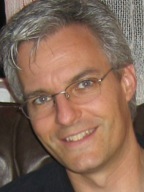 Andreas Warburton合作论文数Department of Physics, Faculty of Science, McGill University;Harvard University257
 C. Bromberg合作论文数Michigan State University, USA256M. A. Ciocci合作论文数255A. Robson合作论文数255
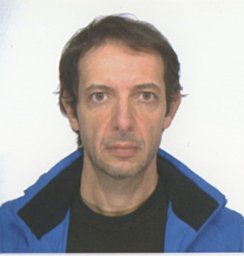 S. Giagu合作论文数INFN Sezione di Roma, Sapienza University255
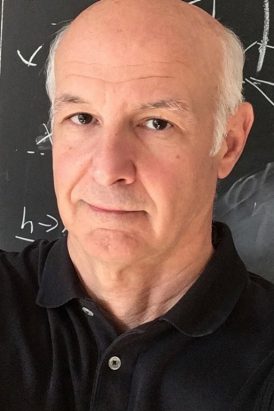 Dante Amidei合作论文数Department of Physics, College of Literature, Science, and the Arts, University of Michigan253
 Bruce Barnett合作论文数William H. Miller III Department of Physics and Astronomy, Krieger School of Arts and Sciences, Johns Hopkins University253S. M. Farrington合作论文数250
 Joey W Huston合作论文数Department of Physics & Astronomy, College of Natural Science, Michigan State University250C. Blocker合作论文数248
 Koji Terashi (寺師弘二)合作论文数International Center for Elementary Particle Physics, University of Tokyo244I. Gorelov合作论文数244
 Ben Brau合作论文数Department of Physics, College of Natural Sciences, University of Massachusetts Amherst240A. Cerri合作论文数A.G. Clark240
 Anadi Canepa合作论文数Fermi National Accelerator Laboratory239
 Melissa Franklin合作论文数Department of Physics, Harvard University237Carl Haber合作论文数Physics Division, Lawrence Berkeley National Laboratory237
 Alberto Annovi合作论文数INFN236
 Mark Neubauer合作论文数Department of Physics, The Grainger College of Engineering, University of Illinois at Urbana-Champaign;National Center for Supercomputing Applications, University of Illinois at Urbana-Champaign235
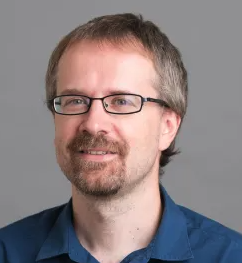 Roman Lysák合作论文数Department of Experimental Particle Physics, Division of Elementary Particle Physics, Institute of Physics of the Czech Academy of Sciences234
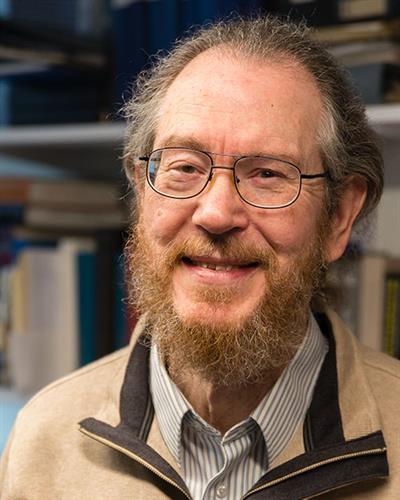 Austin Napier合作论文数Department of Physics and Astronomy, School of Arts and Sciences, Tufts University234Shaoqi Hou合作论文数233
 Giorgio Cortiana合作论文数Max-Planck-Institute for Physics;E.ON Digital Technology;European Organization for Nuclear Research233R. E. Blair合作论文数University of Bologna232
 Andrey Loginov合作论文数CERN231S. Rolli合作论文数Science & Technology Center, Tufts University228
 Anyes Taffard合作论文数School of Physical Sciences, University of California, Irvine;Department of Physics and Astronomy, Irvine227
 Corrinne Mills合作论文数Department of Physics, College of Liberal Arts and Sciences, University of Illinois Chicago, 845 West Taylor St.226
 Kohei Yorita (寄田浩平)合作论文数School of Advanced Science and Engineering, Faculty of Science and Engineering, Waseda University226
 Mario Paolo Giordani合作论文数Dipartimento Politecnico di Ingegneria e Architettura, Università degli Studi di Udine222P. Giannetti合作论文数INFN Sezione di Pisa222
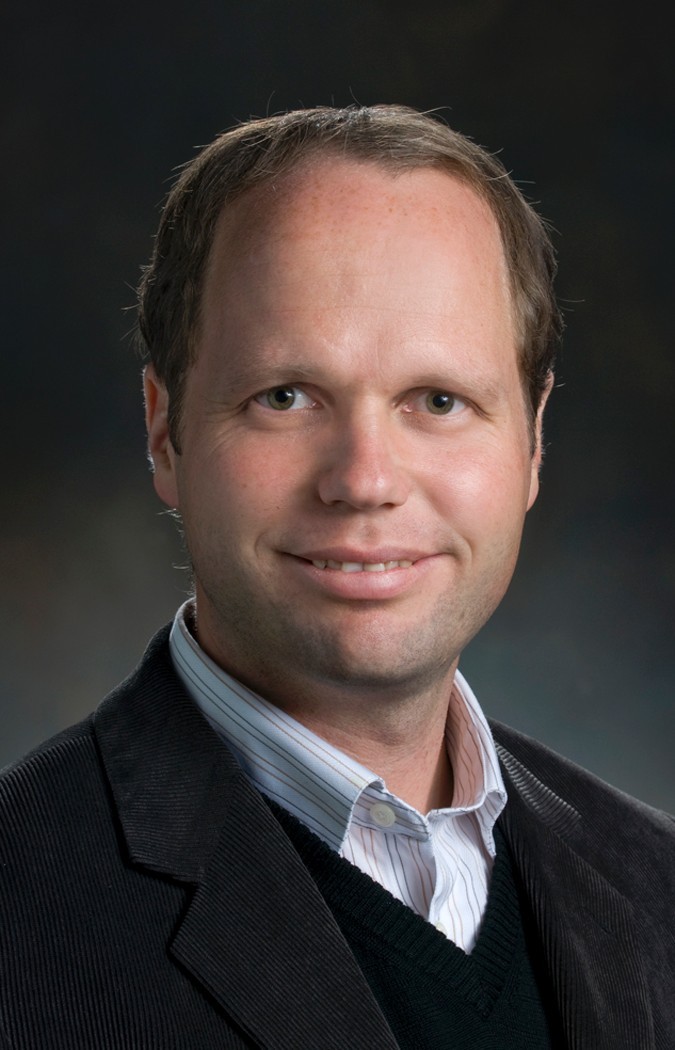 Bernd Stelzer合作论文数Department of Physics, Simon Fraser University221
 Kirsten Tollefson合作论文数Department of Physics and Astronomy, Michigan State University;Graduate School, Michigan State University221P. Catastini合作论文数Istituto Nazionale di Fisica Nucleare Pisa 56127 Pisa Italy221T. Spreitzer合作论文数220
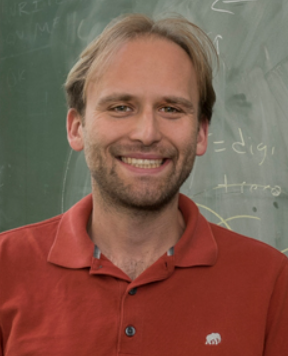 John Adelman合作论文数Department of Physics, Northern Illinois University219
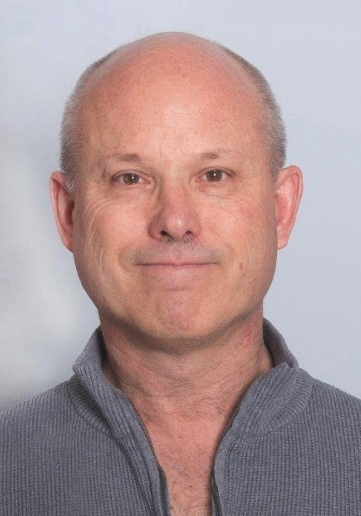 Joseph Boudreau合作论文数Department of Physics and Astronomy, University of Pittsburgh219
 Ashutosh V. Kotwal合作论文数Department of Physics, Trinity College of Arts & Sciences, Duke University219Andrea Bocci合作论文数CERN218
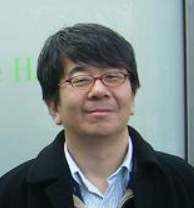 Fumihiko Ukegawa (受川史彦)合作论文数Institute of Pure and Applied Sciences, University of Tsukuba217
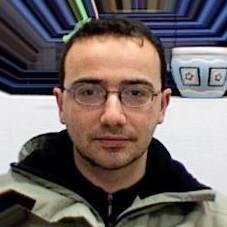 Luca Scodellaro合作论文数Instituto de Física de Cantabria, Consejo Superior de Investigaciones Cientificas217
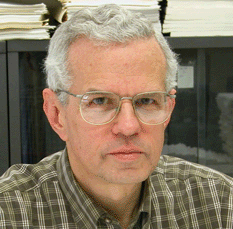 Melvyn J. Shochet合作论文数Enrico Fermi Institute, University of Chicago;Department of Physics, University of Chicago217




