The pandemic caused by the coronavirus disease 2019 (COVID-19) has produced a global health calamity that has a profound impact on the way of perceiving the world and everyday lives. This has appeared as the greatest threat of the time for the entire world in terms of its impact on human mortality rate and many other societal fronts or driving forces whose estimations are yet to be known. Therefore, this study focuses on the most crucial sectors that are severely impacted due to the COVID-19 pandemic, in particular reference to India. Considered based on their direct link to a country's overall economy, these sectors include economic and financial, educational, healthcare, industrial, power and energy, oil market, employment, and environment. Based on available data about the pandemic and the above-mentioned sectors, as well as forecasted data about COVID-19 spreading, four inclusive mathematical models, namely-exponential smoothing, linear regression, Holt, and Winters, are used to analyse the gravity of the impacts due to this COVID-19 outbreak which is also graphically visualized. All the models are tested using data such as COVID-19 infection rate, number of daily cases and deaths, GDP of India, and unemployment. Comparing the obtained results, the best prediction model is presented. This study aims to evaluate the impact of this pandemic on country-driven sectors and recommends some strategies to lessen these impacts on a country's economy.
With tremendous increase in population across the globe, the amount of waste which is generated every day is very high by each individual. Some of the waste can be recycled and some cannot. For this purpose, it has become mandatory to design a system which automatically segregate various types of waste. While designing the solution to this problem, we have proposed a Smart Garbage system which not only segregates the metallic, dry and wet waste but also convert the wet waste into compost automatically. The purpose of converting the wet waste into compost is that it can be further used in horticulture, urban agriculture and organic farming. Along with these two features, the other feature is that it alerts the waste management center through IoT system whenever any of the metallic or dry garbage bin is full to avoid overfilled landfills leading to serious environmental hazards. Therefore, to fix all the abnormalities, we have proposed this work to maintain hygiene and cleanliness in public places.
This research paper revolves around Cybersecurity and supports why it is important for an organization to invest in Cybersecurity. In this paper, we have tried to draw a conclusion on how the Cybersecurity landscape will change post-COVID-19. We have discussed the types of attackers, their motives and the threats that are expected to rise post-COVID-19 in detail. Furthermore, we have tried to break down the attacks that can be executed in different industries like IT industry, automobile industry, etc. Finally, we have tried to propose some solutions (SOAR, Sandboxing, etc.) to prevent cyberattacks in the future.
Plagiarism checkers have been widely used to verify the authenticity of dissertation/project submissions. However, when non-verbatim plagiarism or online examinations are considered, this practice is not the best solution. In this work, we propose a better authentication system for online examinations that analyses the submitted text's stylometry for a match of writing pattern of the author by whom the text was submitted. The writing pattern is analyzed over many indicators (i.e., features of one's writing style). This model extracts 27 such features and stores them as the writing pattern of an individual. Stylometric Analysis is a better approach to verify a document's authorship as it doesn't check for plagiarism, but verifies if the document was written by a particular individual and hence completely shuts down the possibility of using text-convertors or translators. This paper also includes a brief comparative analysis of some simpler algorithms for the same problem statement. These algorithms yield results that vary in precision and accuracy and hence plotting a conclusion from the comparison shows that the best bet to tackle this problem is through Artificial Neural Networks.
Usage of Multi-Criteria decision-making techniques along with optimization techniques to find location for quarantine centers for Covid 19 patients can be done. It is based on various decision factors such as having measurable distance from more Covid prone areas, Availability of hospitals, appropriate for facilitating emergency situations and Route and vehicle moreover working upon the area to predict the appropriate number of resources required according to emergency prone and red alert areas. Show. The approach for suggesting improvement in the task allocation in disaster environments can be to use two-stage heuristic algorithm for solving problem concerning with finding a location for emergency hospitals and emergency resource.
IOT technology is proved to be one of the key players in attracting the attention towards itself in the recent years, for the potential of it to be the part of our healthcare Systems. Among the applications that Internet of Things (IoT) encouraged to the world, Healthcare applications are generally significant. By and large, IoT has been broadly used to interconnect the high-level clinical assets and to offer brilliant and compelling medical care administrations to individuals. The high-level sensors can be either worn or be implanted into the body of the patients, in order to constantly screen their wellbeing. The proposed system is Health Measure Kit and Finding a Potential Covid-19 Suspect using IOT. The proposed system will determine the health of the person in an all in one portable solution using IOT and android application. This work will not be limited to only a portable Health Measure kit/System but our device can also find a Potential Covid-19 Suspect. The work will consist of SPO2 sensor to determine amount of blood oxygen level in the blood of the user, the heart rate sensor to determine the beats per minute, temperature sensor which can tell the temperature of the user just by positioning the index finger on the sensor and an unique lung capacity checker. Based on the above statistical data, and health score calculation using our system, one can identify a potential suspect case of Covid-19 and send his/her information to the health department of India to decrease and stop spread of virus. Improve the efficiency of checking at entry points for various places. Creating awareness on health issues. Helping government in creating an online health ID for every individual which will/can be linked with their government IDs.
Classification of music is one of the most interesting fields in the music industry. Music could be classified based on different features or characteristics of the audio files. Using machine learning models or any other technique that helps us to classify the music into a genre would be a great help to the music industry to handle a huge amount of audio files day by day. This would give them more chances to grow in other fields, as the classification would be handled by the model and so the rest effort could be utilized in a much better way. This would save both time and money. In this paper, the model we used would first extract the features of the training data and on the basis of the training dataset's features, it will classify all the audio files with the same feature under one category. To extract the features of the audio files, we use libraries like librosa and MFCC.
Face Recognition is a challenging task for recognizing and detecting the identity of an individual. Although, plethora of work has already been done in the field of pattern recognition still there has been lot which has not been addressed in any of the literature. In the current research, we have presented a comparative analysis using three popularly known techniques for face recognition namely, Principal Components Analysis (PCA) using Eigen Faces, Hidden Markov Model (HMM) using Singular Value Decomposition, and Artificial Neural Network (ANN) using Gabor filters. These techniques are implemented and evaluated using various measuring metrics such as false acceptance, false recognition rate, and so on. We used ORL and Yale Face dataset to test the robustness of implemented algorithms. Results show that ANN model for face recognition outperforms the other two techniques by achieving more accurate results and shows the highest recognition rate of 97.49% on ORL database. Moreover, it is also observed that ANN model shows the minimum error count of about 2.502% on ORL database while it is 3.5% on Yale Face dataset. To evaluate further, the implemented techniques are compared with best known techniques in class implemented by various researchers.
Meter reading and billing are time-consuming activities for power, water and gas providing boards. The existing billing system relies on a manual method of taking meter readings, updating the reading in the server and finally generating the bill amount. In this project, the user simply needs to use an Android application to capture and upload the picture of the meter after performing OCR operation. The processing on the image is performed on the server side using Google Colab and Python. The meter reading obtained from OCR processing is sent to the firebase, which is further pushed to the Android application. And finally the Android application displays the meter reading and the bill amount generated. Our project ensures the safety (from communicable diseases like COVID-19) of both the board staff and the customer as they don't come in contact with each other. This project also helps in cutting down on their expenditure by reducing manpower and travel costs.
This qualitative study of facial emotion recognition aims to help people suffering from Alexithymia (by genes) in starting off their young age understanding simple human emotion through pictures. This model works on the basis of supervised learning with the help of convolutional neural network. These layers furcate the image highlighting the main feature that differentiate it from other images or identifies it to fall into a particular category. This idea widens up the scope of AI and Machine Learning in the field of Psychology.
As per recent developments in medical science, the skin cancer is considered as one of the common type disease in human body. Although the presence of melanoma is viewed as a form of cancer, it is challenging to predict it. If melanoma or other skin diseases are identified in the early stages, prognosis can then be successfully achieved to cure them. For this, medical imaging science plays an essential role in detecting such types of skin lesions quickly and accurately. The application of our approaches is to improve skin cancer detection accuracy in medical imaging and further, can be automated using electronic devices such as mobile phones etc. In the proposed paper, an improved strategy to detect three type of skin cancers in early stages are suggested. The considered input is a skin lesion image which by using the proposed method, the system would classify it into cancerous or non-cancerous type of skin. The image segmentation is implemented using fuzzy C-means clustering to separate homogeneous image regions. The preprocessing is done using different filters to enhance the image attributes while the other features are assessed by implementing rgb color-space, Local Binary Pattern (LBP) and GLCM methods altogether. Further, for classification, artificial neural network (ANN) is trained using differential evolution (DE) algorithm. Various features are accurately estimated to achieve better results using skin cancer image datasets namely HAM10000 and PH2. The novelty of the work suggests that DE-ANN is best compared among other traditional classifiers in terms of detection accuracy as discussed in result section of this paper. The simulated result shows that the proposed technique effectually detects skin cancer and produces an accuracy of 97.4%. The results are highly accurate compare to other traditional approaches in the same domain.
The objective of the work was to make an Internet of Things (IOT) enabled medicine box that would notify the user to take the medicine on the scheduled time. This would help the elderly people with their everyday medicine rituals. It was developed keeping in mind the hardships faced by the elderly in taking medicines on time due to most of them suffering from Alzheimer’s disease or detreating memo...
In this busy schedule, everyone needs a bit of comfort and a protected life. The development and transformation of standard homes into smart homes has increased dramatically in recent times. This is due to innovations such as the Internet of Things, Sensors, Mobile Phones, Sophisticated Gadgets, Distributed Computing and PDAs like Amazon Alexa, Google Home, Google Assistant, Apple Siri and Microso...
Sustainability is defined as the practice of protecting natural resources for future use without harming the nature. Sustainable development includes the environmental, social, political, and economic issues faced by human being for existence. Water is the most vital resource for living being on this earth. The natural resources are being exploited with the increase in world population and shortfall of these resources may threaten humanity in the future. Water sustainability is a part of environmental sustainability. The water crisis is increasing gradually in many places of the world due to agricultural and industrial usage and rapid urbanization. Data mining tools and techniques provide a powerful methodology to understand water sustainability issues using rich environmental data and also helps in building models for possible optimization and reengineering. In this research work, a review on usage of supervised or unsupervised learning algorithms in water sustainability issues like water quality assessment, waste water collection system and water consumption is presented. Advanced technologies have also helped to resolve major water sustainability issues. Some major data mining optimization algorithms have been compared which are used in piped water distribution networks.
Student Attendance mainframe structure is defined to manage the student's class attending files using the concept of face detection and recognition through open computer vision. The principle reason this system has been put forward is to improve the traditional attendance system of various universities to avoid the misuse of time and assets. The pointing-sides of automation world have forced an idea of switching from standard attendance to the digital system by using face detection and recognition methods. This is how the Student Attendance structure is being developed by introducing the dataset of an individual. The major reason of building this system is to improve the adaptability and performance of the attendance system procedure besides reducing the long term time load, work and disposables used. The main purpose of the Student Attendance markup structure is to perform, adding and manipulating attendance notes of an individual, automatic calculation on number of presentees and absentees based on subject and affability of the class and then generates the automated document or spreadsheet. This idea is completely based on general purpose language named as python through which we use the concept of open computer vision. For face detection system we used haarcascade and for face recognition, we used LBPH model; then the training of individual student happened and finally the system generates the spreadsheet which provides the no. of students present in classroom with an image or video capturing live.
The disturbances caused in the liver are recognized as liver disorder which results in illness. The liver plays a vital role and exclusive functions in the body. Liver injury/rupture can lead to massive damage to the body. Liver disease is a widely used term that covers all the probable issues that cause the liver to fail in order to perform its selected functions. Overconsumption of alcohol can lead to liver disorder which ultimately leads to many other problems. SLAVE is an associate degree inductive learning calculation that employs concepts in lightweight of down like principle hypothesis. This hypothesis can be used to perceive an authentic device for enhancing the comprehension of the knowledge, which cannot be inherited if just the purpose of reading by the user is known. Besides, SLAVE utilizes associate reiterative approach for learning. The research tends to propose an associate adjustment of the underlying reiterative approach used as a region of SLAVE.
Business card is shared as hardcopy, the data present in business card will be highly useful if it is available in digital format. The task of manually entering the details of all business cards is laborious and time-consuming. Document image analysis is used in this paper for automating this process. This will be accomplished by performing OCR and then using the text to extract the Meta data. One more important component of business card is the logo of the organization. The text extraction OCR will be done using the Tesseract API. After conversion of the image to text, the data will be saved in the database. The raw data will be saved in the database, which will later be segregated and stored in the appropriate fields. It is generally ignored in the process of saving text information, in this paper it is extracted and stored in database. For logo detection various techniques like Gabor Filter, Harris edge detection technique, MSER, etc., are compared to determine the best technique for acquiring the most accurate logo extraction. Gabor filter gives the best result is used for the extracting logo and storing in database. Java language on NetBeans IDE platform which use the Spring MVC framework is used to implement this work.
Fine particles like PM2.5 are known to trigger or exacerbate unending ailment, for example, asthma, heart assault, bronchitis and other respiratory issues. The factors affecting the density of PM2.5 in atmosphere are temperature, humidity and pressure. Other factors like burning fire crackers, thrashes, etc. compliments them which leads to adverse effect of PM2.5 on mankind. We cannot control the natural activities of temperature, humidity and pressure but we can at least prevent complimenting them by knowing at what duration of a year there is sudden change in density of PM2.5 in environment due to these factors. In this research, prediction of breakpoint of PM2.5 density in a year with respect to these factors using segment analysis is being tried.
The field of digital imaging has advanced in recent years with increase of various digital gadgets and applications associated to it. With easily availability of image editing softwares which are either free of cost or budget friendly, image can be effortlessly tampered by the means of making forgery. This has led to increase in crime related to various image processing and computer vision applications. To combat with such forgeries digital forensic provide scientific techniques to identify whether image is original or forged. The proposed work implemented a image forgery check system based on SURF features. This is a pixel based technique where after preprocessing the images, relevant features are extracted and compared with a defined estimated threshold value. Based on the demonstrated results it is decided whether the image has been forged or not and if it is, then the area where tampering has been done is displayed as a forged part. The proposed algorithm is tested using open source CASIA image dataset. Also, the presented result shows that SURF feature based authentication provide forgery detection accuracy of 97%. The results are compared with other techniques in similar domain to prove the novelty of the work.
Smart transportation solution for developing smart city, needs continuous collection and analysis of GPS data. Smart traffic solution needs collections of data for movement of vehicles. This research paper suggests a model for studying GPS data by drawing a comparison between different data analysis techniques and visualizing a model for GPS dataset of a moving vehicle. Different clustering technologies have been used to identify corresponding accuracies, i.e. of K-Means, hierarchical and DBSCAN clustering algorithm. Various data attributes have been used to cluster the longitude and latitude of the current position of the vehicle along with the direction the vehicle is moving in. This research paper provides an insight to the usage of DBSCAN for better clustering model, better visualization and to implement it in future models. The dataset used is of a city in Ohio named as Cincinnati, located at 39.1031° N, 84.5120° W and is provided by the department of public services
 Purushottam Sharma合作论文数23
 Deepti Mehrotra合作论文数Amity University13
 Naveen Garg合作论文数Dept Informat Technol, Amity Univ Uttar Pradesh5Rashbir Singh合作论文数3
 Manoj Kumar合作论文数3
 Munib ur Rahman合作论文数Corresponding author. Tel.: +91-9540833365/9011489538.3
 Vinod Kumar Shukla合作论文数Sch Engn, Architecture, Interior Design, Dubai, U Arab Emirates3Payal Srivastava合作论文数2
 Samyak Jain合作论文数2Lalita Chaudhary合作论文数2Kamakshi合作论文数2Adiba Abidin合作论文数2Divya Lal合作论文数2
 Mohammed Alshehri合作论文数2Aakriti Johri合作论文数2
 Rishabh Saxena合作论文数VIT Univ2Avi Bhardwaj合作论文数2preeti chawla合作论文数2Soliha Rahman合作论文数2
 Gurpreet Singh Matharu合作论文数Amity University Uttar Pradesh2
 Shyam S. Sharma合作论文数Health Sciences Center, The University of Illinois at Chicago2
 Renu Jain合作论文数Chemistry Department, D.A.V. (P.G.) College2
 Aazar Khan合作论文数1Gulpreet Kaur Chadha合作论文数1Naman Gupta合作论文数1Pratibha Sharma合作论文数1
 Prashant Kumar合作论文数1Ayushi Pandey合作论文数1Sahil Saxena合作论文数1Priyal Chotwani合作论文数1Hina Gupta合作论文数1Preeti Dhiman合作论文数1
 Archana Singh合作论文数1
 Tajinder Kumar Saini合作论文数Department of Computer Science & Engineering, IKGPTU1
 Rachit Garg合作论文数Sch Comp Sci & Engn, Lovely Profess Univ1
 Sakshi Goel合作论文数Amity University1
 Chetna Choudhary合作论文数Information Technology, Amity University Noida1Akarsh Aggarwal合作论文数Accenture Solutions Private Limited1Sk Gupta合作论文数1
 Rajneesh Tanwar合作论文数Amity Univ1
 Thompson Stephan合作论文数MS Ramaiah Univ Appl Sci, Fac Engn & Technol, Dept Comp Sci & Engn, Bangalore 560054, Karnataka, India1Devraj合作论文数1
 Aggarwal, S.合作论文数Amity Sch. of Eng. & Technol., Amity Univ.;c;Amity Sch. of Eng. & Technol., Amity Univ.1Pallavi Chhikara合作论文数1Singh, R.合作论文数1
 Viral, R.合作论文数Alternate Hydro Energy Centre, Indian Inst. of Technol. Roorkee;c;Alternate Hydro Energy Centre, Indian Inst. of Technol. Roorkee1
 Saket Kumar合作论文数1
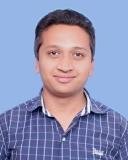 Ankur Gupta合作论文数Dept of Computer Science and Engineering, Vaish College of Engineering1
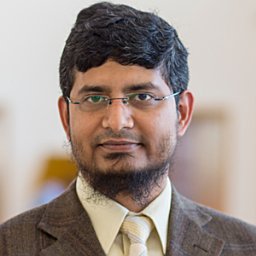 Mufti Mahmud合作论文数University of Padova, Jahangirnagar University1




