Generative adversarial networks (GANs) are playing a very significant role in digital forensics at present. Despite the popularity of GAN applications, GAN training is difficult and suffers from a few pathologies like mode collapse, vanishing gradients, and non-convergence that produce misleading outcomes. Providing solutions to these issues, a novel approach called the Generalized Ensemble GAN Model is devised. It is solely based on the combination of a single generator with three distinct CNN-based discriminators based on the voting ensemble technique. This paper offers an extensive comparative study of the ensemble model with existing GAN Variants Cycle GAN (CGAN), Deep Convolution GAN (DCGAN), and Semi-supervised GAN (SGAN). The comparison of the models is executed based on four quantitative parameters. Inception Score (IS), Fréchet Inception Distance (FID), Structural Similarity Index (SSIM), and Total Computational Time. To achieve insights about performance, the diverse behaviors of the models are analyzed using the Indian Actor Images Dataset. It is analyzed that the Ensemble GAN model outperformed the other GAN models, proving the feasibility and effectiveness of the technique. Outperforming DCGAN, SGAN, and CGAN in all of these characteristics, the Ensemble GAN produced a minimal TCT of 1009.4091 s, a low FID of 4.126, a high IS of 2.67607, and an SSIM of 0.0643. This work presents the Generalized Ensemble GAN Model as a reliable option for enhanced synthetic picture fidelity and stable GAN training, with encouraging ramifications for digital forensic applications.
These days, wireless communication is facing the problems of short battery lifetime and lower capacity globally for Beyond 5G (B5G) communication. These problems can be addressed by proposing the advantages of nonorthogonal multiple access (NOMA)-based cooperative green cognitive radio networks (GCRNs) utilizing green secondary users (GSUs) as relays. For this, an auction market is designed with the composition of BS (auctioneer), GSUs (sellers), and PUs (buyers). The PUs must pay for the cooperative service provided by GSUs, while GSUs sell it for revenue. Moreover, PUs can adjust their bid according to their residual energy. Thus, less energy PUs have a higher chance of winning GSUs' service to prevent energy exhaustion. Meanwhile, GSUs reduce their ask price as per the amount of energy harvesting (EH). Hence, GSUs can serve more PUs if they harvest more energy from the received NOMA signal. Three auction rules impacting GSUs (as relay) selection are also being proposed. Finally, the simulation illustrates the diverse performance of three auction rules (with their merits and demerits) in selecting GSUs. Although all of them effectively enhance system capacity and extend the battery lifetime of PUs, with 0.01% battery energy consumption noticed in each second while transmitting 10 GB of data from the BS to the PUs.
The expansion of the Internet of Things (IoT) has significantly improved the human welfare by allowing the intelligent sensing, automation, and real-time decision support across the diverse application domains. However, the large-scale deployment of IoT devices have generated the dynamic and heterogeneous workloads that has imposed a substantial pressure on the fog computing infrastructures. The fog layer, which bridges the IoT and cloud layers, must handle the fluctuations in service demands while it maintains the strict quality of service (QoS) constraints related to latency, response time, bandwidth utilization, and the energy efficiency. With time-varying workload intensity and an uneven task distribution, the conventional resource management strategies often have suffered from the resource under-provisioning, increased delay, and excessive energy consumption. The existing optimization-based approaches show a limited adaptability when the workload density increases, which leads to a degraded QoS performance under the large-scale IoT operations. Therefore, an efficient and an adaptive resource management policy that jointly optimizes the multiple QoS parameters remains as a critical challenge in the fog computing systems. This paper presents an Enhanced Political Optimizer-based Resource Management Strategy for Fog Computing (EPO-RMS-FC). The proposed model has formulated the resource allocation as a multi-objective optimization problem, and it employs an enhanced political optimizer that tends to improve the convergence stability and an exploration–exploitation balance. A unified fitness function has combined the energy consumption, bandwidth utilization, response time, and computational delay to guide the optimal task-to-resource mapping. The fog system model also considers the heterogeneous fog nodes and the dynamically arriving IoT requests, which allows an adaptive decision-making under the varying operational loads. Simulation-based evaluation has shown that the EPO-RMS-FC consistently outperforms the recent state-of-the-art methods. The proposed model has achieved a minimum latency of 2.50 s for 5 operations, and it maintains 39.84 s at 100 operations, while the comparative models has exceeded 140 s under the identical conditions. The response time is reduced to 0.29 s, with an average improvement of more than 60
Real-time airspace management, in which disruptions such as delays, rerouting, and congestion can cascade rapidly throughout networked airports, relies on effective and efficient modelling of air traffic networks. Intelligent coordination systems need to understand both global patterns of traffic and local dependence in order to achieve this purpose. To express both localized airport-level interactions and worldwide airspace dynamics, this paper proposes a Hierarchical Graph Neural Network (HGNN) that blends Graph Attention Networks (GAT) with Self-Attention Graph Pooling (SAG Pooling). This model effectively analyses pertinent and selective information at various levels. By avoiding over smoothing, keeping operational independence, and imposing localized influence, the proposed architecture addresses the limitations of prevailing GNNs while facilitating hierarchical abstraction of intricate networks into comprehensible higher-level clusters such as regional hubs. HGNN significantly outperforms statistical baselines, flat-attention GNNs, GATs, and standard GCNs. The ability of the model to preserve localized resilience as well as global dependencies is established by the obtained results, with further increased modularity and clustering coefficients, accuracy levels of up to 98%, F1-measures higher than 0.92, and AUC-ROC always greater than 0.96.
Cloud computing has emerged as a powerful paradigm for delivering scalable and on-demand computing resources to users across diverse application domains. However, the rapid growth of cloud services and data-intensive applications has significantly increased energy consumption and resource management challenges within cloud data centers. Efficient load balancing plays a vital role in enhancing system performance, minimizing response time, maximizing resource utilization, and reducing energy consumption in cloud computing environments. This paper presents a dynamic load balancing approach designed to improve the energy efficiency and operational performance of cloud computing systems. The proposed framework dynamically distributes workloads among virtual machines and cloud servers based on resource availability, processing capability, and workload conditions. The model integrates intelligent decision-making mechanisms to optimize task allocation while preventing server overload and underutilization. Additionally, the approach aims to reduce energy consumption by minimizing unnecessary resource activation and improving overall system efficiency. Experimental analysis demonstrates that the proposed dynamic load balancing technique achieves improved throughput, reduced response time, enhanced scalability, balanced resource utilization, and lower energy consumption compared to traditional load balancing methods. The study highlights the significance of adaptive and energy-aware load balancing strategies in developing sustainable and highperformance cloud computing infrastructures for modern digital applications.
Agriculture has a significant worldwide impact in terms of generating employment opportunities and stimulating economic growth. In India, agriculture plays a crucial role in development of food sources, boost up individual income of farmer and employment of the whole country. In the agriculture domain, meticulous machine learning-enabled crop classification is essential for production. Nowadays, for meticulous crop classification satellite images are used together with Geographical Information System (GIS) and remote sensing. Proposed ensemble methods are commonly used to estimate and examine the accomplishment of advanced machine learning concepts in the remote sensing community. In this paper, authors describe a framework with the combination of Support vector machine (SVM), Decision tree (DT), K-nearest neighbor (KNN), and Random forest (RF) and proposed ensemble method named as “SVM-DT-KNN-RF” that investigates the potential of crop mapping used to compare different architectures of machine learning as logistic regression (LR), RF, DT, KNN, SVM, bagging as well as boosting. The classifiers are tested on two remotely sensed datasets, one is Landsat 8 OLI (L8) and another is Sentinel 2 MSI (S2). The three primary findings based on our experiments are first, voting model proved to be the most accurate classifier. Second, bagging and boosting offer good accuracy in classification results. Finally, the results with two satellites i.e., S2 as well as L8 are compared. In the S2 dataset, the proposed ensemble method with a combination of two models i.e., SVM-DT, SVM-KNN and SVM-RF gave 89.1
Social media platforms have grown at an exponential rate leading to the generation of huge amounts of user-generated text (i.e., user-generated content) that can provide valuable information on public opinion, consumer behaviour, and social trends. As a result, sentiment analysis has developed as an important area of research to extract valuable information from this unstructured data. Traditional methods used for performing sentiment analysis often have challenges with context (i.e., trying to understand how a word is being used), sarcasm (i.e., sarcasm is very common in social media), informal language, and multiple languages, all of which are prevalent on social media. This paper presents the development of a hybrid framework that combines the use of advanced Natural Language Processing (NLP) techniques and machine learning algorithms for predicting sentiment in social media. The hybrid framework consists of three stages: text preprocessing, feature extraction from text using TF-IDF and word embeddings, and sentiment classification using a combination of hybrid machine learning algorithms, specifically Support Vector Machine (SVM), Random Forest (RF) and Long Short-Term Memory (LSTM). Sentiment classification is performed using a benchmark set of social media data to classify sentiments into positive, negative and neutral categories. Results from the experiments demonstrate that the proposed hybrid algorithm achieves higher prediction accuracy, precision, recall and F1 score than traditional sentiment analysis techniques.
Object detection and classification in thermal imaging is crucial for a range that operates continuously, such as security, inspection, emergency assistance, and border tracking. When applying several state-of-the-art object detection algorithms to ground-based thermal imaging, the main obstacles include inconsistencies in target size, low-quality images, obstruction, and varying illuminating conditions. This study analyzes the ability of deep-learning algorithms to examine various objects within ground-based thermal images. The novelty of this study lies in its utilization of two network architectures, MobileNetV2 and EfficientNet-B0, which are pre-trained on ImageNet visual images. These networks are typically employed for traditional optical images, but MobileNetv2in this research, are repurposed and trained on custom datasets of thermal images that have been created using the "Seek Shot" camera. This modification aims to test their performance and suitability in analyzing thermal images, expanding their usefulness beyond their original purpose. Standard metrics such as precision, the experiment, the 5-fold cross-validation used to address the bias of the models. The results demonstrate that the MobileNetV2 model achieves the highest detection accuracy of 96.5% for car classes. The research explores alternative deep learning models Faster RCNN and RetinaNet to compare object detection accuracy in thermal datasets. The results showed that out of all the models, MobileNetv2 had the highest mean average precision (mAP) with 92.6% and EfficientNet-B0 had better accuracy than the other two state-of-the-art models, while RetinaNet had the lowest mAP score of 6.57%.
Cardiovascular illness is the main concern of our research projects, a pandemic across the world and among leading causes of death. We are developing a modern, cutting-edge application which will enable diagnosing heart diseases using machine learning (ML), thereby creating transformative solutions for practitioners and laypersons. This paper presents an approach that uses supervised learning techniques to analyze certain characteristics tied with development of cardiac disorders. The proposed scheme employs a convolutional neural network method for predicting disease probabilities based on patient records that may be unstructured or partly structured. The correctness values obtained from the model were within 85
In mobile edge computing, service migration promises intelligent task placement as well as maintaining seamless functionality in bandwidth-intensive, latency-sensitive applications. Despite the promise of service migration offered by deep reinforcement learning (DRL), existing techniques lack topology awareness and dynamic adaptability. This research proposes a novel graph convolutional network (GCN)-based DRL framework enhanced with multi-parameter feedback (energy, delay, bandwidth) for intelligent service migration in MEC. Unlike prior DRL methods, our GCN-based framework models server topologies as spatial relationships and adapts feedback weights dynamically in response to changing system conditions. Experimental evaluation using EdgeSimPy and EdgeAISim shows that our proposed method reduces power consumption by 27
Object detection and classification are vital in image processing and computer vision. Despite substantial progress in image object detection, challenges remain with visible spectrum imaging under adverse conditions. Thermal infrared cameras offer benefits such as operating in complete darkness, sensitivity to illumination changes, resilience to shadows, and penetration through haze and smog. These advantages enable reliable object recognition during both day and night. However, many popular object detection algorithms struggle with ground-based TIR images due to various factors such as small object size, poor image quality, obstacles, and variable illumination conditions. This study proposes the YOLO (You Only Look Once) model using YOLOv8m as the framework to detect small objects and address related issues. The dataset of small objects has been collected using a “Shot” thermal imaging camera. The customized TIR (Thermal Infrared) dataset of small objects was classified into four classes: keys, bolts, ipieces, and coins. YOLOv8m was used for training, enhancement, and implementation of the dataset. The results demonstrate that the YOLOv8m model was flexible and efficient in recognizing these small objects accurately. To evaluate the performance of YOLOv8m, comparisons were made with other algorithms focusing on recognition performance. The YOLOv8m model attained the highest mean average precision (mAP) of 94.5
Abstract - The rapid expansion of Internet of Things (IoT) ecosystems has triggered an immense surge in data generation, demanding computational models that can efficiently manage and process this influx. Although cloud computing provides scalable resources for such tasks, its inherent latency and lack of contextual responsiveness limit its effectiveness for time-sensitive IoT applications. Fog computing, introduced to bridge this gap by enabling localized processing closer to data sources, offers reduced latency but is constrained by limited computational capacity. To overcome these limitations, this research introduces a hybrid IoT–fog–cloud framework that strategically balances real-time responsiveness with computational scalability. A two-phase resource allocation mechanism is proposed: initially, tasks are distributed based on a task guarantee ratio to either fog or cloud layers; subsequently, a Bayesian classifier refines this allocation using historical data for adaptive scheduling. To further enhance performance, the Crayfish Optimization Algorithm (COA), a novel bio-inspired metaheuristic, is employed to minimize execution delays and system latency. Simulations conducted via the iFogSim toolkit confirm the effectiveness of the proposed model, showcasing superior task handling and reduced latency compared to existing approaches. Keywords: IoT, fog computing, cloud computing, resource allocation, task classification, Bayes classifier, COA.
With the increase in usage of IoT devices in home environments, a unified framework for energy efficiency improvement is the need of the day. This work proposes HARL, a hybrid adaptive reinforncement based learning model that improves energy consumption and user comfort in smart home enviornment. This framework is a combination of Deep Q-Network (DQN) and Proximal Policy Optimization (PPO) which is adpative in nature due to its context-aware scheduling of various home appliances. In this framework security is also incorporated by use of AES/ECC encryption by defining role-based and attribute-based access control mechanisms for anomaly detection. This work is proved experimentally using Python implementation and shows that DQN is good for energy consumption stability of around 2.15 to 2.33 kWh with very minimal cost fluctuations of 3.0 to 7.5 units, thus making it more reliable for device scheduling operations. On the other hand PPO, offers more flexibility and better classification performance with AUC-ROC curve of 0.93 in comparison to 0.89 AUC-ROC curve of DQN. Both models performed really good in activity recognition and prediction of three states identified in this work: sleep, active and idle. In this comparison of both supervised and hybrid models like XGB, LSTM, MLP, RL-MLP, and Random Forest, the main objectives were user comfort, minimizing energy usage, real-time deployment, fully autonomous learning, explainability and balancing trade-offs, giving a summary of various models fitting into various scenarios. The comparison is also done on various evaluation metrics like energy consumption, accuracy, speed and model size, with best accuracy of the XGB model and RL-MLP model at 0.99, and next to that is RF with 0.98. The interpretation speed of XGB is very low, with 138.6 ms per interpretation, making it a bad choice, also with a model size of 4.2 MB whereas RL-MLP model also gives very fast accuracy speed of 33.1 ms per interpretation and with a very minimum size of 1.4 MB making it the best option for interpretation with high accuracy, good speed, and small model size. Overall, HARL achieves a balanced solution, combining the stability of DQN with the adaptive, low-latency control of RL-MLP, making it a practical and secure approach for smart home automation.
Edge computing stands out as a pivotal technology in enhancing the performance and efficiency of various applications, including online gaming, autonomous vehicles, smart cities, and more. This model expands the reach of cloud paradigm to the periphery of the network, closer to data sources, thus reducing delay, conserving bandwidth, and enhancing privacy. However, it introduces significant challenges in resource management and task offloading due to the diverse and dispersed nature of edge devices. To tackle these challenges, this paper advocates the use of Deep Reinforcement Learning (DRL) techniques to handle heterogeneous task in dynamic environment. DRL's adaptive and predictive capabilities make it an ideal solution for dynamically managing tasks in an edge environment, optimizing Quality of Service (QoS) aspects such as delay, energy usage, and resource allocation. We present a comprehensive framework, explore various DRL algorithms, and simulate the environment to evaluate the proposed methods' effectiveness. This study aims to contribute significantly to the field of edge computing by enhancing the QoS, thereby supporting the robust development of real-time, distributed applications.
 Thompson Stephan合作论文数MS Ramaiah Univ Appl Sci, Fac Engn & Technol, Dept Comp Sci & Engn, Bangalore 560054, Karnataka, India25
 Premkumar Chithaluru合作论文数Department of Systemics, School of Computer Science, University of Petroleum & Energy Studies (UPES), Bidoli, Dehradun 248007, India21
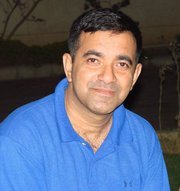 Akashdeep Bhardwaj合作论文数Department of Computer Science, University of Petroleum and Energy Studies17
 Achyut Shankar合作论文数Amity Univ, Dept CSE, Noida, India15
 Anuj Rani合作论文数14
 Fadi Al Turjman合作论文数Muhendislik Fakultesi, Near East University12
 Mohammed Alshehri合作论文数10
 Jyoti Agarwal合作论文数AITEM, Amity Univ.;c;AITEM, Amity Univ.10
 Shashi Bhushan合作论文数9
 Sushil Kumar合作论文数9
 Supriya Raheja合作论文数9Akarsh Aggarwal合作论文数Accenture Solutions Private Limited8
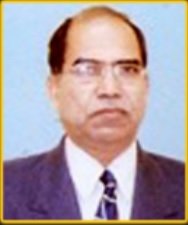 Sarika Jain合作论文数Amity University8Hitesh Kumar Sharma合作论文数7
 Chaitali Choudhary合作论文数University of Petroleum and Energy Studies7
 Dr Sachin Kumar Gupta合作论文数Dept. of Electr. Eng., Banaras Hindu Univ.;c;Dept. of Electr. Eng., Banaras Hindu Univ.7
 Inder Singh合作论文数Department of Computer Application, University of Petroleum and Energy Studies7
 Keshav Kaushik合作论文数Department of Radiation Oncology, Tata Memorial Hospital7
 Pankaj Kashyap合作论文数Jawaharlal Nehru Univ, Sch Comp & Syst Sci, New Delhi 110067, India6Sangeet Srivastava合作论文数6
 Prateek Gupta合作论文数Department of Computer Science and Engineering,Dr B R Ambedkar National Institute of Technology,Jalandhar,India6
 Kiran Ravulakollu合作论文数School of Engineering & Technology, MNR University6
 Adarsh Kumar合作论文数Department of Botany, University of Lucknow6Soly Mathew Biju合作论文数5Purushottam Sharma合作论文数5
 Anand Singh Rajawat合作论文数Sch Comp Sci & Engn, Sandip Univ5
 Xiaochun Cheng合作论文数Department of Computer Science, Middlesex University;MDX;IT5
 S. B. Goyal合作论文数MRCE5
 Atul Kumar Srivastava合作论文数4
 Dharani Kumar Talapula合作论文数4
 Laith Abualigah合作论文数Department of International Relations and Affairs, Al Al-Bayt University;Computer Science Department, Al Al-Bayt University4
 Ashutosh Mishra合作论文数Sch Integrated Technol, Yonsei Univ4
 Sunil Chowdhary合作论文数Abdul Kalam Technical University4
 Kumar Hitesh合作论文数Centre for Inf. Technol., Univ. of Pet. & Energy Studies;c4
 Neelu Jyothi Ahuja合作论文数4
 Mohammad S. Obaidat合作论文数Department of Computer Science, University of Texas-Permian Basin4
 Om Prakash Verma合作论文数3
 Himani Kohli合作论文数3
 Sanjeev Kumar合作论文数3
 Sunil Gupta合作论文数3Ashutosh Srivastava合作论文数3
 M Venkata KRISHNA Reddy合作论文数3
 Megha Chhabra合作论文数School of Engineering, Technology Sharda University3
 Anuj Kumar Singh合作论文数Ajay Kumar Garg Engineering College3
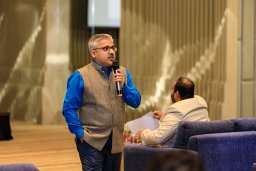 Sandeep Kautish合作论文数LBEF Campus, Kathmandu, Nepal3
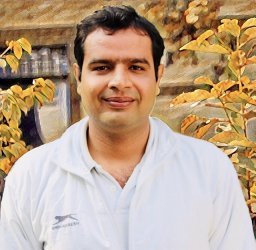 Vishal Dagar合作论文数Department of Economics and Public Policy, Great Lakes Institute of Management3Vikas Deep合作论文数3
 Upasana Dohare合作论文数3Sunder Lal合作论文数Department of Mathematics;University;Department of Mathematics, University3




