Car manufacturers are facing the challenge of defining suitable sensor setups that cover all requirements for the particular SAE level of automated driving. Besides the sensors' performance and surround-view coverage, other factors like vehicle integration, costs and design aspects need to be taken into account. Additionally, a redundant sensor arrangement and the sensors' sensitivity to environmental influences are of crucial importance for safety. By increasing the degree of automation, vehicles require more external sensors to observe their surrounding environment sufficiently, which raises the variety of setup configurations and the difficulty to identify the optimal one. Concerning the vehicle development process, concepts for sensor setups need to be defined at a very early stage. In this concept stage, it is not feasible to explore every possible sensor arrangement with test drives or to simulate the setup performance with tools used for vehicle validation. Thus, we propose a new simulation-based evaluation method, which allows the configuration of arbitrary sensor setups and enables virtual test drives within specific scenarios to evaluate the setup performance in this early development phase with metrics and key performance indicators. Two different setups are analyzed to demonstrate the results of this evaluation method.
Automotive sensor systems play an essential role for highly and fully automated driving by enabling environmental perception. Besides improving the sensors' performance, the data quality and information processing, the arrangement of the vehicular surround sensors is crucial. The conceptual design of robust and reliable sensor systems is a complex task since they comprise a high number of different sensors, each with diverse, adjustable parameters. At this early vehicle concept phase, it is not possible to examine the performance of all system variations in field tests. Thus, we established a simulation-based evaluation methodology to investigate the interaction of multiple sensors as a system and the effects of particular sensor arrangements on object detection and vehicle's surround-view coverage. This paper highlights the considerations while designing sensor systems and analyzes the impact of different sensor positions, especially by systematically altering the mounting height.
Autonomous driving has the potential to disruptively change the automotive industry as we know it today. For this, fail-operational behavior is essential in the sense, plan, and act stages of the automation chain in order to handle safety-critical situations by its own, which currently is not reached with state-of-the-art approaches.The European ECSEL research project PRYSTINE realizes Fail-operational Urban Surround perceptION (FUSION) based on robust Radar and LiDAR sensor fusion and control functions in order to enable safe automated driving in urban and rural environments. This paper showcases some of the key results (e.g., novel Radar sensors, innovative embedded control and E/E architectures, pioneering sensor fusion approaches, AI controlled vehicle demonstrators) achieved until year 2.
 Maike Hartstern合作论文数Department for Research, BMW Group2
 Wilhelm Stork合作论文数Karlsruhe Institute of Technology2
 Aleksandrs Levinskis合作论文数1
 Shai Ophir合作论文数1
 Anna Ryabokon合作论文数1Johannes Jany-Luig合作论文数1
 Jakob Reckenzaun合作论文数Virtual Vehicle Research Gmbh1Rutger Beekelaar合作论文数1
 Jonas Fuchs合作论文数Institute of Virology, Freiburg University Medical Center, Faculty of Medicine, University of Freiburg, Freiburg, Germany.1
 Torsten Reissland合作论文数Institute for Electronics Engineering, Friedrich-Alexander University Erlangen-Nuremberg1
 Omar Veledar合作论文数AVL List GmbH1
 Rihards Novickis合作论文数Inst Elect & Comp Sci1
 Mauricio Marcano合作论文数Tecnalia Res & Innovat, Parque Cient & Tecnol Bizkaia,Edif 700, Derio 48160, Bizkaia, Spain1Andrea Castellano合作论文数1
 Naveen Mohan合作论文数Mechatronics Division, KTH1
 Sergio Diaz合作论文数Univ Simon Bolivar, Lab Dinam Maquinas, Caracas 1080A, Venezuela1
 Anand Dubey合作论文数University of Erlangen Nuremberg1
 Mohsen Kaboli合作论文数Faculty of Electrical and Computer Engineering, K. N. Toosi University of Technology;c;Faculty of Electrical and Computer Engineering, K. N. Toosi University of Technology1
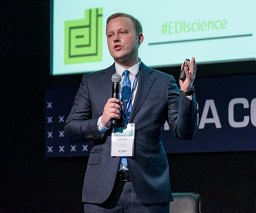 Kaspars Ozols合作论文数Inst. of Electron. & Comput. Sci., Riga, Latvia;c;Inst. of Electron. & Comput. Sci., Riga, Latvia|c|1
 Georg Stettinger合作论文数1
 Georg Macher合作论文数1
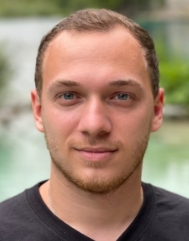 Nicolae Catalin Ristea合作论文数University Politehnica of Bucharest;Microsoft1
 S. Solmaz合作论文数Hamilton Institute;National University of Ireland-Maynooth;Hamilton Institute, National University of Ireland-Maynooth1
 Fabio Tango合作论文数Centro Ricerche Fiat1
 Norbert Druml合作论文数Graz University of Technology1
 Oguz Icoglu合作论文数1
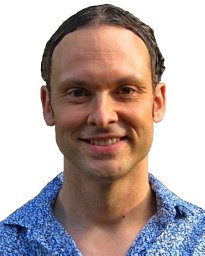 Jarno Vanne合作论文数Institute of Digital and Computer Systems, Tampere University of Technology1
 George Dimitrakopoulos合作论文数University of Piraeus1
 Andrei Anghel合作论文数University of Medicine and Pharmacy;Department of Biochemistry;University of Medicine and Pharmacy|Department of Biochemistry1
 Jorge Villagrá Serrano合作论文数Autopia Program,Center for Automation and Robotics1




