Within this work, a pre-processing system for spectrum sensing is demonstrated. A full hardware-software codesign implementation is demonstrated. Spectral analysis patterns are generated, various transmission properties are evaluated. Furthermore, signal degradation effects caused by ADC and DAC artifacts are discussed. Even within a a loopback system from DAC to ADC a power spectral density difference of 2.2 dB can be observed within the usable transmission band, with even higher disruptions around the Nyquist limits. Ultimately, mitigation strategies for these signal impairments are discussed.
In this work, different spreading sequences are presented and investigated with regard to their usability in joint communication and sensing (JCAS) systems. Gold codes, Kasami codes, maximum-length sequences (m-sequences) and Zadoff-Chu sequences are compared with each other in terms of dynamic range (DR), number of sequences in their subset and cross-correlation (CC) properties. Radar measurements were performed to prove the theoretical results. M-sequences and Zadoff-Chu sequences have the best DR. For a sequence length of 1023, the m-sequence achieved a DR of 57.2 dB. The Zadoff-Chu sequence suffers more from hardware non-idealities than m-sequences. The disadvantage of these two sequences is the high CC within their code family, which prohibits the use of this sequence in a network with many different participants. Gold codes and Kasami codes have a better CC but a very limited DR.
This paper presents a Simulink-based physical layer simulation tool that integrates non-ideal hardware components for simulating OFDM-based Joint Communications and Radar Sensing systems. The tool aims to implement hybrid beamforming (HBF) designs in a more realistic environment. In addition, an enhanced HBF algorithm has been formulated, enabling multi-user (MU) communication and sensing while mitigating inter-user interference. Simulation results using the proposed tool show that non-ideal Hardware (HW) characteristics limit the system's performance, but hybrid beamforming significantly improves it.
This work presents multiple concepts for spectral equalization in pulse-modulated continuous wave (PMCW) radar systems in order to restore the received signal for improved correlation results. Two concepts for postprocessing are presented which use the spillover signal for calibration. A third concept is introduced which uses a predistorted transmit signal and thus does not require spectral equalization in the receiver. The concepts are verified through measurements using a 60 GHz transceiver together with digital-to-analog converters (DACs) and analog-to-digital converters (ADCs) operating at 4 GSa/s, resulting in a range resolution of under 4 cm.
Joint communication and sensing (JCAS) holds great potential in a variety of applications because it combines radar signaling and data transmission into a single system. This means that both applications share their spectrum or even their waveform within the RF spectrum, a scarce and expensive resource. Meanwhile, research on beyond 5G and 6G is increasing tremendously. The advance of software-defined radio, where the signal processing mainly takes place in software, allows different implementations for communication and sensing [1] . Another reason for the integration of both into one system is the growing sensor density, which entails mutual interference. Furthermore, sharing hardware requires a sustainable and resource-efficient solution in the field of RF engineering.
This work presents a novel joint communication and sensing (JCAS) system that uses code spread spectrum (CSS) techniques to generate a signal for simultaneous communication and sensing. The transmission signal and the signal processing in the radar receiver must be adapted to achieve a high dynamic range so that the radar performance does not suffer. A compromise between bit rate and dynamic range must be found. Measurements verify the performance in a physical JCAS system. A dynamic range of 55 dB and a bit error rate (BER) of 2.10(-3) could be achieved with a maximum length sequence (m-sequence) of length 511.
This work presents a rat-race coupler as a balun for the 60 GHz-band. To simplify the structure, also the 3-port rat-race balun is also simulated and manufactured to compare these two balun types. They were analyzed with a vector network analyzer (VNA) and show in the frequency range of 58 GHz to 63 GHz a maximum insertion loss of 3.5 dB and 3.9 dB, respectively and a return loss of 10 dB or less. The common mode rejection ratio (CMRR) is better than 17 dB. The insertion loss and the return loss can further be improved within a measurement setup with connectors with less reflections. It was shown that a 3-port rat-race balun is a valid alternative and has advantage in size and complexity over marchand baluns or substrate integrated waveguide (SIW) baluns.
This work presents an extremely flexible testbed for developing and evaluating novel concepts for frequency-modulated continuous wave (FMCW) radar systems. Chirps are generated and evaluated in baseband in the digital domain. This is made possible by utilizing digital-to-analog and analog-to-digital converters operating at 4 GSa/s with a resolution of 14 bit in conjunction with a 60 GHz mmWave transceiver which uses both the in-phase and quadrature component in both the transmitter and receiver. The system is demonstrated by performing several measurements with bandwidths between 1 GHz and 4 GHz, chirp durations between 100 ns and 65 mu s, and also by introducing artificial nonlinearities.
This work introduces a mobile network front-end based on a direct sampling architecture, enabling simultaneous sampling of all frequency bands below 6 GHz used for mobile communications. Good channel isolation properties of above 43 dB for most channels are an essential enabler for future sensing and communications applications. Variable amplification within individual channels enables direct control over reception levels, and enhances resistance against willful and unwilling jamming of the receiver system.
This paper describes a front-end architecture for an all-band direct sampling receiver. To evaluate the characteristics of this front-end, we conducted a S-parameter analysis to evaluate the performance of transmission and isolation of individual transmission channels. Our results prove high mutual isolation of the channels filtered by Multi-Layer Organic (MLO) filters. The effect of individual filter techniques is compared. Furthermore, the frequency planning is described. Finally, the usability of this front-end within a mobile network is discussed.
Increasing the use of rail-based passenger transportation, compared to passenger cars, is a key factor in the pursuit of a climate-friendly transport sector. For example, in Germany in 2021, carbon dioxide emissions per person-kilometer produced by long-distance train transportation were 72% lower compared to transportation by passenger cars [1] . To strengthen the competitiveness of rail transport, its reliability and cost from the user’s perspective need to be optimized. One way to achieve this goal is to enable higher levels of automation in rail transport, as is being sought in the automotive sector. And just as in the automotive sector, sensor systems are crucial for a reliable estimation of a vehicle’s condition. This reliable estimation is a necessary prerequisite for enabling automation functions.
This paper demonstrates a new noninvasive sensor system to acquire information about a beehives’ health using the micro-Doppler of a FMCW radar at 60 GHz. The possibility to track the presence of the queen bee as well as the general hive activity is demonstrated.
An evaluation platform for digital radar systems operating at 60 GHz is proposed and demonstrated. With a sampling rate of 4 GSa/s, a range resolution of below 4 cm can be achieved. The transmit sequence can be up to $2^{18}$ samples long, leading to a possible unambiguous range of more than 9km. The platform is designed for offline signal processing for maximum flexibility, meaning that data rates in excess of 100 Gbit/s are handled to both play back and record data during measurement.
A new transceiver setup for joint communication and sensing (JCAS) application in V-band with a 3 dB bandwidth of 2.57 GHz is presented in this work. With new communication standards like 6G and a rising amount of wireless transmitted data, new transceiver setups for higher carrier frequencies and larger bandwidth need to be developed. The new transceiver setup has differential IQ input ports and a carrier frequency ranging from 57 GHz to 64 GHz. For the proof of radar and communication applications, the reflected IQ signal was detected, and the usability confirmed. This setup can be used for JCAS applications in meter range with high resolution and data rates.
For a radar based True-Speed-Over-Ground measurement system an interpolation based precision improvement is presented. The system is based on the cross-correlation of two radar receive signals. The theoretical basics of the interpolation are thoroughly introduced and its limits are determined for the general case and for a specific hardware. Measurement results including the interpolation are presented and compared to the former implementation.
A rectangular microstrip antenna with a resonant frequency of 60.5 GHz and a bandwidth of 4 GHz is proposed and evaluated. The antenna is based on the low-cost substrate RO4350B and is designed to reduce costs for prototypes and small batch series by complying with design restrictions for inexpensive pooling offers by many manufacturers. The influence of manufacturing tolerances on the performance of the antenna is also investigated and minimized. Finally, an antenna is fabricated and measurements are compared with simulations.
Joint communication and sensing (JCAS) combines radar and data transmission into one system. Applying this, a frequency modulated continuous wave (FMCW) radar is chosen for sensing and gets modulated by frequency shift keying (FSK) to transmit data. The transmission takes place at 60 GHz with a bandwidth of 5 GHz which leads to a high sensing resolution of 0.03 m. For comparison, the FMCW radar is evaluated without modulation, with an additional frequency offset and with FSK. The results show that FMCW radar with an additional frequency offset does not substantially impact the sensing functionality. The received FSK data were demodulated and could be reconstructed completely at a measuring distance of 1.9 m and with a bit error rate of 3.6 % at a measuring distance of 2.5 m. A JCAS system in V-band was developed and its functionality proven.
In this paper we present an experimental examination on the influence of self-interference in a true-speed-over-ground measurement system. The setup is based on two antenna pairs, in which interference is to be expected if they transmit simultaneously. This work compares the estimation results for simultaneous and for time division multiplexed transmission. Furthermore, an approach for the decoupling of the receive channels is introduced and examined.
Radar sensors have been widely used to estimate speed and displacement of remote targets. A novel market for contactless radar sensing is emerging in the field of automatization and process analysis, where non destructive testing and evaluation methods are desired. Here, modern radar systems offer various advantages over conventional sensors since they enable the contactless, continuous, and cost-efficient measurement of static or dynamic ranges. These can further be used for vibration and vital sign characterization. Advances in microwave technology, an increasing integration density, and the development of novel algorithms keep boosting the performance of the systems. After introducing the most common operation principles, such as unmodulated and frequency-modulated continuous-wave radar, different design aspects and building blocks of cutting-edge systems are explained in detail. In the second part, selected applications are described in detail. These include the sheet thickness monitoring of metallic foils, and the measurement of the ground speed of vehicles with the latest approaches. Exemplary low-power radar systems are presented to show the limits in terms of power consumption while still offering a high measurement precision. In addition, the topics of mechanical vibration sensing and vital sign sensing are addressed by introducing tailored systems.
This work presents a cross correlation-based true-speed-over-ground estimation approach based on experiences from an earlier system. The radar system parameters as well as the antenna configuration were adapted to fit the requirements of the presented application. Also, challenges regarding the previously limited velocity range are addressed and an appropriate solution is proposed. The entire system was thoroughly tested in a train scenario over a wide range of velocities. Very promising measurement results are presented and compared to related approaches.
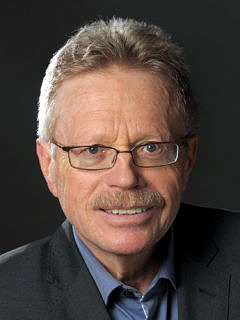 Robert Weigel合作论文数Lehrstuhl fur Technische Elektronik, Friedrich-Alexander-Universitat Erlangen-Nurnberg33
 Alexander Koelpin合作论文数Institute of High-Frequency Technology, Hamburg University of Technology15
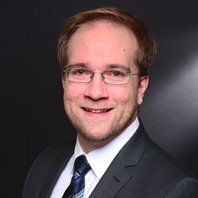 Lurz, Fabian合作论文数Institute for Electronics Engineering, Friedrich-Alexander University of Erlangen-Nuremberg;c;Institute for Electronics Engineering, Friedrich-Alexander University of Erlangen-Nuremberg14
 Samira Faghih-Naini合作论文数10Sebastian Peters合作论文数9
 Georg Fischer合作论文数5
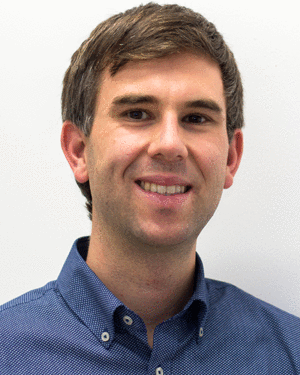 Fabian Michler合作论文数5
 Benedict Scheiner合作论文数4
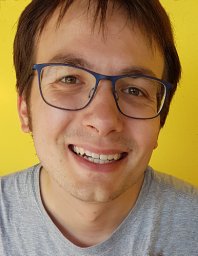 Stefan Erhardt合作论文数4Armin Schuster合作论文数3Thomas Kurin合作论文数3Johann Lichtblau合作论文数3
 Sporer, M.合作论文数3
 Christoph Will合作论文数Infineon Technologies AG2
 Anand Dubey合作论文数University of Erlangen Nuremberg2
 Sebastian Mann合作论文数Inst. for Electron. Eng., Univ. of Erlangen-Nuremberg;c;Inst. for Electron. Eng., Univ. of Erlangen-Nuremberg2Matthias Kuba合作论文数2Kunrui Cao (曹堃锐)合作论文数1Zhongtao Yue合作论文数1Caroline Sebastian合作论文数1Aleksandrs Levinskis合作论文数1
 Shai Ophir合作论文数1
 Stefan Kiefl合作论文数1Alvaro Otero合作论文数1Hongwei Ng合作论文数1
 Anna Ryabokon合作论文数1
 Nikolaos Gatsis合作论文数1Mario Alvarado-Ruiz合作论文数1Chantale Robillard合作论文数1Bjoern Lenhart合作论文数1Johannes Jany-Luig合作论文数1Viktor Rack合作论文数1Johannes Radl合作论文数1
 Marek Wehmer合作论文数1Yoran Bugni合作论文数1
 Quentin Varo合作论文数1
 William Lardier合作论文数1guidong wu (邬贵东)合作论文数1
 Binbin Chen合作论文数1
 Niklas Goerke合作论文数1
 Jie Huang合作论文数1Kariem Elkholy合作论文数1
 Matthias Voelkel合作论文数1Marie Horlbeck合作论文数1Christian Dorn合作论文数1Michael Tuttle合作论文数1
 Yassir Dahmane合作论文数Ecole Cent Nantes, LS2N1
 Chaitra Niddodi合作论文数Dept Comp Sci, Univ Illinois1
 Seppo Borenius合作论文数1




