Image inpainting is a key technique in image processing task to predict the missing regions and generate realistic images. Given the advancement of existing generative inpainting models with feature extraction, propagation and reconstruction capabilities, there is lack of high-quality feature extraction and transfer mechanisms in deeper layers to tackle persistent aberrations on the generated inpainted regions. Our method, V-LinkNet, develops high-level feature transference to deep level textural context of inpainted regions our work, proposes a novel technique of combining encoders learning through a recursive residual transition layer (RSTL). The RSTL layer easily adapts dual encoders by increasing the unique semantic information through direct communication. By collaborating the dual encoders structure with contextualised feature representation loss function, our system gains the ability to inpaint with high-level features. To reduce biases from random mask-image pairing, we introduce a standard protocol with paired mask-image on the testing set of CelebA-HQ, Paris Street View and Places2 datasets. Our results show V-LinkNet performed better on CelebA-HQ and Paris Street View using this standard protocol. We will share the standard protocol and our codes with the research community upon acceptance of this paper.
Modeling the temporal behavior of data is of primordial importance in many scientific and engineering fields. Baseline methods assume that both the dynamic and observation equations follow linear-Gaussian models. However, there are many real-world processes that cannot be characterized by a single linear behavior. Alternatively, it is possible to consider a piecewise linear model which, combined with a switching mechanism, is well suited when several modes of behavior are needed. Nevertheless, switching dynamical systems are intractable because their computational complexity increases exponentially with time. In this article, we propose a variational approximation of piecewise linear dynamical systems. We provide full details of the derivation of two variational expectation-maximization algorithms: a filter and a smoother. We show that the model parameters can be split into two sets: static and dynamic parameters, and that the former parameters can be estimated offline together with the number of linear modes, or the number of states of the switching variable. We apply the proposed method to the head-pose tracking, and we thoroughly compare our algorithms with several state of the art trackers.
The state-of-the-art facial image inpainting methods achieved promising results but face realism preservation remains a challenge. This is due to limitations such as; failures in preserving edges and blurry artefacts. To overcome these limitations, we propose a Symmetric Skip Connection Wasserstein Generative Adversarial Network (S-WGAN) for high-resolution facial image inpainting. The architecture is an encoder-decoder with convolutional blocks, linked by skip connections. The encoder is a feature extractor that captures data abstractions of an input image to learn an end-to-end mapping from an input (binary masked image) to the ground-truth. The decoder uses learned abstractions to reconstruct the image. With skip connections, S-WGAN transfers image details to the decoder. Additionally, we propose a Wasserstein-Perceptual loss function to preserve colour and maintain realism on a reconstructed image. We evaluate our method and the state-of-the-art methods on CelebA-HQ dataset. Our results show S-WGAN produces sharper and more realistic images when visually compared with other methods. The quantitative measures show our proposed S-WGAN achieves the best Structure Similarity Index Measure (SSIM) of 0.94.
Facial image inpainting is a problem that is widely studied, and in recent years the introduction of Generative Adversarial Networks, has led to improvements in the field. Unfortunately some issues persists, in particular when blending the missing pixels with the visible ones. We address the problem by proposing a Wasserstein GAN combined with a new reverse mask operator, namely Reverse Masking Network (R-MNet), a perceptual adversarial network for image inpainting. The reverse mask operator transfers the reverse masked image to the end of the encoder-decoder network leaving only valid pixels to be inpainted. Additionally, we propose a new loss function computed in feature space to target only valid pixels combined with adversarial training. These then capture data distributions and generate images similar to those in the training data with achieved realism (realistic and coherent) on the output images. We evaluate our method on publicly available dataset, and compare with state-of-the-art methods. We show that our method is able to generalize to high-resolution inpainting task, and further show more realistic outputs that are plausible to the human visual system when compared with the state-of-the-art methods. https://github.com/Jireh-Jam/R-MNet-Inpainting-keras
Images can be described as visual representations or likeness of something (person or object) which can be reproduced or captured, e.g. a hand drawing, photographic material. However, for images on photographic material, images can have defects at the point of captured, become damaged, or degrade over time. Historically, these were restored by hand to maintain image quality using a process known as inpainting. The advent of the digital age has seen the rapid shift image storage technologies, from hard-copies to digitalised units in a less burdensome manner with the application of digital tools. This paper presents a comprehensive review of image inpainting methods over the past decade and the commonly used performance metrics and datasets. To increase the clarity of our review, we use a hierarchical representation for the past state-of-the-art traditional methods and the present state-of-the-art deep learning methods. For traditional methods, we divide the techniques into five sub-categories, i.e. Exemplar-based texture synthesis, Exemplar-based structure synthesis, Diffusion-based methods, Sparse representation methods and Hybrid methods. Then we review the deep learning methods, i.e. Convolutional Neural Networks and Generative Adversarial Networks. We detail the strengths and weaknesses of each to provide new insights in the field. To address the challenges raised from our findings, we outline some potential future works.
Facial image inpainting, with high-fidelity preservation for image realism, is a very challenging task. This is due to the subtle texture in key facial features (component) that are not easily transferable. Many image inpainting techniques have been proposed with outstanding capabilities and high quantitative performances recorded. However, with facial inpainting, the features are more conspicuous and the visual quality of the blended inpainted regions are more important qualitatively. Based on these facts, we design a foreground-guided facial inpainting framework that can extract and generate facial features using convolutional neural network layers. It introduces the use of foreground segmentation masks to preserve the fidelity. Specifically, we propose a new loss function with semantic capability reasoning of facial expressions, natural and unnatural features (make-up). We conduct our experiments using the CelebA-HQ dataset, segmentation masks from CelebAMask-HQ (for foreground guidance) and Quick Draw Mask (for missing regions). Our proposed method achieved comparable quantitative results when compare to the state of the art but qualitatively, it demonstrated high-fidelity preservation of facial components.
We propose to estimate the head-pose angles (pitch, yaw, and roll) by simultaneously predicting the pose parameters from observed high-dimensional feature vectors, and tracking these parameters over time. This is achieved by embedding a Gaussian mixture of linear inverse-regression model into a dynamic Bayesian model. The use of a switching Kalman filter (SKF) enables a principled way of carrying out this embedding. The SKF governs the temporal predictive distribution of the pose parameters (modeled as continuous latent variables) conditioned by the discrete variables associated with the mixture of linear inverse-regression formulation. We formally derive the equations of the proposed switching linear regression model, we propose an approximation that is both identifiable and computationally tractable, we design an EM procedure to estimate the SKF parameters in closed-form, and we carry out experiments and comparisons with other methods using recently released datasets.
In this thesis, we address the well-known problem of head-pose estimation in the context of human-robot interaction (HRI). We accomplish this task in a two step approach. First, we focus on the estimation of the head pose from visual features. We design features that could represent the face under different orientations and various resolutions in the image. The resulting is a high-dimensional representation of a face from an RGB image. We propose to solve the head-pose estimation problem by building a link between the head-pose parameters and the high-dimensional features perceived by a camera. This link is learned using a high-to-low probabilistic regression built using probabilistic a mixture of affine transformations. With respect to classic head-pose estimation methods we extend the head-pose parameters by adding some variables to take into account variety in the observations (e.g. misaligned face bounding-box), to obtain a robust method under realistic conditions. Evaluation of the methods shows that our approach achieve better results than classic regression methods and similar results than state of the art methods in head pose that use additional cues to estimate the head pose (e.g depth information). Secondly, we propose a temporal model by using tracker ability to combine information from both the present and the past. Our aim through this is to give a smoother estimation output, and to correct oscillations between two consecutive independent observations. The proposed approach embeds the previous regression into a temporal filtering framework. This extension is part of the family of switching dynamic models and keeps all the advantages of the mixture of affine regressions used. Overall the proposed tracker gives a more accurate and smoother estimation of the head pose on a video sequence. In addition, the proposed switching dynamic model gives better results than standard tracking models such as Kalman filter. While being applied to the head-pose estimation problem the methodology presented in this thesis is really general and can be used to solve various regression and tracking problems, e.g. we applied it to the tracking of a sound source in an image.
Head-pose estimation has many applications, such as social event analysis, human-robot and human-computer interaction, driving assistance, and so forth. Head-pose estimation is challenging, because it must cope with changing illumination conditions, variabilities in face orientation and in appearance, partial occlusions of facial landmarks, as well as bounding-box-to-face alignment errors. We propose to use a mixture of linear regressions with partially-latent output. This regression method learns to map high-dimensional feature vectors (extracted from bounding boxes of faces) onto the joint space of head-pose angles and bounding-box shifts, such that they are robustly predicted in the presence of unobservable phenomena. We describe in detail the mapping method that combines the merits of unsupervised manifold learning techniques and of mixtures of regressions. We validate our method with three publicly available data sets and we thoroughly benchmark four variants of the proposed algorithm with several state-of-the-art head-pose estimation methods.
This paper addresses the problem of head pose estimation with three degrees of freedom (pitch, yaw, roll) from a single image. Pose estimation is formulated as a high-dimensional to low-dimensional mixture of linear regression problem. We propose a method that maps HOG-based descriptors, extracted from face bounding boxes, to corresponding head poses. To account for errors in the observed bounding-box position, we learn regression parameters such that a HOG descriptor is mapped onto the union of a head pose and an offset, such that the latter optimally shifts the bounding box towards the actual position of the face in the image. The performance of the proposed method is assessed on publicly available datasets. The experiments that we carried out show that a relatively small number of locally-linear regression functions is sufficient to deal with the non-linear mapping problem at hand. Comparisons with state-of-the-art methods show that our method outperforms several other techniques.
This paper addresses the problem of head pose estimation with three degrees of freedom (pitch, yaw, roll) from a single image. Pose estimation is formulated as a high-dimensional to low-dimensional mixture of linear regression problem. We propose a method that maps HOG-based descriptors, extracted from face bounding boxes, to corresponding head poses. To account for errors in the observed bounding-box position, we learn regression parameters such that a HOG descriptor is mapped onto the union of a head pose and an offset, such that the latter optimally shifts the bounding box towards the actual position of the face in the image. The performance of the proposed method is assessed on publicly available datasets. The experiments that we carried out show that a relatively small number of locally-linear regression functions is sufficient to deal with the non-linear mapping problem at hand. Comparisons with state-of-the-art methods show that our method outperforms several other techniques.
One of the main applications of the humanoid robot NAO - a small robot companion - is human-robot interaction (HRI). NAO is particularly well suited for HRI applications because of its design, hardware specifications, programming capabilities, and affordable cost. Indeed, NAO can stand up, walk, wander, dance, play soccer, sit down, recognize and grasp simple objects, detect and identify people, localize sounds, understand some spoken words, engage itself in simple and goal-directed dialogs, and synthesize speech. This is made possible due to the robot's 24 degree-of-freedom articulated structure (body, legs, feet, arms, hands, head, etc.), motors, cameras, microphones, etc., as well as to its on-board computing hardware and embedded software, e.g., robot motion control. Nevertheless, the current NAO configuration has two drawbacks that restrict the complexity of interactive behaviors that could potentially be implemented. Firstly, the on-board computing resources are inherently limited, which implies that it is difficult to implement sophisticated computer vision and audio signal analysis algorithms required by advanced interactive tasks. Secondly, programming new robot functionalities currently implies the development of embedded software, which is a difficult task in its own right necessitating specialized knowledge. The vast majority of HRI practitioners may not have this kind of expertise and hence they cannot easily and quickly implement their ideas, carry out thorough experimental validations, and design proof-of-concept demonstrators. We have developed a distributed software architecture that attempts to overcome these two limitations. Broadly speaking, NAO's on-board computing resources are augmented with external computing resources. The latter is a computer platform with its CPUs, GPUs, memory, operating system, libraries, software packages, internet access, etc. This configuration enables easy and fast development in Matlab, C, C++, or Python. Moreover, it allows the user to combine on-board libraries (motion control, face detection, etc.) with external toolboxes, e.g., OpenCv.
We propose a novel method for mapping sound spectrograms onto images and thus enabling alignment between auditory and visual features for subsequent multimodal processing. We suggest a supervised learning approach to this audio-visual fusion problem, on the following grounds. Firstly, we use a Gaussian mixture of locally-linear regressions to learn a mapping from image locations to binaural spectrograms. Secondly, we derive a closed-form expression for the conditional posterior probability of an image location, given both an observed spectrogram, emitted from an unknown source direction, and the mapping parameters that were previously learnt. Prominently, the proposed method is able to deal with completely different spectrograms for training and for alignment. While fixed-length wide-spectrum sounds are used for learning, thus fully and robustly estimating the regression, variable-length sparse-spectrum sounds, e.g., speech, are used for alignment. The proposed method successfully extracts the image location of speech utterances in realistic reverberant-room scenarios.
Localisation et suivi de visages à partir d'images et de sons : une approche Bayésienne temporelle et commumative Dans cette thèse, nous abordons le problème de l’estimation de pose de visage dans le contexte des interactions homme-robot. Nous abordons la résolution de cette tâche à l’aide d’une approche en deux étapes. Tout d’abord en nous inspirant de [Deleforge 15], nous proposons une nouvelle façon d’estimer la pose d’un visage, en apprenant un lien entre deux espaces, l’espace des paramètres de pose et un espace de grande dimension représentant les observations perçues par une caméra. L’apprentissage de ce lien se fait à l’aide d’une approche probabiliste, utilisant un mélange de regressions affines. Par rapport aux méthodes d’estimation de pose de visage déjà existantes, nous incorporons de nouvelles informations à l’espace des paramètres de pose, ces additions sont nécessaires afin de pouvoir prendre en compte la diversité des observations, comme les differents visages et expressions mais aussi lesdécalages entre les positions des visages détectés et leurs positions réelles, cela permet d’avoir une méthode robuste aux conditions réelles. Les évaluations ont montrées que cette méthode permettait d’avoir de meilleurs résultats que les méthodes de regression standard et des résultats similaires aux méthodes de l’état de l’art qui pour certaines utilisent plus d’informations, comme la profondeur, pour estimer la pose. Dans un second temps, nous développons un modèle temporel qui utilise les capacités des traqueurs pour combiner l’information du présent avec celle du passé. Le but à travers cela est de produire une estimation de la pose plus lisse dans le temps, mais aussi de corriger les oscillations entre deux estimations consécutives indépendantes. Le modèle proposé intègre le précédent modèle de régression dans une structure de filtrage de Kalman. Cette extension fait partie de la famille des modèles dynamiques commutatifs et garde tous les avantages du mélange de regressionsaffines précédent. Globalement, le modèle temporel proposé permet d’obtenir des estimations de pose plus précises et plus lisses sur une vidéo. Le modèle dynamique commutatif donne de meilleurs résultats qu’un modèle de suivi utilsant un filtre de Kalman standard. Bien qu’appliqué à l’estimation de pose de visage le modèle presenté dans cette thèse est très général et peut être utilisé pour résoudre d’autres problèmes de régressions et de suivis.
 Radu Patrice Horaud合作论文数RobotLearn;Institut National de Recherche Informatique et Automatique7
 Connah Kendrick合作论文数Manchester Metropolitan Univ, Sch Comp Math & Digital Technol, Manchester, Lancs, England5
 Kevin Walker合作论文数Image Metr Ltd5
 Jireh Jam合作论文数Manchester Metropolitan Univ5
 Georgios Evangelidis合作论文数Sch Informat Sci, Univ Macedonia5
 Sileye O. Ba合作论文数Telecom Bretagne;Intitut Telecom5
 Antoine Deleforge合作论文数French Institute for Research in Computer Science and Automation5
 Moi Hoon Yap合作论文数Manchester Metropolitan University5
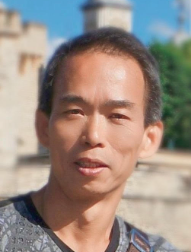 Jison Hsu (徐繼聖)合作论文数Department of Mechanical Engineering, National Taiwan University of Science and Technology2Gee-Sern Jison Hsu合作论文数1Quentin Pelorson合作论文数1Soraya Arias合作论文数INRIA Grenoble Rhone Alpes, 655 Ave Europe, F-38334 Monbonnot, France1
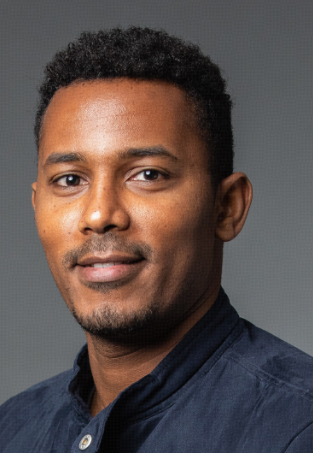 Israel D. Gebru合作论文数Stealth AI Startup1
 Laurent Girin合作论文数Institut de la Communication;Laboratoire Image et Signaux;Centre de Recherches de Royallieu;Centre de Recherches de Royallieu, Institut de la Communication1Fabien Badeig合作论文数LAMSADE, Université Paris-Dauphine1
 Xavier Alameda-Pineda合作论文数Inria Centre de Recherche Grenoble Rhone-Alpes, Université Grenoble Alpes1




