Despite the many recent achievements in developing and deploying social robotics, there are still many underexplored environments and applications for which systematic evaluation of such systems by end-users is necessary. While several robotic platforms have been used in gerontological healthcare, the question of whether or not a social interactive robot with multi-modal conversational capabilities will be useful and accepted in real-life facilities is yet to be answered. This paper is an attempt to partially answer this question, via two waves of experiments with patients and companions in a day-care gerontological facility in Paris with a full-sized humanoid robot endowed with social and conversational interaction capabilities. The software architecture, developed during the H2020 SPRING project, together with the experimental protocol, allowed us to evaluate the acceptability (AES) and usability (SUS) with more than 60 end-users. Overall, the users are receptive to this technology, especially when the robot perception and action skills are robust to environmental clutter and flexible to handle a plethora of different interactions.
This paper addresses the problem of analyzing the performance of 3D face alignment (3DFA), or facial landmark localization. This task is usually supervised, based on annotated datasets. Nevertheless, in the particular case of 3DFA, the annotation process is rarely error-free, which strongly biases the results. Alternatively, unsupervised performance analysis (UPA) is investigated. The core ingredient of the proposed methodology is the robust estimation of the rigid transformation between predicted landmarks and model landmarks. It is shown that the rigid mapping thus computed is affected neither by non-rigid facial deformations, due to variabilities in expression and in identity, nor by landmark localization errors, due to various perturbations. The guiding idea is to apply the estimated rotation, translation and scale to a set of predicted landmarks in order to map them onto a mathematical home for the shape embedded in these landmarks (including possible errors). UPA proceeds as follows: (i) 3D landmarks are extracted from a 2D face using the 3DFA method under investigation; (ii) these landmarks are rigidly mapped onto a canonical (frontal) pose, and (iii) a statistically-robust confidence score is computed for each landmark. This allows to assess whether the mapped landmarks lie inside (inliers) or outside (outliers) a confidence volume. An experimental evaluation protocol, that uses publicly available datasets and several 3DFA software packages associated with published articles, is described in detail. The results show that the proposed analysis is consistent with supervised metrics and that it can be used to measure the accuracy of both predicted landmarks and of automatically annotated 3DFA datasets, to detect errors and to eliminate them. Source code and supplemental materials for this paper are publicly available at https://team.inria.fr/robotlearn/upa3dfa/.
The speaker diarization task answers the question "who is speaking at a given time?". It represents valuable information for scene analysis in a domain such as robotics. In this paper, we introduce a temporal audio-visual fusion model for multiusers speaker diarization, with low computing requirement, a good robustness and an absence of training phase. The proposed method identifies the dominant speakers and tracks them over time by measuring the spatial coincidence between sound locations and visual presence. The model is generative, parameters are estimated online, and does not require training. Its effectiveness was assessed using two datasets, a public one and one collected in-house with the Pepper humanoid robot.
Face frontalization consists of synthesizing a frontal view from a profile one. This paper proposes a frontalization method that preserves non-rigid facial deformations, i.e. facial expressions. It is shown that expression-preserving frontalization boosts the performance of visually assisted speech processing. The method alternates between the estimation of (i) the rigid transformation (scale, rotation, and translation) and (ii) the non-rigid deformation between an arbitrarily-viewed face and a face model. The method has two important merits: it can deal with non-Gaussian errors in the data and it incorporates a dynamical face deformation model. For that purpose, we use the Student's t-distribution in combination with a Bayesian filter in order to account for both rigid head motions and time-varying facial deformations, e.g. caused by speech production. The zero-mean normalized cross-correlation score is used to evaluate the ability of the method to preserve facial expressions. The method is thoroughly evaluated and compared with several state of the art methods, either based on traditional geometric models or on deep learning. Moreover, we show that the method, when incorporated into speech processing pipelines, improves word recognition rates and speech intelligibility scores by a considerable margin.
This paper investigates the impact of head movements on audio-visual speech enhancement (AVSE). Although being a common conversational feature, head movements have been ignored by past and recent studies: they challenge today's learning-based methods as they often degrade the performance of models that are trained on clean, frontal, and steady face images. To alleviate this problem, we propose to use robust face frontalization (RFF) in combination with an AVSE method based on a variational auto-encoder (VAE) model. We briefly describe the basic ingredients of the proposed pipeline and we perform experiments with a recently released audio-visual dataset. In the light of these experiments, and based on three standard metrics, namely STOI, PESQ and SI-SDR, we conclude that RFF improves the performance of AVSE by a considerable margin.(1)
Modeling the temporal behavior of data is of primordial importance in many scientific and engineering fields. Baseline methods assume that both the dynamic and observation equations follow linear-Gaussian models. However, there are many real-world processes that cannot be characterized by a single linear behavior. Alternatively, it is possible to consider a piecewise linear model which, combined with a switching mechanism, is well suited when several modes of behavior are needed. Nevertheless, switching dynamical systems are intractable because their computational complexity increases exponentially with time. In this article, we propose a variational approximation of piecewise linear dynamical systems. We provide full details of the derivation of two variational expectation-maximization algorithms: a filter and a smoother. We show that the model parameters can be split into two sets: static and dynamic parameters, and that the former parameters can be estimated offline together with the number of linear modes, or the number of states of the switching variable. We apply the proposed method to the head-pose tracking, and we thoroughly compare our algorithms with several state of the art trackers.
This paper proposes a full-band and sub-band fusion model, named as FullSubNet, for single-channel real-time speech enhancement. Full-band and sub-band refer to the models that input full-band and sub-band noisy spectral feature, output full-band and sub-band speech target, respectively. The sub-band model processes each frequency independently. Its input consists of one frequency and several context frequencies. The output is the prediction of the clean speech target for the corresponding frequency. These two types of models have distinct characteristics. The full-band model can capture the global spectral context and the long-distance cross-band dependencies. However, it lacks the ability to modeling signal stationarity and attending the local spectral pattern. The sub-band model is just the opposite. In our proposed FullSubNet, we connect a pure full-band model and a pure sub-band model sequentially and use practical joint training to integrate these two types of models' advantages. We conducted experiments on the DNS challenge (INTERSPEECH 2020) dataset to evaluate the proposed method. Experimental results show that full-band and sub-band information are complementary, and the FullSubNet can effectively integrate them. Besides, the performance of the FullSubNet also exceeds that of the top-ranked methods in the DNS Challenge (INTERSPEECH 2020).
Unsupervised person re-ID is the task of identifying people on a target data set for which the ID labels are unavailable during training. In this paper, we propose to unify two trends in unsupervised person re-ID: clustering & fine-tuning and adversarial learning. On one side, clustering groups training images into pseudo-ID labels, and uses them to fine-tune the feature extractor. On the other side, adversarial learning is used, inspired by domain adaptation, to match distributions from different domains. Since target data is distributed across different camera viewpoints, we propose to model each camera as an independent domain, and aim to learn domain-independent features. Straightforward adversarial learning yields negative transfer, we thus introduce a conditioning vector to mitigate this undesirable effect. In our framework, the centroid of the cluster to which the visual sample belongs is used as conditioning vector of our conditional adversarial network, where the vector is permutation invariant (clusters ordering does not matter) and its size is independent of the number of clusters. To our knowledge, we are the first to propose the use of conditional adversarial networks for unsupervised person re-ID. We evaluate the proposed architecture on top of two state-of-the-art clustering-based unsupervised person re-identification (re-ID) methods on four different experimental settings with three different data sets and set the new state-of-the-art performance on all four of them. Our code and model is publicly available at https://team.inria.fr/perception/research/canu-reid/.
We address the problem of 3D shape registration and we propose a novel technique based on spectral graph theory and probabilistic matching. The task of 3D shape analysis involves tracking, recognition, registration, etc. Analyzing 3D data in a single framework is still a challenging task considering the large variability of the data gathered with different acquisition devices. 3D shape registration is one such challenging shape analysis task. The main contribution of this chapter is to extend the spectral graph matching methods to very large graphs by combining spectral graph matching with Laplacian embedding. Since the embedded representation of a graph is obtained by dimensionality reduction we claim that the existing spectral-based methods are not easily applicable. We discuss solutions for the exact and inexact graph isomorphism problems and recall the main spectral properties of the combinatorial graph Laplacian; We provide a novel analysis of the commute-time embedding that allows us to interpret the latter in terms of the PCA of a graph, and to select the appropriate dimension of the associated embedded metric space; We derive a unit hyper-sphere normalization for the commute-time embedding that allows us to register two shapes with different samplings; We propose a novel method to find the eigenvalue-eigenvector ordering and the eigenvector signs using the eigensignature (histogram) which is invariant to the isometric shape deformations and fits well in the spectral graph matching framework, and we present a probabilistic shape matching formulation using an expectation maximization point registration algorithm which alternates between aligning the eigenbases and finding a vertex-to-vertex assignment.
Visual voice activity detection (V-VAD) uses visual features to predict whether a person is speaking or not. V-VAD is useful whenever audio VAD (A-VAD) is inefficient either because the acoustic signal is difficult to analyze or because it is simply missing. We propose two deep architectures for V-VAD, one based on facial landmarks and one based on optical flow. Moreover, available datasets, used for learning and for testing V-VAD, lack content variability. We introduce a novel methodology to automatically create and annotate very large datasets in-the-wild -- WildVVAD -- based on combining A-VAD with face detection and tracking. A thorough empirical evaluation shows the advantage of training the proposed deep V-VAD models with this dataset.
In this article, we address the problem of tracking multiple speakers via the fusion of visual and auditory information. We propose to exploit the complementary nature and roles of these two modalities in order to accurately estimate smooth trajectories of the tracked persons, to deal with the partial or total absence of one of the modalities over short periods of time, and to estimate the acoustic status-either speaking or silent-of each tracked person over time. We propose to cast the problem at hand into a generative audio-visual fusion (or association) model formulated as a latent-variable temporal graphical model. This may well be viewed as the problem of maximizing the posterior joint distribution of a set of continuous and discrete latent variables given the past and current observations, which is intractable. We propose a variational inference model which amounts to approximate the joint distribution with a factorized distribution. The solution takes the form of a closed-form expectation maximization procedure. We describe in detail the inference algorithm, we evaluate its performance and we compare it with several baseline methods. These experiments show that the proposed audio-visual tracker performs well in informal meetings involving a time-varying number of people.
Face frontalization consists of synthesizing a frontally-viewed face from an arbitrarily-viewed one. The main contribution of this paper is a robust frontalization method that preserves non-rigid facial deformations, i.e. expressions, to perform lip reading. The method iteratively estimates the rigid transformation (scale, rotation, and translation) and the non-rigid deformation between 3D landmarks extracted from an arbitrarily-viewed face, and 3D vertices parameterized by a deformable shape model. An important merit of the method is its ability to deal with large Gaussian and non-Gaussian errors in the data. For that purpose, we use the generalized Student-t distribution. The associated EM algorithm assigns a weight to each observed landmark, the higher the weight the more important the landmark, thus favoring landmarks that are only affected by rigid head movements. We propose to use the zero-mean normalized cross-correlation (ZNCC) score to evaluate the ability to preserve facial expressions. We show that the method, when incorporated into a deep lip-reading pipeline, considerably improves the word classification score on an in-the-wild benchmark.
We address the problem of analyzing the performance of 3D face alignment (3DFA) algorithms. Traditionally, performance analysis relies on carefully annotated datasets. Here, these annotations correspond to the 3D coordinates of a set of pre-defined facial landmarks. However, this annotation process, be it manual or automatic, is rarely error-free, which strongly biases the analysis. In contrast, we propose a fully unsupervised methodology based on robust statistics and a parametric confidence test. We revisit the problem of robust estimation of the rigid transformation between two point sets and we describe two algorithms, one based on a mixture between a Gaussian and a uniform distribution, and another one based on the generalized Student's t-distribution. We show that these methods are robust to up to 50% outliers, which makes them suitable for mapping a face, from an unknown pose to a frontal pose, in the presence of facial expressions and occlusions. Using these methods in conjunction with large datasets of face images, we build a statistical frontal facial model and an associated parametric confidence metric, eventually used for performance analysis. We empirically show that the proposed pipeline is neither method-biased nor data-biased, and that it can be used to assess both the performance of 3DFA algorithms and the accuracy of annotations of face datasets.
The recent trend in vision-based multi-object tracking (MOT) is heading towards leveraging the representational power of deep learning to jointly learn to detect and track objects. However, existing methods train only certain sub-modules using loss functions that often do not correlate with established tracking evaluation measures such as Multi-Object Tracking Accuracy (MOTA) and Precision (MOTP). As these measures are not differentiable, the choice of appropriate loss functions for end-to-end training of multi-object tracking methods is still an open research problem. In this paper, we bridge this gap by proposing a differentiable proxy of MOTA and MOTP, which we combine in a loss function suitable for end-to-end training of deep multi-object trackers. As a key ingredient, we propose a Deep Hungarian Net (DHN) module that approximates the Hungarian matching algorithm. DHN allows estimating the correspondence between object tracks and ground truth objects to compute differentiable proxies of MOTA and MOTP, which are in turn used to optimize deep trackers directly. We experimentally demonstrate that the proposed differentiable framework improves the performance of existing multi-object trackers, and we establish a new state of the art on the MOTChallenge benchmark. Our code is publicly available from https://github.com/yihongXU/deepMOT.
Face frontalization consists of synthesizing a frontally-viewed face from an arbitrarily-viewed one. The main contribution of this paper is a robust face alignment method that enables pixel-to-pixel warping. The method simultaneously estimates the rigid transformation (scale, rotation, and translation) and the non-rigid deformation between two 3D point sets: a set of 3D landmarks extracted from an arbitrary-viewed face, and a set of 3D landmarks parameterized by a frontally-viewed deformable face model. An important merit of the proposed method is its ability to deal both with noise (small perturbations) and with outliers (large errors). We propose to model inliers and outliers with the generalized Student's t-probability distribution function, a heavy-tailed distribution that is immune to non-Gaussian errors in the data. We describe in detail the associated expectation-maximization (EM) algorithm that alternates between the estimation of (i) the rigid parameters, (ii) the deformation parameters, and (iii) the Student-t distribution parameters. We also propose to use the zero-mean normalized cross-correlation, between a frontalized face and the corresponding ground-truth frontally-viewed face, to evaluate the performance of frontalization. To this end, we use a dataset that contains pairs of profile-viewed and frontally-viewed faces. This evaluation, based on direct image-to-image comparison, stands in contrast with indirect evaluation, based on analyzing the effect of frontalization on face recognition.
This paper proposes a delayed subband LSTM network for online monaural (single-channel) speech enhancement. The proposed method is developed in the short time Fourier transform (STFT) domain. Online processing requires frame-by-frame signal reception and processing. A paramount feature of the proposed method is that the same LSTM is used across frequencies, which drastically reduces the number of network parameters, the amount of training data and the computational burden. Training is performed in a subband manner: the input consists of one frequency, together with a few context frequencies. The network learns a speech-to-noise discriminative function relying on the signal stationarity and on the local spectral pattern, based on which it predicts a clean-speech mask at each frequency. To exploit future information, i.e. look-ahead, we propose an output-delayed subband architecture, which allows the unidirectional forward network to process a few future frames in addition to the current frame. We leverage the proposed method to participate to the DNS real-time speech enhancement challenge. Experiments with the DNS dataset show that the proposed method achieves better performance-measuring scores than the DNS baseline method, which learns the full-band spectra using a gated recurrent unit network.
This paper presents a generative approach to speech enhancement based on a recurrent variational autoencoder (RVAE). The deep generative speech model is trained using clean speech signals only, and it is combined with a nonnegative matrix factorization noise model for speech enhancement. We propose a variational expectation-maximization algorithm where the encoder of the RVAE is fine-tuned at test time, to approximate the distribution of the latent variables given the noisy speech observations. Compared with previous approaches based on feed-forward fully-connected architectures, the proposed recurrent deep generative speech model induces a posterior temporal dynamic over the latent variables, which is shown to improve the speech enhancement results.
Variational auto-encoders (VAEs) are deep generative latent variable models that can be used for learning the distribution of complex data. VAEs have been successfully used to learn a probabilistic prior over speech signals, which is then used to perform speech enhancement. One advantage of this generative approach is that it does not require pairs of clean and noisy speech signals at training. In this article, we propose audio-visual variants of VAEs for single-channel and speaker-independent speech enhancement. We develop a conditional VAE (CVAE) where the audio speech generative process is conditioned on visual information of the lip region. At test time, the audio-visual speech generative model is combined with a noise model based on nonnegative matrix factorization, and speech enhancement relies on a Monte Carlo expectation-maximization algorithm. Experiments are conducted with the recently published NTCD-TIMIT dataset as well as the GRID corpus. The results confirm that the proposed audio-visual CVAE effectively fuses audio and visual information, and it improves the speech enhancement performance compared with the audio-only VAE model, especially when the speech signal is highly corrupted by noise. We also show that the proposed unsupervised audio-visual speech enhancement approach outperforms a state-of-the-art supervised deep learning method.
In this paper we address speaker-independent multichannel speech enhancement in unknown noisy environments. Our work is based on a well-established multichannel local Gaussian modeling framework. We propose to use a neural network for modeling the speech spectro-temporal content. The parameters of this supervised model are learned using the framework of variational autoencoders. The noisy recording environment is supposed to be unknown, so the noise spectro-temporal modeling remains unsupervised and is based on non-negative matrix factorization (NMF). We develop a Monte Carlo expectation-maximization algorithm and we experimentally show that the proposed approach outperforms its NMF-based counterpart, where speech is modeled using supervised NMF.
In this paper we address the problems of detecting objects of interest in a video and of estimating their locations, solely from the gaze directions of people present in the video. Objects can be indistinctly located inside or outside the camera field of view. We refer to this problem as extended gaze following. The contributions of the paper are the followings. First, we propose a novel spatial representation of the gaze directions adopting a top-view perspective. Second, we develop several convolutional encoder/decoder networks to predict object locations and compare them with heuristics and with classical learning-based approaches. Third, in order to train the proposed models, we generate a very large number of synthetic scenarios employing a probabilistic formulation. Finally, our methodology is empirically validated using a publicly available dataset.
 Xavier Alameda-Pineda合作论文数Inria Centre de Recherche Grenoble Rhone-Alpes, Université Grenoble Alpes49
 Laurent Girin合作论文数Institut de la Communication;Laboratoire Image et Signaux;Centre de Recherches de Royallieu;Centre de Recherches de Royallieu, Institut de la Communication38
 Miles E. Hansard合作论文数INRIA Rhône-Alpes33
 F. Forbes合作论文数INRIA Grenoble Rhone-Alpes28
 Edmond Boyer合作论文数Meta Reality Labs23
 Xiaofei Li (李晓飞)合作论文数School of Engineering, Westlake University;Audio Signal and Information Processing Lab, Westlake University21
 Antoine Deleforge合作论文数French Institute for Research in Computer Science and Automation20
 Georgios Evangelidis合作论文数Sch Informat Sci, Univ Macedonia17
 Sharon Gannot合作论文数Acoustic Signal Processing Laboratory, The Alexander Kofkin Faculty of Engineering, Bar-Ilan University17
 Diana Mateus合作论文数LS2N, Ecole Centrale Nantes14
 David Knossow合作论文数13
 Sileye O. Ba合作论文数Telecom Bretagne;Intitut Telecom13
 Andrei Zaharescu合作论文数INRIA Rhone-Alpes13
 Jordi Sanchez-Riera合作论文数MCLab, Academia Sinica12
 Jan Cech合作论文数Czech Technical University11
 Stéphane Lathuilière合作论文数Telecom Paris10
 Yutong Ban (班雨桐)合作论文数Distributed Robotics Laboratory, Computer Science & Artificial Intelligence Laboratory, Massachusetts Institute of Technology;Surgical Artificial Intelligence and Innovation Laboratory, Massachusetts General Hospital, Harvard Medical School10
 Guillaume Dewaele合作论文数10
 Gabriela Csurka合作论文数NAVER LABS Europe10
 Navneet Dalal合作论文数Matic10thomas skordas合作论文数9
 Vasil Khalidov合作论文数Facebook AI Research9
 Rémi Ronfard合作论文数INRIA;ENSADLAB9
 Cordelia Schmid合作论文数INRIA;Google9
 Avinash Sharma合作论文数International Institute of Information Technology Hyderabad (IIIT-H)9
 Israel D. Gebru合作论文数Stealth AI Startup8
 Adrien Bartoli合作论文数Universite Clermont Auvergne;Institut Universitaire de France;University Hospital of Clermont-Ferrand;SurgAR;DIA2M;EnCoV8
 Peter Sturm合作论文数STEEP Research Team, Inria Grenoble Rhône-Alpes8Stéphane Christy合作论文数8
 Fadi Dornaika合作论文数Departamento de Ciencias de la Computacion e Inteligencia Artificial, Universidad del Pais Vasco8
 Roger Mohr合作论文数emeritus of ENSIMAG8
 Elise Arnaud合作论文数IRISA / INRIA Rennes, Universitaire de Beaulieu8
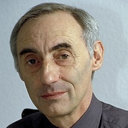 Bernard Espiau合作论文数Centre de recherche Inria Grenoble - Rhône-Alpes, National Institute for Research in Computer Science and Control8
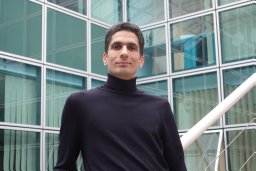 Mostafa Sadeghi合作论文数7
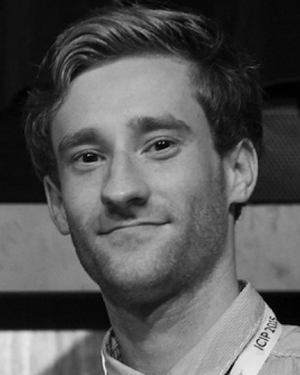 Vincent Drouard合作论文数7Seungkyu Lee合作论文数Apple7
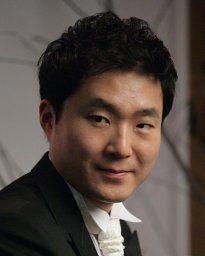 Ouk Choi合作论文数Korea Advanced Institute of Science and Technology7
 Pablo Mesejo合作论文数University of Parma7Andreas Ruf合作论文数6Soraya Arias合作论文数INRIA Grenoble Rhone Alpes, 655 Ave Europe, F-38334 Monbonnot, France6
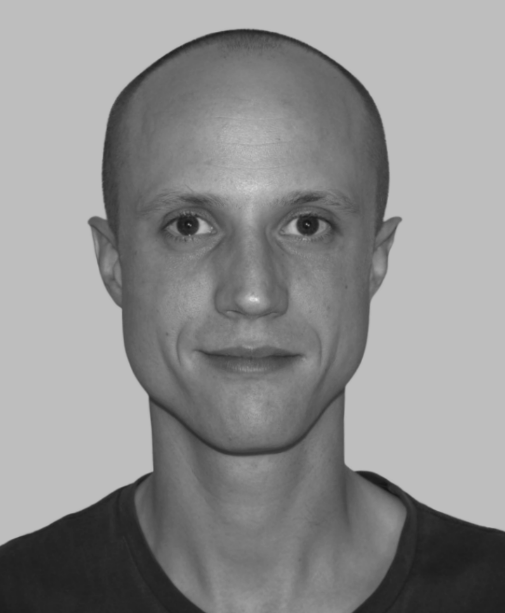 Simon Leglaive合作论文数CentraleSupélec6
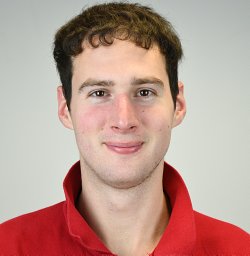 Dionyssos Kounades-Bastian合作论文数INRIA Grenoble Rhone Alpes France6David Demirdjian合作论文数MIT Computer Science and Artificial Intelligence Laboratory6
 Fabio Cuzzolin合作论文数School of Engineering, Computing and Mathematics, Faculty of Technology, Design and Environment, Oxford Brookes University6
 Nicolas Andreff合作论文数Department of Automatic Control and Micro-Mechatronic Systems, Université de Franche-Comté6Bart Lamiroy合作论文数INPL-LORIA, Ecole des Mines6
 Kaustubh Kulkarni合作论文数5
 Mâsse Benoît合作论文数Res Ctr, CHU St Justine5
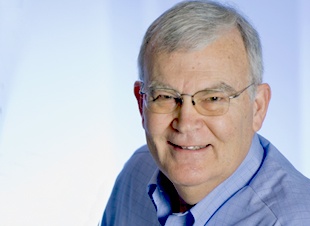 Robert C. Bolles合作论文数Artificial Intelligence Center at SRI International5




