Background Short-term (48-week) results of the OPTIONS trial showed that nucleoside reverse transcriptase inhibitors (NRTIs) can be safely omitted from salvage therapy as long as the regimen has a cumulative activity of >2 active antiretroviral medications. The long-term durability of this approach and outcomes in persons who have more-extensive HIV-1 drug resistance are uncertain. Methods Participants with virologic failure and anticipated antiretroviral susceptibility received an optimized regimen and were randomized to omit or add NRTIs. A separate group with more resistance (cumulative activity ≤2 active agents) received an optimized regimen including NRTIs. Results At week 96, among 360 participants randomized to omit or add NRTIs, 70% and 65% had HIV-1 RNA <200 copies/mL, respectively. Virologic failure was uncommon after week 48. Younger age and starting fewer new antiretroviral medications were associated with higher odds of virologic failure. In the highly resistant group, 53% had HIV-1 RNA <200 copies/mL at week 96. Conclusions HIV-1 salvage therapy can safely omit NRTIs without compromising efficacy or durability of response as long as the new regimen has a cumulative activity of >2 active drugs. Younger people and those receiving fewer new antiretrovirals require careful monitoring. Even among individuals with more-extensive resistance, most achieve virologic suppression. Clinical Trials Registration NCT00537394.
Background. Direct-acting antivirals (DAAs) targeting hepatitis C virus (HCV) have revolutionized outcomes in human immunodeficiency virus (HIV) coinfection. Methods. We examined early events in liver and plasma through A5335S, a substudy of trial A5329 (paritaprevir/ritonavir, ombitasvir, dasabuvir, with ribavirin) that enrolled chronic genotype 1a HCV-infected persons coinfected with suppressed HIV: 5 of 6 treatment-naive enrollees completed A5335S. Results. Mean baseline plasma HCV ribonucleic acid (RNA) =6.7 log(10) IU/mL and changed by -4.1 log(10) IU/mL by Day 7. In liver, laser capture microdissection was used to quantify HCV. At liver biopsy 1, mean %HCV-infected cells=25.2% (95% confidence interval [CI], 7.4%-42.9%), correlating with plasma HCV RNA (Spearman rank correlation r=0.9); at biopsy 2 (Day 7 in 4 of 5 participants), mean %HCV-infected cells=1.0% (95% CI, 0.2%-1.7%) (P<.05 for change), and DAAs were detectable in liver. Plasma C-X-C motif chemokine 10 (CXCL10) concentrations changed by mean=-160 pg/mL per day at 24 hours, but no further after Day 4. Conclusions. We conclude that HCV infection is rapidly cleared from liver with DAA leaving <2% HCV-infected hepatocytes at Day 7. We extrapolate that HCV eradication could occur in these participants by 63 days, although immune activation might persist. Single-cell longitudinal estimates of HCV clearance from liver have never been reported previously and could be applied to estimating the minimum treatment duration required for HCV infection.
BACKGROUNDCurrent guidelines for the management of hepatitis C virus (HCV) infections provide varying recommendations for the optimal treatment of acute HCV infections. There are limited data from small cohort studies to provide guidance on the best approach to treatment of this important patient population.METHODSSofosbuvir-Containing Regimens Without Interferon for Treatment of Acute HCV in HIV-1 Infected Individuals is an open-label, 2-cohort, Phase 1 clinical trial in which the second cohort assessed the safety and efficacy of 8 weeks of ledipasvir/sofosbuvir for the treatment of acute HCV infections in participants with chronic human immunodeficiency virus (HIV)-1 infections. This final analysis of the second cohort had a planned accrual of 27 participants, based on non-inferiority criteria, compared to the study-defined, historical, sustained virologic response (SVR) of 60% with pegylated-interferon/ribavirin.RESULTSWe enrolled 27 men (9 Hispanic; 11 White, non-Hispanic; 5 Black, non-Hispanic; 2 Asian or Pacific Islander; median age 46 years). Most (96%) had HCV genotype-1 infection and 59% had the favorable interleukin 28B CC genotype. The median baseline HCV RNA load was 6.17 log10 IU/mL (interquartile range 4.51 - 6.55). All participants (100%) achieved the primary outcome of a sustained virologic response 12 weeks after the date of the last dose of study treatment (90% confidence interval 90-100%), achieving non-inferiority versus the 60% historic benchmark. No treatment discontinuations occurred.CONCLUSIONSThis multicenter clinical trial, investigating 8 weeks of ledipasvir/sofosbuvir for acute HCV infections in men with HIV infections, reports a 100% SVR. This study provides the rationale for larger studies of shortened courses of direct-acting antiviral therapies in persons with HIV infections, including those with high baseline HCV RNA loads.CLINICAL TRIALS REGISTRATIONNCT02128217.
 Laura Smeaton合作论文数3
 Donald D. Anthony合作论文数2D. E. Cohen合作论文数2Jhoanna Roa合作论文数2
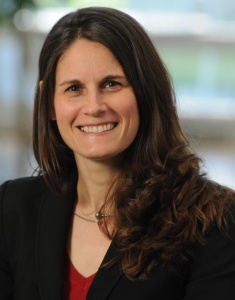 Susanna Naggie合作论文数Department of Medicine, School of Medicine, Duke University School of Medicine2
 Ashwin Balagopal合作论文数Department of Otolaryngology-Head and Neck Surgery, School of Medicine, Johns Hopkins University2
 Kristen Marks合作论文数Joan and Sanford I. Weill Department of Medicine, Weill Cornell Medicine, Cornell University2
 Daniel Fierer合作论文数2
 Marion Peters合作论文数University of California, San Francisco2
 Raymond Chung合作论文数Mass General Research Institute, Massachusetts General Hospital;Harvard Medical School2
 Diana M. Brainard合作论文数AlloVir;MPM BioImpact2
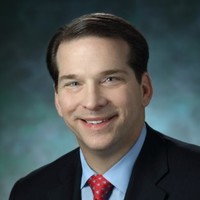 Mark Sulkowski合作论文数Division of Infectious Diseases, Johns Hopkins Bayview Medical Center;Johns Hopkins University School of Medicine2
 Michael Hughes合作论文数Department of Biostatistics, Harvard T.H. Chan School of Public Health, Harvard University;Center for Biostatistics in AIDS Research, Harvard T.H. Chan School of Public Health, Harvard University2David L. Wyles合作论文数2Jennifer J Kiser合作论文数Division of Clinical Pharmacology;Health Science Center, University of Colorado;Health Science Center, University of Colorado2
 Arthur Kim合作论文数Harvard Medical School;Mass General Research Institute, Massachusetts General Hospital2Beverly Alston-Smith合作论文数2
 John Mchutchison合作论文数Tune Therapeutics2Steve Hategekimana Rwema合作论文数1Annie Luetkemeyer合作论文数1
 Carl J. Fichtenbaum合作论文数College of Medicine, University of Cincinnati1
 T. Rajesh合作论文数Department of Electrical and Electronics Engineering, Malla Reddy Engineering College1Bhattacharya Debika合作论文数1Luetkemeyer Anne F合作论文数1
 Ritz Justin合作论文数1Venuto Charles S合作论文数1
 Joseph J. Eron合作论文数Division of Infectious Diseases, Department of Medicine, School of Medical, University of North Carolina at Chapel Hill;Center for AIDS Research, University of North Carolina at Chapel Hill1Jeffrey Quinn合作论文数Department of Medicine, Johns Hopkins University School of Medicine1Andrew H. Talal合作论文数1
 Jorge Santana合作论文数AIDS Clinical Trials Group1Gene D. Morse合作论文数1Evelyn Hogg合作论文数1
 Karen T Tashima合作论文数Division of Infectious Diseases, Brown University1
 Adriana Andrade Frich合作论文数1




