We present a photon-pair source in commercially available optical fiber that produces paired photons at telecommunication and near-infrared (NIR) wavelengths. The highly nondegenerate pairs are 700 nm apart: one in the 1500 nm E- and S-band telecommunication range and the other in the 830 nm NIR range. The high non-degeneracy means the photon pairs are far-detuned from Raman noise, resulting in a high coincidence-to-accidental ratio even while operating at room temperature. The source produces two spectrally and spatially distinct phase-matched processes with low spectral cross-talk, distinct transverse spatial modes in the NIR, and a single fundamental spatial mode in the telecommunication range. The source's room-temperature operation, off-the-shelf materials, and multiplexing potential make it promising for deployment in quantum networks.
Developing a quantum light source that carries more than one bit per photon is pivotal for expanding quantum information applications. Characterizing a high-dimensional multiple-degree-of-freedom source at the single-photon level is challenging due to the large parameter space as well as limited emission rates and detection efficiencies. Here, we characterize photon pairs generated in optical fiber in the transverse-mode and frequency degrees of freedom by applying stimulated emission in both degrees of freedom while detecting in one of them at a time. This method may be useful in the quantum state estimation and optimization of various photon-pair source platforms in which complicated correlations across multiple degrees of freedom may be present.
We simulate Λ-type quantum memory in atomic ensembles with the addition of a high-lying sensor state in the continuous dynamical decoupling regime. We find order-of-magnitudes memory lifetime enhancement and explore the dressing-field parameter space.
In the realm of quantum information processing, harnessing high-dimensional photonic systems provides a pathway to overcome limitations of traditional two-level systems. Orbital angular momentum (OAM) of light has emerged as a powerful tool for creating and manipulating high-dimensional entanglement, promising increased information capacity and enhanced security in quantum communication protocols. However, conventional methods like spontaneous parametric downconversion encounter challenges due to non-uniform production rates of Laguerre-Gaussian modes. This study explores the potential of spontaneous four-wave mixing in ring-core fibers (RCFs) as a viable platform for generating OAM photon pairs with tailored spectral and spatial properties. We show that by controlling the topological charge of pump photons, correlated, uncorrelated, and anti-correlated photon pairs can be engineered across arbitrary spectral ranges, essential for diverse quantum applications. Experimental noise characterization of the RCF-based source demonstrates a high coincidence-to-accidental ratio exceeding 4000, and a low heralded second-order correlation function (g(H)((2)) < 0.005), which confirms its operation well into the single-photon regime. This work demonstrates the potential of RCFs as a versatile platform for generating structured photon pairs, paving the way for future high-dimensional quantum communication and information processing applications. (c) 2025 Optica Publishing Group under the terms of the Optica Open Access Publishing Agreement
We propose a method to build an astronomical interferometer using continuous variable quantum teleportation to overcome the transmission loss between distant telescopes. The scheme relies on two-mode squeezed states shared by distant telescopes as entanglement resources, which are distributed using continuous variable quantum repeaters. We find the optimal measurement on the teleported states, which uses beam-splitters and photon-number-resolved detection. Compared to prior proposals relying on discrete states, our scheme has the advantages of using linear optics to implement the scheme without wasting stellar photons and making use of multiphoton events, which are regarded as noise in previous discrete schemes.
Previous work showed that thermal light with a blackbody spectrum cannot be decomposed into a mixture of independent localized pulses. However, we find that in the weak-source limit and under the assumption of a flat spectrum, the first non-vacuum term in the state expansion does form a mixture of such pulses. This decomposition is essential for quantum-enhanced astronomical interferometry, which typically operates on localized pulses even though stellar light is inherently continuous-wave. We present a quantum derivation of the van Cittert-Zernike theorem that incorporates finite bandwidth, thereby justifying the operations on localized pulses while processing continuous-wave thermal light. For general spectra in the weak-source limit, we establish a criterion under which correlations between pulses can be safely neglected. When this criterion is not met, we provide a corrected strategy that accurately accounts for both the spectral profile and the detector-defined pulse shape.
Photonic quantum memory is a crucial elementary operation in photonic quantum information processing. While many physically distinct memory protocols and hardware implementations have been applied to this task, the development of a quantum memory performant in all relevant metrics simultaneously (e.g., efficiency, bandwidth, lifetime, etc.) is still an open challenge. In this work, we focus on inhomogeneously broadened ensembles of Λ-type quantum emitters, which have long coherence lifetimes and broad bandwidth compatibility, but tend to exhibit low efficiency, in part due to technical constraints on medium growth and preparation, and in part due to inefficient use of a key resource in these systems: the inhomogeneously broadened excited state lineshape. We investigate the properties of electromagnetically induced transparency (EIT) for a survey of inhomogeneous lineshapes that are straightforward to realize experimentally, and optimize the memory efficiency for each lineshape over a large range of experimental parameters. We compare the optimal EIT efficiency to the well-known atomic frequency comb (AFC) protocol, which also relies on spectral shaping of the inhomogeneous broadening, and observe that with sufficient control field power the optimized lineshapes allow more efficient storage. Finally, we optimize over the inhomogeneous lineshape in a protocol agnostic fashion by numerically constructing the linear integral kernel describing the memory interaction and using a singular value decomposition and interpolation procedure to ensure optimality of the resulting lineshape.
We show preliminary photon-pair generation data from Raman-active interstitial N 2 defects in silicon nitride waveguides. Using calculated phase-mismatch of the propagating photons, we propose an experimental scheme for deterministic single-photon generation using non-degenerate pumping wavelengths.
We simulate N-type quantum memory in atomic ensembles with a high-lying sensor state in the regime of continuous dynamical decoupling. We find order-of-magnitude memory lifetime enhancements for realistic experimental parameters.
Non-classical features of quantum systems have the potential to strengthen the way we currently exchange information. In this paper, we explore this enhancement on the most basic level of single particles. To be more precise, we compare how well multi-party information can be transmitted to a single receiver using just one classical or quantum particle. Our approach is based on a multiple-access communication model in which messages can be encoded into a single particle that is coherently distributed across multiple spatial modes. Theoretically, we derive lower bounds on the accessible information in the quantum setting that strictly separate it from the classical scenario. This separation is found whenever there is more than one sender, and also when there is just a single sender who has a shared phase reference with the receiver. Experimentally, we demonstrate such quantum advantage in single-particle communication by implementing a multi-port interferometer with messages being encoded along the different trajectories. Specifically, we consider a two-sender communication protocol built by a three-port optical interferometer. In this scenario, the rate sum achievable with a classical particle is upper bounded by one bit, while we experimentally observe a rate sum of $1.0152\pm0.0034$ bits in the quantum setup.
We report our recent progress in the generation and verification of a transverse-mode Bell state using spontaneous four-wave mixing in a few-mode polarization-maintaining fiber. Utilizing spatial light modulators, we show control over individual four-wave mixing processes through precise beam shaping of the pump transverse mode and verify entanglement via quantum state tomography. We discuss challenges in temporal and frequency distinguishability and illustrate how they can be resolved. This work represents a first step towards creating a versatile fiber-based transverse mode-entangled photon-pair source matched to fiber infrastructure.
Optical quantum memory describes the process of on-demand storage and retrieval of single photon-level quantum states, and is a critical enabling technology for many quantum applications. Memory bandwidth plays an important role in these applications, as it determines the pulse durations compatible with the memory and places an upper bound on the clock rate and processing speed of a quantum device. Here we present experimental results of an atomic barium quantum memory that enables storage and retrieval of ultra-broadband $(> 800$ GHz) signal photons with high storage efficiency [95.6(3)%] and low noise [3.8(6) $\times 10^{-5}$ noise photons]. Experimental Results.- The quantum memory operation is based on the ground $(6s^{2}\ {}^{1}S_{0})$ , excited $(6s6p \ {}^{1}P_{1})$ , and metastable $(6s5d \ {}^{1}D_{2})$ orbital states of atomic barium in a $\Lambda$ -type configuration. The barium vapor is created in an 800–900 °C barium heat pipe oven with 0–1000 torr tunable argon buffer gas pressure. The ground-excited transition at 553.5 nm features large and tunable homogeneous collisional broadening due to the argon buffer gas and a peak optical depth of $d=50$ . The memory operates in the so-called absorb-then-transfer (ATT) regime, in which the signal field is linearly absorbed along the ground-excited transition, whose collisionally broadened lineshape enables efficient absorption of ultra-broadband photons; the resulting atomic polarization is transferred into a so-called spin wave by application of a strong $[O(10 \ \text{uJ}),100\ \text{fs}]$ control pulse along the excited-metastable transition at 1500 nm. The storage state has a 0(0.1) second coherence lifetime in the bare atom [1], but this is reduced to the $O(\text{ns})$ level due to motional dephasing [0.49(1) ns measured memory lifetime]. The memory experiment is repeated at a repetition rate of 1 kHz. The total end-to-end efficiency of the memory at 900°C is 31(1)%, which is limited by available control field power.
We measure 95.6±0.3% storage efficiency of ultrafast photons in a collisionally broadened barium vapor quantum memory. We measure 31±1% total efficiency, limited by control field power, and a 0.515(6) ns lifetime, limited by motional dephasing.
We present a demonstration of simultaneous high-efficiency, high-speed, and low-noise operation of a photonic quantum memory. By leveraging controllable collisional dephasing in a neutral barium atomic vapor, we demonstrate a significant improvement in memory efficiency and bandwidth over existing techniques. We achieve greater than 95% storage efficiency and 26% total efficiency of 880 GHz bandwidth photons, with $\mathcal{O}(10^{-5})$ noise photons per retrieved pulse. These ultrabroad bandwidths enable rapid quantum information processing and contribute to the development of practical quantum memories with potential applications in quantum communication, computation, and networking.
We demonstrate the generation of photon pairs at ~780 and ~1550 nm with a coincidence-to-accidental ratio of ~3200 via spontaneous intermodal four wave mixing mediated by a ring-core fiber stably guiding orbital angular momentum modes.
The purpose of this tutorial paper is to present a broad overview of photon-pair generation through the spontaneous four wave mixing (SFWM) process in optical fibers. Progress in optical fiber technology means that today we have at our disposal a wide variety of types of fiber, which together with the fact that SFWM uses two pump fields, implies a truly remarkable versatility in the resulting possible photon-pair properties. We discuss how the interplay of the frequency, transverse mode, and polarization degrees of freedom, the first linked to the latter two through fiber dispersion, leads to interesting entanglement properties both in individual degrees of freedom and also permitting hybrid and hyper entanglement in combinations of degrees of freedom. This tutorial covers methods for photon pair factorability, frequency tunability, and SFWM bandwidth control, the effect of frequency non-degenerate and counter-propagating pumps, as well methods for characterizing photon pairs generated in optical fibers.
We demonstrate quantum memory of single-photon-level coherent pulses of 880 GHz bandwidth with 95.6(3)% storage efficiency in collisionally broadened barium vapor. We measure 26(1)% total efficiency, limited by control field power; 0.49(1) ns memory lifetime, limited by motional dephasing; and a signal-to-noise ratio of ${O}(10^{3})$, limited by two-photon control field scattering. To the best of the authors’ knowledge, this represents the best efficiency, lifetime, and noise performance of atomic quantum memories in the ultrabroadband regime $(\gt100$ GHz bandwidth) to date.
 Kai Shinbrough合作论文数28Bin Fang合作论文数Dept. of Phys. & Astron., Univ. of Delaware;c;Dept. of Phys. & Astron., Univ. of Delaware25
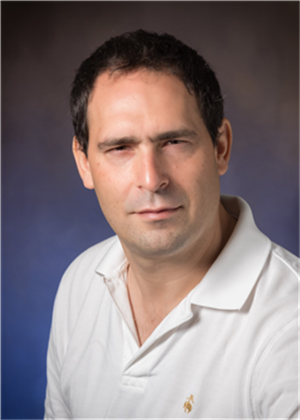 Offir Cohen合作论文数Department of Physics, The Grainger College of Engineering, University of Illinois at Urbana-Champaign18Yujie Zhang合作论文数Illinois Quantum Informat Sci & Technol Ctr IQUIS, Univ Illinois17
 Steven Cundiff合作论文数Department of Physics, University of Michigan10
 Benjamin M. Hunt合作论文数Department of Physics, Mellon College of Science, Carnegie Mellon University9Kathleen Oolman合作论文数8
 Karina Garay Palmett合作论文数Centro de Investigación Científica y de Educación Superior de Ensenada, Baja California8
 Alfred U'Ren合作论文数Instituto de Ciencias Nucleares, Universidad Nacional Autonoma de Mexico8Dong Beom Kim合作论文数Department of Physics, University of Illinois at Urbana-Champaign7Tegan Loveridge合作论文数6
 Yanting Teng合作论文数Dept Phys, Harvard Univ6Sehyun Park合作论文数Department of Physics and Astronomy, Rice University6
 J. Gary Eden合作论文数Department of Electrical and Computer Engineering, The Grainger College of Engineering, University of Illinois at Urbana-Champaign6
 J.E. Sipe合作论文数Department of Physics, University of Toronto5
 Marco Liscidini合作论文数Department of Physics, University of Pavia;Xanadu Quantum Technologies Inc5Yunkai Wang合作论文数Dept Phys, Univ Illinois4Xiao Liu (哮 柳)合作论文数Boston Univ4
 Eric Chitambar合作论文数Department of Electrical and Computer Engineering, The Grainger College of Engineering, University of Illinois at Urbana-Champaign4
 Siddharth Ramachandran合作论文数Department of Electrical and Computer Engineering, College of Engineering, Boston University4Moreno Jamy B合作论文数4
 John Q. Xiao (肖强)合作论文数Department of Physics and Astronomy, College of Arts and Sciences, University of Delaware4Ryan Spiniolas合作论文数3Halise Celik合作论文数Dept Phys & Astron, Univ Delaware3
 Wei Zhuang (庄巍)合作论文数Fujian Institute of Research on the Structure of Matter, Chinese Academy of Sciences3
 Tao Wang (王涛)合作论文数School of Physical Science and Technology Lanzhou University3
 Seth Meiselman合作论文数Dept. of Phys. & Astron., Univ. of Delaware;c3
 Paul G Kwiat合作论文数Department of Physics, The Grainger College of Engineering, University of Illinois Urbana-Champaign3
 Shaul Mukamel合作论文数Department of Chemistry, School of Physical Sciences, University of California, Irvine3K. Surmacz合作论文数2David Diaz合作论文数2X. Hu合作论文数2
 Rodrigo Araiza Bravo合作论文数Dept Phys, Harvard Univ2
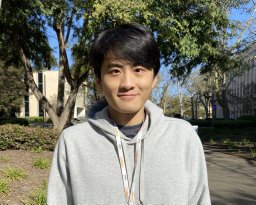 Xinan Chen合作论文数Dept Elect & Comp Engn, Univ Illinois2
 Harsha Kannan合作论文数Dept Phys & Astron, Univ Delaware2
 Daniel Ralph合作论文数Department of Physics, College of Arts & Sciences, Cornell University2Kevin C Lee合作论文数2
 Ian Walmsley合作论文数Oxford Quantum Institute, University of Oxford;Department of Physics, University of Oxford;Faculty of Natural Sciences, Imperial College London2Mellnik A R合作论文数Cornell University2
 Xin Fan (樊鑫)合作论文数International School of Information Science and Engineering, Dalian University of Technology - Ritsumeikan University2Benjamin J. Sussman合作论文数Molecular Photonics;Steacie Institute for Molecular Sciences;National Research Council of Canada;National Research Council of Canada, Steacie Institute for Molecular Sciences2
 Matthew Decamp合作论文数2
 P. Olivero合作论文数2
 Steven Prawer合作论文数Division of Science, The University of Melbourne2
 Dieter Jaksch合作论文数Institute for Quantum Physics, Department of Physics, Universität Hamburg;Keble College, University of Oxford2F. C. Waldermann合作论文数2
 Matthew F. Doty合作论文数Naval Research Laboratory2
 Joshua Nunn合作论文数ORCA Computing Ltd2




