Objectives Multidisciplinary team (MDT) meetings are key to delivering cancer care. Increasing caseload and limited resources make them less effective and unsustainable. The aim of this quality improvement project was to assess novel artificial intelligence-based clinical decision support (CDS) technology to develop and validate standard of care (SoC) to streamline the breast MDT meetings in a tertiary cancer centre.Methods A clinical governance group of the MDT approved international guidelines used to develop SoC. Deontics CDS was assessed for its suitability to apply the SoC pathway for benign and malignant breast disease with the exclusion of metastatic and recurrent cancer.Results Patients discussed over the preceding 16 months were added to the platform in cohorts of 50 women: two consisting of 50 women each diagnosed with benign disease (benign A and B: n=100) and three consisting of 50 women each diagnosed with malignant disease (cancer A, B and C: n=150). Concordance between the blinded MDT decision outcomes and SoC recommendations was analysed. This stepwise approach identified knowledge gaps in SoC and refined the CDS. Concordance improved from 82% to 100% in benign and from 94% to 100% in malignant cases.Discussion A sequential process of validating the SoC with data derived from the development of evidence-based SoC protocols based on international guidelines resulted in a final 100% concordance rate between the platform and MDT recommendations for both benign and malignant disease.Conclusions CDS technology could be a milestone in using SoC to deliver a sustainable clinical decision pathway.
OBJECTIVES:To evaluate the effectiveness of a rules-based artificial intelligence (AI) clinical decision support system (CDSS) called the PROState AI Cancer-Decision Support (PROSAIC-DS) in streamlining the prostate cancer multidisciplinary team (MDT) pathway by identifying patients meeting standard of care (SoC) guidelines for reduced discussion in MDT meetings. SUBJECTS/PATIENTS AND METHODS:This study consisted of two phases. Phase one involved a retrospective concordance analysis of 287 patients referred to the prostate MDT at King's College Hospital over a 2-year period. In phase two, a prospective analysis included 416 patients from Guy's Hospital over another 2-year period. Clinical treatment recommendations were independently reviewed by a panel of urologists and oncologists to establish a 'ground truth.' Concordance between the medical recommendations and those generated by the PROSAIC-DS was assessed. RESULTS:In phase one, the overall concordance between the clinicians' recommendations and the PROSAIC-DS was 92% (95% confidence interval [CI] 88.1-94.7%), compared to just 53% (95% CI 47-59%) with historic MDT outputs (P < 0.01). In phase two, the PROSAIC-DS achieved an 85.6% concordance (95% CI 81.6-88.9%) with the MDT recommendations for 355 evaluable cases (P < 0.01). Notably, using a machine learning-derived decision tree enabled the identification of 93 patients for streamlined management, demonstrating a 97.8% concordance in this subgroup (P < 0.01). CONCLUSION:The implementation of the PROSAIC-DS into the prostate cancer MDT pathway allowed 33.8% of patients to bypass MDT discussions with high treatment concordance. This study showcases the potential for AI-based solutions to improve clinical workflow and patient management in oncology, thus addressing the workload challenges faced by MDTs.
Background and Aim: Machine learning enabled clinical decision support systems offer the potential to enhance the efficiency of decision-making processes in breast cancer multidisciplinary team meetings. We examine the circumstances where a traditional rule-based expert system may have advantages over machine learning enabled clinical decision support systems. Methods: We compared the concordance of an expert system (Deontics) and a machine learning enabled clinical decision support system (Watson for Oncology) with the treatment recommendations of a gold standard consensus panel of breast surgeons and medical oncologists for 208 non-metastatic breast cancer patients, and for 165 patients deemed eligible for triage to an agreed standard of care, and ‘not for discussion at multidisciplinary team meeting’. Results: The overall concordance between the Deontics clinical decision support system treatment plan recommendations and the gold standard consensus panel was 98% compared to 92% for the machine learning enabled clinical decision support system. Using a clinical decision tree, 79% of patients were eligible for triage to a standard of care and ‘not for discussion at multidisciplinary team meetings’; for these patients the concordance between the Deontics clinical decision support system and gold standard consensus panel was 98.8% (95% CI: 95.6-99.8%), whilst for the machine learning enabled clinical decision support system concordance was 78.8% (95% CI: 71.7-84.8%). Conclusion: The high level of agreement between the Deontics clinical decision support system and clinical consensus suggests it may be acceptable for use in the breast multidisciplinary team pathway, whereas the level of disagreement observed for the machine learning enabled clinical decision support system would result in a clinically unsafe error rate if used to triage patients away from the multidisciplinary team meetings. These findings, if replicated in prospective studies in a routine clinical setting, could improve the efficiency of UK breast cancer diagnostic and treatment pathways.
Clinicians seeking guidance for evaluating and managing thyroid nodules currently have several resources. The principal ones are narrative clinical guidelines and clinical risk calculators. This paper will review the strengths and weaknesses of both. The paper will introduce a concept of computer interpretable guideline, a novel way of transforming narrative guidelines in to a clinical decision support tool that can provide patient specific recommendations at the point of care. The paper then describes an experience of developing an interactive web based computer interpretable guideline for thyroid nodule management, called Thyroid Nodule Management App (TNAPP). The advantages of this approach and the potential barriers for widespread adaptation are discussed.
EDITORIAL article Front. Endocrinol., 05 September 2023Sec. Thyroid Endocrinology Volume 14 - 2023 | https://doi.org/10.3389/fendo.2023.1276323
Abstract Background Multidisciplinary teams (MDT/tumour boards) were first introduced in the 1990s and have experienced little change to their methodology since. Universally used for the treatment of prostate cancer (CaP) in the UK new interventions are proposed to improve MDT efficiency and patient outcomes. Clinical practice guidelines (CPGs), designed to increase the uptake of evidence-based practice, suffer from lack of proper implementation. There is increasing evidence to suggest a gap between CPGs and actual treatment and the use of artificial intelligence an (AI) systems can help to increase the efficiency of the MDT. Methods We evaluated differences in MDT concordance with guidelines in the primary treatment of localised or locally advanced prostate cancer using the Deontics AI based custom clinical decision support software (CDSS) software. 59 paper cases were created by an expert clinician, 9 of which were excluded as they did not meet eligibility criteria. The remaining 50 cases were provided to the CDSS for evaluation. Simultaneously, two physicians assessed each patient case and provided their treatment recommendations. The results were assessed for concordance with UK, European and American guidelines, inter-rater reliability and trends in concordance based on patient variables.Results Overall clinician concordance with guidelines was 76%, while total concordance with all three guidelines was 28%. Overall concordance was highest with NICE guidelines, while total concordance was highest for NCCN guidelines. Inter-rater reliability was highest for the NCCN guidelines. Age < 75 (p <0.001; odds ratio [OR], 35.000), prostate volume < 46.5ml (p =0.047; OR, 4.909), and a Gleason score ≠ 8 (p =0.013; OR, 12.333), were all significantly associated with increased guideline concordance in this study. Conclusions Concordance with CPGs needs to be improved in specific patient groups. This may reflect cognitive bias, cognitive overload, or conflicting guideline recommendations and evidence base. One potential solution may be the integration of CDSS technology into the MDT setting. Citation Format: Vishal Santis, Deborah Enting, Vivek Patkar, Anastasia Chalkidou, John Fox, Danny Ruta, Jonathan K. Makanjuola. The PROState AI Cancer–Decision Support (PROSAIC-DS) pilot study: Clinical decision support technology and its role in prostate cancer MDT meetings [abstract]. In: Proceedings of the AACR Virtual Special Conference on Artificial Intelligence, Diagnosis, and Imaging; 2021 Jan 13-14. Philadelphia (PA): AACR; Clin Cancer Res 2021;27(5_Suppl):Abstract nr PO-095.
OBJECTIVE The first edition of the American Association of Clinical Endocrinology/American College of Endocrinology/Associazione Medici Endocrinologi Guidelines for the Diagnosis and Management of Thyroid Nodules was published in 2006 and updated in 2010 and 2016. The American Association of Clinical Endocrinology/American College of Endocrinology/Associazione Medici Endocrinologi multidisciplinary thyroid nodules task force was charged with developing a novel interactive electronic algorithmic tool to evaluate thyroid nodules. METHODS The Thyroid Nodule App (termed TNAPP) was based on the updated 2016 clinical practice guideline recommendations while incorporating recent scientific evidence and avoiding unnecessary diagnostic procedures and surgical overtreatment. This manuscript describes the algorithmic tool development, its data requirements, and its basis for decision making. It provides links to the web-based algorithmic tool and a tutorial. RESULTS TNAPP and TI-RADS were cross-checked on 95 thyroid nodules with histology-proven diagnoses. CONCLUSION TNAPP is a novel interactive web-based tool that uses clinical, imaging, cytologic, and molecular marker data to guide clinical decision making to evaluate and manage thyroid nodules. It may be used as a heuristic tool for evaluating and managing patients with thyroid nodules. It can be adapted to create registries for solo practices, large multispecialty delivery systems, regional and national databases, and research consortiums. Prospective studies are underway to validate TNAPP to determine how it compares with other ultrasound-based classification systems and whether it can improve the care of patients with clinically significant thyroid nodules while reducing the substantial burden incurred by those who do not benefit from further evaluation and treatment.
OBJECTIVE:Clinical practice guidelines (CPGs) could have a more consistent and meaningful impact on clinician behavior if they were delivered as electronic algorithms that provide patient-specific advice during patient-physician encounters. We developed a computer-interpretable algorithm for U.S. and European users for the purpose of diagnosis and management of thyroid nodules that is based on the "AACE, AME, ETA Medical Guidelines for Clinical Practice for the Diagnosis and Management of Thyroid Nodules," a narrative, evidence-based CPG.METHODS:We initially employed the guideline-modeling language GuideLine Interchange Format, version 3, known as GLIF3, which emphasizes the organization of a care algorithm into a flowchart. The flowchart specified the sequence of tasks required to evaluate a patient with a thyroid nodule. PROforma, a second guideline-modeling language, was then employed to work with data that are not necessarily obtained in a rigid flowchart sequence. Tallis-a user-friendly web-based "enactment tool"- was then used as the "execution engine" (computer program). This tool records and displays tasks that are done and prompts users to perform the next indicated steps. The development process was iteratively performed by clinical experts and knowledge engineers.RESULTS:We developed an interactive web-based electronic algorithm that is based on a narrative CPG. This algorithm can be used in a variety of regions, countries, and resource-specific settings.CONCLUSION:Electronic guidelines provide patient-specific decision support that could standardize care and potentially improve the quality of care. The "demonstrator" electronic thyroid nodule guideline that we describe in this report is available at http://demos.deontics.com/trace-review-app (username: reviewer; password: tnodule1). The demonstrator must be more extensively "trialed" before it is recommended for routine use.
Endocrine Practice © 2013 1 ENDOCRINE PRACTICE Rapid Electronic Article in Press Rapid Electronic Articles in Press are preprinted manuscripts that have been reviewed and accepted for publication, but have yet to be edited, typeset and finalized. This version of the manuscript will be replaced with the final, published version after it has been published in the print edition of the journal. The final, published version may differ from this proof. DOI:10.4158/EP13271.OR © 2013 AACE.
Introduction: The cancer multidisciplinary team (MDT) meeting is regarded as the best platform to reduce unwarranted variation in cancer care through evidence-compliant management. However, MDT meetings are often overburdened with many different agendas, and hence struggle to achieve their full potential.
Objectives: The cancer multidisciplinary team (MDT) meeting (MDM) is regarded as the best platform to reduce unwarranted variation in cancer care through evidence-compliant management. However, MDMs are often overburdened with many different agendas and hence struggle to achieve their full potential. The authors developed an interactive clinical decision support system called MATE (Multidisciplinary meeting Assistant and Treatment sElector) to facilitate explicit evidence-based decision making in the breast MDMs.Design: Audit study and a questionnaire survey.Setting: Breast multidisciplinary unit in a large secondary care teaching hospital.Participants: All members of the breast MDT at the Royal Free Hospital, London, were consulted during the process of MATE development and implementation. The emphasis was on acknowledging the clinical needs and practical constraints of the MDT and fitting the system around the team's workflow rather than the other way around. Delegates, who attended MATE workshop at the England Cancer Networks' Development Programme conference in March 2010, participated in the questionnaire survey.Outcome measures: The measures included evidence-compliant care, measured by adherence to clinical practice guidelines, and promoting research, measured by the patient identification rate for ongoing clinical trials.Results: MATE identified 61% more patients who were potentially eligible for recruitment into clinical trials than the MDT, and MATE recommendations demonstrated better concordance with clinical practice guideline than MDT recommendations (97% of MATE vs 93.2% of MDT; N-984). MATE is in routine use in breast MDMs at the Royal Free Hospital, London, and wider evaluations are being considered.Conclusions: Sophisticated decision support systems can enhance the conduct of MDMs in a way that is acceptable to and valued by the clinical team. Further rigorous evaluations are required to examine cost-effectiveness and measure the impact on patient outcomes. The decision support technology used in MATE is generic and if found useful can be applied across medicine.
To facilitate access to relevant documents and information has been the core of the library and information science (LIS) profession. In this regard tools like classification, cataloguing, and indexing formed the basis of library practice for a long time. These served particularly well for the material that was predominantly in the print form and required physical location for storage. New information sources, however, in contrast are increasingly in the electronic or digital form and stored on medium like computer hard disks requiring completely different strategy for access and management. Extension of the traditional bibliographic control tools as well as construction of new tools has therefore become pertinent. Ontology is one of the latest tools in this context. The paper discusses progress of information organising tools culminating in ontology, highlights the commonality of the concept of ontology and its applications among the fields of philosophy, computer science and LIS. It also discusses the select features of ontology development in practice and directions for features of ontology development in practice and directions for further work.
Multidisciplinary team (MDT) model in cancer care was introduced and endorsed to ensure that care delivery is consistent with the best available evidence. Over the last few years, regularMDT meetings have become a standard practice in oncology and gained the status of the key decision-making forumfor patient management. Despite the fact that cancer MDTmeetings are well accepted by clinicians, concerns are raised over the paucity of good-quality evidence on their overall impact. There are also concerns over lack of the appropriate support for this important but overburdened decision-making platform. The growing acceptance by clinical community of the health information technology in recent years has created new opportunities and possibilities of using advanced clinical decision support (CDS) systems to realise full potential of cancer MDT meetings. In this paper, we present targeted summary of the available evidence on the impact of cancer MDT meetings, discuss the reported challenges, and explore the role that a CDS technology could play in addressing some of these challenges.
The authors studied the reaction between H2 and F2, which is highly exothermic in nature, experimentally and computationally. The reaction was carried out in a tubular reactor. Flow rates of H2 and the N2-F2 mixture were varied and the authors report the results in terms of temperature, velocity, and concentration at different locations of the reactor. Numerical simulations were carried out and the temperature profiles predicted by these simulations are compared with the experimental ones. A good match is observed between the two. It has been seen that the reaction temperature is different from what is reported by Wilson et al. (1951), when fluorine is premixed with inert gas like nitrogen. It is also observed that the flame due to the reaction between hydrogen and fluorine is formed in front of the fluorine feed nozzle. The investigation results are useful for the process design of an H2-F2 reactor.
The exothermicity of the reaction between hydrogen and fluorine can be used for chemical processing, or in generation of HF based chemical laser, where higher temperatures are required. The ratio of H(2) to F(2) flow and the flow rate of nitrogen affect the reactor temperatures. The authors report their experimental and computational study on the effect of excess hydrogen and nitrogen flow on reactor temperatures in a tubular reactor. The experiments have been performed over a wide range of flow ratios to generate reliable data for reactor scale-up. The computational studies predict the temperature, velocity, and species concentration at different locations of the reactor. The temperature predictions show a good match with the experimental findings. This study may be helpful in designing a large scale H(2)-F(2) flame reactor.
Abstract A paradox of clinical oncology is that while chemotherapy (CT) or radiotherapy (RT) can induce dramatic tumor responses, they do not translate into commensurate improvements in patient survival. To address this paradox, we have proposed a hypothesis that posits that apoptotic genetic material released from tumor cells into the circulation can enter healthy cells at distant sites to induce oncogenic transformation that masquerade as metastasis (Nature Clinical Practice Oncology 2007;4:203). Implicit in this hypothesis is the suggestion that CT and RT, by inducing tumor cell apoptosis, may encourage dissemination of cancer by a process of “remote de novo oncogenesis”. To test this hypothesis, we purified circulating chromatin fragments (PCFs) from sera of 40 cancer patients, both before and after CT or RT, and from 40 age and sex matched healthy donors, and added them to cells in culture. PCFs from all samples tested readily entered the recipients and triggered a DNA damage response (DDR) evidenced by the activation of H2AX and proteins of DDR and apoptotic pathways, namely, ataxia telangiectasia mutated (ATM), ataxia telangiectasia and Rad3 related (ATR), p53 and Caspase3. The DDR induced the integration of the incoming PCFs into the mouse cell genomes, and some of the genes contained within the PCFs were found to be expressed as human proteins. The extent of DDR induction by PCFs from the various samples followed the order: post- CT/RT > pre- CT/RT > healthy donors. When diverse cell types of human and mouse origin were exposed to PCFs, DDR was activated in all of them indicating that this activation was not cell-type specific but was universal in nature. When injected into mice, PCFs got stably integrated into the genomes of cells of their vital organs. Cultured cells exposed to PCFs showed numerous chromosomal aberrations as well as numerical increase and amplification of centrosomes within 48 hours, indicating an early onset of chromosomal instability. The treated cells exhibited a sequence of morphological changes within a span of 6 days that included: cell cycle arrest increase in cell size apoptosis senescence. By day 8, rapidly dividing resurgent cells with altered morphologies, some of which were apparently oncogenically transformed, arose to surround the senescent cells and ultimately to fill the dish. In contrast to PCFs, DNA purified from PCFs, or directly from serum, had no biological activity. When PCF-treated cells were injected into immuno-deficient mice, tumors developed in 26 % of the injected animals. Our results clearly identify circulating chromatin fragments as novel DNA damaging agents that are capable of entering and integrating into healthy cell genomes to induce chromosomal instability and malignant transformation. These novel findings provide strong support for our proposal for a mechanism of metastasis that implicates a process of “remote de novo oncogenesis.” Citation Format: {Authors}. {Abstract title} [abstract]. In: Proceedings of the 101st Annual Meeting of the American Association for Cancer Research; 2010 Apr 17-21; Washington, DC. Philadelphia (PA): AACR; Cancer Res 2010;70(8 Suppl):Abstract nr LB-103.
The volume and complexity of knowledge produced by medical research calls for the development of technology for automated management and analysis of such knowledge. In this paper, we identify scenarios where a researcher or a clinician may wish to use automated systems for analysing knowledge from clinical trials. For this, we propose a language for encoding, capturing and synthesising knowledge from clinical trials and a framework that allows the construction of arguments from such knowledge. We develop this framework and demonstrate its use on a case study regarding chemotherapy regimens for ovarian cancer.
Crown Copyright 2010 Published by Elsevier Inc. All rights reserved.
Mixing of gases using jets in cross-flow is investigated with the help of Computational Fluid Dynamics (CFD) modeling. This is particularly encountered in hydrocarbon oxidation reactions. A mixture of such gaseous reactants results in the flammable zones inside the mixer. In the present work, CFD simulations have been carried out for various jet angles (30°, 45° downstream, 90° and 45° upstream) and for different orifice shapes (defined in terms of aspect ratio, AR). The model has been validated with experimental data reported in the past literature. Results have been analyzed in terms of volume of mixing region and turbulent viscosity. Also, the characteristics mixing time is calculated for different conditions.
Cancer Multidisciplinary Meeting (MDM) is a widely endorsed mechanism for ensuring high quality evidence-based health care. However, there are shortcomings that could ultimately result in unintended patient harm. On the other hand; clinical guidelines and clinical decision support systems (DSS) have been shown to improve decision-making in various measures. Nevertheless, their clinical use requires seamlessly interoperation with the existing electronic health record (EHR) platform to avoid the detrimental effects that duplication of data and work has in the quality of care. The aim of this work is to propose a, computational framework to provide a clinical guideline-based DSS for breast cancer MDM. We discuss a range of design and implementation issues related to knowledge representation and clinical service delivery of the system; and propose a service oriented architecture based on the HL7 EHR functional model. The main result is the DSS named MATE (Multidisciplinary Assistant and Treatment sElector), which demonstrates that decision support can be effectively deployed in a real clinical setting and suggest; that the technology could be generalised to other cancer MDMs.
 John Fox合作论文数20
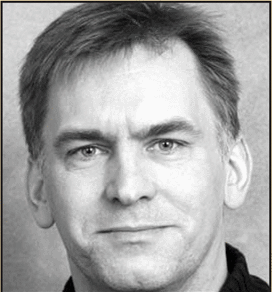 David W. Glasspool合作论文数11
 Dionisio Acosta Mena合作论文数Institute of Health Informatics, University College London5Richard G. Thomson合作论文数Medical School, Newcastle University5
 Jeffrey Garber合作论文数5
 Matthew South合作论文数Wellcome Centre for Integrative Neuroimaging, Medical Sciences Division, University of Oxford5
 Ashwin W. Patwardhan合作论文数Department of Chemical Engineering, Institute of Chemical Technology5
 Ioannis Chronakis合作论文数4Alison Jones合作论文数4
 John Fox合作论文数Deontics Ltd.;Department of Engineering Science, University of Oxford;Institute of Digital Healthcare, Warwick University4
 Enrico Papini合作论文数Department of Endocrine and Metabolic Diseases, Ospedale Regina Apostolorum;“La Sapienza” University of Rome4
 Sanjay Modgil合作论文数Department of Informatics, King's College London;Department of Philosophy, University of Milan4
 Elizabeth Black合作论文数Department of Informatics, King's College London4Tim Davidson合作论文数3
 Ralf Paschke合作论文数Department of Endocrinology & Metabolism, University of Calgary;Department of Biochemistry & Molecular Biology, Cumming School of Medicine, University of Calgary3
 Mor Peleg合作论文数Department of Information Systems, University of Haifa3Laszlo Hegedus合作论文数3Hossein Gharib合作论文数3
 Danny Ruta合作论文数Inst Hlth & Soc, Newcastle Univ3
 Dave Robertson合作论文数School of Informatics,University of Edinburgh3
 Smita Chandra合作论文数3Tony Rose合作论文数3Mo Keshtgar合作论文数2A. K. Tiwari合作论文数2c prasad合作论文数2L. M. Gantayet合作论文数2
 Deborah Enting合作论文数2
 Roberto Valcavi合作论文数2
 Matthew Williams合作论文数2
 Matthew J. Williams合作论文数Soft Matter Syst Res Grp, Univ Georgia2Nassar Svetlana合作论文数2Liz Black合作论文数2Paolo Besana合作论文数Pegaso Ingegneria2Daniel S. Duick合作论文数2
 Andrea Frasoldati合作论文数Arcispedale Santa Maria Nuova Endocrinology Unit2Ayelet Oettinger合作论文数2
 Manoj T. Kandakure合作论文数2Jason L. Gaglia合作论文数2Mohammed Keshtgar合作论文数2Rory Steele合作论文数2
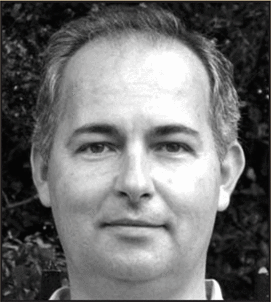 Dan Grecu合作论文数Advanced Computation Lab UK, Cancer Research UK2H.Z. Fani合作论文数1Richard H. J. Begent合作论文数1Urmila C. Samant合作论文数1Vishal Santis合作论文数1
 Ashley Jones合作论文数Dept Psychol, St Jude Childrens Res Hosp1D. Acosta合作论文数1mansoor ali合作论文数1Elias Pintus合作论文数1




