This review paper gives an overview progress and problems of communications at a data rate of about 100 Gbit/s. The problem of increasing wireless data rate is priority for many research centers. It is proved that the frequency of about 300 GHz is most suitable to increase the data rate. In the last part of the paper, an overview of the state-of-the-art in technology development and successful demonstrations of data transmission and semiconductor devices with TGz-range cutoff frequency will be given.
У статті проведено числові експерименти по генерації електромагнітних коливань за допомогою діодів Ганна на основі варізонних з'єднання AlGaInAs, оптимізовані параметри і отримані вихідні характеристики діодів
Представлені результати дослідження невідомого раніше ефекту аномально великого поглинання випромінювання при взаємодії електромагнітної хвилі з дуже тонким металевим циліндром.
Monoslab HNb 3 O 8 supported on MgO was obtained; the changes of the structure of HNb 3 O 8 after exfoliation and after aniline adsorption were detected.
A new method has been developed for the synthesis of finely dispersed, highly active, supported hydrodesulfurization catalysts based on Chevrel phases. It is hypothesized that the modification of MoS2 with cobalt or nickel, which enhances the catalytic activity, and the same modification of Chevrel-type systems are of the same nature. The modifiers act through electron density donation into the conduction band of the active component. The increase in catalytic activity is due to the decrease of the effective charge of the molybdenum ion. The catalysts undergo partial restructuring during the reaction.
Nickel-doped alkali halide microcrystals were obtained by various methods, including an original synthetic procedure. Their spectral and structural characteristics were investigated. The crystal field strength was calculated from the reflection spectra recorded for the microcrystals for different impurity concentrations. In contrast to single crystals, higher impurity concentrations can be obtained for lower degrees of aggregation in microcrystals.
The structure distortions of the bend type are shown to be a reason of the lower coordination numbers for the MoS2 based catalysts for hydrodesulfurization.
New results concerning the change in polarized XANES spectra and the white line for vertical rotation of 1T-TaS2 monocrystal were obtained. This change results from to the presence of charge density wave superstructure in 1T-TaS2.
XANES data for 1T- and 2H-TaS2 were obtained for LIII and LIITa edges. The changes of the electron density in that were determined after pyridine intercalation.
Two polytypes (2H- and 1T-) of TaS2 have been investigated by extended X-ray absorption fine structure (EXAFS) spectroscopy. The EXAFS data were in good agreement with the trigonal-prizmatic coordination of Ta in 2H-TaS2. For 1T-TaS2, a lattice distortion of Ta local surrounding was observed, attributed to charge density waves (CDW). In order to fit the EXAFS data, a new model of the CDW cluster has been suggested which includes both the Ta and S atoms' displacements.
The local structure of high dispersive MoS2 with an average size of about 30 Å has been studied using EXAFS spectra measured at the MoK edge. The sample with the general formula MoS2+x was sintered by means of high temperature decomposition of MoS3. Coordination numbers for the first shell MoS (4.2) and the second shell MoMo (2.8) less than one could be expected for small size particles. However, interatomic distances and Debye-Waller factors are the same as for the MoS2 polycrystalline sample. It is commonly considered that a decreased of the coordination numbers is due to sulfur nonstoichiometry in MoS2Al2O3 catalysts. However, nonstoichiometry is absent in our sample. A possible reason for the decrease of the coordination numbers in this case may be the distortion of the outer layer of the particle, such that interatomic distances in this layer are not observed by EXAFS due to large Debye-Waller factors.
Alkylperoxo complexes of the Co(acac)2(OOR)B family (acac is acetylacetonato ligand; R=PhMe2C; B=Py, Py-d, or 3-Br-Py) were isolated and their role in the oxidation of cyclohexane with ROOH was studied.From H-1 and Co-59 NMR data obtained in benzene solutions containing Co(acac)2 + ROOH + B, cobalt exists at 20-degrees-C mainly as the Co(acac)2(OOR)B species. In benzene solutions of Co (acac) 2 + ROOH that containing no B, cobalt exists mainly as three complexes of the Co(x)(acac)(y)(OH)(z) family.Similar yields were found for various products of cyclohexane oxidation in benzene: cyclohexane = 1:1 solutions of Co(acac)2 + ROOH + B, where alkylperoxo complexes of Co(III) prevail, and of Co(acac)2 + ROOH, where alkylperoxo complexes were not detected. This suggests that the key intermediates of cyclohexane oxidation with the Co(acac)2 + ROOH and Co(acac)2 + ROOH + B are the same. Most probably, they are the free radicals RO2. and RO.. Tbe role of the cobalt catalyst consists in the generation of these radicals. The formation of alkylperoxo complexes in the presence of B inhibits rather than promotes the oxidation, due to the capture of active radicals RO2..
Vanadium complexes formed from VO (acac)2 as the starting material for the catalysts have been characterized in situ with 51V and 1H NMR and EPR in the course of three types of catalytic reactions: (1) decomposition of cumene and tert-butyl hydroperoxides in C6D6, (2) epoxidation of cyclohexene in C6D6:cyclohexene=1:1 mixture and (3) oxidation of cyclohexane in C6D6: cyclohexane = 1:1 mixture. In the course of all three reactions VO (acac)2 transforms initially into the alkylperoxo complex VO(acac)2OOR and the alkoxo complex VO(acac)2OR, which further decompose to produce VO (OR)3 and two other vanadium (V) species: an alkylperoxo complex I and an alkoxo complex II. VO (acac)2OOR reacts with cyclohexene to form VO (acac)2OR and cyclohexene oxide. I reacts with cyclohexene to form II and cyclohexene oxide and with ROH to form II and VO(OR)3. II does not react with cyclohexene but reacts with ROOH to form I. No acetylacetonate ligands have been detected in I or II with 1H NMR. I is suggested to be the key species that permits cyclohexene epoxidation with ROOH under steady-state conditions. No complexes of I with cyclohexene are observed with 51V NMR. I does not react directly with cyclohexane, but through the equilibrium VvO(OOR) ⇌ VIVO+RO2· produces free radical RO2· that initiates oxidation of cyclohexane.
In experiments where a palladium giant cluster of Pd561Phen60(OAc)180 idealized formula was contacted with gaseous deuterium at room temperature and atmospheric pressure, the content of tritium in deuterium was increased. Among various origins of the effect observed, deuteron-deuteron cold fusion is considered.
Vanadium(V) complexes formed in the reaction between vanadyl acetylacetonate and alkylhydroperoxides are characterized according to their1H and51V NMR spectra and the reactivity of these complexes towards cyclohexene is studied.
EPR and NMR studies of solutions of KO 2 in halogenated hydrocarbons at 213-273 K have revealed paramagnetic centers differing form the superoxide ion 02-, the peroxy radical H02, and alkylhalogenoperoxy and alkylperoxy radicals RO='. These paramagnetic centers are probably molecular complexes of the superoxide ion 02with the molecules CHCI3, CH2C12, CH3CI , CHCI2F , CH=Br 2 and C~HCI 3. The complexes are formed by the two-center coordination of 02by interaction with a hydrogen atom (hydrogen bonding) and a halogen atom in the halogenated hydrocarbon.
 Evgenii P. Talsi合作论文数9
 V. M. Nekipelov合作论文数9
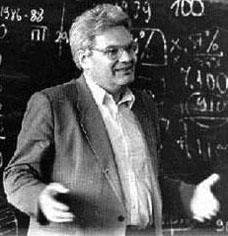 Kirill Ilyich Zamaraev合作论文数Institute of Catalysis Novosibirsk USSR8
 V. D. Chinakov合作论文数8D.I. Kochubey合作论文数5A. A. Shubin合作论文数4D. I. Kochubey合作论文数4
 Timur Kim合作论文数Diamond Light Source3Eugeni P Talzi合作论文数3Di Kochubei合作论文数2V. E. Rogov合作论文数2
 V. A. Rogov合作论文数2Sh.K. Shaikhutdinov合作论文数2
 Alexander Stepanov合作论文数Boreskov Institute of Catalysis, Siberian Branch of the Russian Academy of Sciences2І. М. Maiboroda合作论文数1V. I. Kochubei合作论文数1Yu. G. Konyukhova合作论文数1VK DUDCHENKO合作论文数1A. I. Min'kov合作论文数1Vm Nekipelov合作论文数1Va Zakharov合作论文数1M. V. Kaydash合作论文数Kharkiv Air Force, University named after Ivan Kozhedub1YI ERMAKOV合作论文数1Vladimir A. Likholobov合作论文数1Vladimir I Zaikovskii合作论文数1
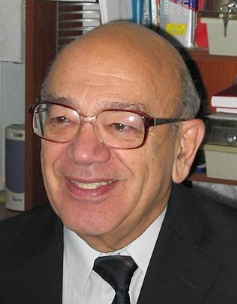 Ilya Moiseev合作论文数Gubkin Russian State University of Oil and Gas1B. N. Novgorodov合作论文数1
 Michael Vargaftik合作论文数1
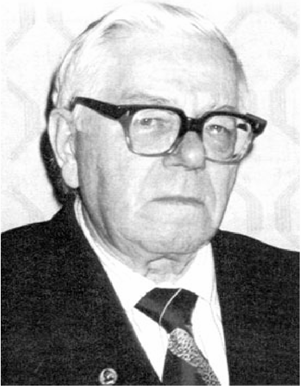 S. V. Bogdanov合作论文数1S.P Degtjarev合作论文数1
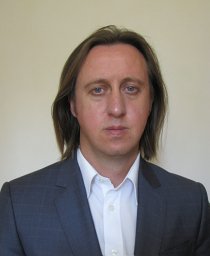 Ihor Storozhenko合作论文数1




