Emittance stands as a fundamental parameter characterizing the quality of charged particle beams. To achieve rapid and accurate emittance diagnostics for intense negative hydrogen ion beams at the end of the low-energy beam transport section, we have developed a pepper-pot emittance meter (PPEM) equipped with an absolute calibration function. By implementing optical filtering and identifying contributions from neutral particle emission, the image quality of the pepper-pot measurements was substantially improved. A specially designed calibration mask enabled the establishment of a quantitative relationship between image grayscale values and beamlet intensity over a defined number of measurement cycles. Through comparative experiments with a double-slit scanner, the reliability and applicability of the PPEM within a specific range were verified.
This study systematically evaluates the error sources in the reverse calculation of negative hydrogen ion beam extraction, with a focus on the impact of co-extracted electrons and measurement sampling. An iterative-convergence-based beam dynamics algorithm was implemented using the COMSOL simulation platform. Errors were quantified by comparing reverse-calculated phase-space distributions with original forward simulation data. When co-extracted electrons were neglected in both forward and reverse simulations, the beam envelope error remained below 0.5 I_e/I_H^- . The assumed electron distribution also affected the results, with deviations from the true distribution introducing additional error. Furthermore, the sampling process of pepper-pot measurements contributed to the overall uncertainty in the reconstruction. Ignoring co-extracted electrons leads to substantial errors in reverse calculation, while adopting a suitable electron distribution model improves accuracy. Optimal measurement sampling further enhances reconstruction reliability. These findings provide guidance for improving the reverse-calculation-based reconstruction of ion source meniscus profiles.
Abstract The RF-driven H − ion source has demonstrated a maintenance interval of over 7500 hours with an availability close to 100%. In order to meet the requirement of providing 500 kW beam power to the spallation target, as stipulated by CSNS-II, it is essential to increase the beam current from the ion source while also reducing the beam emittance. A detailed study has been conducted on beam emittance optimization, the removal of stripped proton beams, and the influence of the chopper field on space charge compensation using the new Low Energy Beam Transport (LEBT) system. This document presents the most recent findings from these investigations, highlighting the challenges faced during the commissioning phase.
High-energy, high-peak-power 2 mu m femtosecond pulses are essential for multiple applications in atmospheric sensing, material processing, and strong-field physics. Tm:YAP offers a broader gain bandwidth than holmium-doped media, enabling superior 2 mu m femtosecond pulse generation. However, the central wavelength of conventional c-cut Tm:YAP regenerative amplifiers operate at a central wavelength of 1.94 mu m, where strong water-vapor absorption occurs, necessitating nitrogen-purged and low-temperature environments to achieve high-energy femtosecond pulses. Here, we demonstrate an ambient-air, room-temperature thulium-doped regenerative amplifier that delivers high-energy, high-peak-power 2 mu m femtosecond pulses. This breakthrough is achieved by strategically shifting the emission peak to 1.98 mu m, where water-vapor absorption is significantly weaker, using an a-cut Tm:YAP crystal, while mitigating thermal loading and enhancing the damage threshold through an optimized crystal design. The system delivers 2.6 mJ pulse energy at a 1 kHz repetition rate with excellent stability (1.58% RMS) and high beam quality (M-2 < 1.1). In addition, it provides a spectral bandwidth exceeding 19 nm and a compressed pulse duration of 431 fs, yielding a peak power approaching 4.8 GW. These results represent the highest pulse energy and peak power achieved in thulium-doped regenerative amplifiers, establishing an efficient, compact, and low-cost approach for generating high-energy, high-peak-power, broadband 2 m femtosecond pulses.
In modern accelerator physics, tasks such as online control, design simulation, and others face optimization challenges including high-dimensional parameters, measurement noise, and local optima, which traditional algorithms struggle to address for precise control. Taking the radio-frequency ion source of the China Spallation Neutron Source (CSNS) as the research subject, this paper proposes a beam state recovery scheme based on Bayesian optimization. It incorporates customized strategies for dimensionality reduction and safety constraints tailored to accelerator scenarios. Furthermore, a BO-PV parameter optimization tool with a graphical interface has been developed, supporting flexible input of control PVs and monitoring PVs, as well as fully automated optimization. These outcomes validate the effectiveness of the proposed scheme for precise beam control in accelerators, providing a reference for intelligent optimization and control in large-scale accelerators.
Superconducting linear accelerator (SCL) is commonly used to boost the negative hydrogen ion (H−) beam energy above the medium-β range. Stripped proton beam loss in SCL is one of the heat and radioactive source, which could threaten the operation of the SCL. This paper describes a novel technique for removing stripped protons produced in the low-energy beam transport section, the main area of H− beam stripping in the linac. The experiment is conducted at the China Spallation Neutron Source. The H− beam is bent by 1.8° before being focused into the radio-frequency quadrupole (RFQ) entrance. As a result of the differential pumping and optimized beam optics design, the bending magnet effectively removes over 99% of the stripped protons, resulting in a significant reduction of stripped protons captured by the RFQ and downstream linac. Published by the American Physical Society 2025
Space charge compensation (SCC) plays a crucial and foundational role in the transport of low-energy ion beams through residual gas, as it effectively mitigates beam divergence caused by space charge forces. At high residual gas pressures, the space charge compensation degree (SCCD) can exceed 100%, a situation referred to as overcompensation. In this study, a model for secondary particle production and tracking has been integrated into a beam optics calculation code to investigate the overcompensation process during the transport of a negative ion beam through residual hydrogen. The impact of secondary electrons, often overlooked, is examined in detail. The findings indicate that electrons predominantly accumulate in the overcompensation region, effectively mitigating overcompensation by leveling the potential and reducing the SCCD. Based on the electron growth rate, the accumulation process is categorized into three stages. Results pertaining to beam parameters reveal that electrons can affect the growth of beam emittance by altering the transverse potential. This research contributes to enhancing our understanding of SCC processes in the low-energy beam transport domain and improving the precision of future beam optics simulations.
An RF-driven ion source has been put into commissioning on the China Spallation Neutron Source (CSNS) accelerator since September 2021. In the last two run cycles, the ion source has operated for 310 and 323 days respectively, with an availability of almost 100%. To fully meet the requirements of the CSNS project Phase-II (CSNS-II), the beam intensity from the linac should be enhanced to above 40mA, and the transverse emittance should be minimized to suppress beam loss during acceleration and transportation. A new test bench consisting of an ion source and a LEBT has been constructed to carry out these optimization and research. The featured functions of the LEBT are associated with proton elimination and electrostatic beam chopping. This report covers the operation status and development of the RF-driven H- source and the new LEBT.
为满足中国散裂中子源打靶功率提升需求,加速器采用外置天线射频负氢离子源替换此前使用的潘宁表面负氢离子源,为加速器提供高品质和高稳定的束流.文章主要介绍了基于EPICS软件系统和PLC硬件平台的射频负氢离子源控制系统设计方案和具体实现.针对射频功率源的电磁干扰和高压平台打火造成设备损坏,给出了相应的解决措施.此外,为提高离子源长期运行稳定性,设计了放电室高精度注铯控制程序及打靶功率稳定程序.控制系统自投入运行以来,运行稳定可靠,为离子源的高效运行提供了有力保障.
The China Spallation Neutron Source project Phase-II (CSNS-II) aims to deliver a proton beam of 500 kW on the tungsten target. To accomplish this goal, an RF-driven negative hydrogen ion source was developed to replace the penning ion source used in CSNS-I. The RF-driven ion source has been put into commissioning on CSNS accelerator since September 8 th , 2021. And it was shut down on July 26 th , 2022, together with the whole accelerator for the annual maintenance in summer. In this run cycle it has accumulated service time of over 7200 hours without major maintenance. The availability of the ion source is above 99.99%, except for one or two sparks per day of the 50 kV high voltage platform, each spark causing 1 second trip of the accelerator. The RF-driven ion source has an external antenna winding around a silicon nitride plasma chamber, which is quite robust in high duty-factor operation. In this paper, we present the structure of the ion source, the improvements over other ion sources, and the issues met in the commissioning.
The China Spallation Neutron Source project Phase-II aims to deliver 500 kW beam power to the spallation target. To meet the beam power requirement, an RF-driven negative hydrogen ion source with an external-antenna has been developed. In order to optimize the beam transmission through the radio frequency quadrupole and the downstream linac, the low energy beam transport line needs to be carefully studied and the transverse emittance is focused in this paper. With computational simulation and experimental verification, the emittance growth caused by nonlinear magnetic fields of the solenoid and the residual magnetic fields at the measuring position has been carefully analyzed. The measurement uncertainty of the double-slit scanner has also been quantitatively estimated. Using the same plasma-beam boundary setting, the beam extraction system is also optimized with particle tracking simulation in CST PARTICLE STUDIO.
Unsound wheat kernel recognition is an important part of wheat quality inspection, and it is also a key indicator to measure wheat quality. Research on unsound wheat kernel recognition is of great significance to the correct evaluation of wheat quality. The existing researches on unsound wheat kernel recognition are mainly to directly optimize the classical classification networks, and the recognition effect is often unsatisfactory due to insufficient training data. Aiming at the problem that the recognition rate of unsound wheat kernels is not ideal due to the lack of training data, we propose a Transfer Learning Feature Fusion (TLFF) model. The model uses transfer learning and feature fusion to identify unsound wheat kernels. First, feature extraction is performed by deep Convolutional Neural Networks (CNNs) VGG-16 and VGG-19 pre-trained on the large public dataset ImageNet. Then, the features extracted by the pre-trained neural networks are fused and classified through the flattening layer, fully connected layer, Dropout layer, and Softmax layer. We conduct experiments on single model, two-model fusion, three-model fusion, and four-model fusion, and select the three-model fusion scheme to perform this task. Finally, we vote on the output results of the three best fusion models to further improve the recognition rate. The pre-trained models we use are trained on a large public dataset ImageNet. Since the scale of the dataset is very large, these pre-trained models also have good generalization performance for images other than ImageNet dataset. Therefore, although our dataset is small, we can still achieve good recognition results. Experimental results show that the recognition performance of the TLFF model is significantly better than the existing unsound wheat kernel recognition models.
High current beam is required for CSNS update in future. Over 50 mA H− will be designed to deliver to the linac in CSNS II. For the present state of CSNS ion source, the beam emittance cannot satisfy the requirement of RFQ entrance at the 50 mA H− beam. In order to improve the beam quality, CSNS ion source is required further improvement. Simulation shows emittance growth due to the space charge force in the intense H− beam when the beam transports through the analyzing magnet. After considering the neutralization of space charge, the emittance growth could be suppressed. The analyzing magnet thus is considered to removed, which might destroy the neutralization of space charge. The beam emittance is measured at the revised CSNS ion source. Measured results show that beam emittance without the analyzing magnet becomes smaller than that of CSNS ion source. At the requirement of 0.2 πmm mrad, beam current is larger than 30 mA. It reveals that analyzing magnet could destroy space charge neutralization and result in the significant increase of emittance. Although the results presented are preliminary, it is important to improve the beam quality. This paper details the ion source improvement and measurement process.
In this paper, we present an experimental and theoretical study of excitation processes for the heaviest stable helium-like ion, that is, He-like uranium occurring in relativistic collisions with hydrogen and argon targets. In particular, we concentrate on angular distributions of the characteristic Kα radiation following the K → L excitation of He-like uranium. We pay special attention to the magnetic sub-level population of the excited 1s2lj states, which is directly related to the angular distribution of the characteristic Kα radiation. We show that the experimental data can be well described by calculations taking into account the excitation by the target nucleus as well as by the target electrons. Moreover, we demonstrate for the first time an important influence of the electron-impact excitation process on the angular distributions of the Kα radiation produced by excitation of He-like uranium in collisions with different targets.
China in the United Nations General Assembly "double carbon" goal: CO2 emissions strive to peak before 2030, strive to achieve carbon-neutral before 2060, which requires large-scale DC injection and nuclear power production, if its system or receiving terminal serious failure, may lead to a large number of power supply from the operation, there will be serious grid frequency stability problem. As the last line of defense against stability damage, the low-frequency load loss device is crucial to the safety of the power grid. Under this new situation, it needs to focus on studying and verifying the low-frequency load reduction scheme in Liaoning Province, This paper simulates the fault set according to the low-frequency load reduction scheme in 2012 and the low-frequency load reduction scheme of Liaoning Power Grid, establishes the low-frequency load reduction optimization model for the power grid frequency stability problem, and analyzes the fault frequency stability of the northeast power grid target system in 2015.
We developed and optimized an RF-driven H-source at the China Spallation Neutron Source (CSNS) to achieve the requirement of project phase-II. At the beginning of 2019, the first uncesiated H-beam was produced, but 15% RF power was reflected when the forward power was 20 kW. To decrease the reflection of the RF power, the RF power matching network was optimized based on the measurement of the plasma equivalent impedance, and the reflected power was decreased to less than 200W at the same forward power. The plasma equivalent impedance is studied with different conditions (RF power, hydrogen flow rate, and frequency). The results show that the plasma equivalent resistance increases at first and then decreases as the RF power increase. Then the transformer model is adopted to derive the plasma impedance.
Intelligent fault diagnosis algorithms based on machine learning and deep learning techniques have been widely used in industrial applications and have obtained much attention as well as achievements. In real industrial applications, working loads of machines are always changing. Hence, directly applying the traditional algorithms will cause significant degradation of performance with changing conditions. In this paper, a novel domain adaptation method, named generative transfer learning (GTL), is proposed to tackle this problem. First, raw datasets were transformed to time–frequency domain based on short-time Fourier transformation. A domain discriminator was then built to distinguish whether the data came from the source or the target domain. A target domain classification model was finally acquired by the feature extractor and the classifier. Experiments were carried out for the fault diagnosis of a wind turbine gearbox. The t-distributed stochastic neighbor embedding technique was used to visualize the output features for checking the effectiveness of the proposed algorithm in feature extraction. The results showed that the proposed GTL could improve classification rates under various working loads. Compared with other domain adaptation algorithms, the proposed method exhibited not only higher accuracy but faster convergence speed as well.
This work demonstrates efficient micro-lensing of laseraccelerated proton beams by transient electromagnetic (EM) fields in coil targets. In an all-optical principle, hig intensity ps-laser pulses are used to charge solid density t argets and induce EM target-discharges [1]. The strong transient EM-fields are guided by the target geometry. Such EM-mode propagation along wire targets [2] has already been used for the guiding of a proton beam [3]. Our collaboration aims at a more easily tunable energy-selective collimation and focusing with independent discharge and particle source targets: A sub-mm coil shaped part of the discharge target’s rod produces lensing effects. Protons with in an energy range of approximately ±2MeV, with energies up to12MeV, are focused over cm-scale distances.
CSNS front end is currently under running, which consists of a H⁻ penning ion source(IS), a low energy beam transport(LEBT), a radio frequency quadrupole (RFQ) and a medium energy beam transport(MEBT). CSNS ion source is a type of Penning surface plasma source, similar to ISIS ion source. Cesium is used to enhance the H⁻ ion production efficiency. The ion source is running with duty factor of 1.25%(25Hz and 500us). Normally, 40mA H⁻ beam from ion source with 50keV can be delivered into LEBT. Three solenoids and two direction magnets are employed to transport and match the beam from the ion source into the RFQ. The pre-chopper is installed at the end of LEBT. The chopper mainly works at 3.8-4.2 kV and 1 MHz rate, which is about the RF frequency of the ring at injection. The rise time is less than 10ns,which fulfills the requirement of ring injection. For the RFQ, it is a 324MHz 4-vane type with a output energy of 3.0MeV and the length of 3.62m. The input cavity power is about 400kW. During commissioning, 16mA H⁻ beam can be obtained at the exit of RFQ, and the RFQ transmission rate is up to 94%.
We have studied the K-shell excitation of He-like uranium (U90+) in relativistic collisions with hydrogen and argon atoms. Performing measurements with different targets, as well as with different collision energies, enabled us to explore the proton- (nucleus-) impact excitation as well as the electron-impact excitation process for the heaviest He-like ion. The large fine-structure splitting in uranium allowed us to partially resolve excitation into different L-shell levels. State-of-the-art relativistic calculations which include excitation mechanisms due to the interaction with both protons (nucleus) and electrons are in good agreement with the experimental findings. Moreover, our experimental data clearly demonstrate the importance of including the generalized Breit interaction in the treatment of the electron-impact excitation process.
 Uwe Spillmann合作论文数20
 Alexandre Gumberidze合作论文数18Sergiy Trotsenko合作论文数18S. Hagmann合作论文数16Th Stoehlker合作论文数16
 Shengjin Liu (刘盛进)合作论文数Institute of High Energy Physics, Chinese Academy of Sciences;University of Chinese Academy of Sciences15
 Pierre-Michel Hillenbrand合作论文数GSI Helmholtzzentrum für Schwerionenforschung GmbH13
 Dariusz Banas合作论文数Institute of Physics, Jan Kochanowski University13
 Gunter Weber合作论文数Helmholtz Institute11Michael Lestinsky合作论文数11
 Christophor Kozhuharov合作论文数10kh blumenhagen合作论文数10Nikolaos Petridis合作论文数10
 D.F.A. Winters合作论文数10Xiuxia Cao (曹秀霞)合作论文数9n winters合作论文数9Carsten Brandau合作论文数Gesellschaft fuer Schwerionenforschung, GSI Helmholtzzentrum für Schwerionenforschung;ExtreMe Matter Institute, GSI Helmholtzzentrum für Schwerionenforschung9A. Surzhykov合作论文数Max-Planck-Institut fur Kernphysik9
 Robert DuBois合作论文数Missouri University of Science and Technology9
 Yongchuan Xiao (肖永川)合作论文数Institute of High Energy Physics, Chinese Academy of Sciences;University of Chinese Academy of Sciences8
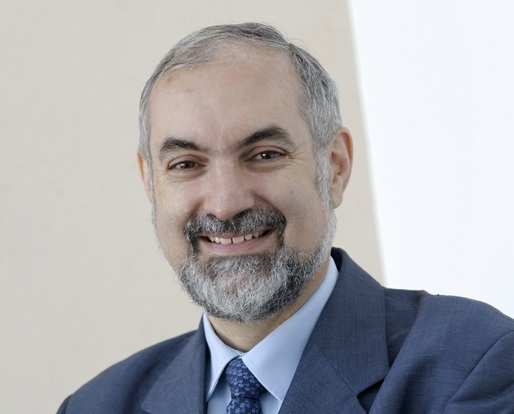 Paul Indelicato合作论文数Laboratoire Kastler Brossel8
 Daniel B Thorn合作论文数Zephyr Spectral8R. Maertin合作论文数7m hegewald合作论文数7
 Martino Trassinelli合作论文数Gesellschaft für Schwerionenforschung7Robert E Grisenti合作论文数7
 Yury A Litvinov合作论文数GSI Helmholtz Centre for Heavy Ion Research7Benzheng Chen合作论文数Xi An Jiao Tong Univ, Sch Phys, MOE Key Lab Nonequilibrium Synth & Modulat Conden, Xian 710049, Peoples R China6H. Beyer合作论文数6
 Stefan Schippers合作论文数Institute of Experimental Physics I, Justus-Liebig-University Giessen6
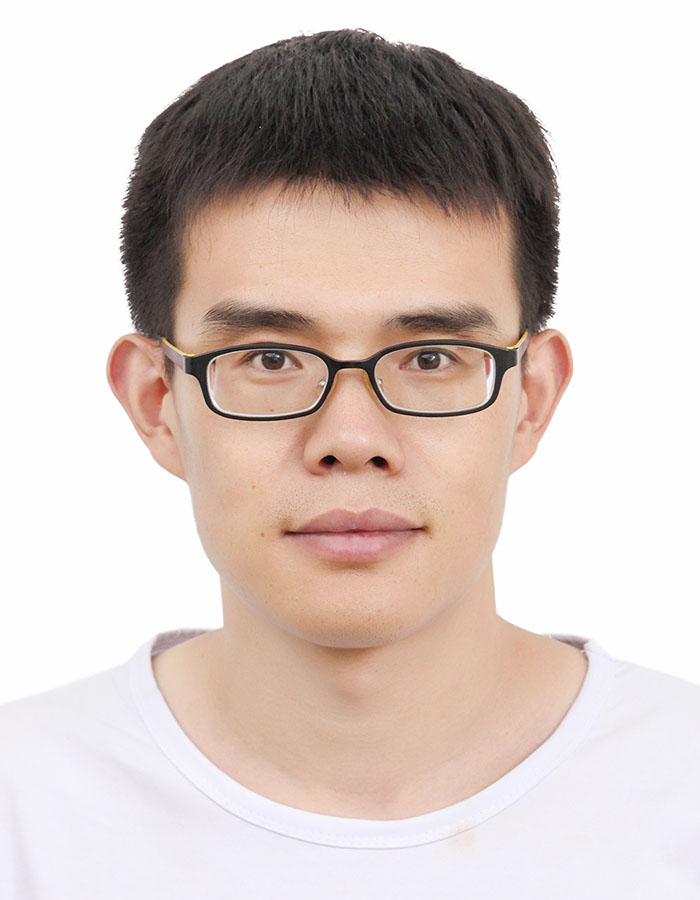 Dalong Guo (郭大龙)合作论文数Institute of Modern Physics, Chinese Academy of Sciences;University of Chinese Academy of Sciences5A. B. Voitkiv合作论文数5s geyer合作论文数5Yanghuafu Ou (欧阳华甫)合作论文数中国科学院大学高能物理研究所5
 Bennaceur Najjari合作论文数5
 Christopher Fontes合作论文数Computational Physics Division, Los Alamos National Laboratory5t gassner合作论文数4A. Mueller合作论文数4Cao Xingzhong合作论文数4Sebastian Hess合作论文数4Regina Reuschl合作论文数4H. F. Beyer合作论文数4
 Reinhold Schuch合作论文数Department of Physics, Stockholm University4
 Stephan Fritzsche合作论文数Helmholtz Institute at Jena;Department of Theoretical Physics, Friedrich-Schiller-Universität Jena4M. S. Schoeffler合作论文数3m schwemlein合作论文数3W. Wen合作论文数3Renli Zhu合作论文数3Shunming Liu合作论文数3




