Fixed-frequency superconducting qubits demonstrate remarkable success as platforms for stable and scalable quantum computing. Cross-resonance gates have been the workhorse of fixed-coupling, fixed-frequency superconducting processors, leveraging the entanglement generated by driving one qubit resonantly with a neighbor's frequency to achieve high-fidelity, universal CNOTs. Here, we use on-resonant and off-resonant microwave drives to go beyond cross-resonance, realizing natively interesting two-qubit gates that are not equivalent to CNOTs. In particular, we implement and benchmark native ISWAP, SWAP, $\sqrt{\text{ISWAP}}$, and BSWAP gates. Furthermore, we apply these techniques for an efficient construction of the B-gate: a perfect entangler from which any two-qubit gate can be reached in only two applications. We show these native two-qubit gates are better than their counterparts compiled from cross-resonance gates. We elucidate the resonance conditions required to drive each two-qubit gate and provide a novel frame tracking technique to implement them in Qiskit.
Qiskit Experiments is a Python package for designing and running quantum computing experiments with a focus on calibration and characterization of quantum devices.It consists of a general purpose experiments framework that can be used by researchers to rapidly implement new experiments and a library of common experiments for calibration, characterization, and verification of quantum devices.
The performance of a quantum processor depends on the characteristics of the device and the quality of the control pulses. Characterizing cloud-based quantum computers and calibrating the pulses that control them is necessary for high-fidelity operations. However, this time intensive task eats into the availability of the device. Here, we show restless measurements with a dynamic repetition rate that speed-up calibration and characterization tasks. Randomized benchmarking is performed 5.3 times faster on the quantum device than when an active reset is used and without discarding any data. In addition, we calibrate a qubit with parameter scans and error-amplifying gate sequences and show speed-ups of up to a factor of forty on the quantum device over active reset. Finally, we present a methodology to perform restless quantum process tomography that mitigates restless state preparation errors. These results reduce the footprint of characterization and calibration tasks. Quantum computers can thus either spend more time running applications or run calibrations more often to maintain gate fidelity.
The resonator-induced PHASE gate is a two-qubit operation in which driving a bus resonator induces a state dependent phase shift on the qubits equivalent to an effective ZZ interaction. In principle, the dispersive nature of the gate offers flexibility for qubit parameters. However, the drive can cause resonator and qubit leakage, the physics of which cannot be fully captured using either the existing Jaynes-Cummings or Kerr models. In this paper, we adopt an ab initio model based on Josephson nonlinearity for transmon qubits. The ab initio analysis agrees well with the Kerr model in terms of capturing the effective ZZ interaction in the weak-drive dispersive regime. In addition, however, it reveals numerous leakage transitions involving high-excitation qubit states. We analyze the physics behind such novel leakage channels, demonstrate the connection with specific qubit-resonator frequency collisions, and lay out a plan toward device parameter optimization. We show that this type of leakage can be substantially suppressed using very weakly anharmonic transmons. In particular, weaker qubit anharmonicity mitigates both collision density and leakage amplitude, while larger qubit frequency moves the collisions to occur only at large anharmonicity not relevant to experiment. Our work is broadly applicable to the physics of weakly anharmonic transmon qubits coupled to linear resonators. In particular, our analysis confirms and generalizes the measurement-induced state transitions noted in Sank et al. [Phys. Rev. Lett. 117, 190503 (2016)] and lays the groundwork for both strong-drive resonator-induced PHASE gate implementation and strong-drive dispersive qubit measurement.
Superconducting qubits are sensitive to a variety of loss mechanisms including dielectric loss from interfaces. By changing the physical footprint of the qubit, it is possible to modulate sensitivity to surface loss. Here, we show a systematic study of planar superconducting transmons of differing physical footprints to optimize the qubit design for maximum coherence. We find that qubits with small footprints are limited by surface loss and that qubits with large footprints are limited by other loss mechanisms, which are currently not understood.
Microwave photons inside lattices of coupled resonators and superconducting qubits can exhibit surprising matter-like behavior. Realizing such open-system quantum simulators presents an experimental challenge and requires new tools and measurement techniques. Here, we introduce Scanning Defect Microscopy as one such tool and illustrate its use in mapping the normal-mode structure of microwave photons inside a 49-site Kagome lattice of coplanar waveguide resonators. Scanning is accomplished by moving a probe equipped with a sapphire tip across the lattice. This locally perturbs resonator frequencies and induces shifts of the lattice resonance frequencies which we determine by measuring the transmission spectrum. From the magnitude of mode shifts we can reconstruct photon field amplitudes at each lattice site and thus create spatial images of the photon-lattice normal modes.
We have measured the persistent current in individual normal metal rings over a wide range of magnetic fields. From this data, we extract the first six cumulants of the single-ring persistent current distribution. Our results are consistent with the prediction that this distribution should be nearly Gaussian for diffusive metallic rings. This measurement highlights the sensitivity of persistent current to the mesoscopic fluctuations within a single isolated coherent volume.
Like a quantum computer designed for a particular class of problems, a quantum simulator enables quantitative modelling of quantum systems that is computationally intractable with a classical computer. Superconducting circuits have recently been investigated as an alternative system in which microwave photons confined to a lattice of coupled resonators act as the particles under study, with qubits coupled to the resonators producing effective photon-photon interactions. Such a system promises insight into the non-equilibrium physics of interacting bosons, but new tools are needed to understand this complex behaviour. Here we demonstrate the operation of a scanning transmon qubit and propose its use as a local probe of photon number within a superconducting resonator lattice. We map the coupling strength of the qubit to a resonator on a separate chip and show that the system reaches the strong coupling regime over a wide scanning area.
To ultimately study phase transitions of light, arrays of superconducting resonators must be made with low disorder in individual resonator frequencies. We fabricate and measure such arrays, minimizing disorder to a few parts in 104.
 Devin Underwood合作论文数14
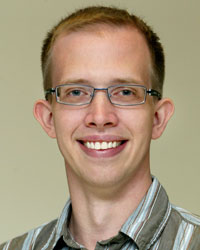 Andrew Houck合作论文数Department of Electrical and Computer Engineering, School of Engineering and Applied Science, Princeton University;Center for Quantum Advantage, Brookhaven National Laboratory14
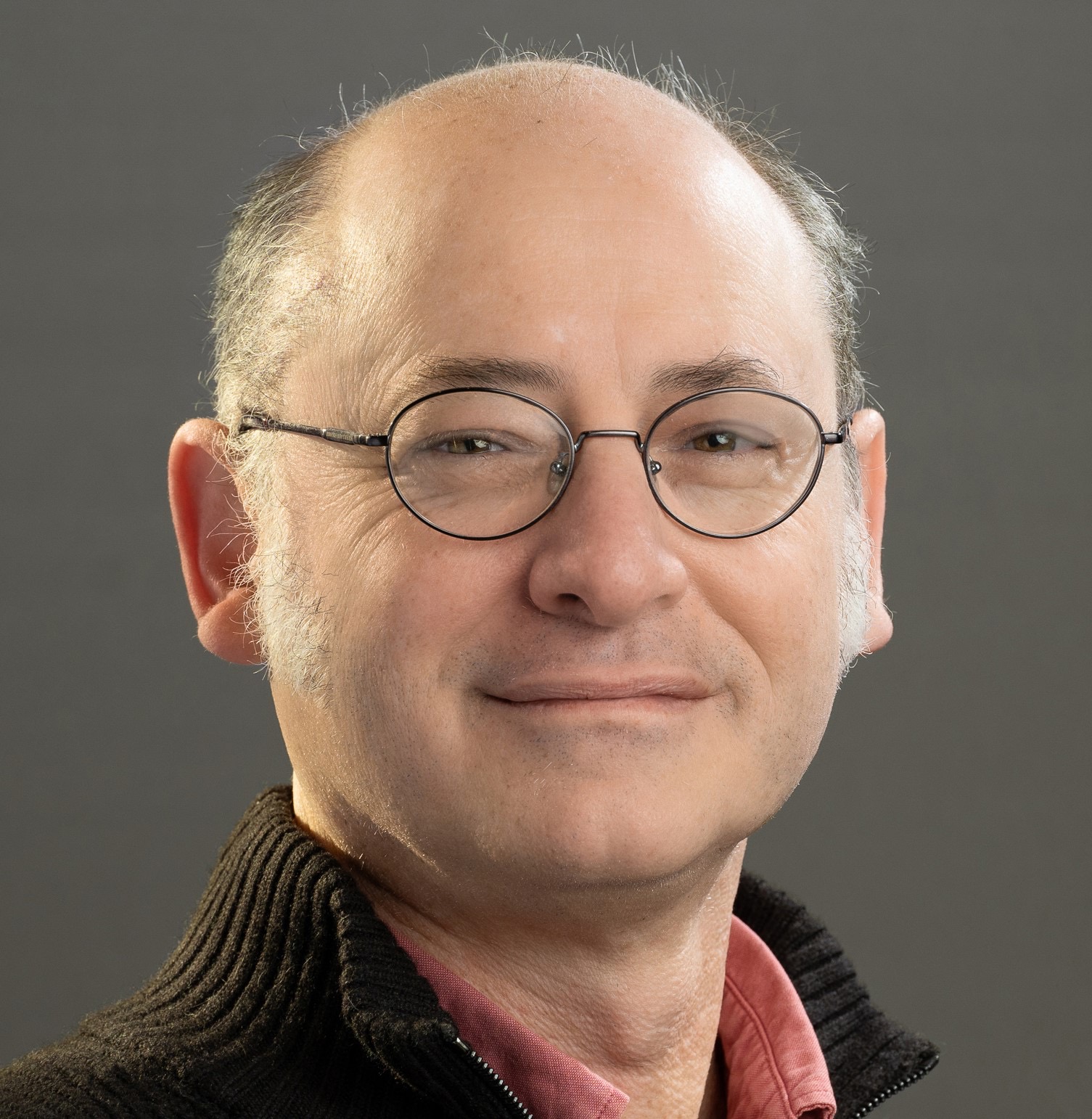 Jack Harris合作论文数Department of Physics, Yale University;Department of Applied Physics, Yale University;Yale Quantum Institute, Yale University9Ania C. Bleszynski Jayich合作论文数9
 Jens Koch合作论文数Department of Physics and Astronomy, Weinberg College of Arts & Sciences, Northwestern University7James Raftery合作论文数7
 Felix von Oppen合作论文数Dahlem Center for Complex Quantum Systems, Freie Universitat Berlin4Srikanth Srinivasan合作论文数Dept Elect Engn, Princeton Univ4
 Andy C. Y. Li合作论文数4
 Bruno Peaudecerf合作论文数4
 Eran Ginossar合作论文数Department of Condensed;Weizmann Institute of Science;Department of Condensed, Weizmann Institute of Science4
 Hakan Türeci合作论文数Department of Electrical and Computer Engineering, Princeton University3A. C. Bleszynski-Jayich合作论文数3Darius Sadri合作论文数Department of Physics;Stanford University;Department of Physics, Stanford University3john g harris合作论文数2Neereja Sundaresan合作论文数2
 Muir Kumph合作论文数IBM TJ Watson Res Ctr, IBM Quantum2Naoki Kanazawa合作论文数Toyohashi Univ Technol, Dept Elect & Elect Informat Engn, Tempaku Ku, Toyohashi, Aichi 4418580, Japan2
 Schmidt Sebastian S合作论文数Inst Theoret Phys, ETH2
 Oliver E Dial合作论文数Massachusetts Institute of Technology2Ngo D Q合作论文数2
 Leonid Glazman合作论文数Department of Physics, Yale University2
 Daniel Egger合作论文数Quantum Applications Research & Software Group, IBM Research – Zurich2
 Manuel Castellanos Beltran合作论文数National Institute of Standards and Technology2
 Bordyuh M合作论文数2
 Anthony Hoffman合作论文数Department of Electrical Engineering, College of Engineering, University of Notre Dame2Ania C. Bleszynski合作论文数2Leonid I Glazman合作论文数2M. A. Castellanos-Beltran合作论文数1Arthur Safira合作论文数1John M. Cotte合作论文数1Joseph Sirianni合作论文数1Helena Zhang合作论文数1Isaac Lauer合作论文数1Eric P. Lewandowski合作论文数1Christopher Wood合作论文数1Ken X. Wei合作论文数IBM Quantum, IBM1Caroline Tornow合作论文数1
 Moein Malekakhlagh合作论文数IBM Thomas J Watson Res Ctr, IBM Quantum1April Carniol合作论文数1John Blair合作论文数1
 Jeff Thompson合作论文数Department of Electrical and Computer Engineering, Princeton University;Department of Physics, Princeton University1
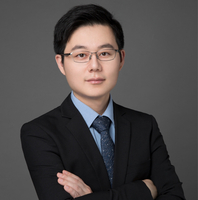 Cheng Yang (杨橙)合作论文数Zhongshan Hospital, Fudan University1
 David Abraham合作论文数IBM T.J. Watson Research Center1Fung, Y.-K,-K合作论文数1
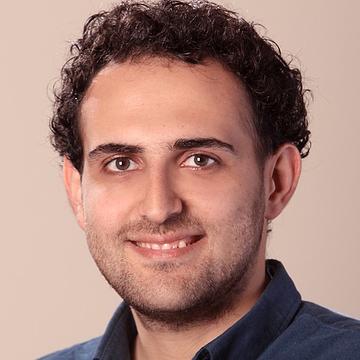 Ali Javadi-Abhari合作论文数IBM Research1
 Santino D Carnevale合作论文数Dept. of Electr. & Comput. Eng., Ohio State Univ.;c;Dept. of Electr. & Comput. Eng., Ohio State Univ.1
 David McKay合作论文数Department of Physics;University of Illinois;Department of Physics, University of Illinois1




