Stimulated Raman Scattering (SRS) enables label-free imaging by probing the vibrational responses of molecules. SRS offers high specificity and sensitivity; however, its signal-to-noise ratio (SNR) is constrained by photodamage to the sample. To address this limitation, high-power, quantum-enhanced SRS microscopes have recently been developed and applied to both polymers and biological samples. Using squeezed light for illumination, these microscopes suppress noise below the shot noise level, improving the SNR without increasing the illumination intensity. In this work, we highlight the advantages of using squeezed light over other sources of quantum correlations when operating at the high optical powers required for precision microscopy limited by photodamage. We then present the latest developments a photodamage-evading quantum microscope where both the quality of the quantum probe and the classical SNR are improved on compared to the previous single-beam SRS imaging experiments. These improvements led to a fast, multispectral quantum imaging system with noise levels below the shot noise limit of state-of-the-art classical SRS microscopes.
Stimulated Raman scattering (SRS) microscopy is a powerful label-free imaging technique that probes the vibrational response of chemicals with high specificity and sensitivity. High-power, quantum-enhanced SRS microscopes have been recently demonstrated and applied to polymers and biological samples. Quantum correlations, in the form of squeezed light, enable the microscopes to operate below the shot noise limit, enhancing their performance without increasing the illumination intensity. This addresses the signal-to-noise ratio (SNR) and speed constraints introduced by photodamage in shot noise-limited microscopes. Previous microscopes have either used single-beam squeezing, but with insufficient brightness to reach the optimal ratio of pump-to-Stokes intensity for maximum SNR, or have used twin-beam squeezing and suffered a 3 dB noise penalty. Here we report a quantum-enhanced Raman microscope that uses a bright squeezed single-beam, enabling operation at the optimal efficiency of the SRS process. The increase in brightness leads to multimode effects that degrade the squeezing level, which we partially overcome using spatial filtering. We apply our quantum-enhanced SRS microscope to biological samples and demonstrate quantum-enhanced multispectral imaging of living cells. The imaging speed of 100×100 pixels in 18 seconds allows the dynamics of cell organelles to be resolved. The SNR achieved is compatible with video-rate imaging, with the quantum correlations yielding a 20% improvement in imaging speed compared to shot noise-limited operation.
Much of our progress in understanding microscale biology has been powered by advances in microscopy. For instance, super-resolution microscopes allow the observation of biological structures at near-atomic-scale resolution, while multi-photon microscopes allow imaging deep into tissue. However, biological structures and dynamics still often remain out of reach of existing microscopes, with further advances in signal-to-noise, resolution and speed needed to access them. In many cases, the performance of microscopes is now limited by quantum effects -- such as noise due to the quantisation of light into photons or, for multi-photon microscopes, the low cross-section of multi-photon scattering. These limitations can be overcome by exploiting features of quantum mechanics such as entanglement. Quantum effects can also provide new ways to enhance the performance of microscopes, such as new super-resolution techniques and new techniques to image at difficult to reach wavelengths. This review provides an overview of these various ways in which quantum techniques can improve microscopy, including recent experimental progress. It seeks to provide a realistic picture of what is possible, and what the constraints and opportunities are.
We present a new technique for whispering gallery mode biosensing involving direct detection of the back-scattered light. This results in suppressing laser frequency noise by 27 dB, and gives an absolute sensitivity of 76 kHz.
This paper presents the findings of an investigation into the effects of pressure and temperature variations on methane concentrations measurements in near-infrared spectrum. A wavelength band was found where the spectral absorbance of methane is free from the interference of other common mine gases. The pressure and temperature variations that are expected in underground coal mines were found to have negligible effects on the uncertainty of spectroscopic measurement of methane concentration.
A setup is proposed to enhance tracking of very small particles, by using optical tweezers embedded within a Sagnac interferometer. The achievable signal-to-noise ratio is shown to be enhanced over that for a standard optical tweezers setup. The enhancement factor increases asymptotically as the interferometer visibility approaches 100%, but is capped at a maximum given by the ratio of the trapping field intensity to the detector saturation threshold. For an achievable visibility of 99%, the signal-to-noise ratio is enhanced by a factor of 200, and the minimum trackable particle size is 2.4 times smaller than without the interferometer.
We present an experimental analysis of quadrature entanglement produced from a pair of amplitude squeezed beams. The correlation matrix of the state is characterized within a set of reasonable assump- tions, and the strength of the entanglement is gauged using measures of the degree of inseparability and the degree of EPR paradox. We introduce controlled decoherence in the form of optical loss to the entangled state, and demonstrate qualitative differences in the response of the degrees of inseparability and EPR para- dox to this loss. The entanglement is represented on a photon number diagram that provides an intuitive and physically relevant description of the state. We calculate efficac y contours for several quantum information protocols on this diagram, and use them to predict the effectiveness of our entanglement in those protocols.
 Michael a Taylor合作论文数Centre for Eng. Quantum Syst., Univ. of Queensland;c;Centre for Eng. Quantum Syst., Univ. of Queensland3
 Alex Terrasson合作论文数2Nicolas P. Mauranyapin合作论文数2
 Glen I Harris合作论文数2Joachim Knittel合作论文数Deutsche Thomson-Brandt GmbH2Boris Hage合作论文数2M. T. L. Hsu合作论文数1Catxere A. Casacio合作论文数1
 Kai Barnscheidt合作论文数1
 Dmitry Tabakaev合作论文数1
 Ping Koy Lam合作论文数Centre for Quantum Computation & Communication Technology, College of Science, Australian National University;Agency for Science, Technology and Research1
 Mehmet Kizil合作论文数School of Mechanical and Mining Engineering, Faculty of Engineering, Architecture and Information Technology, The University of Queensland1McAuslan David L合作论文数Centre for Engineered Quantum Systems, University of Queensland1Chrzanowski Helen M.合作论文数1
 Hugo Kerdoncuff合作论文数1
 Alex Szorkovszky合作论文数Centre for Eng. Quantum Syst., Univ. of Queensland;c;Centre for Eng. Quantum Syst., Univ. of Queensland1
 George a Brawley合作论文数1
 Sven Ramelow合作论文数Quantum Information, University of Vienna;Institute for Quantum Optics and Quantum Information, Austrian Academy of Science;Institute for Quantum Optics and Quantum Information, University of Vienna1Mørch Troels合作论文数1Pedersen Poul L合作论文数1
 Miroslav Gajdacz合作论文数Institut for Fysik og Astronomi, Aarhus Universitet1
 Timothy Ralph合作论文数School of Mathematics and Physics, Faculty of Science, University of Queensland1
 Roman Schnabel合作论文数Institut für Quantenphysik, Fachbereich Physik, Universität Hamburg;Institut für Laserphysik, Faculty of Mathematics, Informatics and Natural Sciences, Universität Hamburg;Noisy Labs1
 Saiied M. Aminossadati合作论文数Faculty of Engineering, Architecture and Information Technology, University of Queensland;School of Mechanical and Mining Engineering, University of Queensland1Jon D. Swaim合作论文数1
 Dan Oron合作论文数Nanophotonics Laboratory, Department of Molecular Chemistry and Materials Science, Weizmann Institute of Science1
 Joel Q. Grim合作论文数Physics Department, Wake Forest University1
 J. Arlt合作论文数Clarendon Laboratory;Department of Physics;University of Oxford;Clarendon Laboratory, University of Oxford1
 Kristoffer Haldrup合作论文数Dept Phys, Tech Univ Denmark1
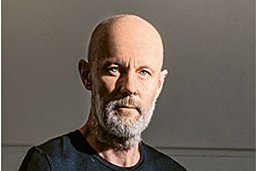 Rob Thew合作论文数Group of Applied Physics;University of Geneva;Group of Applied Physics, University of Geneva1
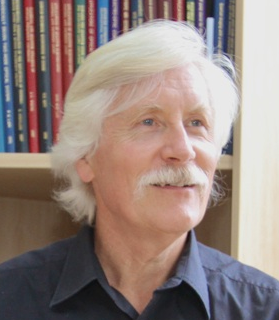 Hans-Albert Bachor合作论文数College of Science, Australian National University1
 Andrew Doherty合作论文数Faculty of Science, The University of Sydney1
 Jacob Sherson合作论文数Departments of Management, Physics, and Cognitive Science, Aarhus University;Center for Hybrid Intelligence, Aarhus University1
 Martin Meedom Nielsen合作论文数National Laboratory, DK-4000 Roskilde, Denmark1
 Ulrik Lund Andersen合作论文数Department of Physics, Technical University of Denmark;Max-Planck-Institut Für Die Physik Des Lichts1
 Javad Shemshad合作论文数School of Mechanical and Mining Engineering, The University of Queensland1




