Purpose: Lung allocation policy is significant in determining lung transplantations (LTx). This study aims to evaluate the impact of LTx policy changes on geographic disparities in allocation and waitlist mortality (WLM).
Purpose: Earlier studies have examined the relationship between donor-recipient race-matching (RM) in lung transplantations (LTx). We aim to update the findings using all available lung transplant data from Organ Procurement and Transplant Network (OPTN) as of September 1, 2022.
Purpose: Over 47,000 people are living with Fontan Circuit in the US & Europe. Many adults with Fontan circulation require orthotopic heart transplant (OHT) or combined heart-liver transplantation (CHLT) often due to Fontan Associated Liver Disease (FALD). With no clear guidelines, we investigated our institutional experience of transplant in Fontan patients with FALD.
Purpose: Short-term mechanical circulatory support (MCS) plays an increasing role in patients in acute cardiogenic shock as a bridge-to-decision strategy for potential left ventricular assist device (LVAD) implantation.Microaxial flow pump (MFP) therapy thereby is gaining increasing importance as a complement to venoarterial extracorporeal membrane oxygenation (VA-ECMO) therapy for left ventricular unloading.The aim of the study was to compare VA-ECMO vs. VA-ECMO + MFP therapy as short-term MCS prior to LVAD implantation.Methods: 183 patients with advanced heart failure underwent LVAD implantation at our center between 2010 -2020.Of these, 34 patients had short-term MCS with VA-ECMO (n=16, group 1) or VA-ECMO + MFP (n=18, group 2) before LVAD implantation.Data were retrospectively analysed.Results: Both groups consisted only of patients in acute cardiogenic shock (INTERMACS profile 1 + 2, age (group 1 vs. group 2: 50.1 §9.8 vs. 52.7 § 7.3 years, p=0.1)).Short-term MCS was performed until LVAD implantation.Time on short-term MCS (6.6 §3.8 vs. 8 §4.9 days, p=0.4) showed no significant difference between the groups.Implanted permanent devices were HVAD and Heart Mate 3 (HM3) (group 1: HVAD: 88%, HM3: 12%; group 2: HVAD: 55%, HM3: 45%).Procedural characteristics showed no significant differences in terms of access, procedure time or volume management.Rates of in-hospital stroke (5.5 vs. 0%, p=1.0) and major bleeding (0 vs. 0%, p=1.0) were low in both groups.Rate of concomitant temporary RVAD implantation was similar in both groups (43.7 vs. 38.8%,p=1.0).Consecutive right heart failure in the first 3 months occurred in both groups (6,3 vs.5.5%, p=1.0).30-day (12.5 vs. 17%, p=1.0) and 1-year mortality (31.3 vs. 22.2%, p=0.7) revealed no significant differences between groups. Conclusion:Our study shows a similar outcome after short-term MCS and LVAD implantation in both groups resulting in a 30-day survival of >80% in our high-risk cohorts.The effect of additional MFP needs to be proven in further studies.
 Matthias Peltz合作论文数6
 Christopher Heid合作论文数Dept Cardiovasc & Thorac Surg, Univ Texas Southwestern Med Ctr Dallas4
 John Santosh Kumar Murala合作论文数4
 Mark Drazner合作论文数Department of Internal Medicine, UT Southwestern Medical Center3
 Fernando Torres合作论文数3Vaidehi Kaza合作论文数3
 Michael Wait合作论文数3A. Amin合作论文数2Grodin Justin L合作论文数2Peter Stastny合作论文数2Bhavna Lavingia合作论文数2S Daneman合作论文数2Kelly Nottingham合作论文数2
 Maryjane Farr合作论文数Department of Internal Medicine, Medical School, UT Southwestern Medical Center;Division of Cardiology, UT Southwestern Medical Center2David E Fixler合作论文数2K. J. Guleserian合作论文数1A. Hackmann合作论文数1F. Aras合作论文数1A. Lawrence合作论文数1M. Jessen合作论文数1C. Liu合作论文数Sch Med, UT Southwestern1
 Suresh Keshavamurthy合作论文数University of Kentucky Cardiovascular & Thoracic Surgery, Kentucky Clinic1
 Anil Pillai合作论文数Harold Simmons Cancer Center, University of Texas Southwestern Medical Center;Interventional Radiology, University of Texas Southwestern Medical Center;University of Texas Southwestern Medical Center, University of Texas Southwestern Medical Center1
 Garg Suneela合作论文数Department of Community Medicine, Maulana Azad Medical College1
 La Hoz Ricardo M合作论文数1A BARNES合作论文数1
 Nuno Barros合作论文数1R Rosenblatt合作论文数1D Meyer合作论文数1Jacques Thibodeau合作论文数1
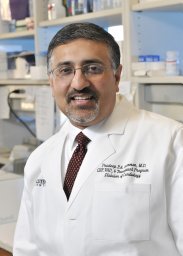 Pradeep P A Mammen合作论文数Department of Internal Medicine, University of Texas Southwestern Medical Center1Beverley Adams-Huet合作论文数1Barbara Kauper合作论文数1Jason Crumpton合作论文数1Karl Eugen Hauptmann合作论文数1




