Cyclicity and trend are important components of time series data and many studies based on cyclicity and trend have achieved good results in long-term time series forecasting. However, we believe that current work neglects the influence of real-world inter-channel correlations in time series data which leads to suboptimal predictions. Furthermore, these models rely on complex designs to capture diverse information so that resulting in low computational efficiency. To address this challenge, we propose McWC, a long-term time series forecasting model that separately models the cyclicity, trend, and inter-channel correlations. Specifically, McWC first decouples cyclical information from data using a multi-layer cyclicity construction module. Then, it extracts inter-channel correlations using multi-layer perceptron. Next, it models and fuses the multi-layer high-frequency and low-frequency information from data using a multi-level wavelet decomposition module. Finally, it aggregates the results of different components to obtain the output. Simultaneously, we decouple intra-channel autocorrelations by calculating a loss function in the frequency domain. Experiments on six real-world datasets demonstrate that McWC achieves state-of-the-art performance, exhibiting excellent computational efficiency and historical information extraction capabilities.
With the acceleration of urbanization and the increase in car ownership, urban traffic congestion has become an increasingly severe problem. Existing traffic light control methods based on fixed-time and inductive control are unable to adapt to the dynamic changes in large-scale urban traffic flows. Moreover, many deep reinforcement learning algorithms do not adequately consider the impact of vehicles near intersections on traffic flow. This paper introduces the SRM attention mechanism module into the D3QN algorithm, namely SRM-D3QN. By leveraging the SRM attention mechanism, which assigns higher weights to vehicles near intersections, the model can better focus on the traffic conditions in these critical areas. In the SRM-D3QN algorithm, the extracted features are fed into the SRM attention module. The SRM module assigns different weights to each feature based on their spatial relevance and importance. Specifically, the SRM assigns higher weights to the states of vehicles near intersections to ensure that the model pays more attention to these key regions. Simulation experiments were conducted in the traffic simulation software SUMO, using different traffic flow environments at a single intersection model. The performance of the SRM-D3QN algorithm outperforms the selected comparison algorithms and demonstrates faster convergence speed, proving the effectiveness of the algorithm's performance and its faster learning speed.
In image enhancement for low-illumination images, deep learning methods based on the Retinex theory typically decompose the image into illumination and reflectance, followed by iterative optimization or the use of prior custom enhancements. The reflectance map is then approximated as the enhanced image by dividing the radiance by the illumination map. However, this approach does not account for the noise hidden in low-illumination images or introduced during the enhancement of illumination. Additionally, it may cause computational overflow and amplify noise when the illumination in certain regions approaches ”0”. Moreover, these methods often require cumbersome multi-stage training and rely solely on convolutional neural networks, indicating limitations in capturing long-range dependencies. This paper proposes an efficient single-stage framework named SRF(Retinex-based single-retinex-based framework based on Retinex). SRF first estimates the inverse illumination image, then enhances the image by multiplying the inverse illumination with the low-illumination image, resulting in an image with improved brightness but still containing noise. Finally, we design a low-illumination guided Transformer network, LGF (Low-Illumination Guided Transformer), which utilizes the low-illumination image to guide denoising, thus more comprehensively considering the edge and detail information of the enhanced image. By integrating the LGT into SRF, we obtain the proposed algorithm SRLFormer. Experimental results show that SRLFormer significantly outperforms state-of-the-art methods in both qualitative and quantitative experiments, and its potential practical value is also demonstrated in downstream tasks and applications.
Spine lesion classification is a crucial task in medical imaging that plays a significant role in the early diagnosis and treatment of spinal conditions. In this paper, we propose an MAFMv3 (Multi-Scale Attention Feature Fusion MobileNetv3) model for automated spine lesion classification, which builds upon MobileNetv3, incorporating Attention and Atrous Spatial Pyramid Pooling (ASPP) modules to enhance focus on lesion regions and capture multi-scale features. This novel architecture uses raw, normalized, and histogram-equalized images to generate a comprehensive 3D feature map, significantly improving classification performance. Preprocessing steps include Histogram Equalization, and data augmentation techniques are applied to expand the dataset and enhance model generalization. The proposed model is evaluated on the VinDr-SpineXR publicly available dataset. The MAFMv3 model achieves state-of-the-art results with an accuracy of 96.81%, precision of 98.38%, recall of 97.95%, F1-score of 98.15%, and AUC of 99.98%, demonstrating its potential for clinical applications in medical imaging. Future work will focus on further optimizations and validating the model in real-world clinical environments to enhance its diagnostic impact.
Accurate lumbar spine segmentation is essential for diagnosing and treating spinal disorders. Existing methods often struggle to balance accuracy and computational efficiency, particularly with multimodal images such as MRI and CT. To address this, we propose a deep learning framework using a three-step approach: the "Balanced E-Net" detects lumbar regions, SpatialConfigurationNet 3D annotates vertebrae centroids, and HyperDenseNet performs precise segmentation. A novel gradient-sensitivity-based pruning method optimizes HyperDenseNet, enhancing efficiency by removing redundant filters. Tested on MRI and CT datasets, the framework achieves dice, IoU, and Hausdorff scores of 95.42%, 95.68%, and 4.51mm, outperforming current methods and streamlining clinical workflows.
Recent studies have shown that by introducing prior knowledge, multi-scale analysis of complex and non-stationary time series in real environments can achieve good results in the field of long-term forecasting. However, affected by channel-independent methods, models based on multi-scale analysis may produce suboptimal prediction results due to the autocorrelation between time series labels, which in turn affects the generalization ability of the model. To address this challenge, we are inspired by the idea of sharpness-aware minimization and the recently proposed FreDF method and design a deep learning model TimeCF for long-term time series forecasting based on the TimeMixer, combined with our designed adaptive convolution information aggregation module and Sharpness-Aware Minimization Frequency Domain Loss (SAMFre). Specifically, TimeCF first decomposes the original time series into sequences of different scales. Next, the same-sized convolution modules are used to adaptively aggregate information of different scales on sequences of different scales. Then, decomposing each sequence into season and trend parts and the two parts are mixed at different scales through bottom-up and top-down methods respectively. Finally, different scales are aggregated through a Feed-Forward Network. What's more, extensive experimental results on different real-world datasets show that our proposed TimeCF has excellent performance in the field of long-term forecasting.
Sequential recommendation aims to accurately predict the users' next preferences, where user interest is influenced by their intent. Utilizing intent contrastive learning, the sequential recommendation has achieved advanced performance. However, most contrastive learning models address the critical issue of data sparsity using data augmentation, which amplifies the noise present in the original sequences, resulting in learning biased user intent distribution functions, and deteriorating the modeling effectiveness of true intent. To address this issue, we propose a model named Explicit Intent Enhanced Contrastive Learning with Denoising Networks for Sequential Recommendation (EICD-Rec). In EICD-Rec, we design a contrastive learning recommender naturally sensitive to users' true intents. The recommender can adaptively filter noise at different frequency scales in sequences in the frequency domain, thus obtaining purer representations of user intents. Moreover, to further enhance the accurate representation of users' true intents, we model explicit intent. Integrating this explicit intent with implicit intent to construct high-quality self-supervision signals and maximize the joint probability distribution between items and explicit intent, thereby enhancing the accuracy of representing users' true intent. Extensive experimental evaluations on three widely used real-world datasets demonstrate the effectiveness and generality of our proposed EICD-Rec model.
Identifying influential nodes, which play a critical role in the structure and dynamics of complex networks, is a fundamental problem in network analysis. While numerous centrality measures have been developed to address this challenge, most existing methods either focus solely on local or global structural information, or lack the flexibility to incorporate additional network features. Moreover, traditional approaches often struggle to adapt to the diverse and complex nature of real-world networks, limiting their effectiveness in accurately capturing node influence. In this study, we propose the Quasi-Laplacian Gravity Model (QLGM), a novel approach that integrates the Quasi-Laplacian matrix with Gravity Model principles to provide a more comprehensive assessment of node influence. The flexibility of QLGM allows it to serve as a general and extensible framework, capable of incorporating diverse network features and existing centrality measures. By integrating these additional sources of information, QLGM not only enhances the performance of traditional and modern centrality methods but also adapts effectively to various network structures. Experimental results on a range of real-world networks demonstrate the effectiveness and adaptability of the QLGM in the identification of influential nodes.
Segmenting the spine from CT images is crucial for diagnosing and treating spine-related conditions but remains challenging due to the spine’s complex anatomy and imaging artifacts. This study introduces a novel encoder-decoder-based deep learning approach, named LinkNet-152, tailored for automated spine segmentation. The model integrates a modified EfficientNetB7 encoder with attention modules to enhance feature extraction by focusing on regions of interest. The decoder leverages a modified LinkNet architecture, replacing ResNet34 with the deeper ResNet152 to improve feature extraction and segmentation accuracy. Additionally, gradient sensitivity-based pruning is applied to optimize the model’s complexity and computational efficiency. Evaluated on the VerSe 2019 and VerSe 2020 datasets, the proposed model achieves superior performance, with a Dice coefficient of 96.85% and a Jaccard index of 95.37%, outperforming state-of-the-art methods. These results highlight the model’s effectiveness in addressing the challenges of spine segmentation and its potential to advance clinical applications.
To explore a more accurate prediction method for subgrade settlement induced by underpass construction, this study takes the existing railway project of Ningbo Yuanyi Road underpass as a case to construct a subgrade settlement prediction model based on the Mamba neural network. Using monitoring data collected using on-site automated monitoring robots as the data foundation, the prediction results of the improved transformer, long short-term memory (LSTM), time-series dense encoder (Tide), and decomposition-linear (Dlinear) neural networks are compared. The research results show that the Mean Squared Error (MSE) and Mean Absolute Error (MAE) of the proposed Bi-Mamba model are 0.279 and 0.276, respectively, demonstrating higher prediction accuracy than comparative models such as iTransformer and LSTM. Additionally, ablation experiments verify that the attention gating module in the model reduces the MSE by 9.1%, serving as a key component for improving accuracy. This study provides an advanced data-driven prediction method for subgrade settlement forecasting, offering technical references for similar engineering projects.
The application of dynamic graph representation learning in the processing of dynamic systems, such as social networks and transportation networks, has increased in recent times due to its ability to efficiently integrate topological and temporal information into a compact representation. Continuous-time dynamic graphs (CTDGs) have received considerable attention due to their capacity to retain precise temporal information. Existing methods based on random walk techniques often use time-biased sampling to extract dynamic graph patterns, neglecting the topological properties of the graph. Additionally, previous anonymous walks do not share node identifiers, failing to fully leverage the correlations between network patterns, which play a crucial role in predicting future interactions. Consequently, this study focuses on methods related to CTDGs. This paper presents a novel continuous-time dynamic graph learning method based on spatio-temporal random walks, which makes three main contributions: (i) By considering temporal constraints and topological structures, our method extracts diverse expressive patterns from CTDGs; (ii) It introduces the hitting counts of the nodes at a certain position as the node’s relative identity. This approach fully leverages the correlation of network patterns, ensuring that the pattern structure remains consistent even after removing node identities; (iii) An attention mechanism is employed to aggregate walk encodings, allowing the importance of different walks to be distinguished. This facilitates a more precise delineation of the relationships and structural attributes between nodes, thereby enhancing the precision and expressive power of node representations. The proposed method demonstrates superior performance compared to the average strongest baseline, achieving gains of 2.72
Traffic flow forecasting is integral to the advancement of intelligent transportation systems and the development of smart cities. This paper introduces a novel model, the Spatial-Temporal Similarity Fusion Graphs Adversarial Convolutional Networks (STSF-GACN), which leverages advanced data preprocessing techniques to enhance the predictive accuracy and efficiency of traffic flow forecasting. The innovation of our approach lies in the meticulous construction of the spatial-temporal similarity matrix through the precise calculation of temporal and spatial similarities. This matrix forms the backbone of our model, serving as the generator in the integrated Generative Adversarial Network (GAN) architecture. The Spatial-Temporal Similarity Fusion Adaptive Graph Convolutional Network, developed as part of our GAN's generator, utilizes cutting- edge techniques such as the Wasserstein distance and Dynamic Time Warping to optimize the adaptive adjacency matrix, enabling the model to capture latent spatial-temporal correlations with unprecedented depth and precision. The discriminator of the GAN further refines the model by evaluating the accuracy of the traffic predictions, ensuring that the generative model produces results that are not only accurate but also robust against varying traffic conditions. This cohesive integration of GAN into the model architecture allows for a significant improvement in prediction accuracy and convergence speed, moving beyond traditional forecasting methods.
Spine segmentation poses significant challenges due to the complex anatomical structure of the spine and the variability in imaging modalities, which often results in unclear boundaries and overlaps with surrounding tissues. In this research, a novel 3D Multi-Feature Attention (MFA) model is proposed for spine segmentation. The standard MobileNetv3 is modified by adding the RCBAM (Reverse Convolution Block Attention Module) module, and FPP (Feature Pyramid Pooling) for feature enhancement. Each modified MobileNetv3 is trained separately on axial, coronal, and sagittal views of 3D images. The features are concatenated to form a 3D feature map and given to the decoder part for spine segmentation. The results show that the 3D MFA outperforms from state-of-the-art method with DCS (dice coefficient score), and IoU (Intersection over Union) of 96.52%, and 95.84% on VerSe 2020 dataset while 94.64% and 93.69% on VerSe 2019 dataset with less computational cost.
We propose a method to identify the congestion driver sources contributing to the major traffic congestion of a regional (Hunan province) freeway network. The results indicate that the congestion driver sources are mostly observed during heavy traffic periods and mainly distributed in the regions surrounding Changsha (the capital of Hunan province) and the regions adjacent to other provinces and freeway interconnecting hubs. Moreover, we develop a method to analyze the major driver sources of a local freeway section. Using the method, the trips affected by traffic accidents or road maintenance works can be identified well. Our findings and the proposed methods could facilitate the deployment of effective traffic control countermeasures and the development of sustainable regional transportation.
Spine fractures represent a critical health concern with far-reaching implications for patient care and clinical decision-making. Accurate segmentation of spine fractures from medical images is a crucial task due to its location, shape, type, and severity. Addressing these challenges often requires the use of advanced machine learning and deep learning techniques. In this research, a novel multi-scale feature fusion deep learning model is proposed for the automated spine fracture segmentation using Computed Tomography (CT) to these challenges. The proposed model consists of six modules; Feature Fusion Module (FFM), Squeeze and Excitation (SEM), Atrous Spatial Pyramid Pooling (ASPP), Residual Convolution Block Attention Module (RCBAM), Residual Border Refinement Attention Block (RBRAB), and Local Position Residual Attention Block (LPRAB). These modules are used to apply multi-scale feature fusion, spatial feature extraction, channel-wise feature improvement, segmentation border results border refinement, and positional focus on the region of interest. After that, a decoder network is used to predict the fractured spine. The experimental results show that the proposed approach achieves better accuracy results in solving the above challenges and also performs well compared to the existing segmentation methods.
In recent years, with the increase of urbanization and car ownership, urban traffic congestion have become increasingly prominent. Traffic light control can effectively reduce urban traffic congestion. In the research of controlling traffic lights of multiple intersections, most methods introduced theories related to deep reinforcement learning, but few methods considered the information interaction between intersections or the way of information interaction is unreasonable. Inspired by this, this paper proposes a multi-agent deep reinforcement learning with actor-attention-critic network for traffic light control (MAAC-TLC) algorithm. In MAAC-TLC, each agent introduces the attention mechanism in the process of learning, so that it will not pay attention to all the information of other agents indiscriminately, but only focus on the important information of the agents that plays an important role in it, so as to ensure that all intersections can learn the optimal policy. Finally, the traffic lights at each intersection in the MAAC-TLC algorithm are controlled according to its own policy, thereby improving the traffic efficiency of the traffic network. The experimental results on light and heavy traffic flow scenarios have demonstrated that MAAC-TLC can improve traffic congestion at multiple intersections effectively.
AbstractThis study addresses the critical issue of anemia detection using machine learning (ML) techniques. Although a widespread blood disorder with significant health implications, anemia often remains undetected. This necessitates timely and efficient diagnostic methods, as traditional approaches that rely on manual assessment are time-consuming and subjective. The present study explored the application of ML – particularly classification models, such as logistic regression, decision trees, random forest, support vector machines, Naïve Bayes, and k-nearest neighbors – in conjunction with innovative models incorporating attention modules and spatial attention to detect anemia. The proposed models demonstrated promising results, achieving high accuracy, precision, recall, and F1 scores for both textual and image datasets. In addition, an integrated approach that combines textual and image data was found to outperform the individual modalities. Specifically, the proposed AlexNet Multiple Spatial Attention model achieved an exceptional accuracy of 99.58%, emphasizing its potential to revolutionize automated anemia detection. The results of ablation studies confirm the significance of key components – including the blue-green-red, multiple, and spatial attentions – in enhancing model performance. Overall, this study presents a comprehensive and innovative framework for noninvasive anemia detection, contributing valuable insights to the field.
Spine CT image reconstruction and lesion classification are crucial in diagnosing spine disorders, supporting treatment through automated lesion detection. Leveraging advancements in machine learning, this paper introduces a novel approach using transfer learning and a Quantum Convolutional Neural Network (QCNN) to improve accuracy in spine image analysis. First, the study applies MobileNetv2 and ResNet50-based transfer learning models for spine image reconstruction, comparing their results to select the best-performing model. For lesion classification, a QCNN model is proposed, with its outputs passed into a traditional neural network comprising convolutional, max-pooling, and residual layers. The proposed methods outperform prior models and other pre-trained machine learning classifiers, demonstrating enhanced accuracy and efficiency in spine lesion classification. This approach offers valuable support for radiologists, suggesting an efficient automated solution for identifying and classifying spinal lesions in CT images.
Low-light images are challenging for both human observation and computer vision algorithms due to low visibility. To address this issue, various image enhancement techniques such as dehazing, histogram equalization, and neural network-based methods have been proposed. However, most existing methods often suffer from the problems of insufficient contrast and over-enhancement while enhancing the brightness, which not only affects the visual quality of images but also adversely impacts their subsequent analysis and processing. To tackle these problems, this paper proposes a low-light image enhancement method called LEFB. Specifically, the low-light image is first transformed into the LAB color space, and the L channel controlling brightness is enhanced using a local contrast enhancement algorithm. Then, the enhanced image is further enhanced using an exposure fusion-based contrast enhancement algorithm, and finally, a bilateral filtering function is applied to reduce image edge blurriness. Experimental evaluations are conducted on real datasets with four comparison algorithms. The results demonstrate that the proposed method has superior performance in enhancing low-light images, effectively addressing problems of insufficient contrast and over-enhancement, while preserving fine details and texture information, resulting in more natural and realistic enhanced images.
Graph embedding plays an important role in the analysis and study of typical non-Euclidean data, such as graphs. Graph embedding aims to transform complex graph structures into vector representations for further machine learning or data mining tasks. It helps capture relationships and similarities between nodes, providing better representations for various tasks on graphs. Different orders of neighbors have different impacts on the generation of node embedding vectors. Therefore, this paper proposes a multi-order adjacency view encoder to fuse the feature information of neighbors at different orders. We generate different node views for different orders of neighbor information, consider different orders of neighbor information through different views, and then use attention mechanisms to integrate node embeddings from different views. Finally, we evaluate the effectiveness of our model through downstream tasks on the graph. Experimental results demonstrate that our model achieves improvements in attributed graph clustering and link prediction tasks compared to existing methods, indicating that the generated embedding representations have higher expressiveness.
 Jinfang Sheng (盛津芳)合作论文数School of Computer Science and Engineering, Central South University79
 Songqiao Chen (陈松乔)合作论文数Central South University17
 Zejun Sun (孙泽军)合作论文数11
 Aman Ullah合作论文数10
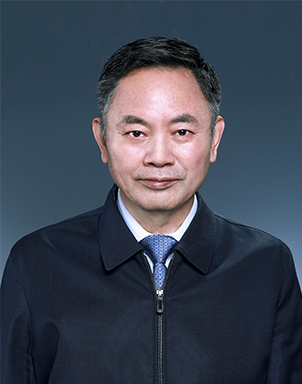 Yaoxue Zhang (张尧学)合作论文数Central South University8
 Nasrullah Khan合作论文数6
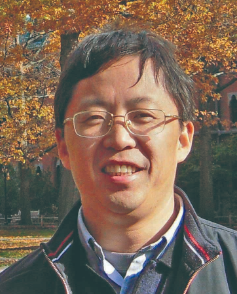 Jianxin Wang (王建新)合作论文数School of Computer Science and Engineering, Central South University6
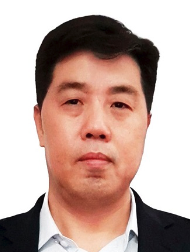 Jun Long (龙军)合作论文数Big Data Institute, Central South University6
 Muhammad Usman Saeed合作论文数5Zhi-wei CHEN (陈志伟)合作论文数4WenHe Liu (刘文和)合作论文数4XianAn Li (李先安)合作论文数4
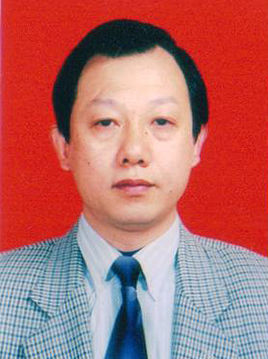 Kanghua Li (李康华)合作论文数中南大学湘雅医院4
 Faiza Khawaja合作论文数3Zhengang Hou合作论文数3Qiangqiang Dong合作论文数3Zhengkun He合作论文数3
 Jinying Dai合作论文数3Wenjun Kang合作论文数3Junkai Zhang合作论文数3Chong ZHU (朱翀)合作论文数3Fu Tan (覃芙)合作论文数3
 Junming Shao (邵俊明)合作论文数School of Computer Science & Engineering, University of Electronic Science and Technology of China3Peipei Hu (胡培培)合作论文数3
 Weihua Gui (桂卫华)合作论文数Central South University3
 Lin Chen合作论文数3
 Jianhong Chen (陈建宏)合作论文数School of Resources and Safety Engineering, Central South University3Jiaqi Yu合作论文数2Lvhang Cheng合作论文数2
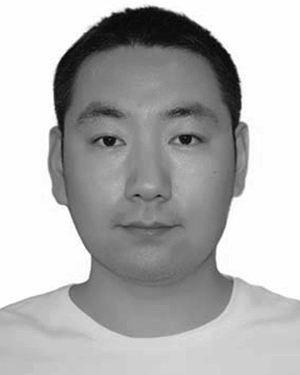 Zhongjing Yu合作论文数Univ Elect Sci & Technol China, Sch Comp Sci & Engn, Big Data Res Ctr, Chengdu 611731, Sichuan, Peoples R China2Xiangyu HOU (侯翔宇)合作论文数2qiang wu (吴强)合作论文数2Wei Zhu合作论文数2TieCheng Xiang (向铁城)合作论文数2JieFeng Li (李杰锋)合作论文数2ZhanSheng Deng (邓展生)合作论文数2LiKe Chen (陈立科)合作论文数2Jin Zheng (郑瑾)合作论文数2Bo Xiong (熊波)合作论文数2Xuan Zhang (张璇)合作论文数2
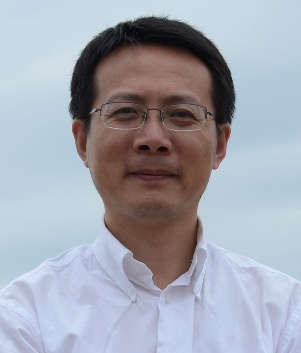 Weimin Li (李卫民)合作论文数School of Computer Engineering and Science, Shanghai University2
 Jie Hu (胡节)合作论文数School of Computing and Artificial Intelligence, Southwest Jiaotong University2
 Ghulam Ali (古拉姆·阿里)合作论文数Centre for Energy Systems, National University of Sciences and Technology2
 Jianer Chen (陈建二)合作论文数Department of Computer Science and Engineering, Texas A&M University;School of Computer Science and Cyber Engineering, Guangzhou University2
 Kai Wang (王凯)合作论文数School of Automation, Central South University2
 Weiping Wang (王伟平)合作论文数School of Computer Science and Engineering, Central South University2Chunhua Zhu (朱春华)合作论文数2Yunqiao Tan合作论文数2




