BackgroundMajor vault protein (MVP) is the major component of vault, a eukaryotic organelle involved in multiple cellular processes, and is important in multiple cellular processes and diseases including the drug resistance in cancer chemotherapies. However, the role of MVP in lung cancer remains unclear.MethodsWe examined MVP expression in 120 non-small cell lung cancer (NSCLC) tumors and matched normal tissues by immunohistochemistry. Its relationship with NSCLC prognosis was determined by investigating the patient cohort and analyzing the data from a published dataset consisting with more than 1900 lung cancer patients. We further performed shRNA-introduced knockdown of MVP in Lewis lung carcinoma (LLC) cells and examined its effects on the tumor formation in a xenograft mouse model and the tumor cell proliferation, apoptosis, and signal transduction in vitro.ResultsWe found that MVP was up-regulated significantly in tumor tissues compared with the matched tumor-adjacent normal tissues. The increased expression of MVP in lung adenocarcinoma was associated with a better prognosis. Knockdown of MVP in LLC cells promoted xenografted lung cancer formation in mice, which was accompanied with accelerated tumor cell proliferation and suppressed cell apoptosis in vitro. Knockdown of MVP stimulated STAT3 phosphorylation, nuclear localization, and activation of JAK2 and RAF/MEK/ERK pathways in LLC cells. Administration of STAT3 inhibitor WP1066 could prevent MVP knockdown induced tumorigenesis.ConclusionsOur findings demonstrate that MVP may act as a lung tumor suppressor via inhibiting STAT3 pathway. MVP would be a potential target for novel therapies of lung adenocarcinoma.
Class A scavenger receptor (SR-A) plays an important role in macrophage adhesion. However, the underlying mechanism remains unclear. We previously found that 78 kDa glucose-regulated protein (GRP78) inhibited SR-A-mediated ligand internalization into macrophage by binding to SR-A. The aim of the study was to investigate whether GRP78 could regulate SR-A-mediated cell adhesion. We demonstrated that GRP78 bound directly to SR-A by fluorescence resonance energy transfer (FRET) assay. Overexpression of GRP78 inhibited macrophage adhesion via SR-A. These results suggest that GRP78 may act as an inhibitor of macrophage adhesion via SR-A.
In response to hyperglycemia in patients with diabetes, many signaling pathways contribute to the pathogenesis of diabetic complications, including diabetic retinopathy (DR). Excessive production of inflammatory mediators plays an important role in this process. Amadori-glycated albumin, one of the major forms of advanced glycated end-products, has been implicated in DR by inducing inflammatory responses in microglia/macrophages. Our goal was to delineate the potential cross talk between class A scavenger receptor (SR-A) and the receptor for advanced glycated end-product (RAGE) in the context of DR. We show here that SR-A ablation caused an exacerbated form of DR in streptozotocin-injected C57BL/6J mice as evidenced by fundus imaging and electroretinography. Immunohistochemical staining and RT-PCR assay indicated that there was augmented activation of proinflammatory macrophages with upregulated synthesis of proinflammatory mediators in the retina in Sr-a(-/-) mice. Overexpression of SR-A suppressed RAGE-induced mitogen-activated protein kinase (MAPK) signaling, whereas RAGE activation in macrophages favored a proinflammatory (M1) phenotype in the absence of SR-A. Mechanistic analysis on bone marrow-derived macrophages and HEK293 cell line revealed that SR-A interacted with and inhibited the phosphorylation of mitogen-activated protein kinase kinase 7, the major kinase in the RAGE-MAPK-NF-κB signaling, thereby leading to diminished secretion of proinflammatory cytokines. Our findings suggest that the antagonism between SR-A and RAGE contributes to the pathogenesis of DR by nurturing a disease-prone macrophage phenotype. Therefore, specific agonist that boosts SR-A signaling could potentially provide benefits in the prevention and/or intervention of DR.
 Xiaoyu Li (李晓宇)合作论文数School of Basic Medical Sciences, Nanjing Medical University3
 Xudong Zhu (朱旭东)合作论文数School of Basic Medical Sciences, Nanjing Medical University3
 Jingjing Ben (贲晶晶)合作论文数School of Basic Medical Sciences, Nanjing Medical University3
 Nan Li (李南)合作论文数College of Economics and Management, Nanjing University of Aeronautics and Astronautics3
 Qing Yang (杨青)合作论文数3
 Qi Chen (陈琪)合作论文数School of Basic Medical Sciences, Nanjing Medical University3Hui Bai合作论文数3
 Hanwen Zhang (张瀚文)合作论文数School of Basic Medical Sciences, Nanjing Medical University2
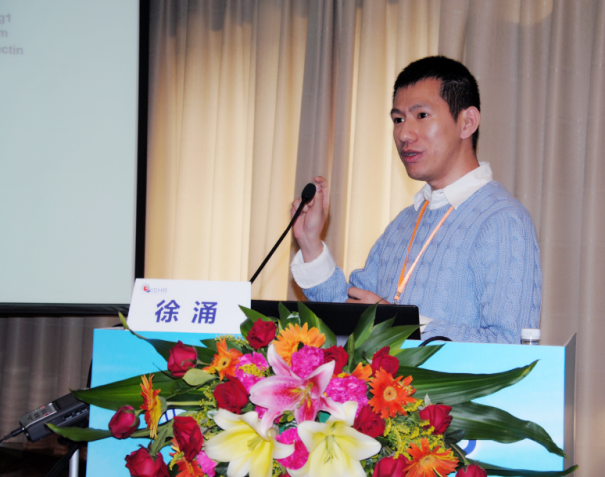 Yong Xu (徐涌)合作论文数南京医科大学基础医学院2Xiaodan Zhou合作论文数1Huang Min合作论文数1Bin Jiang合作论文数1Yan Zhang合作论文数1Jin Xu合作论文数1Ke Ma合作论文数1Lili Chen合作论文数State Key Laboratory of Pharmaceutical Biotechnology, Department of Biochemistry, College of Life Sciences, Nanjing University, Nanjing 210093, PR China1Yu Qi合作论文数Nanjing Med Univ, Dept Pathophysiol, Key Lab Cardiovasc Dis & Mol Intervent, Nanjing 211166, Jiangsu, Peoples R China1Keran Li合作论文数1QingQing Ding (丁清清)合作论文数1Zhang Yan合作论文数1Li Kexue合作论文数1
 Qin Jiang (蒋沁)合作论文数Eye Hospital,Nanjing Medical University1
 Chaojun Li (李朝军)合作论文数State Key Laboratory of Reproductive Medicine and Offspring Health, Nanjing Medical University1Yaoyu Chen (陈耀宇)合作论文数江苏省人民医院血液科1
 Junqing Ma (马俊青)合作论文数Department of Orthodontics, Stomatological Hospital Affiliated to Nanjing Medical University1




