Mollisol is crucial for solving food security issues, but long-term excessive application of chemical fertilizers has led to severe Mollisol degradation in Northeast China, especially a rapid decline in soil organic carbon (SOC). In context of the use of crop-herbage intercropping and straw return as alternatives for some chemical fertilizers, it is important to understand how crop-herbage intercropping and straw return combined with chemical fertilizers influence labile organic carbon (LOC) fractions that improve SOC. To address this, this study explored how the combined application of maize (Zea mays L.)-Melilotus officinalis intercropping, straw return, and chemical fertilizers affect LOC fractions and mineralized carbon (MC) from the perspective of physical property-mediated pathways. Thus, a field experiment with six treatments was established in the Songnen Plain of Northeast China: (1) maize monoculture without chemical fertilizers and straw return (CK), (2) maize monoculture with chemical fertilizers and no straw return (CF), (3) maize monoculture with chemical fertilizers and straw return (CFS), (4) maize-M. officinalis intercropping and straw return combined with full application of chemical fertilizers (CFSM), (5) maize-M. officinalis intercropping and straw return combined with half application of chemical fertilizers (1/2CFSM), and (6) maize-M. officinalis intercropping and straw return without chemical fertilizers (SM). The CF and CFS groups had no effect on bulk density and porosity but reduced specific gravity. The CFSM group increased water contents, porosity, LOC fractions, SOC, MC, and CO2 release rate and decreased bulk density and specific gravity. Compared with the CF group, the 1/2CFSM group enhanced water contents, microbial biomass carbon, and water-soluble organic carbon (WSOC) to 6.36%, 17.91%, and 11.6%, respectively. We found that maize-M. officinalis intercropping, straw return, and reducing chemical fertilizers application improved LOC fractions to increase SOC by positively affecting bulk density, specific gravity, and water contents. Further analysis indicated that WSOC was a key determinant of SOC and maize yields. These findings provide a strategy to increase SOC and rehabilitate degraded soils through crop-herbage intercropping and straw return combined with reducing chemical fertilizers application, which will contribute to a sustainable and environmentally friendly agriculture.
As an important part of the ecosystem, saline-alkali soils are in urgent need of efficient and environmentally friendly soil conditioners. Biochar and wood vinegar are regarded as organic soil improvement and plant growth regulators to improve soil physicochemical properties and promote crop growth. However, the mechanism of how inorganic phosphorus bacteria increase phosphorus when biochar and wood vinegar applied to saline-alkali soils is not clear. Herein, the present study was designed to investigate the effects of biochar and wood vinegar with different rates on physicochemical properties of saline-alkali soils and inorganic phosphorus bacteria diversities and to discuss the mechanism of biochar and wood vinegar on available phosphorus by pot experiments. The application of biochar and wood vinegar exhibited an effect on the decrease in pH and salt contents and the increase in soil porosity, soil nutrients, and hundred-grain weight of rice. The 600 kg ha(-1) biochar and 1800 kg ha(-1) wood vinegar group showed the most significant increment in available phosphorus, alkaline phosphatase, acid phosphatase, and neutral phosphatase activities, with the increases of 49.24%, 40.35%, 48%, and 149%, respectively. The 600 kg ha(-1) biochar and 1200 kg ha(-1) wood vinegar group significantly enhanced microbial biomass phosphorus concentrations by 41.29%. Moreover, biochar and wood vinegar shifted inorganic phosphorus bacteria composition structure and promoted its diversities, more so at a higher rate of wood vinegar application. The dominant species of inorganic phosphorus bacteria were Proteobacteria, Gammaproteobacteria, Alphaproteobacteria, Pseudomonas, and Rhizobium in saline-alkali soils. The Alphaproteobacteria and Hydrogenophaga were the key microorganisms reducing pH and salt contents and increasing available phosphorus contents in saline-alkali soils. In conclusion, the application of biochar and wood vinegar was a useful strategy to improve saline-alkali soils.
农业产业的数字化是现代农业发展的基础和关键,是北大荒集团农业现代化的重点发展领域.发展数字农业需要创新应用众多前沿科技成果,加强集中统筹、组织领导和标准方案管控,突出北大荒集团现代农业发展独特优势,强化支持力度,并率先取得突破.数字农业建设将进一步夯实北大荒集团现代农业创新发展数字技术基础,构筑新一代人工智能等信息技术支撑下的现代农业生产体系、经营体系和产业体系,增强北大荒集团保障国家粮食安全的战略地位.
灰斑病、锈病和大斑病给玉米产业造成巨大经济损失,精准诊断可降低其对农业发展的不良影响.文章基于深度迁移学习理论提出一种两阶段迁移学习的EfficientNet模型,解决识别复杂背景玉米叶部病害过程中出现的域迁移和小样本问题.经ImageNet至Plant Village及Plant Village至本地数据集(Localdataset)的两阶段迁移学习后,微调的EfficientNet模型与先进的深度网络模型在预留的玉米病叶数据集上进行预测.两阶段迁移学习试验表明,EfficientNet B4模型性能最优.第一阶段和第二阶段B4模型准确率分别达到98.61%和99.10%,F1分数达到0.9840和0.9908,此外B4模型参数量比先进深层卷积神经网络少.B0模型参数量对标轻量级卷积神经网络,识别效果优于两种经典MobileNet结构,更适合移动端搭载.此外,训练过程中应用Mish激活函数可提升模型性能.经两阶段迁移学习的EfficientNet有效解决训练不充分和域迁移等问题,为田间复杂背景下玉米叶部病害识别提供应用实例,为智慧农业移动设备开发提供理论基础.
农村居民生活类支出是研究农户生活质量与收入变化的重要指标,探究甘肃省干旱区农户家庭生活类不同支出水平的影响因素,为改善甘肃省干旱区农户生活水平奠定实证基础,对推进全面建设小康社会具有重要意义.基于甘肃省1021户干旱区农户调查数据,运用核密度估计和分位数回归估计等分析方法,对干甘肃省干旱区农户生活类支出进行研究.结果表明,从总体上看甘肃省干旱区农户家庭生活类支出水平偏低且具有同质性;从影响因素上看,甘肃省干旱区农户户主年龄和受教育年限对家庭生活类支出影响不显著,家庭可支配收入和家庭总人口对家庭生活类支出有决定性意义的正向影响关系.为改善甘肃省干旱区农户生活水平,从改善外部生态、改变生产方式、增加农户收入三个维度入手,着力培育生态、生产、生活"三生协调"模式,提高农户生活质量,丰富农户生活消费结构.
随着新冠肺炎疫情的持续发展,在能源等大宗商品价格高涨的情况下,全球经济受到不同程度的影响.我国"能耗双控"等因素限制用电,导致粮食价格大幅上涨,农产品价格波动明显,我国农业面临严峻挑战.本文立足国内外大背景,重点分析了限电对我国农业产生的影响,阐述了北大荒作为我国粮食安全"压舱石"是如何科学多举措应对限电危机,使农业实现可持续高质量发展.
Environmental regulations have been intensified across the country under the pressure of the national “double carbon” strategy, the constraints of energy-saving and emission-reduction targets by enterprises, and public opinion. The tightening of environmental regulations is bound to impact the innovation behavior of heavily polluting enterprises; however, it remains uncertain whether the impact is positive or negative. Using a differences-in-differences approach of data from listed companies in China’s heavily-polluting industries between 2010 and 2016, this paper examines the changes in their innovation behavior under the tightening environmental regulations after the “smog explosion” event as a “quasi-natural experiment” at the end of 2011. The study found that the “smog event” had a significant net negative effect on the innovation behavior of heavily polluting firms, with a significant decrease in their innovation inputs. The quantile regression results show that the R&D intensity of enterprises is related to the haze treatment effect in a U-shaped curve. Further research found that the decline in innovation investment was more significant for state-owned heavily-polluting firms compared to private heavy polluting firms. Robustness tests indicate that the empirical results of this paper are somewhat robust. This paper aims to identify the contradictory roots of the “Porter hypothesis” debate by analyzing the differences in innovation behavior of enterprises with different R&D intensity and different property rights.
本文阐述了北大荒集团发展绿色农业的重要意义,介绍了集团发展绿色农业的现状及存在的问题,针对存在的问题,经过实地调研、座谈交流等多种形式深入研究后,提出北大荒集团发展绿色农业的指导思想、基本原则和主要目标及发展绿色农业的重点任务和保障措施,并提出了支撑政策和建议.旨在为推进北大荒集团践行"绿水青山就是金山银山"理念、做强绿色产业、做大绿色产品市场、全力发展绿色农业提供参考和建议.
智慧农业集成应用最新农业科技成果,代表全球农业发展的方向.本文建议海南省应大力发展智慧农业,率先开展智慧农业示范区的"点示范",重点加强"三区两中心"的"面推广",统筹推进"智慧农服"的"全覆盖",着力构建农业大数据分析支撑体系,积极探索新型智慧农业投融资方式.
产业链、供应链、创新链、价值链"四链融合"是产业升级的表现形式和基本路径.粮食产业"四链"主体之间的相互作用主要是通过供求机制、竞争机制、价格机制、激励机制、协同机制和信用机制等进行的.在不断巩固提升国家粮食产能基础上,通过壮链、补链、联链,推动粮食生产体系、经营体系、产业体系建设,助力我国农业高质量发展和乡村振兴.
Earthworm manure is a soil enhancement product that is homogeneous, permeable, ecological, and organic. It has a particle structure that is substantially greater than the soil’s surface area. Using a suitable quantity of earthworm fertilizer in the soil will improve the nutritional state of the soil surface, as well as the microbial control system and drainage capacity. Bioengineering earthworm dung is now a tough challenge, but picture quality evaluation can help enhance the organic fertilizer treatment process for earthworm manure. Researchers began researching appropriate assessment methods in order to assure the influence of earthworm excrement and to precisely and effectively measure changes in image quality. As a result, we must first determine the consistency qualities, extract the image's color and texture, and then create a comparable vector with 11 dimensions. Finally, we learn how to train the picture quality regression model using the mechanical learning (ML) approach. As a result, an effective and precise image quality evaluation system was created, and earthworm manure bioengineering was effectively applied.
为加强对粮食生产区水稻倒伏面积、位置及严重程度的识别和监测,基于黑龙江红卫农场2019年9月22日的哨兵2号卫星多光谱遥感影像计算水稻的光谱反射率、植被指数以及图像纹理3种特征,利用决策树分类法对倒伏水稻进行识别和分类.首先根据现场调查和目视解译结果选定倒伏水稻样点,分析正常、轻度倒伏、中度倒伏、重度倒伏4种倒伏类型水稻的光谱反射率特征,发现在绿光、红光、红边3以及近红外1处存在较大差异.植被指数特征中,NDVI和RVI均随水稻倒伏程度加深而下降,GRVI、DVI和NDREⅠ则在水稻倒伏后逐渐增加.其中,不同倒伏类型水稻的DVI显示出了较大的差异.4种水稻倒伏类型在可见光波段的均值纹理特征差异显著,尤其是蓝光波段的纹理均值是区分不同倒伏类型的重要特征.基于对水稻倒伏敏感的特征量构建决策树,成功区分了正常、轻度倒伏、中度倒伏和重度倒伏4种倒伏类型,与实际倒伏面积对比的识别误差分别为5.33%、6.51%、10.25%和-7.75%,识别的准确度较高.
国家为进一步发挥海南省生态优势,深入开展生态文明体制改革综合试验,建设国家生态文明试验区,制定了国家生态文明试验区(海南)实施方案的背景下,海南省在一三产业融合型生态经济建设方面有了一些进展.本文通过分析海南省生态建设现状和生态经济发展问题,列举了一三产业融合型生态经济产业类型与海南省一三产业融合型生态经济空间格局,并提出海南省一三产业融合型生态经济空间格局构建的对策建议,对推进海南省承接产业溢出参与粤港澳大湾区产业协作分工,培育新型农民和增加就业,促进生态示范省建设和绿色产业经济健康协调发展具有重要作用意义.
国有企业内部劳动、人事和分配"三项制度"改革是国有企业改革的重要内容,也是建立现代企业制度的必然要求.本文按照改革开放以来国企改革的四个阶段(即:实施简政放权阶段、推行多种经济责任制阶段、建立现代企业制度阶段和新时期国企混改阶段)全面系统地回顾了黑龙江垦区国有企业三项制度改革的历史进程、改革内容和改革成果,总结了垦区国有企业三项制度改革的经验和教训并得出几点启示,以期对下一步深化农垦国有企业三项制度改革提供借鉴.
本文以内蒙古伊利实业集团股份有限公司、内蒙古蒙牛乳业(集团)股份有限公司、光明乳业股份有限公司国内三家行业标杆企业为对标对象,通过深入挖掘和剖析其有益经验与管理亮点,总结和提炼其生产经营的有力措施,并提出助推企业高质量发展和提升核心竞争力的相关对策建议,以期为完达山乳业股份有限公司更好更快发展提供理论参考和借鉴.
为适应黑龙江垦区不同发展时期对国有资产管理的要求,垦区结合实际,与时俱进,不断充实与完善农垦国有资产管理制度,为加强国有资产管理提供了重要的制度保障.本文分别阐述了不同时期垦区探索建立国有资产监督管理制度的经验做法,以期为北大荒农垦集团继续深化国有资产监管体制改革,进一步完善国有资产监管制度体系提供借鉴.
从20世纪90年代初开始,根据国家财会制度改革要求,黑龙江农垦企业(北大荒集团)也相应地进行了财会制度改革,逐步与国家新财会制度相衔接.本文从贯彻执行"两则""两制"等四方面对黑龙江垦区财会制度改革与新旧财会制度衔接进行研究,以期对北大荒集团进一步深化财会制度改革提供借鉴.
本文阐述了全面预算管理的概念和内容,分析了当前企业全面预算管理存在的问题,并提出了有效实现全面预算管理的对策与建议,以期助力北大荒集团构建现代国有企业管理体系,成为现代一流企业.
以哈尔滨市4处代表性居住区与龙塔广场(对照样点)为研究对象,采用隶属函数分析法,于2019年7、8月,测定该4处居住区绿地与龙塔广场的噪音量、空气负离子(negative air ion,简称NAI)浓度和滞尘量3项生态指标,研究了不同居住区中绿地的生态效应.结果 表明:在不同月份、一天内不同时段,不同居住区绿地与龙塔广场绿地各项生态指标相比,绿地减噪量、NAI浓度增量、滞尘量的变化趋势不尽相同.居住区绿地减噪量(4.15、5.42、2.55、5.50 db)、NAI浓度增量(187、139、170、215个·cm 3)>龙塔广场绿地(2.44 db、89个·cm-3),龙塔广场绿地的滞尘量(2.29 mg·m-3)>居住区绿地(2.09、1.41、2.59、1.80mg·m-3).对于不同月份生态效应隶属函数分析中,不同环境中绿地生态效应有所不同,各居住区与广场绿地7月总体生态效应(0.20、0.22、0.15、0.30、0.07)>8月总体生态效应(0.19、0.16、0.13、0.29、0.11×10⁻²).居住区绿地的生态效应(0.20、0.19、0.14、0.30)>龙塔广场绿地(0.03),其中远大都市绿洲居住区的绿化生态效应最佳(0.30).因此,居住区绿地绿化率、植物多样性、配植形式、乔灌比等生态指标可显著影响其生态效应.
国有企业内部劳动、人事和分配"三项制度"改革是国有企业改革的重要内容,也是建立现代企业制度的必然要求.本文按照改革开放以来国企改革的四个阶段(即:实施简政放权阶段、推行多种经济责任制阶段、建立现代企业制度阶段和新时期国企混改阶段)全面系统地回顾了黑龙江垦区国有企业三项制度改革的历史进程、改革内容和改革成果,总结了垦区国有企业三项制度改革的经验和教训并得出几点启示,以期对下一步深化农垦国有企业三项制度改革提供借鉴.
 BaoSheng Zhang (张宝生)合作论文数11MengLong An (安蒙龙)合作论文数10mingming guo (郭明明)合作论文数9YuanFu Zhang (张元福)合作论文数8XiangLiang Ceng (曾祥亮)合作论文数8
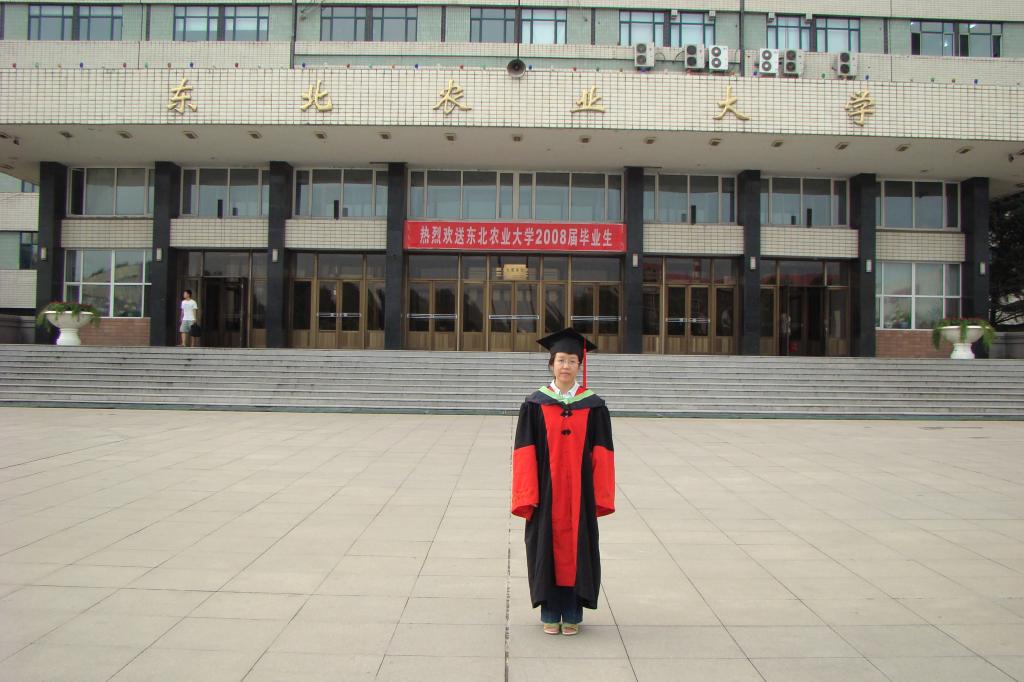 Huimin Liu (刘慧民)合作论文数东北农业大学园艺园林学院6Nie Ying (聂颖)合作论文数5lin dai (代琳)合作论文数5Xin Zhang (张鑫)合作论文数5HongBo Wang (王洪波)合作论文数5
 Wei Zhao (赵伟)合作论文数School of Resources and Environment, Northeast Agricultural University5Yanbing Gao (高炎冰)合作论文数5Hongyan Wang (王宏燕)合作论文数5TaiPeng Sun (孙泰朋)合作论文数4LinLin Ding (丁琳琳)合作论文数4Xin Liu (刘馨)合作论文数4Yang Wang (王阳)合作论文数4Fei Cao (曹菲)合作论文数4kui shao (邵奎)合作论文数3WeiMing Lv (吕维明)合作论文数3Ying Nie (聂颖)合作论文数3Lili Zhang (张黎黎)合作论文数3Ling Wang合作论文数2zhanmin li (李战民)合作论文数2Zheqing Tang合作论文数2jihong xin (辛霁虹)合作论文数2ximei hou (侯喜梅)合作论文数2yandong jiao (焦艳冬)合作论文数2XIAO Bing (肖冰)合作论文数2LI Mengyu (李梦瑜)合作论文数2Xiao-fang LIN (林晓芳)合作论文数2XU Bo (徐博)合作论文数2YuTian Meng (孟雨田)合作论文数2ShengYuan Yu (于省元)合作论文数2ChunLei Zou (邹春蕾)合作论文数2QuanCheng Gao (高全成)合作论文数2Yao Li (李垚)合作论文数2
 Daidi Che (车代弟)合作论文数School of Horticulture, Northeast Agricultural University2
 Yajun Chen (陈雅君)合作论文数School of Horticulture, Northeast Agricultural University2Fu Shi-Cong (傅世枞)合作论文数2chunhui zhang (张春慧)合作论文数2
 Xianjie Wang (王先杰)合作论文数Beijing University of Agricuture2Chunfeng Chen (陈春锋)合作论文数2
 Jiangli Wang (王江丽)合作论文数Agricultural of College of Shihezi University2Guang Zhao合作论文数2Yanshuang Che合作论文数2guangfeng jiang (蒋光锋)合作论文数1




