Recently, the ever-increasing demand for wearable electronics has significantly accelerated the development of flexible strain sensors. Liquid metal exhibits potential applications in smart wearable devices because of its high electrical conductivity and room temperature fluidity. However, its applications are limited by challenges in terms of issues in achieving liquid metal (LM) non-leakage, wide detection range, and high conductivity simultaneously. Herein, we developed a non-leakage and high stretchable sheath–core structure liquid metal-based strain-sensing fiber and, in particular, unique conductive pathways were constructed within core fibers featuring a microporous structure, where gallium-based liquid metals (LM) formed islands, and carboxyl carbon nanotubes (CNTs) served as bridges under large strains. This structure ensures the stable containment of liquid metal (LM) without any leakage. Through the cooperative interaction between carboxyl carbon nanotubes (CNTs) and liquid metal (LM), the composite fiber SA@LM-CNT achieves an impressive detection range of up to 190
The shear thickening fluid as a protective material has received increasing attention, and its impact resistance and its rheological properties are controllable by integrating various kinds of additives to a single phase shear thickening fluid. In this paper, the rheological properties of shear thickening fluids with 26 wt.% fume silica, PEG200 and different mass fraction of multi-walled carbon nano-tubes are investigated, and the effect of temperature from –5 °C to 55 °C on steady state rheological properties of 1.0 wt.% multi-walled carbon nanotubes reinforced shear thickening fluids is studied. Finally a single yarn pull-out test is conducted to examine the influence of multi-shear thickening fluid on the shear strength and inter-yarn friction of fabrics. The results show that the addition of multi-walled carbon nanotubes can improve significantly the viscosity and shear thickening efficiency.
The shear thickening fluid as a protective material has received increasing attention, and its impact resistance and its rheological properties are controllable by integrating various kinds of additives to a single phase shear thickening fluid. In this paper, the rheological properties of shear thickening fluids with 26 wt.% fume silica, PEG200 and different mass fraction of multi-walled carbon nano-tubes are investigated, and the effect of temperature from -5?C to 55?C on steady state rheological properties of 1.0 wt.% multi-walled carbon nanotubes reinforced shear thickening fluids is studied. Finally a single yarn pull-out test is conducted to examine the influence of multi-shear thickening fluid on the shear strength and inter-yarn friction of fabrics. The results show that the addition of multi-walled carbon nanotubes can improve significantly the viscosity and shear thickening efficiency.
People increasingly need air filters with ultra-high efficiency due to air pollution. In this work, BNNSs (boron nitride nanosheets) were prepared by chemical method using potassium permanganate and sulphuric acid. This functionalization induced the exfoliation of the layered structure of h-BN into monolayer or few-layer sheets. Infrared spectrum analysis shows that the oxidation functional group was introduced into hexagonal boron nitride. Further investigation of the crystallization property was accomplished by XRD analysis in conclusion that the crystal structure was not changed for the introduction of oxidation functional group. The polyacrylonitrile (PAN) and BNNSs/PAN nanofiber films were constructed by electrospinning. It is found that the electrospun nanofiber films had good filtration effect and could capture the most particles in the air because of electrostatic adsorption. The removal rate of particle by the filters reached 99.8% for BNNSs/PAN nanofiber films. Addition of BNNSs increaed the mechanical property of the nanofiber films.
The dynamic stab-resistance behaviors of laminate composites composed of TA15, TA1 titanium with various thicknesses of ultra-high-molecular-weight polyethylene, and polyester fabrics are characterized under dynamic stab testing conditions and analyzed by a new method using the average velocity of tension-compaction-plastic deformation process to calculate the ratio of energy in different damage process. The damaged area is observed by optical microscopy and SEM, and the impact force-time curve and damage degree are analyzed, and the energy of different processes during the dynamic stab test is calculated. The results show that laminates with the structure of high strength material among the low strength materials have much better performance than other specimens.
利用热塑性聚氨酯(TPU)和碳化硅(SiC)涂覆芳纶织物,制备具有良好柔韧性和抗刺穿性能的防刺织物.测试了织物的刚柔性、层间剥离性能和准静态穿刺性能,探讨碳化硅含量、粒径大小对涂层织物防刺性能的影响.结果表明:添加碳化硅颗粒后的涂层溶液能够进一步提高织物的防刺性能,而且柔韧性下降较小;当碳化硅粒径相同时,涂层织物的防刺性能随着添加量的增加先增大后减小,当30 nm碳化硅质量分数为1%,或80 nm碳化硅质量分数为3%时,涂层织物有较好的防刺性能.
The effects of different microstructure on the dynamical stab-resistant property of TA15 alloy are investigated. The specimens were tested on the stab apparatus after heat treatment at temperature of 850, 930 and 1030°C, time of 30min and air cooled. The impact force-time curves, microstructure and fracture morphology of specimens were analyzed. The results showed that the properties of higher strength and plasticity are benefit to the performance of stab resistance of TA15 specimens, and the curves of 930°C and 850°C exhibit two peaks and longer time ranges, but the curve of 1030°C exhibits the shortest time to reach the peak of impact force, and the specimens heat treated at 850°C exhibit the better performance against the knife impactor because of fine grain and stronger grain boundary binding force to absorb the impact force energy.
为了制备防刺复合材料,以气相二氧化硅(Fumed SiO2)和碳纳米管(CNTs)为分散相,聚乙二醇(PEG200)为分散介质,采用超声分散法制备多相剪切增稠液(STFs),然后以浸渍工艺将其与超高分子量聚乙烯(UHMWPE)纤维织物复合.结果 表明,CNTs颗粒的加入会使得STFs体系黏度和剪切应力增加,增稠周期缩短,增稠比增大,具备更高的储能模量和耗能模量;UHMWPE织物/STFs复合材料纤维束间的摩擦增加,抗穿刺性能增强,在不影响防刺性能的前提下,织物层数减少.
通过单纱拔出、防刺性能、柔顺性和SEM测试,分析了纳米SiO2/WPU复合芳纶材料的防刺性能.结果表明,织物经WPU复合后,纱线间紧密程度增加,防刺性能显著提高;随着纳米SiO2的加入,复合材料的防刺性能进一步提高,当纳米SiO2含量为3%时,防刺性能最好,与纯织物相比,在质量增加62%的情况下,复合材料的最大穿刺力增加了688%,能量吸收增加了692%;当纯织物与复合材料防刺性能几乎相同时,柔顺性也几乎相同,同时,复合材料能够提高穿着者的活动灵活性.
为研究多相剪切增稠液(STFs)的流变行为,以气相二氧化硅(SiO2)、碳化硅(SiC)为分散相,聚乙二醇(PEG200)为分散介质制备多相剪切增稠液.利用旋转流变仪测试不同质量分数SiC的剪切增稠液的流变性能,分析多相剪切增稠液的稳态以及动态流变行为规律.结果表明:SiC颗粒的加入会使得STFs体系的黏度增加.稳态流变情况下,STFs随着剪切速率的增加呈现先变稀再增稠的现象;随SiC含量的增加,临界剪切速率减小,增稠周期缩短,增稠比增大.动态流变情况下,分散体系中耗能模量(G″)都大于储能模量(G'),以耗能为主;体系主要表现为黏性,模量随着SiC含量的增加有所提高.
首先对TA15合金进行了变形量分别为60%,75%和90%的轧制,然后在800、850和930℃分别进行了15、30、45和60 min的热处理试验.利用OM、SEM和Image-pro Plus 5.0等手段研究了TA15合金在不同状态下的显微组织和静态球化行为.结果表明:静态球化过程中晶内针状次生α相断裂及球化行为比晶界α相更易于发生;TA15合金静态球化行为的发生对温度敏感,850℃获得球化比例可增加至95%,930℃球化率不变但晶粒长大明显,晶界清晰化.通过JMAK方程对TA15合金的静态球化动力学过程模拟,发现温度、时间对球化率的影响规律为随热处理温度和原始变形量的增加,球化率随热处理时间增加但上升趋势降低.
Spheroidization is the most effective and direct mechanism for grain refinement of titanium alloys. The study of dynamic spheroidizing and static spheroidizing behavior of titanium alloys has great significance to the preparation of high performance fine-grained titanium alloy products. The spheroidization behavior, spheroidization mechanismand spheroidization kinetics of titanium alloys were reviewed in this paper. The problems existing in the study of titanium alloy spheroidization were analyzed.According to the present research situation at home and abroad, the trend of grain refinement study of titanium alloy and the problems that need to be solved were put forward.
为研究高强织物动态防刺机制,从力学角度分析了在刀具穿刺过程中织物的受力变化,并通过FESEM扫描,分析了刀具穿刺过程中的能量变化.研究结果表明:当叠层角度为45°时,织物的防刺效果最佳;刀具穿刺过程中的能量除克服织物的弹性外,还有部分能量因摩擦转化为热能,该热能至少可使温度升高至255℃;要提高织物的防刺性能,除了纤维要具有高强度和高模量外,织物中纱线间的紧密程度更为重要.
The influence of different hot deformation parameters on globularization process of lamellar microstructure of TA15 alloy were studied by rolling experiment and OM, TEM observation. The results show that deformation between α lamellar and β phase in Widmanstatten microstructure is not consistent, with the increase of the deformation, energy aggregation reaches the grain boundary migration of α phase and the deformation activation energy required the β phase embedded in the lamellar α phase, that is, lamellar ball occurs. When the deformation temperature is 920 ℃, dynamic response is more likely to occur at high temperature, which is not conducive to the spheroidization of lamellar α phase; when the deformation temperature is 880 ℃, the microstructure globularization rate of TA15 alloy is obviously increased.
As the hot working temperature range of TA7 titanium alloy is narrow, and the plasticity of the processing technology is poor, forging, rolling and other processing links are easy to crack. In order to reduce the cracking, three methods were adopted in the rolling process: in one heating, explosive composite pure titanium slab was rolled by a relatively low rolling temperature; high temperature and short time heating were used, and cogging was in the temperature above the phase change; the cold rolling was changed into warm-rolling at 350-400 ℃. The results show that the above method can effectively improve the processing plasticity, reduce the cracking risk, and obtain good microstructure and properties.
Microstructure and properties of TA7 alloy sheets after different heat-treatment and deformation were studied.The results show that the strength of TA7 alloy decreases and the plasticity increases with anneal temperature rising at the temperature range of 700-850 ℃.The strength of TA7 alloy decreases and recrystallization can be obtained with the increase of deformation.
研究了TA7合金在不同热处理温度下的再结晶程度对板材力学性能的影响.结果表明:随热处理温度升高,TA7合金板材再结晶程度增强,对应的板材塑性增加,强度略有下降;断口分析表明,随再结晶程度增加,位错聚集区域减少,加工应力释放,断裂区域大部分呈现出细小椭圆或等轴的韧窝,表现出更好的材料塑性.
对原始组织为魏氏体的TA15合金进行了二火次轧制,研究了合金板材在不同轧制变形量时的球化行为及变形机理.结果表明:原始组织为片层状的TA15板材轧制过程中随变形量增加,球化程度增加.当总变形量达75%时,约10%~15%片层发生球化;当轧制总变形量达到90%时,全部片层组织球化.因此,通过大变形能大大提高球化率而减少片层厚度.
TA7钛合金可被用于制造飞机蒙皮、喷气发动机焊接轮环等中等强度的焊接结构件,但由于存在成形塑性差、易开裂、成品率低等问题,TA7钛合金板材的加工难度较大.为此,针对TA7钛合金板材的生产工艺进行了探索性实验,对比了3种不同制备工艺对TA7钛合金板材开裂情况、显微组织及力学性能的影响.结果表明:开坯轧制在低温区域进行,一火轧制后板材表面开裂明显,成品板材晶粒细小,但组织均匀性不高;开坯轧制在相变点附近的高温区域进行,一火轧制后板材开裂程度明显改善,成品板材晶粒有所长大,但组织均匀性依旧较差;开坯轧制在低温区域进行,且后期采用换向轧制得到的板材表现出最优的综合性能.此外,3种工艺制备的TA7钛合金成品板材的室温力学性能相差不大.
The TC4 titanium alloy plates with width up to 2 300 mm and thickness from 40 to 70 mm have been produced by the 2. 8-meter hot rolling mill at Western Titanium Technologies Co.,Ltd. The starting materials were triple arc-melted and multi-direction forged. And the thermal deformation process parameters were got by the thermal simulation experiment. It was found that heating temperature,reduction of each pass and strain rate are key processing parameters. The optical microstructure reveals that these TC4 titanium alloy plates exhibit duplex microstructure. It is composed of equiaxed primary α grains of about 25 μm size,together with colonies of elongated secondary α grains, and they are surrounded by the intergranularβphase. Mechanical properties tests show that,at the room temperature, the tensile strength of the plate is 925~960 MPa,the yield strength is 870~910 MPa and the elongation is 12. 0% ~14. 5%.
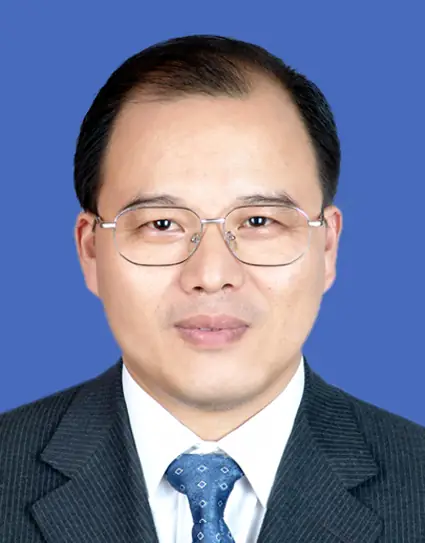 Zhengping Xi (奚正平)合作论文数China Chengtong Holdings Group Ltd.17
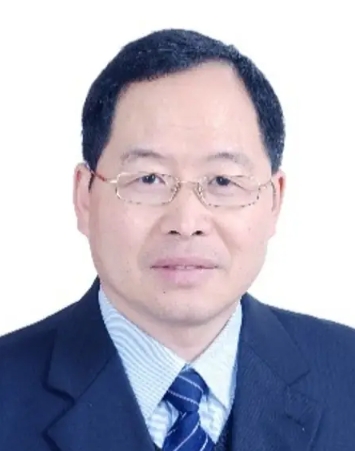 Yongqing Zhao (赵永庆)合作论文数Northwest Institute for Non-ferrous Metal Research14
 YingJie Xie合作论文数12Yun Lian Qi合作论文数12
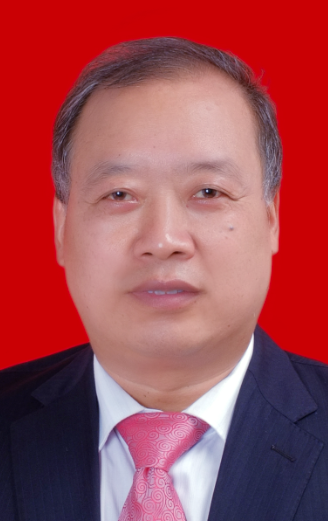 Runjun Sun (孙润军)合作论文数School of Textile Science and Engineering, Xi'an Polytechnic University11
 Qiushi Wang合作论文数Key Laboratory of Functional Textile Material and Product, Xi'an Polytechnic University),8Jianchao Yang合作论文数8Yu Du (杜宇)合作论文数8Ying Shu (舒滢)合作论文数6WenJie Fu (付文杰)合作论文数5Xing Wang (王兴)合作论文数5YuChuan Zhou (周玉川)合作论文数4Ying-ying Zhou合作论文数3Mingyue TIAN (田明月)合作论文数3
 Qy Hong (洪权)合作论文数3LiQiang Lv (吕利强)合作论文数3WeiNa Gao (高维娜)合作论文数3
 Y. Y. Luo合作论文数3Henglei Qu合作论文数3Wenzhu Gao合作论文数3ZHA Gang-qiang (查钢强)合作论文数2
 Xiaoya Jia合作论文数2Peng LEI (雷鹏)合作论文数2ChangJuan Zhang (张嫦娟)合作论文数2RuiQin Wang (王瑞琴)合作论文数2JianHui Ju (巨建辉)合作论文数2WeiDong Ceng (曾卫东)合作论文数2Yi Dai (戴毅)合作论文数2MeiYu Chen (陈美玉)合作论文数2Peng Dang (党鹏)合作论文数2Qing Zhang (张清)合作论文数2Henlei Qu合作论文数2Bing Xi (席兵)合作论文数2
 Weidong Zeng (曾卫东)合作论文数School of Materials Science and Engineering, Northwestern Polytechnical University2Caiting He合作论文数1Jing WANG (王静)合作论文数1Peng LI (李鹏)合作论文数1
 Lingjie Yu合作论文数1Jinhui XI (席锦会)合作论文数1Han FAN (范晗)合作论文数1Yafeng XIA (夏亚峰)合作论文数1Jie ZHANG (张杰)合作论文数1Li Chang合作论文数1QiuLi Xing (邢秋丽)合作论文数1Ping Guo (郭萍)合作论文数1Wei Luo (罗伟)合作论文数1Xiaocui Zhu (朱晓翠)合作论文数School of Mechanical and Aerospace Engineering, Jilin University1




