Si3N4 whiskers and nanocarbon powder were added to AlN-Y2O3-YF3 ceramics, and the microstructure, thermal conductivity and flexural strength of the samples were studied. Instead of working as one-dimensional reinforcement in AlN ceramics, the Si3N4 whiskers formed a beta-Sialon phase that significantly strengthened the grain boundaries, thereby increasing the flexural strength of AlN sample. The added carbon powder formed a transition layer at the grain boundaries and further strengthened them. The fracture mode of the samples changed from intergranular to transgranular, and their flexural strength was increased. Moreover, carbon powder reduced the concentration of aluminum vacancy and improved the thermal conductivity of the samples. Therefore, the flexural strength and thermal conductivity of AlN ceramics with carbon powder and Si3N4 whisker additives were synergistically increased to 366.4 f 16.4 MPa and 203.5 f 3.16 W m-1 K-1, respectively.
The AlN ceramics manufactured by a nonaqueous gel casting process were studied. It was shown that trimethylolpropane triglycidyl ether (TMPGE) and tetraethylenepentamine (TEPA) were suitable for the gel casting process through a nucleophilic addition reaction. This system cured at room temperature and avoided oxygen inhibition. The rheological behaviors of the slurries and bending strength of green bodies obtained under different conditions were investigated. Suspensions with a high-solid loading of 59 vol.% and low viscosity (678 mPa·s) were obtained with 1 wt.% dispersant, 20 wt.% TMPGE, and TEPA: TMPGE=1:5. The results showed that the bending strength of the green body is not only associated with the content of TMPGE, TEPA, and solid loading, but also the drying process. The bending strength greatly improved and reached 34.9 MPa after drying at 130 °C, which was strong enough for subsequent processing. With the increase of solid loading, sintered AlN ceramics exhibited higher relative density and thermal conductivity, reaching 99.6% and 152 W/(m·K) at 59 vol.%, while the optimized bending strength of 274 MPa was obtained at 55 vol.%. Meanwhile, complex-shaped ceramics without cracks were prepared.
Mitigating the growth of dendritic lithium (Li) metal on silicon (Si) anodes has become a crucial task for the pursuit of long-term cycling stability of high energy density Si-based lithium-ion batteries (LIBs) under fast charging or other specific conditions. While it is widely known that Li metal plating on Si-based anodes may introduce inferior cycling stability and cause safety concerns, the evolution of the anode/material structure and electrochemical performance with Li metal plating remains largely unexplored. A comprehensive quantitative investigation of the hybrid Li storage mechanism, combining the Li alloying/dealloying mechanism and plating/stripping mechanism, has been conducted to explore the effect of Li plating on Si-based anodes. The findings reveal that Li plating/stripping accounts for the decay of the overall Coulombic efficiency and cycling stability of the hybrid Li storage mechanism. Furthermore, alloying reactions occurring below 0 V encourage the formation of crystalline Li15Si4, which subsequently exacerbates voltage hysteresis. The performance decay is amplified as the ratio of Li plating/stripping capacity increases, or in other words, as the over-lithiation level rises, thereby posing a threat to the battery's cycling stability. These results provide valuable insights into the design of advanced Si-based electrodes for high energy density LIBs.
A solid-electrolyte interphase (SEI) with high stability and high Li+ conductivity is highly desirable for Si-based lithium-ion batteries with high energy density and superior fast charging capability. Here, we proposed constructing a superior SEI by regulating the interaction between electrolyte components and anode surfaces to achieve the above goal. With combined experimental and theoretical studies, we demonstrated that the P-based layer could selectively adsorb fluoroethylene carbonate (FEC, a common electrolyte solvent) to form a robust, thin, and dense Li3P/LiF-dominant SEI with high ionic conductivity on SiOx particles. SiOx with a uniform 6 nm-thick P layer (SiOx@P) delivered excellent electrochemical cycling stability (1050 mA h g-1, 83.3% capacity retention for 1000 cycles at 1.0C). Our Ah-level LiNi0.6Co0.2Mn0.2O2||SiOx@P pouch cell demonstrated stable cycling with a high energy density (410 W h kg-1 and 780 W h L-1 at 0.2C), along with an exceptional fast charging capability. It exhibited the capability to charge up to 86.5% of its capacity within 15 minutes and demonstrated 83.8% capacity retention after 250 cycles at a charging rate of 4C. This achievement offers a unique insight into SEI formation, providing new opportunities to construct an advanced SEI for Si-based anodes toward high energy density fast charging LIBs. We demonstrated the interaction between electrolyte composition and P interphase of Si-based battery anode, and showed its exceptional stability and fast-charging capability by the formation of a robust Li3P/LiF solid electrolyte interphase.
Isobam is widely used for fabricating ceramics through spontaneous gelation and has attracted considerable interest. However, the disadvantage of the Isobam system is the low gelation strength. The effects of suitable additives and the mechanism by which they effectively enhance the green body strength and the rheological behavior of an aluminum nitride (AlN) slurry with 50 vol% solid loading were investigated using polyethyleneimine (PEI), hydantoin epoxy resin, and trimethylolpropane triglycidyl ether (TMPGE). Results showed that the additives acted as both dispersants and cross-linkers in the AlN suspension using the Isobam gelling system. The flexural strength of the AlN green body increased by 42%, 204%, and 268% with the addition of 1 wt% PEI, 1 wt% hydantoin epoxy resin, and 0.5 wt% TMPGE, respectively. After sintering at 1700 °C, the AlN ceramic with 0.5 wt% TMPGE had flexural strength and thermal conductivity of 235 MPa and 166.44 W/(m·K), respectively, showing superior performance to the ceramics without additives.
Lithium (Li) plating, triggered by fast charging and low temperature, will cause performance degradation and safety concerns for lithium-ion batteries (LIBs). However, strategically limited and controlled Li deposition might be advantageous for enhancing energy density. The detailed mechanism and regulation for performance improvement are yet to be fully explored. This study meticulously modulates the overlithiation capacity to regulate Li plating and probes its effects on the stability of high-capacity silicon/graphite (Si/Gr) electrodes through consecutive cycling and over the calendar aging period. The Si/Gr electrode (20 wt% Si) with a 20% overlithiation degree exhibits enhanced reversible capacity in comparison to the pristine Si/Gr electrode. This improvement is attributed to precision-controlled Li deposition, the increased electrochemical utilization of Si and Gr above 0 V, and the additional intercalation/alloying reactions below 0 V, which decelerate the progression of capacity degradation and significantly boost the electrochemical performance of Si/Gr electrodes. Moreover, this tailored Si/Gr electrode with a 20% overlithiation degree attenuates the deterioration associated with calendar aging. This research not only elucidates the intricate interplay and mechanisms of Li plating on Si/Gr electrodes during overlithiation but also presents a new understanding and approach to advance the performance of LIBs and extend their service lifespan.
The effect of yttrium fluoride (YF3) on the densification behavior, microstructure, phase composition and thermal conductivity of aluminium nitride (AlN) ceramics with yttrium oxide (Y2O3) and YF3 additives were studied. Since YF3 provided liquid phases and promoted densification at a lower temperature, the sintering temperature required to reach the full density of AlN samples decreased with the increase in YF3 content. Appropriate addition of YF3 could improve the thermal conductivity of AlN ceramics, but the values of thermal conductivity decreased as YF3 increased further. It is attributed to the ability of YF3 to react with oxygen impurity was worse than that of Y2O3. Moreover, the reducing atmosphere significantly affected the phase composition, and the oxygen content in grain boundary phases decreased at 1750 degrees C and 1800 degrees C. Therefore, the proper proportion of Y2O3-YF3 additives could simultaneously improve densification and the thermal conductivity of AlN samples at a low sintering temperature.
A continuously tunable optoelectronic oscillator (OEO) with three frequency tuning mechanisms is proposed to enable frequency locking covering the whole working band. Three frequency-tuning mechanisms are employed simultaneously in the OEO, including a course tuning of microwave photonic filter, a fine tuning of phase shifter and a frequency calibration of direct digital synthesizer (DDS). The introduction of frequency compensation signal achieved by DDS increases the locking range of OEO so that the lock-out problem caused by mode hopping can be effectively solved. In the proof-of-concept experiment, a 3–6 GHz tunable RF oscillating signal has been successfully verified. The locking range of the proposed OEO is extended over 11 times compared to conventional OEO. With a 500 m optical fiber inserted in the loop, the phase noise is measured to be −110 dBc/Hz at 10 kHz offset. The Allan deviation is improved from $1.7\times 10 ^{-8}$ to $1.6\times 10 ^{-11}$ at 1000 s averaging time. To the best of the authors’ knowledge, this is the first time that a frequency tunable OEO with full locking range has been implemented.
结合硅太阳电池电致发光(EL)和光致发光(PL)的原理分析,提出利用EL和PL图像来分析太阳电池Ag-Si接触电阻性能的新方法.制备用于n型太阳电池的两组不同体系玻璃粉的正银浆料,经丝网印刷、烧结后制得太阳电池.通过PL检测、EL检测和Ag-Si接触电阻测试,对太阳电池正银电极的欧姆接触性能进行分析,发现Pb-B-Si体系玻璃制备的正银浆料经烧结后形成的电极性能较好.通过对玻璃粉的同步热分析仪(TGA-DSC)分析,发现转变温度Tg较低的玻璃粉制备的电极浆料所形成的电极接触性能较好.
>Dear editor, With the popularization of digital techniques, practical control systems are usually implemented via embedded microprocessors, and sampled-data control is applied. The system state is sampled and received by the controller only at discrete sampling instants [1]. Sampled-data control is fundamentally time-triggered,
Micro-electromechanical systems (MEMS) have dominated the interests of the industry due to its microminiaturization and high frequency for the past few decades. With the rapid development of various radio frequency (RF) systems, such as 5G mobile telecommunications, satellite, and other wireless communication, this research has focused on a high frequency resonator with high quality. However, the resonator based on an inverse piezoelectric effect has met with a bottleneck in high frequency because of the low quality factor. Here, we propose a resonator based on optomechanical interaction (i.e., acoustic-optic coupling). A picosecond laser can excite resonance by radiation pressure. The design idea and the optimization of the resonator are given. Finally, with comprehensive consideration of mechanical losses at room temperature, the resonator can reach a high Q-factor of 1.17 × 10⁴ when operating at 5.69 GHz. This work provides a new concept in the design of NEMS mechanical resonators with a large frequency and high Q-factor.
Silicon (Si) is a potential high-capacity anode material for the next-generation lithium-ion battery with high energy density. However, Si anodes suffer from severe interfacial chemistry issues, such as side reactions at the electrode/electrolyte interface, leading to poor electrochemical cycling stability. Herein, we demonstrate the fabrication of a conformal fluorine-containing carbon (FC) layer on Si particles (Si-FC) and its in situ electrochemical conversion into a LiF-rich carbon layer above 1.5 V ( vs . Li + /Li). The as-formed LiF-rich carbon layer not only isolates the active Si and electrolytes, leading to the suppression of side reactions, but also induces the formation of a robust solid–electrolyte interface (SEI), leading to the stable interfacial chemistry of as-designed Si-FC particles. The Si-FC electrode has a high initial Coulombic efficiency (CE) of 84.8% and a high reversible capacity of 1450 mAh/g at 0.4 C (1000 mA/g) for 300 cycles. In addition, a hybrid electrode consisting of 85 wt% graphite and 15 wt% Si-FC, and mass 2.3 mg/cm 2 loading delivers a high areal capacity of 2.0 mAh/cm 2 and a high-capacity retention of 93.2% after 100 cycles, showing the prospects for practical use. Graphical Abstract
The effect of ZnO on phase composition, microstructure, thermal and dielectric properties of AlN ceramics was studied. The X-ray diffraction indicated that ZnAl2O4 and ZnO phases were detected in samples. With 0.5 wt% ZnO added, the thermal conductivity of AlN sample increased to 193.7 W/m·K. Whereas, the thermal conductivity dropped sharply due to excess ZnO. Moreover, the addition of ZnO increased the permittivity and altered the relaxation mechanism of AlN ceramics. The fitting data and activation energy from impedance spectroscopy revealed the variation of defect mechanisms in samples. The addition of 0.5 wt% ZnO reduced the concentration of aluminum vacancy in AlN grains to improve thermal conductivity. Nevertheless, excess ZnO dissolved into the AlN lattice and created additional defects, causing the decrease in thermal conductivity and electrical resistivity for AlN ceramics. Overall, suitable addition of ZnO can effectively increase the thermal conductivity and alter the dielectric properties of AlN ceramics.
The effects of the low-content addition of boron nitride nanoplatelets (BNp) on the microstructure, flexural strength, thermal and dielectric properties of AlN ceramics were studied. X-ray diffraction and microtopography indicated that the platelike BNp phases were detected in the grain boundary, decreasing the grain size of the AlN samples. Flexural strength increased with 0.5 wt% and 1 wt% BNp addition, and such increase was attributed to the smaller grain sizes and the two-dimensional structure bridging mechanism. Comparing the experimental thermal conductivity with the theoretical calculated values, no strong atomic interaction occurred between AlN and BNp, and thermal conductivity slightly decreased with the addition of a suitable amount of BNp. Moreover, the temperature dependence of dielectric spectrum of the samples exhibited a remarkable difference due to the additional polarisation mechanisms caused by the addition of BNp. Overall, suitable addition of BNp can improve flexural strength whilst maintaining the high thermal conductivity and excellent dielectric properties of AlN ceramics.
In this paper, we provided a manufacturing method for low-sintering-temperature radio frequency (RF) devices by stereolithographic (SLA) printing. The effect of ceramic powder percentage on rheological properties, curing behavior, sintering properties, microstructure, and dielectric properties was discussed. With the proportion of ceramic powder ranging from 60 wt% to 75 wt%, the viscosity of slurries declined, the sintering shrinkage rate varied from 21.61% to 15.83%, the dielectric constant raised from 5.22 to 6.64, and the dielectric loss initially reached the optimum value of 0.0024 and then deteriorated to 0.0035. The maximum solid content of slurries was 75 wt%, and the printable viscosity should be below 7.33 Pa.s. At the mass ratio of 65:35, the samples sintered at 850 degrees C showed good properties: a density of 3.0135 g.cm- 3, a dielectric constant of 5.56, a low dielectric loss of 2.4 x 10⁻³, and tau f = -32.76 ppm/degrees C. The printed Luneburg lens showed a gain enhancement of over 5 dB, by using a 10 dBi standard gain horn antenna as a feed source. Thus, this research established a foundation for the fabrication of ceramic RF devices with high-performance, complex structures, and low sintering temperature via SLA printing.
A novel and simple gelling system based on a water-soluble copolymer of isobutylene and maleic anhydride (commercial name, Isobam) was adopted to manufacture various ceramics via spontaneous gelation. The gelation mechanism of AlN slurry was investigated using infrared spectroscopy. Results show that Isobam was hydrolyzed to produce the -COOH group, and the hydrogen bonding was formed between the -COOH and -CONH2 groups of Isobam during spontaneous gelation. Meanwhile, the gelling process of the Isobam system could be accelerated via enhancing hydrogen bonding through APS addition. With 1 wt% addition of APS, the gelation time reduced to 23 h, the viscosity of 50 vol% AlN slurry decreased to 0.21 Pa.s, and the flexural strength of green body improved by 48%. Therefore, the presence of hydrogen bonding in the Isobam gelation mechanism was confirmed, and it could be enhanced by introducing APS to accelerate gelation. A novel and simple gelling system based on a water-soluble copolymer of isobutylene and maleic anhydride (commercial name, Isobam) was adopted to manufacture various ceramics via spontaneous gelation. The gelation mechanism of AlN slurry was investigated using infrared spectroscopy. Results show that Isobam was hydrolyzed to produce the -COOH group, and the hydrogen bonding was formed between the -COOH and -CONH2 groups of Isobam during spontaneous gelation. Meanwhile, the gelling process of the Isobam system could be accelerated via enhancing hydrogen bonding through APS addition. With 1 wt% addition of APS, the gelation time reduced to 23 h, the viscosity of 50 vol% AlN slurry decreased to 0.21 Pa.s, and the flexural strength of green body improved by 48%. Therefore, the presence of hydrogen bonding in the Isobam gelation mechanism was confirmed, and it could be enhanced by introducing APS to accelerate gelation.
Dense (1 - x) La[Al-0.9(Mg0.5Ti0.5)(0.1)]O-3-x CaTiO3 ceramics were synthesized via solid-state reaction. The crystal structure and microwave dielectric properties of the ceramics were systematically investigated. Rietveld refinement revealed that when x = 0.2, the ceramics had a rhombohedral structure with an R-3c space group. When x >= 0.5, the ceramics had an orthorhombic structure with a Pbnm space group. Selected area electron diffraction and Raman spectroscopy analyses proved that the microwave dielectric ceramics had a B-site order, which accounted for the great improvement in microwave dielectric properties. The content of oxygen vacancies was identified through X-ray photoelectron spectroscopy, and the change rule of Q x f was closely related to oxygen vacancy content. The perturbation of A-site cations had an important influence on dielectric constant. Specifically, with the increase in Ti4+ content, the perturbation effect of the A-site cations was enhanced and dielectric constant increased. When x = 0.65, the temperature coefficient of resonant frequency of the (1 x) La [Al-0.9(Mg0.5Ti0.5)(0.1)]O-3-x CaTiO3 microwave dielectric ceramics was near zero. The optimal microwave dielectric properties of 0.35LaAl(0.9)(Mg0.5Ti0.5)(0.1)O3-0.65CaTiO(3) were epsilon(r) = 44.6, Q x f = 32,057 GHz, and tau(f) = +2 ppm/degrees C.
High‐gain, low‐weight, wide bandwidth, and miniaturized lens antennas with stable properties against temperature are intensely required in extreme environments such as aerospace field. However, high‐performance microwave dielectric ceramics with near‐zero thermal expansion and frequency shift with temperature are very rare; moreover, the requirement of 3D printing processes also restricts their developments. Ba 0.4 Sr 0.6 Zn 2 Si 2 O 7 with negative coefficient of thermal expansion (CTE), which originates from the stretched [ZnO 4 ] tetrahedral chain to the twisted one along b ‐axis with temperature, and CaTiO 3 with positive temperature coefficient of resonant frequency (τ f ) can effectively adjust both CTE and τ f of Zn 1.8 SiO 3.8 to near‐zero value in 0.95(0.9Zn 1.8 SiO 3.8 –0.1Ba 0.4 Sr 0.6 Zn 2 Si 2 O 7 )–0.05CaTiO 3 ceramic. Then, a Ku‐band Luneburg lens integrative antenna fabricated by stereolithography 3D printing technology exhibits an average gain of 8.06 dBi at 10.45–11.39 GHz and 10.3 dBi at 12.27–13.45 GHz, which has potential applications in temperature‐stable satellite communication.
A two-dimensional cross-like phoxonic crystal (PxC) model is proposed, which exhibits simultaneously large complete photonic crystal (PtC) and phononic crystal (PnC) bandgaps. The most salient trait of the structure is the wide range of geometrical parameters compatible with large complete bandgaps. After geometrical optimization, photonic and phononic bandgaps with gap-to-midgap ratios of 11.5% and 90.7% are obtained, respectively. These values are close to the best topology-optimized reported values but are obtained with simple shapes compatible with nanoscale fabrication technology. These characteristics make the convex-concave topology a promising candidate for PxC devices. A cavity is then introduced by filling up one cross-like hole in the 7 x 7 super-cell. PtC and PnC bands with defects appear in the respective large complete bandgaps, confining phonons and photons in the same cavity. Acousto-optic (AO) coupling between photonic and phononic defect modes is further investigated by the finite element method, taking both photoelastic and moving interface mechanisms into consideration. The symmetries of both photonic and phononic modes play a dominant role in the coupling strength. Results show that the strongest linear coupling between a photonic transverse magnetic mode and phononic breathing mode is obtained due to the in-phase superposition in the x and y directions. A quadratic nonlinear coupling is observed when photonic modes are coupled with the phononic stretching mode due to the inverse superposition of x and y directions. Finally, the optomechanical coupling rates relative to zero-point motion are estimated.
Four methods are applied to calculate the acousto-optic (AO) coupling in one-dimensional (1D) phoxonic crystal (PXC) cavity: transfer matrix method (TMM), finite element method (FEM), perturbation theory, and Born approximation. Two types of mechanisms, the photoelastic effect (PE) and the moving interface effect (MI), are investigated. Whether the AO coupling belongs to linear or quadratic, the results obtained by the perturbation theory are in good agreement with the numerical results. We show that the combination method of FEM and perturbation theory has some advantages over Born approximation. The dependence of linear and quadratic couplings on the symmetry of acoustic and optical modes has been discussed in detail. The linear coupling will vanish if the defect acoustic mode is even symmetry, but the quadratic effect may be enhanced. Based on second-order perturbation theory, the contribution of each optical eigenfrequency to quadratic coupling is clarified. Finally, the quadratic coupling is greatly enhanced by tuning the thickness of the defect layer, which is an order of magnitude larger than that of normal defect thickness. The enhancement mechanism of quadratic coupling is illustrated. The symmetry of the acoustic defect mode is transformed from odd to even, and two optical defect modes are modulated to be quasi-degenerated modes. This study opens up a possibility to achieve tunable phoxonic crystals on the basis of nonlinear AO effects.
 Wenzhong Lv (吕文中)合作论文数School of Optical and Electronic Information, Huazhong University of Science and Technology99
 Wen Lei (雷文)合作论文数School of Optical and Electronic Information, Huazhong University of Science and Technology37
 Guifen Fan (范桂芬)合作论文数School of Optical and Electronic Information, Huazhong University of Science and Technology31
 Fei Liang (梁飞)合作论文数IC College, Huazhong University of Science and Technology25
 Hai Jiang合作论文数18
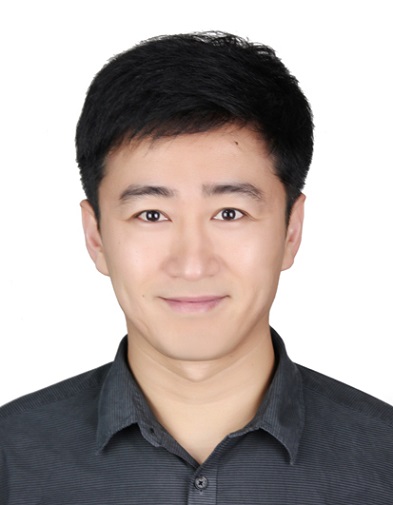 XiaoChuan Wang (王晓川)合作论文数School of Optical and Electronic Information, Huazhong University of Science and Technology16
 Burhan Ullah合作论文数Dept Phys, Islamia Coll Peshawar13
 Xue-Kai Lan合作论文数13
 Zhengyu Zou合作论文数12
 Dongxiang Zhou (周东祥)合作论文数School of Optical and Electronic Information, Huazhong University of Science and Technology12
 Xiao-Qiang Song合作论文数Wenzhou Advanced Manufacturing Institute, Huazhong University of Science and Technology10
 Shuping Gong合作论文数9
 Jiamin Wu (吴甲民)合作论文数School of Materials Science and Engineering, Huazhong University of Science and Technology9
 Ming Fu (付明)合作论文数School of Optical and Electronic Information, Huazhong University of Science and Technology8
 Kang Du合作论文数7Hua-Bo Wang合作论文数6
 Jie Li (李颉)合作论文数School of Electronic Science and Engineering(National Exemplary School of Microelectronics), University of Electronic Science and Technology of China6
 Shenglin Jiang (姜胜林)合作论文数School of Optical and Electronic Information, Huazhong University of Science and Technology6Maolin Mu合作论文数5Jing Tao合作论文数5
 Fei Wang (王非)合作论文数School of Electronic Information and Communications, Huazhong University of Science and Technology5Mengjie Wang合作论文数5Fangyuan Chen合作论文数4Jianping He合作论文数4Ning Ding合作论文数4
 Yongming Sun (孙永明)合作论文数Wuhan National Laboratory for Optpelectronics, Huazhong University of Science and Technology4Xiaorong Zhang合作论文数3Zehao Chen合作论文数3Jian LIU (刘坚)合作论文数3
 Jun Jin合作论文数3
 Daoli Zhang (张道礼)合作论文数School of Optical and Electronic Information, Huazhong University of Science and Technology;National Demonstrative School of Microelectronics, Huazhong University of Science and Technology3Denghong Zhang (章登宏)合作论文数School of Physics, East China University of Science and Technology3
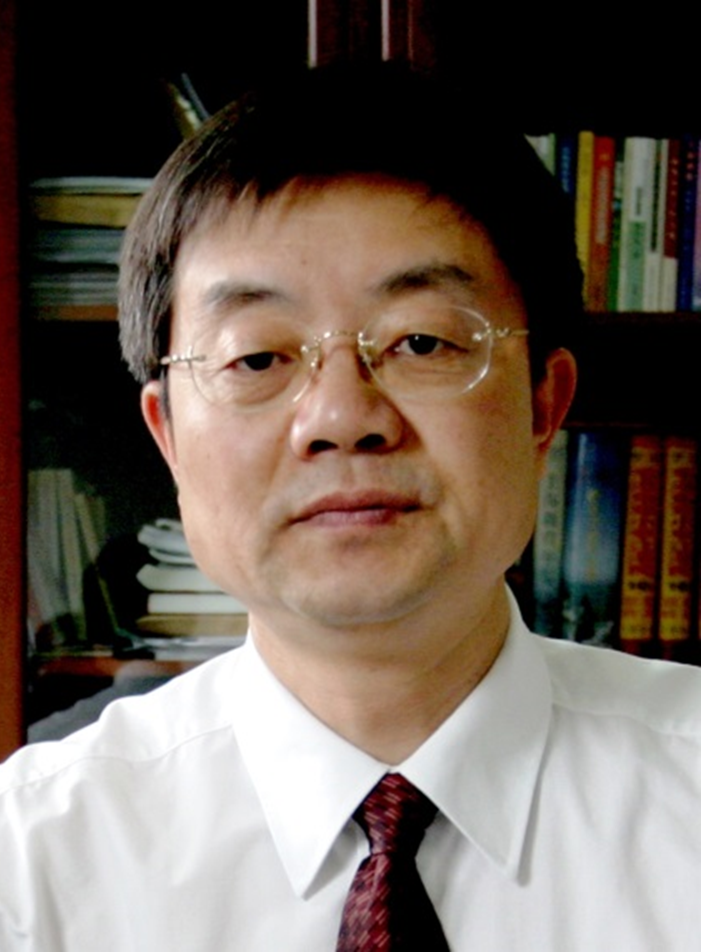 Guanzhong Lu (卢冠忠)合作论文数School of Chemistry and Molecular Engineering, East China University of Science and Technology;Shanghai Institute of Technology3
 Yanglong Guo (郭杨龙)合作论文数Research Institute of Industrial Catalysis, East China University of Science and Technology3
 Hongping Hu (胡洪平)合作论文数School of Aerospace Engineering, Huazhong University of Science and Technology3Yunsong Wang (王筠松)合作论文数School of Chemistry and Molecular Engineering, East China University of Science and Technology3
 Lamin Zhan (占腊民)合作论文数School of Optical and Electronic Information, Huazhong University of Science and Technology3
 Yongming Hu (胡永明)合作论文数School of Physics and Electronic Technology,Hubei University,Wuhan ,China3
 Junxiong Gao (高俊雄)合作论文数Wuhan International Institute of Microelectronics, Huazhong University of Science and Technology3mengxu li合作论文数2Lue Wen-Zhong合作论文数2
 Mingzhe Hu (胡明哲)合作论文数2Shuibin Tu合作论文数2LIANG Jun (梁军)合作论文数2Jun Liang合作论文数2Chunhao Li合作论文数2zhaoqiang li (李昭强)合作论文数2Kaiwei HUA (华锴玮)合作论文数2
 Fangfang Zeng合作论文数2




