Squeezed states of light enable enhanced measurement precision by reducing noise below the standard quantum limit. A key application of squeezed light is nonlinear microscopy, where state-of-the-art performance is limited by photodamage and quantum-limited noise. Such microscopes require bright, pulsed light for optimal operation, yet generating and detecting bright pulsed squeezing at high levels remains challenging. In this work, we present an efficient technique to generate high levels of bright picosecond pulsed squeezed light using a χ^2 optical parametric amplification process in a waveguide. We measure -3.2 dB of bright squeezing with optical power compatible with nonlinear microscopy, as well as -3.6 dB of vacuum squeezing. Corrected for losses, these squeezing levels correspond to -15.4^+2.7_-8.7 dB of squeezing generated in the waveguide. The measured level of bright amplitude pulsed squeezing is to our knowledge the highest reported to date, and will contribute to the broader adoption of quantum-enhanced nonlinear microscopy in biological studies.
Weak quantum measurements enable real-time tracking and control of dynamical quantum systems, producing quantum trajectories – evolutions of the quantum state of the system conditioned on measurement outcomes. For classical systems, the accuracy of trajectories can be improved by incorporating future information, a procedure known as smoothing. Here we apply this concept to quantum systems, generalising a formalism of quantum state smoothing for an observer monitoring a quantum system exposed to environmental decoherence, a scenario important for many quantum information protocols. This allows future data to be incorporated when reconstructing the trajectories of quantum states. We experimentally demonstrate that smoothing improves accuracy using a continuously measured nanomechanical resonator, showing that the method compensates for both gaps in the measurement record and inaccessible environments. We further observe a key predicted departure from classical smoothing: quantum noise renders the trajectories nondifferentiable. These results establish that future information can enhance quantum trajectory reconstruction, with potential applications across quantum sensing, control, and error correction.
Shallow-water waves are a notable example of nonlinear hydrodynamics, giving rise to phenomena such as tsunamis and undular waves. These dynamics are typically studied in hundreds-of-meters-long wave flumes. In this work, we demonstrate a chip-scale wave flume, which exploits nanometer-thick superfluid helium films and optomechanical interactions to achieve nonlinearities surpassing those of extreme terrestrial flows. Measurements reveal wave steepening, shock fronts, and solitary wave fission-nonlinear behaviors predicted in superfluid helium but never directly observed. Our approach enables lithography-defined wave flume geometries, optomechanical control of hydrodynamic properties, and orders-of-magnitude faster measurements than terrestrial flumes. This approach combining quantum fluids and nanophotonics provides a platform to explore complex wave dynamics at the microscale.
Phononic circuits constructed from high tensile stress membranes offer a range of desirable features such as high acoustic confinement, controllable nonlinearities, low mass, compact footprint, and ease of fabrication. This tutorial presents a systematic approach to modelling and designing phononic integrated circuits on this platform, beginning with acoustic confinement, wave propagation and dispersion, mechanical and actuation nonlinearities, as well as resonator dynamics. By adapting coupled mode theory from optoelectronics to suspended membranes, and validating this theory with several numerical techniques (finite element modelling, finite difference time domain simulations, and the transfer matrix method), we then provide a comprehensive framework to engineer a broad variety of phononic circuit building blocks. As illustrative examples, we describe the implementation of several acoustic circuit elements including resonant and non-resonant variable-ratio power splitters, mode converters, mode (de)multiplexers, and in-line Fabry-Perot cavities based on evanescent tunnel barriers. These building blocks lay the foundation for phononic integrated circuits with applications in sensing, acoustic signal processing, and power-efficient and radiation-hard computing.
Many applications, including industrial processes, sonar, and navigation, rely on the detection of acoustic waves. Photonic hydrophones demonstrate comparable sensitivity to piezoelectric-based hydrophones but with significantly reduced size, weight, and power requirements. In this paper, we demonstrate a micron-sized free-standing silicon photonic hydrophone. We demonstrate sensitivity on the order of ∼mPa/Hz from 10-200 kHz, with a minimum detectable pressure of 145 µPa/Hz at 22 kHz. We also deployed our hydrophone in a wave flume to evaluate its suitability for underwater measurement and communication. Our hydrophone matches the sensitivity of commercial hydrophones but is many orders of magnitude smaller in volume, which could enable high spatial resolution imaging of micron-sized acoustic features (i.e., living cell vibrations). Our hydrophone could also be used in underwater communication and imaging applications.
Quantum emitters are a key resource in quantum technologies, microscopy, and other applications. The ability to rapidly detect them is useful both for quality control in engineered emitter arrays and for high-contrast imaging of naturally occurring emitters. Using full photon-counting statistics and optimal Bayesian hypothesis testing, we show that extended Hong–Ou–Mandel (HOM) interference between quantum emission and a coherent field enables orders-of-magnitude speed-ups in emitter detection under realistic noise and loss. Strikingly, the performance advantage improves as loss and background noise increase, and persists for incoherent emission. Taken together with prior demonstrations of extended HOM interference, this suggest that substantial performance gains are achievable with current technology under realistic, non-ideal conditions. This offers a new approach to fast, low-intensity imaging and for emitter characterization in large-scale quantum systems. Fundamentally, the discovery that quantum interference and measurements, used together, are more robust to both loss and noise than standard measurement techniques opens the possibility of broad applications across quantum metrology.
Error correction is essential for modern computing systems, enabling information to be processed accurately even in the presence of noise. Here, we demonstrate a new approach which exploits an error correcting phase that emerges in a system of three coupled nonlinear resonators. Within this phase, perturbed memory states are autonomously restored via the collective dynamics of the nonlinear network. We implement our scheme using a network of nanomechanical resonators. Nanomechanical systems are an attractive platform for low energy computing, but purely mechanical error correction has not been previously demonstrated. We experimentally show that the error correcting phase provides a 35 times reduction in the rate of errors, and allows robust error correction over a wide range of system parameters. These results highlight how emergent nonlinear dynamics can be harnessed for practical applications, paving the way towards error-resilient nanomechanical computing.
Many essential cellular functions depend on the viscoelastic properties of the cytoplasm. While techniques such as optical tweezers and atomic force microscopy can measure these properties, their reliance on localized probes prevents intracellular imaging and perturbs native cellular behaviour. Label-free microscopy offers a non-invasive alternative for observing intracellular dynamics. However, limitations in signal-to-noise ratio and imaging speed typically restrict analysis to diffusivity, leaving cellular viscous properties inaccessible. Here, we introduce rheoSCAT, a label-free, phase-sensitive microscope engineered with ultra-low phase noise. This system enables measurements of intracellular dynamics at frequencies up to 50 kHz, twenty times faster than previous label-free approaches. Applied to live cancer cells, this technique establishes a connection between label-free microscopy and rheology. The high speed of our technique reveals viscoelastic behaviours that were previously inaccessible, which we show are consistent with probe-based microrheology observations. The rheological images produced distinguish intra- and extracellular regions with high contrast, resolve spatial variations in cellular mechanics, and enable monitoring of cellular state and stress over time. The ability to quantitatively map intracellular energetics and viscoelasticity offers a powerful tool for advancing fundamental cell biology, cancer research, clinical diagnostics, and drug development.
Accelerometers offer motion-sensing capabilities across a wide range of areas, enabling navigational awareness in consumer goods and defense applications, and playing a key role in monitoring and control systems. To date, on-chip accelerometers have largely utilized a single device layer or substrate as a test mass. This constrains the test mass to the dimensions and density of the device layer or substrate, ultimately limiting the sensitivity of the device. We demonstrate an alternative approach, which utilizes a pick-and-place bonding technique to increase the test mass of an on-chip accelerometer. By bonding a high-density platinum sphere to a nanomechanical silicon-nitride trampoline membrane, we achieve a quality factor of 1900 in air with 95-mg test mass, corresponding to a thermomechanical noise-limited acceleration sensitivity of 0.8 ng/root Hz. We optically probe the device's response to applied accelerations with increasing levels of acoustic and vibration isolation, measuring a peak sensitivity of 5.5 ng/root Hz at 117 Hz in air, limited by environmental vibrations. This represents the best peak sensitivity reported using a chip-integrated test mass.
Quantum emitters are a key resource in quantum technologies, microscopy, and other applications. The ability to rapidly detect them is useful both for quality control in engineered emitter arrays and for high-contrast imaging of naturally occurring emitters. Using full photon-counting statistics and optimal Bayesian hypothesis testing, we show that extended Hong-Ou-Mandel interference between quantum emission and a coherent field enables orders-of-magnitude speed-ups in emitter detection under realistic noise and loss. Strikingly, the performance advantage improves as loss and background noise increase, and persists for incoherent emission. Our work offers a new approach to fast, low-intensity imaging and for emitter characterization in large-scale quantum systems.
The applications of nanomechanical resonators range from biomolecule mass sensing to hybrid quantum interfaces. Their performance is often limited by internal material damping, which can be greatly reduced by using crystalline materials. Crystalline silicon carbide is appealing due to its exquisite mechanical, electrical and optical properties, but has suffered from high internal damping due to material defects. Here we resolve this by developing nanomechanical resonators fabricated from bulk monocrystalline 4H-silicon carbide. This allows us to achieve damping as low as 2.7 mHz, more than an order-of-magnitude lower than any previous crystalline silicon carbide resonator and corresponding to a quality factor as high as 20 million at room temperature. The volumetric dissipation of our devices reaches the material limit for silicon carbide for the first time. This provides a path to greatly increase the performance of silicon carbide nanomechanical resonators.
Despite extensive experimental efforts over the past two decades, the quest for Majorana fermions in superconductors remains inconclusive. We propose an experimental method that can conclusively confirm, or rule out, the existence of these quasiparticles: Firstly, we shift focus from superconductors, whose very topological nature is disputed, to the unambiguous topological superfluid $^3$He. Secondly, we identify the interaction between surface waves and the chiral Majorana current in the bulk of a topological superfluid of varying density. The proposed experiment provides a path towards the detection of the Majorana fermion, an 80-year-old theoretical prediction. It is realistically achievable based on the advent of microscopic superfluid resonators coupled to optical cavities. The proposal may open the door to experiments ranging from simulations of exotic cosmological particles to topological acoustics and fault tolerant quantum computing.
Nanomechanical oscillators are an alternative platform for computation in harsh environments. However, external perturbations arising from such environments may hinder information processing by introducing errors into the computing system. Here, we simulate the dynamics of three coupled Duffing oscillators whose multiple equilibrium states can be used for information processing and storage. Our analysis reveals that, within experimentally relevant parameters, error correcting dynamics can emerge, wherein the system’s state is robust against random external impulses. We find that oscillators in this configuration have several surprising and attractive features, including dynamic isolation of resonators exposed to extreme impulses and the ability to correct simultaneous errors.
Integrated acoustic circuits leverage guided acoustic waves for applications ranging from radio-frequency filters to quantum state transfer, biochemical sensing and nanomechanical computing. In many applications it is desirable to have a method for unidirectional acoustic wave emission. In this work we demonstrate directional emission in an integrated single-mode, on-chip membrane waveguide, demonstrating over 99.9% directional suppression and reconfigurable directionality. This avoids both loss and unwanted crosstalk, allowing the creation of more complex and compact phononic circuits.
Current methods to determine the health state of cells (i.e., live, dying, dead) require staining, rendering the cell samples not usable anymore for subsequent measurements of the same kind or other kinds. Moreover, the staining processes are usually time-consuming, involving multiple steps of incubation and washing. We aim to develop fast optical measurement platforms to quantify important biophysical characteristics exhibited by live cells of different states, in a non-destructive and real-time manner. Inspired by the recent progress in interferometric scattering microscopy, our research team constructed an apparatus employing quantum-limited light scattering, where an ultralow noise laser serves as the light source. The sample being imaged introduces scatter and noise not present in the ultraclean background permitted by the ultralow noise laser. As a result, scattered light from the sample and reflected light from the coverglass underneath the sample interferes, forming interference patterns captured by a photodiode or a camera. Because biomolecular dynamics, for example motor protein mobilities, is different in a healthy and a diseased cell, we hypothesize that the interference patterns generated by healthy cells, dying cells, and dead cells are distinguishable. To test our hypothesis, we imaged healthy, dying, and dead A549 cells. 50x50 pixel images were taken at 0.5-μm/pixel resolutions. We modulated the incident laser at frequencies ranging from 0 Hz to 10 kHz. We saw distinct interference patterns at frequencies past 2 kHz. These interesting results warrant a novel label-free and non-destructive approach to probe cell health state, and can be beneficial for many basic researches and clinical applications in the future.
tronics have generally been required to drive gates, and logical operations have generally involved bits with different oscillation frequencies. This limits the scalability of nanomechanical logic. Here we demonstrate an acoustically driven logic gate that has a single frequency of operation. Our gate uses the bistability of a nonlinear mechanical resonator to define logical states. These states are efficiently coupled into and out of the gate via nanomechanical waveguides, providing the mechanical equivalent of electrical wires and allowing purely mechanical information transfer. Since the inputs and output all share the same frequency, they are compatible with cascaded chains of gates. Our architecture is CMOS compatible, and with miniaturization could allow an energy cost that approaches the fundamental Landauer limit. Together this presents a pathway towards large-scale nanomechanical computers.
Whispering Gallery Mode (WGM) optomechanical resonators are a promising technology for the simultaneous control and measurement of optical and mechanical degrees of freedom at the nanoscale. They offer potential for use across a wide range of applications such as sensors and quantum transducers. Double-disk WGM resonators, which host strongly interacting mechanical and optical modes co-localized around their circumference, are particularly attractive due to their high optomechanical coupling. Large-scale integrated fabrication of silicon double-disk WGM resonators has not previously been demonstrated. In this work, we present a process for the fabrication of double-layer silicon-on-insulator wafers, which we then use to fabricate functional optomechanical double silicon disk resonators with on-chip optical coupling. The integrated devices present experimentally observed optical quality factors of the order of 105 and a single-photon optomechanical coupling of approximately 15 kHz.
Quantum light allows imaging with sensitivity, speed and resolution beyond the reach of other techniques. Applications in biology are particularly important, because the best conventional microscopes are often severely constrained by photodamage to the specimen. Here, I will present experiment work from my lab applying squeezed light, a form of quantum light, to imaging of molecular vibrations. If time permits, I will also discuss work on quantum single-molecule imaging.
We explore the generation of nonclassical mechanical states by combining continuous position measurement and feedback control. We find that feedback-induced spring softening can greatly enhance position squeezing. Conversely, even with a pure position measurement, we find that spring hardening can enable momentum squeezing. Beyond enhanced squeezing, we show that feedback also mitigates degradation introduced by background mechanical modes. Together, this significantly lowers the barrier to measurement-based preparation of nonclassical mechanical states at room temperature.
 Glen I Harris合作论文数51
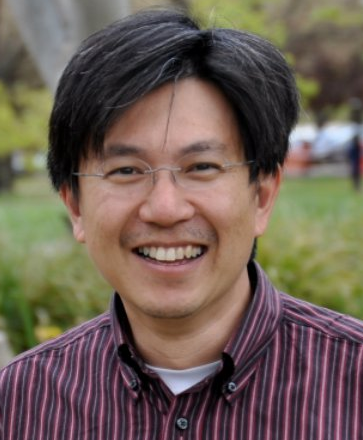 Ping Koy Lam合作论文数Centre for Quantum Computation & Communication Technology, College of Science, Australian National University;Agency for Science, Technology and Research43
 Christopher Baker合作论文数School of Mathematics and Physics, Faculty of Science, The University of Queensland39
 Joachim Knittel合作论文数Deutsche Thomson-Brandt GmbH37
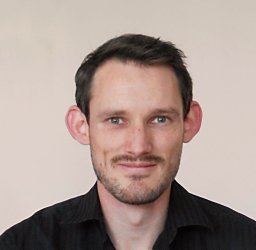 Michael a Taylor合作论文数Centre for Eng. Quantum Syst., Univ. of Queensland;c;Centre for Eng. Quantum Syst., Univ. of Queensland30
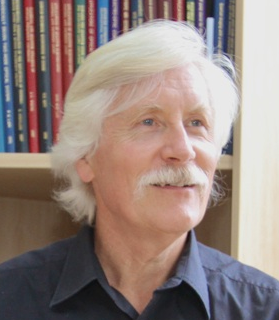 Hans-Albert Bachor合作论文数College of Science, Australian National University28Stefan Forstner合作论文数23Lars S. Madsen合作论文数21James S. Bennett合作论文数20
 Timothy Ralph合作论文数School of Mathematics and Physics, Faculty of Science, University of Queensland20
 Halina Rubinsztein-Dunlop合作论文数Australian Institute for Bioengineering and Nanotechnology, University of Queensland;Centre for Biophotonics and Laser Science, School of Physical Sciences, University of Queensland;Bose-Einstein Condensation laboratory, School of Mathematics and Physics, Faculty of Science, University of Queensland19
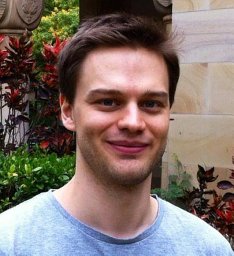 George a Brawley合作论文数17
 Eoin Sheridan合作论文数School of Chemical Sciences, Dublin City University17
 Nicolas Treps合作论文数Laboratoire Kastler Brossel, Université Pierre et Marie Curie;Sorbonne Université16
 Erick Romero合作论文数Australian Res Council Ctr Excellence Engn Quantu, Univ Queensland16T. McRae合作论文数OzGrav, Australian National University16Nicolas P. Mauranyapin合作论文数14Thomas Symul合作论文数Ctr Quantum Computat & Commun Technol, Australian Natl Univ14
 Gerard Milburn合作论文数School of Mathematics and Physics, The University of Queensland13
 Roman Schnabel合作论文数Institut für Quantenphysik, Fachbereich Physik, Universität Hamburg;Institut für Laserphysik, Faculty of Mathematics, Informatics and Natural Sciences, Universität Hamburg;Noisy Labs13
 Ulrik Lund Andersen合作论文数Department of Physics, Technical University of Denmark;Max-Planck-Institut Für Die Physik Des Lichts13
 Lee Kwan Hyi合作论文数Nanomaterial Science and Engineering Major, Korea Institute of Science and Technology12
 Waleed Muhammad合作论文数Department of Mechatronics, Gwangju Institute of Science and Technology12
 Yauhen Sachkou合作论文数11McAuslan David L合作论文数Centre for Engineered Quantum Systems, University of Queensland11Jiri Janousek合作论文数Centre for Quantum Comput. & Commun. Technol., Australian Nat. Univ.;c;Centre for Quantum Comput. & Commun. Technol., Australian Nat. Univ.11
 Alex Szorkovszky合作论文数Centre for Eng. Quantum Syst., Univ. of Queensland;c;Centre for Eng. Quantum Syst., Univ. of Queensland11Jon D. Swaim合作论文数11Magnus T. L. Hsu合作论文数10
 Andrew Doherty合作论文数Faculty of Science, The University of Sydney10
 Vincent Daria合作论文数Department of Quantum Science & Technology, Research School of Physics, The Australian National University9Kalra Rachpon合作论文数9Boris Hage合作论文数9A. M. Lance合作论文数8
 Andreas Sawadsky合作论文数Quantum Brilliance8
 Douglas Bulla合作论文数Centre for Ultrahigh-Bandwidth Devices of Optical Systems, Australian National University8
 B. C. Buchler合作论文数Centre for Quantum Atom Optics, Australian;Australian National University;Australian Centre for Quantum Atom Optics, Australian National University8
 Michael Vanner合作论文数Department of Physics, Faculty of Natural Sciences, Imperial College London8
 Beibei Li (李贝贝)合作论文数Institute of Physics, Chinese Academic of Science;University of Chinese Academy of Sciences8Alex Terrasson合作论文数7Yasmine L. Sfendla合作论文数Sch Math & Phys, Univ Queensland7
 Scott Foster合作论文数7
 Mehmet Kizil合作论文数School of Mechanical and Mining Engineering, Faculty of Engineering, Architecture and Information Technology, The University of Queensland7
 Bekker Christiaan合作论文数School of Mathematics and Physics, University of Queensland7
 Varun Shimoga Prakash合作论文数University of Houston7Greenall Hamish合作论文数6Catxere A. Casacio合作论文数6
 Chao Meng合作论文数Niels Bohr Institute, University of Copenhagen6
 Hugo Kerdoncuff合作论文数6




