Justice-involved people with substance use disorders are an at-risk population for health risk behaviors, particularly those related to Human Immunodeficiency Virus (HIV) and other sexually transmitted infections. Risk-reduction programs provide correctional agencies with a practical solution in to reducing HIV-related health risks in justice-involved populations. This study compared two interventions (in-prison, group-based WaySafe with self-adminstered, tablet-based StaySafe for people on probation) to determine whether one intervention was more effective than the other in terms of common outcomes. Multi-level analyses compared effect sizes from outcome studies testing WaySafe and StaySafe. Results showed the interventions had similar effects with regard to measures of HIV Knowledge, HIV Services and Testing, and Risk Reduction Skills. Collectively, this study suggests the StaySafe intervention can be used in situations where the more intensive WaySafe intervention is not feasible and affords correctional agencies the flexibility to implement the curriculum that best meets their organization’s goals and needs.
Background: People with substance use disorders often differ in their decision-making styles. The present study addressed the impact of two decision-making styles (rational and dependent) on outcomes from a StaySafe tablet computer app intervention designed to improve decision-making around health risk behaviors and previously found to be effective for justice-involved people receiving treatment for a substance use disorder and under community supervision. Objectives: Participants were justice-involved residents in residential treatment. After completing a baseline survey, participants were randomly assigned to either complete the StaySafe app or to a standard procedure condition; and then asked to complete a post-intervention survey three months after baseline (this protocol has been registered with clinicaltrials.gov NCT02777086): 348 participants completed a baseline survey and 238 completed the post-test survey. Outcomes included measures of confidence and motivation around HIV knowledge and risks and getting tested. Multilevel analyses addressed the hypothesis that outcomes were related to decision-making style. Multiple imputation (MI) was used to address the effects of missing data. Results: StaySafe was more effective for those in the lower half of the decision-making dependent scale for HIV risks (HIV-Knowledge, Hepatitis testing, HIV Services testing, and Sex Risk, as well as motivation for treatment. The decision-making rational scale was less consistently related to HIV risk. Conclusions: The present study showed individuals with substance use disorders who differed in their decision-making styles reacted differently to the StaySafe intervention. Two scales, rational decision making, and dependent decision making are relevant to consider with respect to interventions targeting improving decision making among drug users.
Sample attrition is a confounding issue in the analysis of data collected in follow-up studies. The present study uses a regression procedure that includes a propensity score as a predictor in estimating imputed data. The utility of the procedure was addressed by comparing results from this augmented data with those from the original data. Data were from a randomized controlled study testing the utility of a tablet-based intervention designed to improve decision-making with respect to health risk behaviors. Outcomes included self-reported testing for HIV, STD, and hepatitis. Two samples were used (163 in community facilities and 348 in residential facilities). Seventy-eight in the community sample and 238 in the residential sample completed follow-up surveys. Propensity scores based on a stepwise logistic regression were used to make the calibration sample and the missing data sample as close as possible. Multilevel analysis was performed for each outcome and multiple imputation compared estimated mean differences for the augmented and original analyses. The model imputing missing data was effective for the three outcomes and increased power. Least square mean differences between augmented and original data appeared to be essentially the same for most of the outcomes. This protocol has been registered with https://www.clinicaltrials.gov/(NCT02777086).
Background Persons involved in the justice system are at high risk for HIV and drug overdose upon release to the community. This manuscript describes a randomized controlled trial of two evidence-based linkage interventions for provision of HIV prevention and treatment and substance use disorder (SUD) services in four high risk communities to assess which is more effective at addressing these needs upon reentry to the community from the justice system. Methods This is a 5-year hybrid type 1 effectiveness-implementation randomized controlled trial that compares two models (Patient Navigation [PN] or Mobile Health Unit [MHU] service delivery) of linking justice-involved individuals to the continuum of community-based HIV and SUD prevention and treatment service cascades of care. A total of 864 justice-involved individuals in four US communities with pre-arrest histories of opioid and/or stimulant use who are living with or at-risk of HIV will be randomized to receive either: (a) PN , wherein patient navigators will link study participants to community-based service providers; or (b) services delivered via an MHU , wherein study participants will be provided integrated HIV prevention/ treatment services and SUD services. The six-month post-release intervention will focus on access to pre-exposure prophylaxis (PrEP) for those without HIV and antiretroviral treatment (ART) for people living with HIV (PLH). Secondary outcomes will examine the continuum of PrEP and HIV care, including: HIV viral load, PrEP/ ART adherence; HIV risk behaviors; HCV testing and linkage to treatment; and sexually transmitted infection incidence and treatment. Additionally, opioid and other substance use disorder diagnoses, prescription, receipt, and retention on medication for opioid use disorder; opioid and stimulant use; and overdose will also be assessed. Primary implementation outcomes include feasibility, acceptability, sustainability, and costs required to implement and sustain the approaches as well as to scale-up in additional communities. Discussion Results from this project will help inform future methods of delivery of prevention, testing, and treatment of HIV, HCV, substance use disorders (particularly for opioids and stimulants), and sexually transmitted infections for justice-involved individuals in the community. Trial registration: Clincialtrials.gov NCT05286879 March 18, 2022.
In the United States, approximately 9 million people cycle in and out of jail and more than 600,000 people are released from prison each year. Unfortunately, the reentry process includes several barriers people must overcome (e.g., criminal thinking) to achieve adequate psychosocial functioning. As such, valid and reliable assessments that allow correctional staff to monitor clients' progress in treatment and test program effectiveness are paramount to reducing this major public safety concern. The TCU Criminal Thinking Scales (CTS) are a widely used assessment of criminal thinking in correctional settings. This study reevaluated the psychometric properties of the TCU CTS using Item Response Theory. Results showed the TCU CTS had good internal reliability and each scale loaded onto one factor. Item level analysis revealed most items adequately fit the model, generally measuring moderate levels of criminal thinking. Furthermore, several TCU CTS scales were negatively correlated with motivation for treatment and psychosocial functioning.
Background: A novel approach to understand the influence of extreme weather events (EWE) on healthcare access (HA) in a population living with HIV (PLWH) demonstrated an increase of up to 13% no-show rate during these events in Miami, Florida. As a coastal city, it is exposed to EWE at increased frequency and intensity. Indirect effects of EWE disrupt comprehensive HA, affecting ART adherence and HIV-treatment retention rates. Method: This study was conducted at the largest academic medical center for South Florida, including a sample of ~87,000 clinic visits retrospectively modelled against EWE. Thirty years of hourly weather data were extracted for Miami, Florida, from the NOAA, and percentiles extrapolated. EWE were defined as >90 th percentile of heat or precipitation. Time series regression analysis was used to link the clinic visits (2015-2019) with percentiles. A survey was distributed to PLWH receiving clinical care and aimed to understand their knowledge, attitudes, and behaviors regarding climate and health, and EWE. These clinics include PLWH who are MSM, pregnant women, homeless, and other marginalized individuals in Miami. Results: There were nearly 10 months with extreme heat and 3 months with extreme precipitation inconsecutively within the five-year study-pe-riod. A 6% reduction in attendance on days with extreme heat (p=.0001), and 3% reduction on days with extreme precipitation (p=.1855) was seen. When asked what PLWH would do if they had a scheduled clinic visit but would be faced with EWE, they were nearly 4x more likely to not attend due to high temperature (p=0.0122) or heavy rain (p=0.0058). Conclusion: As EWE become more prevalent, it is important to develop capacity building within existing healthcare systems and community planning. Climate’s (in)direct influence on health and healthcare access should be integrated in the conversation to build resilient systems offering comprehensive care, ART adherence and increase treatment retention.
BACKGROUND:A self-administered tablet app, StaySafe, helps people under community supervision to make better decisions regarding health risk behaviors, especially those linked to HIV, viral hepatitis, and other sexually transmitted infections. The multi-session StaySafe design uses an interactive, analytical schema called WORKIT that guides users through a series of steps, questions, and exercises aimed at promoting critical thinking about health risks associated with substance use and unprotected sex. Repetition of the WORKIT schema is designed to enhance procedural memory that can be rapidly accessed when individuals are faced with making decisions about risky behaviors.METHODS:A total of 511 participants under community supervision in community and residential treatment settings from three large Texas counties completed consent forms and baseline surveys, followed by randomization to one of two conditions: 12 weekly StaySafe sessions or standard practice (SP). The study also asked participants to complete a follow-up survey three months after baseline. Outcome measures included knowledge, confidence, and motivation (KCM) scales around HIV knowledge, avoiding risky sex, HIV services, and reducing health risks; decision-making; and reports of talking about issues such as making better decisions, avoiding HIV risks, and HIV prevention or treatment with others (probation officers, counselors, trusted friend or advisor, or family members).RESULTS:Participants in both community and residential settings voluntarily completed multiple StaySafe sessions, with those in the residential settings completing more sessions. When compared with SP participants, StaySafe participants showed greater improvement in the KCM measures-HIV knowledge, avoiding sex risks, HIV services, and risk reduction skills. In addition, greater improvements in the KCM measures as well as an increased likelihood to discuss issues with others were associated with completing more StaySafe sessions.CONCLUSION:These results suggest that the StaySafe app is a feasible and potentially effective tool for improving health risk reduction decision-making for individuals under community supervision.
Building an evidence-informed prevention program that later transfers to dissemination is easier said than done; especially in workplace settings, many of which have significant barriers to adopting prevention programs and do not offer evidence-based wellness programs. By way of a case example of an original program called Team Awareness, this chapter describes an integral and process-oriented framework that guided the authors' work in building and disseminating a substance misuse prevention strategy for the workplace. While the focus was on alcohol and drugs, findings show that Team Awareness supports a broader approach to mentally healthy work cultures. Starting from initial findings and gaps in research, to meeting the needs of employers, and to the creation of a sustainable program, the authors describe the methodological and theoretical recipe that led to the success of program dissemination. The authors emphasize that a balance between fidelity, adaptation, and capacity building are some of the primary reasons that Team Awareness has been used by diverse organizations, including non-profit, for-profit, community-based, and public workplace entities in the United States and abroad.
Although interorganizational relationships (IORs) are essential to the effective delivery of human services, very little research has examined relationships between juvenile justice agencies and behavioral health providers, and few studies have identified the most critical organizational and individual-level characteristics influencing IORs. Across 36 sites, juvenile probation officials ( n = 458) and community behavioral health providers ( n = 91) were surveyed about characteristics of their agencies, themselves, and IORs with each other. Generalized Linear Mixed Models were used to analyze the data. The strongest predictors included Perceived Organizational Support and individual Adaptability. Implications for research, theory and practice are discussed.
Increases in HIV prevalence indicate ongoing need for HIV interventions. A brief manualized intervention called TCU WaySafe, which addresses multiple HIV risks, was further evaluated to determine how it addressed individual's knowledge deficiencies in the assessed risks. The sample of 1256 offenders in 8 correctional substance abuse treatment programs participated either in treatment as usual (TAU) or TCU WaySafe. From multivariate multi-level analysis, WaySafe was more effective in improving the greatest need area, whether knowledge, motivation, or confidence regarding HIV risky behaviors. Findings underscored the importance of addressing HIV risk areas with greatest need for change and strengthens previous findings of the intervention's potential for individuals with varying HIV risks.
Historical evidence and experience from more than five decades of research in the United States has engendered a unifying definition of recovery that embodies individual change processes associated with improved health and wellness, self-empowerment, and a life of fulfillment. While the U.S. has the world's highest rate of imprisonment, and the majority of those incarcerated are involved with drugs, impacting desistance and recovery requires addressing criminogenic thoughts and behaviors, as well as substance use. Because overall health and wellness are important aspects of recovery as well as desistance, this chapter discusses risk behaviors and physical health issues (particularly infectious diseases in regard to criminal justice populations) as well as recent advances with innovative interventions. The initial focus is on historical, empirical knowledge of recovery, and then on accomplishments realized among individuals involved in the criminal justice system. Conclusions support the benefit of a holistic approach (e.g., behavioral, physical, mental, emotional, and so forth) to desistance and recovery.
The role of physical and psychological health is examined as a predictor of client engagement in prison-based drug treatment. A treatment process model was expanded to include physical and mental health issues. The sample included 6009 offenders in prison-based drug treatment, comprised of 67% male, 26% African American, 51% white, and 22% Hispanic; average age was 34.6. Half reported "some physical health concerns" and mentioned a variety of ailments. A fifth reported moderate stress on the Kessler Psychological Distress Scale (K10) and 15% reported PTSD based on the PTSD Check List (PCL). Structural equation modeling was used to model treatment engagement in terms of demographics, physical health concerns, psychological distress, HIV risky behaviors, self-esteem, decision making, and treatment motivation. Two random samples were created, with one used for estimation and the other for cross-validation. The findings suggested physical health and HIV risky behaviors have effects on client engagement through psychological functioning, and that psychological functioning has direct effects on treatment engagement.
This paper describes the development and protocol for feasibility and efficacy testing of a risk reduction intervention designed to improve behavioral health outcomes among drug offenders on probation under community supervision or in residential substance abuse treatment centers. StaySafe is a self-administered tablet-based intervention for teaching better decision-making skills regarding health risk behaviors, especially those involving HIV risks. We are using pre/post, experimental/control group randomized clinical trial (RCT) in both community and residential probation settings with goals to 1) assess the feasibility and acceptance of StaySafe by examining participation rates and satisfaction measures, and 2) examine the impact of StaySafe on decision-making skills, confidence and motivation to avoid sex and drug risks, willingness to discuss health risks and concerns with helpful others, and engagement in health risk behaviors. StaySafe consists of 12 brief sessions and utilizes an evidence-based decision-making schema, called WORKIT, which guides participants through steps for identifying the problem and options, evaluating the options and making a decision about which option to carry out. Multiple sessions of StaySafe provide a practice effect so that the WORKIT steps become easily accessible to participants when making decisions. Three of the sessions provide participants a choice of activities designed to provide additional information about HIV and reinforce lessons learned during the WORKIT sessions. Preliminary data demonstrate feasibility and high levels of satisfaction with StaySafe.
Youth under juvenile justice (JJ) supervision are at high-risk of adverse outcomes from substance use, making prevention important. Few studies have examined prevention-related attitudes of JJ employees, yet such attitudes may be important for implementing prevention programs. Attitudes toward prevention may reflect individual characteristics and organizational contexts.
This study demonstrates the feasibility of forming multiagency change teams including correctional and community agencies involved in the community reentry of prisoners with histories of substance use. The sample included 148 participants from 21 change teams. Results showed that change team members’ perception of their “home” agency affects the change team process, but change teams also develop their own group processes independent of their home agency climate.
Although research indicates that organizational characteristics substantially influence the adoption and use of evidence-based practices (EBPs), there has been little empirical research on organizational factors most likely to influence successful implementation of EBPs, particularly in criminal justice settings. This study examined organizational characteristics related to the success of change teams in achieving improvements in assessment and case-planning procedures for persons leaving correctional settings and receiving community services. In this evaluation of the Organizational Process Improvement Intervention (OPII), part of the National Institute on Drug Abuse's (NIDA's) Criminal Justice Drug Abuse Treatment Studies (CJDATS) cooperative, 21 sites were randomized to an early-start or a delayed-start condition. For this analysis, data from both conditions were combined. Agencies with fewer program needs, good communication, adequate staffing levels, good supervision, positive attitude toward rehabilitation, and higher institutional capacity for change were better able to implement planned changes in assessment and case-planning procedures. Such agencies may be better candidates for implementation improvement strategies, whereas other agencies could benefit from pre-intervention efforts aimed at strengthening these characteristics before attempting to improve assessment procedures.
Targeted HIV screens may help identify some risk-related concerns of drug-using offenders. The present study describes the Texas Christian University HIV/Hepatitis Risk Assessment (TCU HVHP) form, a 19-item self-report instrument measuring HIV and hepatitis risks based on a sample (N = 1,056) of offenders in eight prisons. Principal components analysis indicated four scales (Injection Risk, Condom Attitudes, Sex Risk, and AIDS Concern) with reliable psychometric properties with coefficient α reliabilities ranging from .72 to .88. Concurrent validities indicated the four scales were related to motivation for treatment, level of drug use, psychosocial functioning, and criminal thinking, although the patterns varied by gender. The TCU HVHP Form should be attractive to programs needing a brief assessment measuring HIV risk behaviors, attitudes toward condom use, and concerns about acquiring and transmitting HIV.
 George W. Joe合作论文数Institute of Behavioral Research, Texas Christian University20
 Grace A Rowan-Szal合作论文数Psychology Department, Rutgers University17
 Joel B. Bennett合作论文数Organizational Wellness and Learning Systems USA USA15
 Jennifer Pankow合作论文数11
 Patrick M. Flynn合作论文数Institute of Behavioral Research, Texas Christian University10
 Kevin Knight (武凯文)合作论文数Didi Global10
 G. Shawn Reynolds合作论文数9
 Robert E Booth合作论文数7Brewster John T合作论文数5Dvoryak Sergey合作论文数5Gerald Melnick合作论文数5Larisa Sinitsyna合作论文数5Jack M. Greener合作论文数5
 D. Dwayne Simpson合作论文数Institute of Behavioral Research, Texas Christian University4
 Wayne Welsh合作论文数Departamento de Justicia Penal, la Temple University4GW JOE合作论文数4Jamie K. Forst合作论文数3Roxanne Muiruri合作论文数3
 Sami Abdel-Salam合作论文数West Chester University3Sells S B合作论文数3
 Julie S. Gray合作论文数3Danica K. Knight合作论文数Institute of Behavioral Research, Texas Christian University3
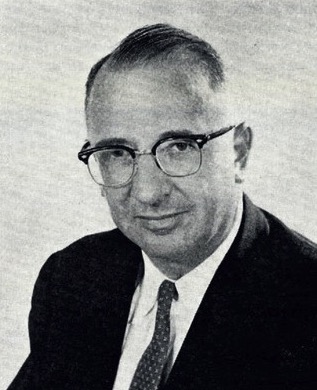 Harry Wexler合作论文数Scientific Services Division, U.S. Weather Bureau3Bennett Fletcher合作论文数3L. A. R. Stein合作论文数Center for Alcohol and Addiction Studies;Brown University;Center for Alcohol and Addiction Studies, Brown University3Colleen Gallagher合作论文数2Thomas B. Sease合作论文数2Linda Frisman合作论文数2
 Carl Latkin合作论文数Bloomberg School of Public Health, Johns Hopkins University;School of Medicine, Johns Hopkins University2
 Tisha Wiley合作论文数2Monico Laura B合作论文数2Pierce Joshua C合作论文数2Eggers Michele合作论文数2A. Jones合作论文数2
 Jerry Stahler合作论文数Department of Geography and Urban Studies, Temple University2
 Karen Fortuin Corsi合作论文数2Norma G. Bartholomew合作论文数2
 Roger H. Peters合作论文数2B. Krishna Singh合作论文数2Elizabeth Anne Cole合作论文数2Hsiu-Ju Lin合作论文数2Onei Uetela合作论文数1Mark Sanchez合作论文数1steven g cole合作论文数1Jitesh Parmar合作论文数1
 Esther Schlossberg合作论文数1Marta A Guerra合作论文数1Tina J. Benoit合作论文数1




