Methylation of the ribose 2′‐hydroxyl, the most widespread modification of ribosomal and splicesomal RNAs, is guided by the box C/D class of small nucleolar RNAs (snoRNAs). Box C/D small nucleolar ribonucleoproteins (snoRNPs) contain four core proteins: fibrillarin, Nop56, Nop58 and 15.5 kDa. We constructed U25 snoRNAs containing a single photoactivatable 4‐thiouridine at each U position within the conserved box C/D and C′/D′ motifs. Proteins assembled on the snoRNA after injection into Xenopus oocyte nuclei were identified by cross‐linking, and reconstituted particles characterized by functional rescue and mutational analyses. Our data argue that box C/D snoRNPs are asymmetric, with the C′ box contacting Nop56 and fibrillarin, the C box interacting with Nop58, and the D and D′ boxes contacting fibrillarin. No cross‐link to 15.5 kDa was detected; its binding is disrupted by 4‐thiouridine substitution in position 1 of the C box. Repositioning the guide sequence of U25 upstream of box D instead of D′ revealed that both C/D motifs have the potential to function as guide centers, but, surprisingly, there was no alteration in protein cross‐linking.
The processing and methylation of precursor rRNA is mediated by the box C/D small nucleolar RNAs (snoRNAs). These snoRNAs differ from most cellular RNAs in that they are not exported to the cytoplasm. Instead, these RNAs are actively retained in the nucleus where they assemble with proteins into mature small nucleolar ribonucleoprotein particles and are targeted to their intranuclear site of action, the nucleolus. In this study, we have identified the cis-acting sequences responsible for the nuclear retention of U3 box C/D snoRNA by analyzing the nucleocytoplasmic distributions of an extensive panel of U3 RNA variants after injection of the RNAs into Xenopus oocyte nuclei. Our data indicate the importance of two conserved sequence motifs in retaining U3 RNA in the nucleus. The first motif is comprised of the conserved box C' and box D sequences that characterize the box C/D family. The second motif contains conserved box sequences B and C. Either motif is sufficient for nuclear retention, but disruption of both motifs leads to mislocalization of the RNAs to the cytoplasm. Variant RNAs that are not retained also lack 5' cap hypermethylation and fail to associate with fibrillarin. Furthermore, our results indicate that nuclear retention of U3 RNA does not simply reflect its nucleolar localization. A fragment of U3 containing the box B/C motif is not localized to nucleoli but retained in coiled bodies. Thus, nuclear retention and nucleolar localization are distinct processes with differing sequence requirements.
Small nucleolar RNAs (snoRNAs) are a large family of eukaryotic RNAs that function within the nucleolus in the biogenesis of ribosomes. One major class of snoRNAs is the box C/D snoRNAs named for their conserved box C and box D sequence elements. We have investigated the involvement of cis-acting sequences and intranuclear structures in the localization of box C/D snoRNAs to the nucleolus by assaying the intranuclear distribution of fluorescently labeled U3, U8, and U14 snoRNAs injected into Xenopus oocyte nuclei. Analysis of an extensive panel of U3 RNA variants showed that the box C/D motif, comprised of box C', box D, and the 3' terminal stem of U3, is necessary and sufficient for the nucleolar localization of U3 snoRNA. Disruption of the elements of the box C/D motif of U8 and U14 snoRNAs also prevented nucleolar localization, indicating that all box C/D snoRNAs use a common nucleolar-targeting mechanism. Finally, we found that wild-type box C/D snoRNAs transiently associate with coiled bodies before they localize to nucleoli and that variant RNAs that lack an intact box C/D motif are detained within coiled bodies. These results suggest that coiled bodies play a role in the biogenesis and/or intranuclear transport of box C/D snoRNAs.
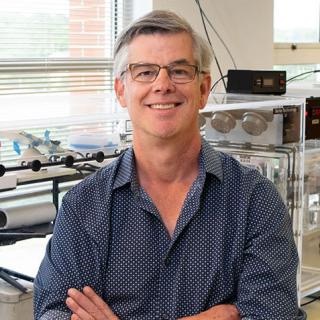 Michael Terns合作论文数Department of Biochemistry and Molecular Biology, Franklin College of Arts and Sciences, University of Georgia3
 Aarthi Narayanan合作论文数College of Science, George Mason University2A Solache合作论文数1Kyle Friend合作论文数1J. Rosenfeld合作论文数1Zhu-Hong Li合作论文数Univ Georgia, Ctr Trop & Emerging Global Dis, Athens, GA 30602 USA1Cahill Niamh M合作论文数1
 Joan Steitz合作论文数Department of Molecular Biophysics and Biochemistry, School of Medicine, Yale University1Leon V. Kochian合作论文数EMD Millipore1Tsung-Hsien Chuang合作论文数Departments of Immunology and Cell Biology, The Scripps Clinic and Research Institute1
 Rebecca M. Terns合作论文数Departments of Biochemistry and Molecular Biology , and Genetics;University of Georgia;Departments of Biochemistry and Molecular Biology , and Genetics, University of Georgia1




