PURPOSE The Response Assessment in Neuro-Oncology (RANO) criteria are widely used in high-grade glioma clinical trials. We compared the RANO criteria with updated modifications (modified RANO [mRANO] and immunotherapy RANO [iRANO] criteria) in patients with newly diagnosed glioblastoma (nGBM) and recurrent GBM (rGBM) to evaluate the performance of each set of criteria and inform the development of the planned RANO 2.0 update. MATERIALS AND METHODS Evaluation of tumor measurements and fluid-attenuated inversion recovery (FLAIR) sequences were performed by blinded readers to determine disease progression using RANO, mRANO, iRANO, and other response assessment criteria. Spearman's correlations between progression-free survival (PFS) and overall survival (OS) were calculated. RESULTS Five hundred twenty-six nGBM and 580 rGBM cases were included. Spearman's correlations were similar between RANO and mRANO (0.69 [95% CI, 0.62 to 0.75] v 0.67 [95% CI, 0.60 to 0.73]) in nGBM and rGBM (0.48 [95% CI, 0.40 to 0.55] v 0.50 [95% CI, 0.42 to 0.57]). In nGBM, requirement of a confirmation scan within 12 weeks of completion of radiotherapy to determine progression was associated with improved correlations. Use of the postradiation magnetic resonance imaging (MRI) as baseline scan was associated with improved correlation compared with use of the pre-radiation MRI (0.67 [95% CI, 0.60 to 0.73] v 0.53 [95% CI, 0.42 to 0.62]). Evaluation of FLAIR sequences did not improve the correlation. Among patients who received immunotherapy, Spearman's correlations were similar among RANO, mRANO, and iRANO. CONCLUSION RANO and mRANO demonstrated similar correlations between PFS and OS. Confirmation scans were only beneficial in nGBM within 12 weeks of completion of radiotherapy, and there was a trend in favor of the use of postradiation MRI as the baseline scan in nGBM. Evaluation of FLAIR can be omitted. The iRANO criteria did not add significant benefit in patients who received immune checkpoint inhibitors.
Abstract BACKGROUND We sought to compare the Response Assessment in Neuro-Oncology (RANO), modified RANO (mRANO), and immunotherapy RANO (iRANO) in a large population of patients with newly diagnosed (nGBM) and recurrent (rGBM) glioblastoma. METHODS Bidimensional measurements of enhancing disease and FLAIR sequence evaluation were performed by two independent readers on brain MRIs of consecutive patients with IDH-wildtype nGBM and rGBM treated at a single institution. Discrepancies were evaluated by a third reader. Dates of disease progression (PD) were identified using RANO, mRANO, iRANO, and other response assessment criteria variations. Spearman’s correlations between PFS and OS were calculated using iterative multiple imputations for censored observations. RESULTS 526 nGBM and 580 rGBM cases were included. Spearman’s correlations were not significantly different between RANO and mRANO in nGBM (0.69 [95% CI 0.62 to 0.75] vs. 0.67 [0.60, 0.73]) and rGBM (0.48 [0.40, 0.55] vs. 0.50 [0.42, 0.57]). Evaluation of FLAIR did not improve the correlation in patients who received antiangiogenic therapy. Acquisition of confirmation scans was associated with increased correlation only when PD was identified within 12 weeks of completion of radiation in nGBM. The use of the post-radiation MRI as a baseline was associated with increased correlation compared to use of the pre-radiation MRI in nGBM (0.67 [0.60, 0.73] vs. 0.53 [0.42, 0.62]). The correlation with iRANO was similar to RANO and mRANO among 98 patients with nGBM and 175 patients with rGBM who received immunotherapy. CONCLUSIONS RANO and mRANO demonstrated similar correlations between PFS and OS. The evaluation of FLAIR can be omitted, while confirmation scans were only beneficial in nGBM in the first 12 weeks after completion of radiation. There was a trend in favor of the post-radiation MRI as the baseline scan in nGBM. The use of iRANO criteria did not add a significant benefit in patients who received immunotherapy.
BACKGROUND:Lower-grade gliomas (LGGs) with isocitrate dehydrogenase 1 and/or 2 (IDH1/2) mutations have long survival times, making evaluation of treatment efficacy difficult. We investigated the volumetric growth rate of IDH mutant gliomas before and after treatment with established glioma therapies to determine whether a significant change in growth rate could be documented and perhaps be used in the future to evaluate treatment response to investigational agents in LGG trials.METHODS:In this multicenter retrospective study, 230 adult patients with IDH1/2 mutated LGGs (World Health Organization grade II or III) undergoing surgery, radiation, or chemotherapy for progressive non-enhancing tumor were identified. Subjects were required to have 3 MRI scans containing T2/fluid attenuated inversion recovery imaging spanning a minimum of 6 months prior to treatment. A mixed-effect model was used to estimate tumor growth prior to treatment. A subset of 95 patients who received chemotherapy, radiotherapy, or chemoradiotherapy and had 2 posttreatment imaging time points available were evaluated for change in pre- and posttreatment volumetric growth rates using a piecewise mixed model.RESULTS:The pretreatment volumetric growth rate across all 230 patients was 27.37%/180 days (95% CI: [23.36%, 31.51%]). In the 95 patients with both pre- and posttreatment scans available, there was a significant difference in volumetric growth rates before (26.63%/180 days, 95% CI: [19.31%, 34.40%]) and after treatment (-15.24% /180 days, 95% CI: [-21.37%, -8.62%]) (P < 0.0001). The growth rates for patient subgroup with 1p/19q codeletion (N = 118) was significantly slower than the rate of the 1p/19q non-codeleted group (N = 68) (22.84% vs 35.49%, P = 0.0108).CONCLUSION:In this study, we evaluated the growth rates of IDH mutant gliomas before and after standard therapy. Further study is needed to establish whether a change in growth rate is associated with patient survival and its use as a surrogate endpoint in clinical trials for IDH mutant LGGs.
 Benjamin Ellingson合作论文数University of California Los Angeles3
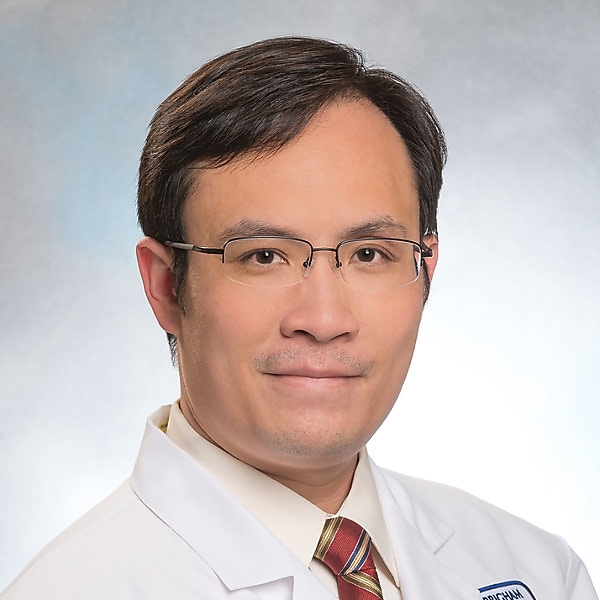 Raymond Y. Huang合作论文数Harvard Medical School;Department of Radiology, Brigham and Women's Hospital3
 Timothy Cloughesy合作论文数Department of Molecular and Medical Pharmacology, David Geffen School of Medicine, University of California, Los Angeles;Brain Research Institute, University of California, Los Angeles3
 Elizabeth Gerstner合作论文数Mass General Research Institute;Harvard Medical School;Massachusetts General Hospital3
 Patrick Y. Wen合作论文数Department of Neurology, Harvard Medical School;Center For Neuro-Oncology, Dana-Farber Cancer Institute3
 Camden Bay合作论文数2Yuh-Shin Chang合作论文数2
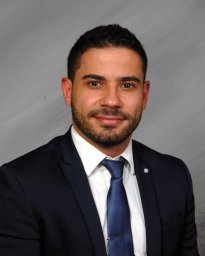 Gilbert Youssef合作论文数Dana-Farber/Brigham and Women's Cancer Center, Harvard Medical School2
 Mary Jane Lim-Fat合作论文数Sunnybrook Health Sciences Centre2
 Wenya Linda Bi合作论文数Department of Neurosurgery, Brigham and Women's Hospital;Harvard Medical School2
 David Reardon合作论文数Center for Neuro-Oncology, Dana-Farber Cancer Institute;Harvard Medical School2
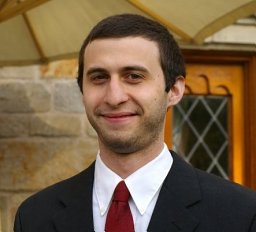 DeSalvo Matthew N合作论文数Harvard Medical School, Boston, MA 02115, USA. matthew_desalvo@hms.harvard.edu2
 Guenette Jeffrey P合作论文数Warren Alpert School of Medicine, Brown University2
 Eudocia Q. Lee合作论文数Division of Cancer Neurology, Department of Neurology, Brigham and Women's Hospital, Harvard Medical School;Center for Neuro-Oncology, Dana-Farber Cancer Institute2Rahman Rifaquat合作论文数2
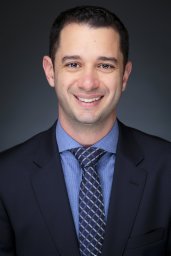 Omar M. Arnaout合作论文数2
 Daniel Cagney合作论文数Department of Radiation Oncology, Mater Private Network;Royal College of Surgeons in Ireland2Thomas F Flood合作论文数1Luis Nicolas Gonzalez Castro合作论文数1Christopher Potter合作论文数1Hyemin Um合作论文数1
 Albert Y Kim合作论文数Smith College1L Nicolas Gonzalez Castro合作论文数1
 Katherine Barnett Peters合作论文数Department of Neurology, Duke University School of Medicine;Duke Cancer Institute1
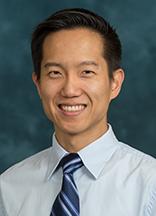 John Kim合作论文数Department of Radiology, University of Michigan Medical School;Division of Neuroradiology, University of Michigan Medical School;Division of Emergency Radiology, University of Michigan Medical School1
 Ingo Mellinghoff合作论文数Pharmacology, Weill Cornell Graduate School of Medical Sciences, Cornell University1Kim Albert合作论文数1
 Robert Young合作论文数Cancer Center, Massachusetts General Hospital;Department of Pathology, Massachusetts General Hospital;Harvard Medical School1
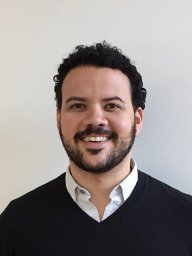 McFaline-Figueroa José Ricardo合作论文数College of Physicians and Surgeons, Columbia University1Tixier Florent合作论文数1
 Schiff, David合作论文数School of Medicine, University of Virginia1Christopher A. Potter合作论文数1
 Tracy Luks合作论文数Department of Radiology and Biomedical Imaging, University of California, San Francisco;School of Medicine, University of California, San Francisco1
 Susan M. Chang合作论文数Weill Institute for Neurosciences, University of California, San Francisco;School of Medicine, University of California, San Francisco1
 Harini Veeraraghavan合作论文数Department of Computer Science and Engineering;University of Minnesota;Department of Computer Science and Engineering, University of Minnesota1




