Existing research on vehicle energy saving primarily focuses on longitudinal control, whereas path tracking control mainly emphasizes control accuracy. To simultaneously ensure both lateral control accuracy and energy-saving performance, this study proposes an Adaptive Genetic Algorithm LQT Controller to address the complex parameter tuning of traditional LQT controllers and the lack of feedback dynamic adjustment capability in conventional Genetic Algorithm LQT controllers. The proposed method dynamically adjusts the crossover and mutation rates of the Q and R matrices by evaluation of the control signals and results from the population, effectively balancing the global search and local convergence during the optimization process. Finally, joint simulations using Carsim and Simulink demonstrated that the proposed controller not only achieved high path tracking accuracy and smooth control signals but also significantly improved energy-saving performance under high-speed, large-curvature operating conditions. By optimizing the kinetic energy loss, the residual vehicle speed is notably increased, and the kinetic energy consumption is reduced by 14.45% compared with the traditional LQT controller. This proves the potential of the lateral control algorithm in enhancing the energy-saving performance.
We present a low-cost legged mobile manipulation system that solves long-horizon real-world tasks, trained by reinforcement learning purely in simulation. This system is made possible by 1) a hierarchical design of a high-level policy for visual-mobile manipulation following instructions and a low-level policy for quadruped movement and limb control, 2) a progressive exploration and learning approach that leverages privileged task decomposition information to train the teacher policy for long-horizon tasks, which will guide an imitation-based student policy for efficient training of the high-level visuomotor policy, and 3) a suite of techniques for minimizing sim-to-real gaps. In contrast to previous approaches that use high-end equipment, our system demonstrates effective performance with more accessible hardware - specifically, a Unitree Go1 quadruped, a WidowX250S arm, and a single wrist-mounted RGB camera - despite the increased challenges of sim-to-real transfer. When fully trained in simulation, a single policy autonomously solves long-horizon tasks such as search, move, grasp, and drop-into, achieving nearly 80 teleoperation on the same tasks but operates in a more efficient way, at 1.5 times the speed of human expert. The sim-to-real transfer is fluid across diverse indoor and outdoor scenes under varying lighting conditions. Finally, we discuss the key techniques that enable the entire pipeline, including efficient RL training and sim-to-real, to work effectively for legged mobile manipulation, and present their ablation results.
The actor-critic (AC) framework has achieved strong empirical success in off-policy reinforcement learning but suffers from the "moving target" problem, where the evaluated policy changes continually. Functional critics, or policy-conditioned value functions, address this by explicitly including a representation of the policy as input. While conceptually appealing, previous efforts have struggled to remain competitive against standard AC. In this work, we revisit functional critics within the actor-critic framework and identify two critical aspects that render them a necessity rather than a luxury. First, we demonstrate their power in stabilizing the complex interplay between the "deadly triad" and the "moving target". We provide a convergent off-policy AC algorithm under linear functional approximation that dismantles several longstanding barriers between theory and practice: it utilizes target-based TD learning, accommodates dynamic behavior policies, and operates without the restrictive "full coverage" assumptions. By formalizing a dual trust-coverage mechanism, our framework provides principled guidelines for pursuing sample efficiency-rigorously governing behavior policy updates and critic re-evaluations to maximize off-policy data utility. Second, we uncover a foundational link between functional critics and efficient exploration. We demonstrate that existing model-free approximations of posterior sampling are limited in capturing policy-dependent uncertainty, a gap the functional critic formalism bridges. These results represent, to our knowledge, first-of-their-kind contributions to the RL literature. Practically, we propose a tailored neural network architecture and a minimalist AC algorithm. In preliminary experiments on the DeepMind Control Suite, this implementation achieves performance competitive with state-of-the-art methods without standard implementation heuristics.
Quadruped-based mobile manipulation presents significant challenges in robotics due to the diversity of required skills, the extended task horizon, and partial observability. After presenting a multi-stage pick-and-place task as a succinct yet sufficiently rich setup that captures key desiderata for quadruped-based mobile manipulation, we propose an approach that can train a visuo-motor policy entirely in simulation, and achieve nearly 80% success in the real world. The policy efficiently performs search, approach, grasp, transport, and drop into actions, with emerged behaviors such as re-grasping and task chaining. We conduct an extensive set of real-world experiments with ablation studies highlighting key techniques for efficient training and effective sim-to-real transfer. Additional experiments demonstrate deployment across a variety of indoor and outdoor environments. Demo videos and additional resources are available on the project page: https://horizonrobotics.github.io/gail/SLIM.
Exploration is one of the central topic in reinforcement learning (RL). Many existing approaches take a single agent perspective when tackling this problem. In this work, we view this problem from a different angle by taking a multi-agent perspective. By doing this, we can not only learn with parallel agents, which is not fundamentally different by itself, but more importantly, it unlocks the possibility of introducing collaborative exploration and learning among these agents. We formulate this problem as *Collaborative Exploration* and proposed concrete instantiations. We introduce a collaborative reward generator as a core component to induce collaboration, which can compute novelty of a state not only from one agent's own perspective, but also respect other agents' intrinsic motivation in pursuit of novelty. This leads to collaboration and specialization of each agent within the set of agents. In addition, we discussed how to effectively leverage the shared information from other agents in the data collection and evaluation phases, respectively. Experiments on the DeepMind control suite (DMC) benchmark tasks showcase the effectiveness of the proposed method.
In this work, we investigate how to leverage pre-trained visual-language models (VLM) for online Reinforcement Learning (RL). In particular, we focus on sparse reward tasks with pre-defined textual task descriptions. We first identify the problem of reward misalignment when applying VLM as a reward in RL tasks. To address this issue, we introduce a lightweight fine-tuning method, named Fuzzy VLM reward-aided RL (FuRL), based on reward alignment and relay RL. Specifically, we enhance the performance of SAC/DrQ baseline agents on sparse reward tasks by fine-tuning VLM representations and using relay RL to avoid local minima. Extensive experiments on the Meta-world benchmark tasks demonstrate the efficacy of the proposed method. Code is available at: https://github.com/fuyw/FuRL.
Reward specification is one of the most tricky problems in Reinforcement Learning, which usually requires tedious hand engineering in practice. One promising approach to tackle this challenge is to adopt existing expert video demonstrations for policy learning. Some recent work investigates how to learn robot policies from only a single/few expert video demonstrations. For example, reward labeling via Optimal Transport (OT) has been shown to be an effective strategy to generate a proxy reward by measuring the alignment between the robot trajectory and the expert demonstrations. However, previous work mostly overlooks that the OT reward is invariant to temporal order information, which could bring extra noise to the reward signal. To address this issue, in this paper, we introduce the Temporal Optimal Transport (TemporalOT) reward to incorporate temporal order information for learning a more accurate OT-based proxy reward. Extensive experiments on the Meta-world benchmark tasks validate the efficacy of the proposed method. Our code is available at: https://github.com/fuyw/TemporalOT.
As autonomous driving systems being deployed to millions of vehicles, there is a pressing need of improving the system's scalability, safety and reducing the engineering cost. A realistic, scalable, and practical simulator of the driving world is highly desired. In this paper, we present an efficient solution based on generative models which learns the dynamics of the driving scenes. With this model, we can not only simulate the diverse futures of a given driving scenario but also generate a variety of driving scenarios conditioned on various prompts. Our innovative design allows the model to operate in both full-Autoregressive and partial-Autoregressive modes, significantly improving inference and training speed without sacrificing generative capability. This efficiency makes it ideal for being used as an online reactive environment for reinforcement learning, an evaluator for planning policies, and a high-fidelity simulator for testing. We evaluated our model against two real-world datasets: the Waymo motion dataset and the nuPlan dataset. On the simulation realism and scene generation benchmark, our model achieves the state-of-the-art performance. And in the planning benchmarks, our planner outperforms the prior arts. We conclude that the proposed generative model may serve as a foundation for a variety of motion planning tasks, including data generation, simulation, planning, and online training. Source code is public at https://github.com/HorizonRobotics/GUMP/
In this work, we investigate the potential of improving multi-task training and also leveraging it for transferring in the reinforcement learning setting. We identify several challenges towards this goal and propose a transferring approach with a parameter-compositional formulation. We investigate ways to improve the training of multi-task reinforcement learning which serves as the foundation for transferring. Then we conduct a number of transferring experiments on various manipulation tasks. Experimental results demonstrate that the proposed approach can have improved performance in the multi-task training stage, and further show effective transferring in terms of both sample efficiency and performance.
Unsupervised video object learning seeks to decompose video scenes into structural object representations without any supervision from depth, optical flow, or segmentation. We present VONet, an innovative approach that is inspired by MONet. While utilizing a U-Net architecture, VONet employs an efficient and effective parallel attention inference process, generating attention masks for all slots simultaneously. Additionally, to enhance the temporal consistency of each mask across consecutive video frames, VONet develops an object-wise sequential VAE framework. The integration of these innovative encoder-side techniques, in conjunction with an expressive transformer-based decoder, establishes VONet as the leading unsupervised method for object learning across five MOVI datasets, encompassing videos of diverse complexities. Code is available at https://github.com/hnyu/vonet.
Traffic prediction plays a key role in various smart city applications, which can help traffic managers make traffic plans in advance, assist online ride-hailing companies in deploying vehicles reasonably, and provide early warning of congestion for safety authorities. While increasingly complex models achieve impressive prediction performance, there are concerns about the effectiveness of these models in handling large-scale road networks. Especially for researchers who don't have access to powerful GPU devices, the expensive memory burden limits the usefulness of these models. In this paper, we take the first step of learning on the large-scale spatio-temporal graph and propose a divide-and-conquer training strategy for Large Spatio-Temporal Graph Learning, namely LarSTL. The core idea behind this strategy is to divide the large graph into multiple subgraphs, which are treated as task streams to sequentially train the model to conquer each subgraph one by one. We introduce a novel perspective based on the continuous learning paradigm to achieve this goal. In order to overcome forgetting the knowledge learned from previous subgraphs, an experience-replay strategy consolidates the learned knowledge by replaying nodes sampled from previous subgraphs. Moreover, we configure specific feature adaptors for each subgraph to extract personalized features, and it is also beneficial to consolidate the learned knowledge from the perspective of parameters. We conduct experiments using multiple large-scale traffic network datasets on a V100 GPU with only 16GB memory, and the results demonstrate that our LarSTL can achieve competitive performance and high efficiency.
An in-depth exploration of object detection and semantic segmentation is provided, combining theoretical foundations with practical applications. State-of-the-art advancements in machine learning and deep learning are reviewed, focusing on convolutional neural networks (CNNs), YOLO architectures, and transformer-based approaches such as DETR. The integration of artificial intelligence (AI) techniques and large language models for enhancing object detection in complex environments is examined. Additionally, a comprehensive analysis of big data processing is presented, with emphasis on model optimization and performance evaluation metrics. By bridging the gap between traditional methods and modern deep learning frameworks, valuable insights are offered for researchers, data scientists, and engineers aiming to apply AI-driven methodologies to large-scale object detection tasks.
This paper presents our 2nd place solution for the NuPlan Challenge 2023. Autonomous driving in real-world scenarios is highly complex and uncertain. Achieving safe planning in the complex multimodal scenarios is a highly challenging task. Our approach, Imitation with Spatial-Temporal Heatmap, adopts the learning form of behavior cloning, innovatively predicts the future multimodal states with a heatmap representation, and uses trajectory refinement techniques to ensure final safety. The experiment shows that our method effectively balances the vehicle's progress and safety, generating safe and comfortable trajectories. In the NuPlan competition, we achieved the second highest overall score, while obtained the best scores in the ego progress and comfort metrics.
In order to provide adaptive and user-friendly solutions to robotic manipulation, it is important that the agent can learn to accomplish tasks even if they are only provided with very sparse instruction signals. To address the issues reinforcement learning algorithms face when task rewards are sparse, this paper proposes an intrinsic motivation approach that can be easily integrated into any standard reinforcement learning algorithm and can allow robotic manipulators to learn useful manipulation skills with only sparse extrinsic rewards. Through integrating and balancing empowerment and curiosity, this approach shows superior performance compared to other state-of-the-art intrinsic exploration approaches during extensive empirical testing. When combined with other strategies for tackling the exploration challenge, e.g. curriculum learning, our approach is able to further improve the exploration efficiency and task success rate. Qualitative analysis also shows that when combined with diversity-driven intrinsic motivations, this approach can help manipulators learn a set of diverse skills which could potentially be applied to other more complicated manipulation tasks and accelerate their learning process.
The Visual Object Tracking challenge VOT2022 is the tenth annual tracker benchmarking activity organized by the VOT initiative. Results of 93 entries are presented; many are state-of-the-art trackers published at major computer vision conferences or in journals in recent years. The VOT2022 challenge was composed of seven sub-challenges focusing on different tracking domains: (i) VOT-STs2022 challenge focused on short-term tracking in RGB by segmentation, (ii) VOT-STb2022 challenge focused on short-term tracking in RGB by bounding boxes, (iii) VOT-RTs2022 challenge focused on “real-time” short-term tracking in RGB by segmentation, (iv) VOT-RTb2022 challenge focused on “real-time” short-term tracking in RGB by bounding boxes, (v) VOT-LT2022 focused on long-term tracking, namely coping with target disappearance and reappearance, (vi) VOT-RGBD2022 challenge focused on short-term tracking in RGB and depth imagery, and (vii) VOT-D2022 challenge focused on short-term tracking in depth-only imagery. New datasets were introduced in VOT-LT2022 and VOT-RGBD2022, VOT-ST2022 dataset was refreshed, and a training dataset was introduced for VOT-LT2022. The source code for most of the trackers, the datasets, the evaluation kit and the results are publicly available at the challenge website ( http://votchallenge.net ).
Maximum entropy (MaxEnt) RL maximizes a combination of the original task reward and an entropy reward. It is believed that the regularization imposed by entropy, on both policy improvement and policy evaluation, together contributes to good exploration, training convergence, and robustness of learned policies. This paper takes a closer look at entropy as an intrinsic reward, by conducting various ablation studies on soft actor-critic (SAC), a popular representative of MaxEnt RL. Our findings reveal that in general, entropy rewards should be applied with caution to policy evaluation. On one hand, the entropy reward, like any other intrinsic reward, could obscure the main task reward if it is not properly managed. We identify some failure cases of the entropy reward especially in episodic Markov decision processes (MDPs), where it could cause the policy to be overly optimistic or pessimistic. On the other hand, our large-scale empirical study shows that using entropy regularization alone in policy improvement, leads to comparable or even better performance and robustness than using it in both policy improvement and policy evaluation. Based on these observations, we recommend either normalizing the entropy reward to a zero mean (SACZero), or simply removing it from policy evaluation (SACLite) for better practical results.
While natural gradients have been widely studied from both theoretical and empirical perspectives, we argue that a fundamental theoretical issue regarding the existence of gradients in infinite dimensional function spaces remains underexplored. We therefore study the natural gradient induced by Sobolev metrics and develop several rigorous results. Our results also establish new connections between natural gradients and RKHS theory, and specifically to the Neural Tangent Kernel (NTK). We develop computational techniques for efficient approximation of the proposed Sobolev Natural Gradient. Preliminary experimental results reveal the potential of this new natural gradient variant.
The purpose of multi-task reinforcement learning (MTRL) is to train a single policy that can be applied to a set of different tasks. Sharing parameters allows us to take advantage of the similarities among tasks. However, the gaps between contents and difficulties of different tasks bring us challenges on both which tasks should share the parameters and what parameters should be shared, as well as the optimization challenges due to parameter sharing. In this work, we introduce a parameter-compositional approach (PaCo) as an attempt to address these challenges. In this framework, a policy subspace represented by a set of parameters is learned. Policies for all the single tasks lie in this subspace and can be composed by interpolating with the learned set. It allows not only flexible parameter sharing but also a natural way to improve training. We demonstrate the state-of-the-art performance on Meta-World benchmarks, verifying the effectiveness of the proposed approach.
Standard model-free reinforcement learning algorithms optimize a policy that generates the action to be taken in the current time step in order to maximize expected future return. While flexible, it faces difficulties arising from the inefficient exploration due to its single step nature. In this work, we present Generative Planning method (GPM), which can generate actions not only for the current step, but also for a number of future steps (thus termed as generative planning). This brings several benefits to GPM. Firstly, since GPM is trained by maximizing value, the plans generated from it can be regarded as intentional action sequences for reaching high value regions. GPM can therefore leverage its generated multi-step plans for temporally coordinated exploration towards high value regions, which is potentially more effective than a sequence of actions generated by perturbing each action at single step level, whose consistent movement decays exponentially with the number of exploration steps. Secondly, starting from a crude initial plan generator, GPM can refine it to be adaptive to the task, which, in return, benefits future explorations. This is potentially more effective than commonly used action-repeat strategy, which is non-adaptive in its form of plans. Additionally, since the multi-step plan can be interpreted as the intent of the agent from now to a span of time period into the future, it offers a more informative and intuitive signal for interpretation. Experiments are conducted on several benchmark environments and the results demonstrated its effectiveness compared with several baseline methods.
We consider the safe reinforcement learning (RL) problem of maximizing utility with extremely low constraint violation rates. Assuming no prior knowledge or pre-training of the environment safety model given a task, an agent has to learn, via exploration, which states and actions are safe. A popular approach in this line of research is to combine a model-free RL algorithm with the Lagrangian method to adjust the weight of the constraint reward relative to the utility reward dynamically. It relies on a single policy to handle the conflict between utility and constraint rewards, which is often challenging. We present SEditor, a two-policy approach that learns a safety editor policy transforming potentially unsafe actions proposed by a utility maximizer policy into safe ones. The safety editor is trained to maximize the constraint reward while minimizing a hinge loss of the utility state-action values before and after an action is edited. SEditor extends existing safety layer designs that assume simplified safety models, to general safe RL scenarios where the safety model can in theory be arbitrarily complex. As a first-order method, it is easy to implement and efficient for both inference and training. On 12 Safety Gym tasks and 2 safe racing tasks, SEditor obtains much a higher overall safety-weighted-utility (SWU) score than the baselines, and demonstrates outstanding utility performance with constraint violation rates as low as once per 2k time steps, even in obstacle-dense environments. On some tasks, this low violation rate is up to 200 times lower than that of an unconstrained RL method with similar utility performance. Code is available at https://github.com/hnyu/seditor.
 Yihong Gong (龚怡宏)合作论文数School of Software Engineering, Xi'an Jiaotong University50
 Haichao Zhang (张海超)合作论文数Horizon Robotics17
 Haonan Yu合作论文数Horizon Robotics16
 Yi Yang (杨亿)合作论文数13
 Mei Han合作论文数Tianjin University13
 Huazhong Ning合作论文数WeRide11
 Jiang Wang合作论文数Microsoft10
 Thomas S. Huang (黄煦涛)合作论文数Beckman Institute, University of Illinois, Urbana-Champaign10
 Qinxun Bai (白沁洵)合作论文数General AI Lab, Horizon Robotics8
 Peng Wang (王鹏)合作论文数ByteDance8
 Zhenheng Yang (杨振恒)合作论文数7
 Hai Tao合作论文数Department of Computer Engineering
Baskin School of Engineering
University of California, Santa Cruz7
Hai Tao合作论文数Department of Computer Engineering
Baskin School of Engineering
University of California, Santa Cruz7 Zhiheng Huang合作论文数Amazon Web Services7
 Junhua Mao合作论文数Waymo6Jie Zhou合作论文数5
 Yue Zhou合作论文数5
 Alan L. Yuille合作论文数Department of Cognitive Science, Krieger School of Arts & Sciences, Johns Hopkins University5
 Liang Zhao合作论文数Mu Tech5
 Ming Yang合作论文数Ant Group5
 Ying Wu (吴郢)合作论文数Department of Electrical and Computer Engineering, McCormick School of Engineering, Northwestern University5
 Fengjun Lv合作论文数Element Inc.5
 Yi Zhang合作论文数Department of Computer Science and Engineering, Baskin School of Engineering, University of California, Santa Cruz;Rulai, Inc.4
 Ram Nevatia合作论文数Viterbi School of Engineering, University of Southern California;Thomas Lord Department of Computer Science, University of Southern California;Ming Hsieh Department of Electrical and Computer Engineering, University of Southern California4
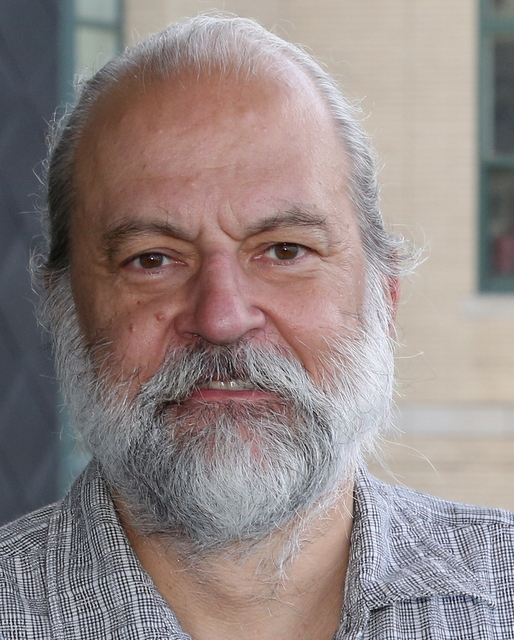 Alexander I. Rudnicky合作论文数Language Technologies Institute, School of Computer Science, Carnegie Mellon University;Automated Speech Technologies LLC4
 Shenghuo Zhu (朱胜火)合作论文数Aibee Inc.4
 Di Wu合作论文数Samsung AI Center Montreal3
 Benoit Boulet合作论文数Department of Electrical and Computer Engineering, Faculty of Engineering, McGill University;McGill Engine Centre for Technological Innovation and Entrepreneurship, McGill University3
 Zhengyuan Zhou合作论文数Department of Technology, Operations, and Statistics, Stern School of Business, New York University;Department of Computer Science and Engineering, Tandon School of Engineering, New York University;Center for Data Science, New York University3
 Chenxu Luo (罗晨旭)合作论文数3Xuguang Wang合作论文数3
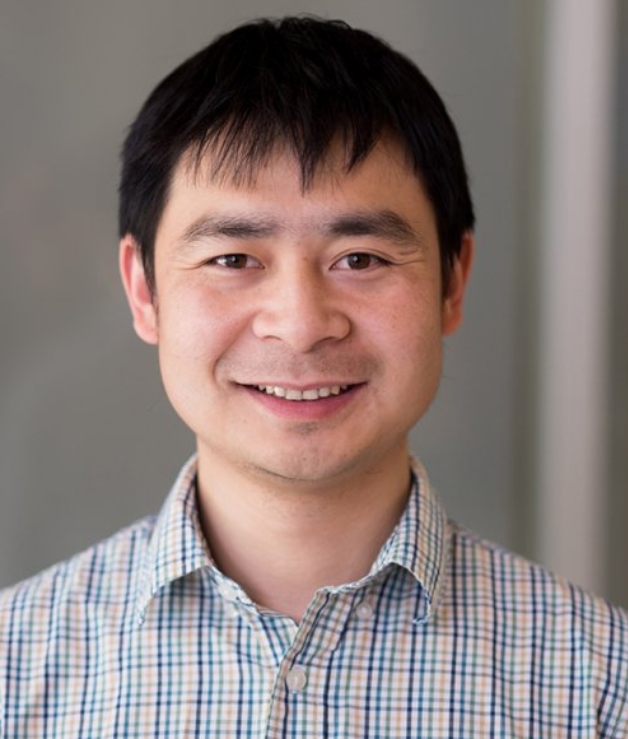 Qiang Liu合作论文数Department of Computer Science, College of Natural Sciences, The University of Texas at Austin3
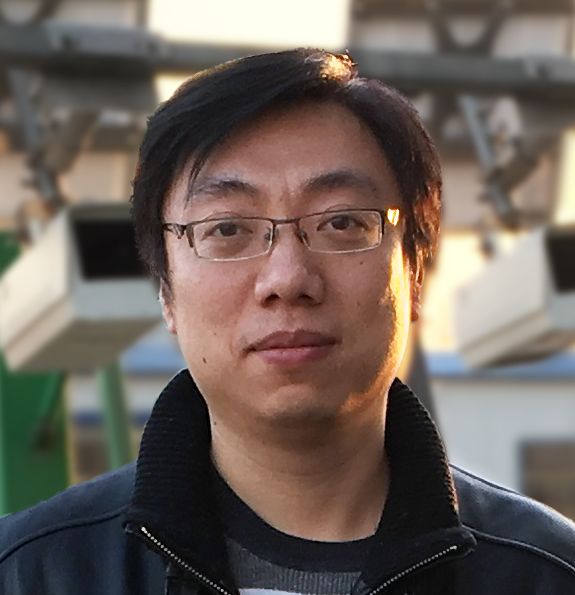 Jinjun Wang (王进军)合作论文数Institute of Artificial Intelligence and Robotics, Department of Automation, School of Electronic and Information, Xian Jiaotong University3
 Rui Zhao (赵瑞)合作论文数Tencent AI Lab3
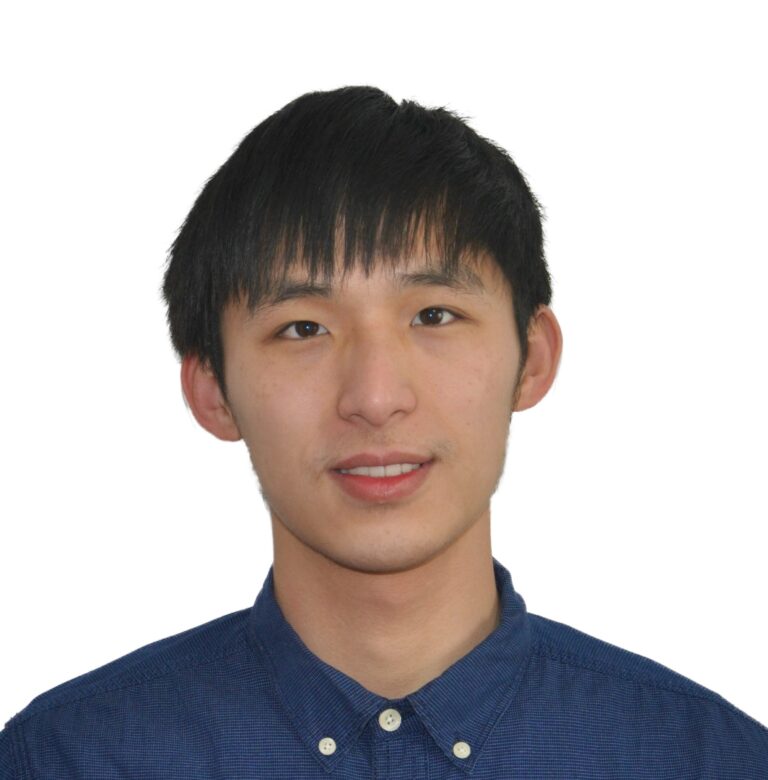 Yuwei Fu合作论文数McGill Intelligent Automation Lab, McGill University3
 Yang Wang (王洋)合作论文数Waymo3Dan Kong合作论文数3
 Shengyang Dai (戴声扬)合作论文数Google3
 Chang Huang (黄畅)合作论文数Horizon Robotics Inc.3Kai Yu合作论文数NEC Research, USA3
 Volker Tresp合作论文数Institut für Informatik, Fakultät für Mathematik, Informatik und Statistik, Ludwig Maximilian University of Munich3Panli Xu合作论文数2Jingyu Qian合作论文数2Zhening Yang合作论文数2
 Jesse Zhang合作论文数University of Southern California2
 Lingfeng Sun (孙凌峰)合作论文数Boston Dynamics AI Institute2Perry Dong合作论文数2Xin Liu合作论文数2Hui Han合作论文数2





