Estimating 3D human pose and shape from a single RGB image is a long-standing problem with broad applications in graphics, AR/VR, motion analysis, and hu-man-robot interaction. Despite recent advances using largescale CNNs, transformers, and vision-language models, existing methods often fail to generalize to in-the-wild scenarios, where domain shifts and depth ambiguities remain significant challenges. While test-time adaptation (TTA) is a natural way to improve robustness, naϊve strategies based on off-the-shelf 2D pose supervision typically amplify ambiguities and degrade 3D estimation quality. We propose a metaauxiliary learning-enhanced TTA framework that adapts the model to each test instance by treating every input sample as its own domain. Our method defines 3D human pose and shape estimation as the primary task, while leveraging 2D pose prediction and masked autoencoding as auxiliary tasks. Through a meta-learning paradigm, we explicitly simulate perinstance adaptation, ensuring that auxiliary updates at test time benefit 3D predictions. Extensive experiments demonstrate that our framework achieves consistent gains across multiple benchmarks and improves state-of-the-art base models in both controlled and in-the-wild settings, establishing a new paradigm for adaptive 3D human pose and shape estimation.
Inspired by the success of DeepSeek-R1, we explore the potential of rule-based reinforcement learning (RL) in MLLM post-training for perception policy learning. While promising, our initial experiments reveal that incorporating a thinking process through RL does not consistently lead to performance gains across all visual perception tasks. This leads us to delve into the essential role of RL in the context of visual perception. In this work, we return to the fundamentals and explore the effects of RL on different perception tasks. We observe that the perceptual perplexity is a major factor in determining the effectiveness of RL. We also observe that reward design plays a crucial role in further approaching the upper limit of model perception. To leverage these findings, we propose Perception-R1, a scalable RL framework using GRPO during MLLM post-training. With a standard Qwen2-VL-2B-Instruct, Perception-R1 achieves +4.2% on RefCOCO+, +17.9% on PixMo-Count, +4.2% on PageOCR, and notably, 31.9% AP on COCO2017 val for the first time, establishing a strong baseline for perception policy learning.
Systematic generalization is a critical property that most general deep learning algorithms lack. In this paper, we investigate the relation between gradient directions and systematic generalization. We propose a formulation to treat reducible training loss as a resource, and the training process consumes it to reduce test loss. We derive a bias that a training gradient is less efficient in using the resource at each step than an alternative gradient that leads to systematic generalization. The bias is avoided if and only if both gradients are zero or point in the same direction. We demonstrate the bias in standard deep learning models, including fully connected, convolutional, residual networks, LSTMs, and (Vision) Transformers. We also discuss a requirement for the generalization. We hope this study provides novel insights for improving systematic generalization.
In this paper, we argue that gradient descent is one of the reasons that make compositionality learning hard during neural network optimization. We find that the optimization process imposes a bias toward non-compositional solutions. This is caused by gradient descent, trying to use all available and redundant information from input, violating the conditional independence property of compositionality. Based on this finding, we suggest that compositionality learning approaches considering only model architecture design are unlikely to achieve complete compositionality. This is the first work to investigate the relation between compositional learning and gradient descent. We hope this study provides novel insights into compositional generalization, and forms a basis for new research directions to equip machine learning models with such skills for human-level intelligence.
This paper proposes an efficient approach to learning disentangled representations with causal mechanisms based on the difference of conditional probabilities in original and new distributions. We approximate the difference with models' generalization abilities so that it fits in the standard machine learning framework and can be efficiently computed. In contrast to the state-of-the-art approach, which relies on the learner's adaptation speed to new distribution, the proposed approach only requires evaluating the model's generalization ability. We provide a theoretical explanation for the advantage of the proposed method, and our experiments show that the proposed technique is 1.9--11.0$\times$ more sample efficient and 9.4--32.4 times quicker than the previous method on various tasks. The source code is available at \url{https://github.com/yuanpeng16/EDCR}.
Compositional generalization is the algebraic capacity to understand and produce large amount of novel combinations from known components. It is a key element of human intelligence for out-of-distribution generalization. To equip neural networks with such ability, many algorithms have been proposed to extract compositional representations from the training distribution. However, it has not been discussed whether the trained model can still extract such representations in the test distribution. In this paper, we argue that the extraction ability does not transfer naturally, because the extraction network suffers from the divergence of distributions. To address this problem, we propose to use an auxiliary reconstruction network with regularized hidden representations as input, and optimize the representations during inference. The proposed approach significantly improves accuracy, showing more than a 20% absolute increase in various experiments compared with baselines. To our best knowledge, this is the first work to focus on the transferability of compositionality, and it is orthogonal to existing efforts of learning compositional representations in training distribution. We hope this work will help to advance compositional generalization and artificial intelligence research.
Motivated by the human's ability to continually learn and gain knowledge over time, several research efforts have been pushing the limits of machines to constantly learn while alleviating catastrophic forgetting. Most of the existing methods have been focusing on continual learning of label prediction tasks, which have fixed input and output sizes. In this paper, we propose a new scenario of continual learning which handles sequence-to-sequence tasks common in language learning. We further propose an approach to use label prediction continual learning algorithm for sequence-to-sequence continual learning by leveraging compositionality. Experimental results show that the proposed method has significant improvement over state-of-the-art methods. It enables knowledge transfer and prevents catastrophic forgetting, resulting in more than 85% accuracy up to 100 stages, compared with less than 50% accuracy for baselines in instruction learning task. It also shows significant improvement in machine translation task. This is the first work to combine continual learning and compositionality for language learning, and we hope this work will make machines more helpful in various tasks.
In this paper we present our scientific discovery that good representation can be learned via continuous attention during the interaction between Unsupervised Learning(UL) and Reinforcement Learning(RL) modules driven by intrinsic motivation. Specifically, we designed intrinsic rewards generated from UL modules for driving the RL agent to focus on objects for a period of time and to learn good representations of objects for later object recognition task. We evaluate our proposed algorithm in both with and without extrinsic reward settings. Experiments with end-to-end training in simulated environments with applications to few-shot object recognition demonstrated the effectiveness of the proposed algorithm.
Compositional generalization is a basic mechanism in human language learning, but current neural networks lack such ability. In this paper, we conduct fundamental research for encoding compositionality in neural networks. Conventional methods use a single representation for the input sentence, making it hard to apply prior knowledge of compositionality. In contrast, our approach leverages such knowledge with two representations, one generating attention maps, and the other mapping attended input words to output symbols. We reduce the entropy in each representation to improve generalization. Our experiments demonstrate significant improvements over the conventional methods in five NLP tasks including instruction learning and machine translation. In the SCAN domain, it boosts accuracies from 14.0% to 98.8% in Jump task, and from 92.0% to 99.7% in TurnLeft task. It also beats human performance on a few-shot learning task. We hope the proposed approach can help ease future research towards human-level compositional language learning.
In this paper we propose to solve an important problem in recommendation -- user cold start, based on meta leaning method. Previous meta learning approaches finetune all parameters for each new user, which is both computing and storage expensive. In contrast, we divide model parameters into fixed and adaptive parts and develop a two-stage meta learning algorithm to learn them separately. The fixed part, capturing user invariant features, is shared by all users and is learned during offline meta learning stage. The adaptive part, capturing user specific features, is learned during online meta learning stage. By decoupling user invariant parameters from user dependent parameters, the proposed approach is more efficient and storage cheaper than previous methods. It also has potential to deal with catastrophic forgetting while continually adapting for streaming coming users. Experiments on production data demonstrates that the proposed method converges faster and to a better performance than baseline methods. Meta-training without online meta model finetuning increases the AUC from 72.24% to 74.72% (2.48% absolute improvement). Online meta training achieves a further gain of 2.46\% absolute improvement comparing with offline meta training.
There are two halves to RL systems: experience collection time and policy learning time. For a large number of samples in rollouts, experience collection time is the major bottleneck. Thus, it is necessary to speed up the rollout generation time with multi-process architecture support. Our work, dubbed WALL-E, utilizes multiple rollout samplers running in parallel to rapidly generate experience. Due to our parallel samplers, we experience not only faster convergence times, but also higher average reward thresholds. For example, on the MuJoCo HalfCheetah-v2 task, with $N = 10$ parallel sampler processes, we are able to achieve much higher average return than those from using only a single process architecture.
Learning to reconstruct depths from a single image by watching unlabeled videos via deep convolutional network (DCN) is attracting significant attention in recent years, e.g.(Zhou et al. 2017). In this paper, we propose to use surface normal representation for unsupervised depth estimation framework. Our estimated depths are constrained to be compatible with predicted normals, yielding more robust geometry results. Specifically, we formulate an edge-aware depth-normal consistency term, and solve it by constructing a depth-to-normal layer and a normal-to-depth layer inside of the DCN. The depth-to-normal layer takes estimated depths as input, and computes normal directions using cross production based on neighboring pixels. Then given the estimated normals, the normal-to-depth layer outputs a regularized depth map through local planar smoothness. Both layers are computed with awareness of edges inside the image to help address the issue of depth/normal discontinuity and preserve sharp edges. Finally, to train the network, we apply the photometric error and gradient smoothness to supervise both depth and normal predictions. We conducted experiments on both outdoor (KITTI) and indoor (NYUv2) datasets, and showed that our algorithm vastly outperforms state-of-the-art, which demonstrates the benefits of our approach.
The performance of off-policy learning, including deep Q-learning and deep deterministic policy gradient (DDPG), critically depends on the choice of the exploration policy. Existing exploration methods are mostly based on adding noise to the on-going actor policy and can only explore \emph{local} regions close to what the actor policy dictates. In this work, we develop a simple meta-policy gradient algorithm that allows us to adaptively learn the exploration policy in DDPG. Our algorithm allows us to train flexible exploration behaviors that are independent of the actor policy, yielding a \emph{global exploration} that significantly speeds up the learning process. With an extensive study, we show that our method significantly improves the sample-efficiency of DDPG on a variety of reinforcement learning tasks.
It has been recently shown that a convolutional neural network can learn optical flow estimation with unsupervised learning. However, the performance of the unsupervised methods still has a relatively large gap compared to its supervised counterpart. Occlusion and large motion are some of the major factors that limit the current unsupervised learning of optical flow methods. In this work we introduce a new method which models occlusion explicitly and a new warping way that facilitates the learning of large motion. Our method shows promising results on Flying Chairs, MPI-Sintel and KITTI benchmark datasets. Especially on KITTI dataset where abundant unlabeled samples exist, our unsupervised method outperforms its counterpart trained with supervised learning.
This paper presents two unsupervised learning layers (UL layers) for label-free video analysis: one for fully connected layers, and the other for convolutional ones. The proposed UL layers can play two roles: they can be the cost function layer for providing global training signal; meanwhile they can be added to any regular neural network layers for providing local training signals and combined with the training signals backpropagated from upper layers for extracting both slow and fast changing features at layers of different depths. Therefore, the UL layers can be used in either pure unsupervised or semi-supervised settings. Both a closed-form solution and an online learning algorithm for two UL layers are provided. Experiments with unlabeled synthetic and real-world videos demonstrated that the neural networks equipped with UL layers and trained with the proposed online learning algorithm can extract shape and motion information from video sequences of moving objects. The experiments demonstrated the potential applications of UL layers and online learning algorithm to head orientation estimation and moving object localization.
Detecting and tracking people are challenging problems, because the human body is non-rigid and the detected human are easily occluded by other objects. In this paper, we present a robust human detecting and tracking system which can be used in indoor environments. The proposed method is to get the human's disparity image from stereo camera, and then we extract the identify model human of by image processing. Hu moment is chosen to detect human because it has the invariant character of translation, rotation, proportion. Robust human tracking is performed with Extend Kalman Filter (EKF) as it's flexible and easy to apply in practical environments. In proposed system, the operator can monitor the process; modify the parameters and observe the experiment results in developed interactive GUI. Our experiments have demonstrated that the method improves human detecting and tracking robustness.
This paper describes an efficient pedestrian detection system for videos acquired from moving platforms. Given a detected and tracked object as a sequence of images within a bounding box, we describe the periodic signature of its motion pattern using a twin-pendulum model. Then a principle gait angle is extracted in every frame providing gait phase information. By estimating the periodicity from the phase data using a digital phase locked loop (dPLL), we quantify the cyclic pattern of the object, which helps us to continuously classify it as a pedestrian. Past approaches have used shape detectors applied to a single image or classifiers based on human body pixel oscillations, but ours is the first to integrate a global cyclic motion model and periodicity analysis. Novel contributions of this paper include: i) development of a compact shape representation of cyclic motion as a signature for a pedestrian, ii) estimation of gait period via a feedback loop module, and iii) implementation of a fast online pedestrian classification system which operates on videos acquired from moving platforms.
In this paper we explore the problem of accurately segmenting a person from a video given only approximate location of that person. Unlike previous work which assumes that the appearance model is known in advance, we developed an iterative expectation-sampling (ES) algorithm for solving segmentation and appearance modeling simultaneously The appearance model is encoded with a kernel-based PDF defined in a joint color/path-length space. This appearance model remains unchanged during a short time period, although the object can articulate. Thus, we can perform the ES iteration not only for a single frame but also for an image sequence. The algorithm is iterative, but simple, efficient and gives visually good results.
 Larry Davis合作论文数Department of Computer Science, University of Maryland;Center for Automation Research, University of Maryland;Amazon7
 Yuanpeng Li合作论文数Baidu5
 Kenneth Church合作论文数Khoury College of Computer Sciences, Northeastern University;The Institute for Experiential AI, Northeastern University5
 Wei Xu合作论文数Horizon Robotics5
 Joel Hestness合作论文数Cerebras Systems5
 Mohamed H. Elhoseiny合作论文数Visual Computing Center, King Abdullah University of Science and Technology5
 Chuck Thorpe合作论文数Computer Science Department, Clarkson University3
 Tianbing Xu合作论文数3
 Zhenheng Yang (杨振恒)合作论文数2
 Yi Yang (杨亿)合作论文数2
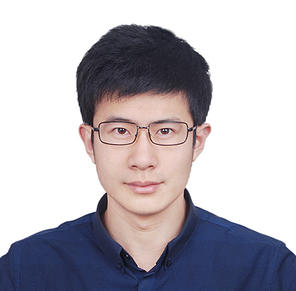 Peng Wang (王鹏)合作论文数ByteDance2
 Jian Peng合作论文数Helixon2
 Qiang Liu合作论文数Department of Computer Science, College of Natural Sciences, The University of Texas at Austin2
 Anurag Mittal合作论文数Computer Vision Lab, Department of Computer Science & Engineering, Indian Institute of Technology Madras2
 Yang Wang合作论文数Department of Computer Science and Software Engineering, Concordia University2
 Zhixiang Chi合作论文数Huawei Canada1Jisheng Yin合作论文数1Yana Wei合作论文数1Kangheng Lin合作论文数1Ramakant Nevatia合作论文数1
 Yuang Peng合作论文数1Ingrid B. Carlbom合作论文数1Chunrui Han合作论文数Stepfun1
 matthew g berry合作论文数Department of Chemical and Biomolecular Engineering, North Carolina State University1Jianjian Sun合作论文数Megvii Technology Inc.1
 Wei Cui合作论文数School of Physics and Electronic Information, Yan’an University1
 Zheng Ge合作论文数Megvii Inc.1
 Yuan-Peng Li合作论文数ABaidu1
 Isaac Weiss合作论文数1
 Haoran Wei合作论文数Alibaba DAMO Academy1
 Rama Chellappa合作论文数Department of Electrical and Computer Engineering, Whiting School of Engineering, Johns Hopkins University;Department of Electrical and Computer Engineering, A. James Clark School of Engineering, University of Maryland1Yujing Wang合作论文数Coupang1
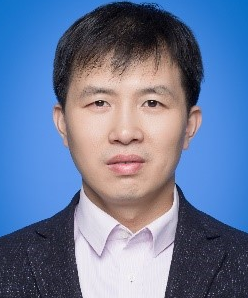 Wenbing Tao (陶文兵)合作论文数School of Artificial Intelligence and Automation, Huazhong University of Science and Technology1
 Gopal Pingali合作论文数Accenture1
 Daxiang Dong合作论文数Baidu, Inc.1
 Xiangyu Zhang (张祥雨)合作论文数StepFun1
 Tian Hao合作论文数Baidu Research1
 Sen Wang合作论文数HoYoverse1
 Xiuzhi Li (李秀智)合作论文数Faculty of Information Technology, Beijing University of Technology1
 Jianyu Wang合作论文数1
 Daxin Jiang (姜大昕)合作论文数StepFun1
 Xinxin Zuo合作论文数Department of Electrical and Computer Engineering, Concordia University1
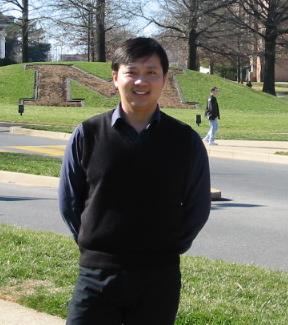 Yang Ran合作论文数University of Maryland, College Park1
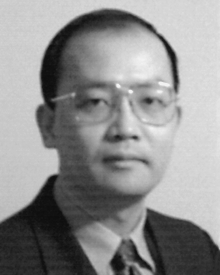 Qinfen Zheng合作论文数Center for Automation Research, University of Maryland;Institute for Advanced Computer Studies, University of Maryland1
 Wael AbdAlmageed合作论文数Holcombe Department of Electrical and Computer Engineering, Clemson University1Songmin Jia合作论文数College of Electronic Information & Control Engineering1
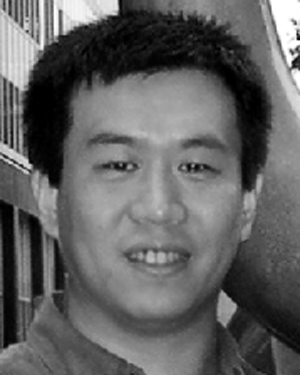 Zhanfeng Yue合作论文数1




