The pure-vision multi-view 3D detection task is crucial for autonomous driving, necessitating precise environmental perception. Current methods fall short in effectively leveraging spatiotemporal information, often neglecting the differentiation and utilization of temporal information at various intervals and underutilizing multi-scale spatial information. To address these challenges, we introduce CrossBEV, a novel multi-view 3D perception framework that enhances spatial perception through cross-processing of historical frame features and reuse of multi-scale spatial features. CrossBEV comprises two important modules: Dual-Temporal Predictive Module (DTPM) and Cross-Frame Feature Reactivation (CFFR) Module. The DTPM module classifies historical frames for temporal processing, generating unified historical query features as pseudo-current frame features to constrain network training for object detection. The CFFR module integrates multi-scale image features across frames, boosting dynamic scene comprehension. Evaluated on the nuScenes dataset, CrossBEV achieved 65.1 https://github.com/AuRa-99/CrossBEV.
Detecting small infrared targets is critical for all-weather surveillance and precision guidance systems. While U-shaped architectures have advanced infrared small target detection, they are hindered by an intrinsic semantic discrepancy: shallow layers are prone to structural noise, whereas deep layers suffer from resolution degradation and severe erosion of small target cues. Naive feature aggregation strategies fail to reconcile these conflicting contexts. To address this bottleneck, we present the Entropy-weighted Adaptive Contrast Network (EACNet), which introduces a physics-prior-guided semantic coupling paradigm. In contrast to standard attention, our Entropy-weighted Adaptive Contrast (EAC) module employs a Directional Local Entropy (DLE) strategy integrated with adaptive contrast measurement. This formulation acts as a geometric filter that explicitly penalizes curve-like continuous clutter while selectively activating isotropic point-like targets. To facilitate cross-layer semantic feature fusion, we design a Multi-level Skip Connection (MSC) that calibrates deep semantic representations using shallow spatial features. Accompanied by a cascaded Axial Dilated Fusion Bottleneck (ADFB) for long-range contextual aggregation, EACNet effectively integrates physics-driven and data-driven representations. Comprehensive experiments demonstrate that, even under extremely low signal-to-clutter ratios, EACNet offers a good balance among robustness, interpretability, and real-time efficiency.
Object detection in aerial drone imagery has attracted increasing attention in Unmanned Aerial Vehicle(UAV) sensing applications. However, small objects occupying limited image regions, with large scale variations and similar background interference, make it challenging to perceive them. Meanwhile, the constrained computing power of the onboard platform imposes requirements on the speed and efficiency of the algorithm. In this paper, we propose an efficient object detection network for real-time UAV perception named ESO-Det. Our approach introduces three key innovations: (1) Dense Cross-branch Complementary Module, a lightweight model that dynamically integrates semantic and spatial information to improve the network’s understanding of scene details. (2) Large-Kernel Context Integration Module, a module that expands receptive fields to effectively aggregate multi-scale contextual information. (3) Lightweight Selective Aggregation Module, a model selectively aggregates fused multi-scale features through different functional branches. Extensive experiments demonstrate that the proposed method achieves higher performance than representative existing approaches while maintaining real-time processing capability. The results show that our method is suitable for real-time UAV object detection.
Using machine learning (ML) and deep learning (DL) algorithms for precise coagulant dosing in drinking water treatment plants (DWTPs) helps ensure drinking water safety and supports greenhouse gas (GHG) emission reduction. The effectiveness of these algorithms depends heavily on the availability of long-term data. Short-term data are used in this study to explore the potential of four traditional ML algorithms and four DL algorithms for precise coagulant dosing. Three strategies were introduced: an innovative method for floc morphological feature extraction, selection of temporal windows, and integration of transformer architecture. Based on these strategies, 16 different scenarios were constructed, resulting in 96 models for analysis. Results show that without any strategy applied, ML models achieved 5.0% higher R and 10.5% higher R² than DL models. This is due to their simplicity, faster convergence, and suitability for low-dimensional data. However, with the proposed strategies, DL models significantly improved and outperformed ML models. Given the time-lagged dependencies across DWTP treatment units, optimized DL models N better captured complex nonlinear temporal relationships. The best-performing model was the temporal convolutional network (TCN) with floc morphological features, 4-h temporal window, and transformer architecture, achieving R and R2 values of 0.99. The model was trained with only one month of data and rapidly deployed. A weekly self-updating mechanism was integrated to ensure long-term adaptability. The model has been operating stably in a DWTP for over six months. It has reduced coagulant dosage by 20% and carbon dioxide equivalent (CO2-eq) emissions by an estimated 70 tons annually. This study demonstrates the strong potential of optimized DL algorithms to improve water purification and reduce carbon emissions.
Fault diagnosis is critical to flight safety for multirotor uncrewed aerial vehicles (UAVs). While graph neural networks (GNNs) have shown validity in modeling complex structural data, conventional approaches relying on undirected graphs and local message-passing struggle with graph heterophily and limited receptive fields. To overcome these limitations, this article proposes directional information and global perception fusion (DIGPGNN)-a novel GNN architecture that integrates for enhanced UAV fault diagnosis. Initially, a directed graph is constructed based on feature similarity to reduce graph heterophily. Subsequently, an adaptive bidirectional aggregation GNN (ABAGNN) is used to adaptively aggregate the feature information of bidirectional neighbor nodes, thereby enhancing the model's focus on homophilic neighborhood nodes. Finally, the efficient graph transformer (EGT) incorporates a global self-attention strategy to learn the optimal graph structure by connecting distant homophilic nodes. Experimental results validate the effectiveness of DIGPGNN, achieving a 4.01% and 1.88% improvement in classification accuracy on public and self-built UAV datasets, respectively.
Class incremental semantic segmentation (CISS) aims to segment new classes during continual steps while preventing the forgetting of old knowledge. Existing methods alleviate catastrophic forgetting by replaying distributions of previously learned classes using stored prototypes or features. However, they overlook a critical issue: in CISS, the representation of class knowledge is updated continuously through incremental learning, whereas prototype replay methods maintain fixed prototypes. This mismatch between updated representation and fixed prototypes limits the effectiveness of the prototype replay strategy. To address this issue, we propose the Adaptive prototype replay (Adapter) for CISS in this paper. Adapter comprises an adaptive deviation compensation (ADC) strategy and an uncertainty-aware constraint (UAC) loss. Specifically, the ADC strategy dynamically updates the stored prototypes based on the estimated representation shift distance to match the updated representation of old class. The UAC loss reduces prediction uncertainty, aggregating discriminative features to aid in generating compact prototypes. Additionally, we introduce a compensation-based prototype similarity discriminative (CPD) loss to ensure adequate differentiation between similar prototypes, thereby enhancing the efficiency of the adaptive prototype replay strategy. Extensive experiments on Pascal VOC and ADE20K datasets demonstrate that Adapter achieves state-of-the-art results and proves effective across various CISS tasks, particularly in challenging multi-step scenarios.
Deep learning technology has been widely applied in the field of image object detection, and many mature object detection models have emerged, which rely on a large number of data samples for learning and training. However, in many practical application scenarios, it is difficult to obtain a large number of correctly labeled samples. The demand for the quantity and quality of training dataset samples is an important issue in the field of few-shot detection. This paper explores the relationship between sample size and training effectiveness through model training experiments on different datasets. It is found that the accuracy and recall of the model both above 70% when the sample size is more than 500, and less than 10% when the sample size is less than 100. We optimized a dataset of 197 images based on data augmentation, achieving an improvement in training effectiveness by increase 17.1% mean average precision of the model. By adjusting the simulation azimuth and pitch angles to obtain datasets with different sparsity, we trained the detection model using these datasets and tested the model's detection performance using test images. We found that increasing the shooting angle interval would make the dataset sparser, resulting in a decrease in the mean average precision of the model on the validation set and a decrease in the detection performance on the test images. Moreover, an overly sparse dataset could cause over-fitting problems.
Road extraction from high-resolution remote sensing images is a challenging task due to the presence of disturbing features and the diversity of road representations. To overcome these problems, deep neural networks-based methods have been recently used to improve the speed and accuracy of road extraction. In this letter, we propose a simple yet effective method for feature extraction with context fusion and self-learning sampling, which we call dual feature fusion (DFF). Moreover, we point out that the DFF method is functionally similar to the downsampling and upsampling structure. From this, we propose a network with a dense feature skip connect structure (DFC-UNet) to extract the roads from remote sensing images. The complexity of the high-dimensional features of the U-shaped structure is also analyzed, and the redundant features are suppressed through the equivalent replacement of the DFF block. Aiming at the unbalanced characteristics of samples and the topological characteristics of the road network, we then propose a comprehensive loss function based on dynamic weighting to strengthen the learning of the road network. Experimental results on the Massachusetts road dataset, the DeepGlobe dataset, and the CHN6_CUG dataset confirm the effectiveness of the proposed method.
With the rapid development of modern industry, actual production processes generally have a variety of complex characteristics, including nonlinearity, multimodality, and contamination. Those characteristics, as well as the faults, bring great challenges to traditional process monitoring. To deal with all the abovementioned three problems simultaneously, this article develops a robust nonlinear multimode process monitoring scheme. First, the robust decomposition of kernel function (RDKF) algorithm is proposed to detect outliers. Then, a nonlinear mode identification method is presented by combining the block diagonal kernel function matrix and spectral clustering. For the online sample, a mode indicator is derived from the kernel function to judge whether it belongs to a fault or a certain mode. Finally, the effectiveness of the proposed method is validated by two cases in terms of both mode identification and fault detection.
Aim: This research aimed to construct a clinical model for forecasting the likelihood of lung metastases in differentiated thyroid carcinoma (DTC) with intermediate- to high-risk.Methods: In this study, 375 DTC patients at intermediate to high risk were included. They were randomly divided into a training set (70%) and a validation set (30%). A nomogram was created using the training group and then validated in the validation set using calibration, decision curve analysis (DCA) and receiver operating characteristic (ROC) curve.Results: The calibration curves demonstrated excellent consistency between the predicted and the actual probability. ROC analysis showed that the area under the curve in the training cohort was 0.865 and 0.845 in the validation cohort. Also, the DCA curve indicated that this nomogram had good clinical utility.Conclusion: A user-friendly nomogram was constructed to predict the lung metastases probability with a high net benefit.
Frequent operation changes are inevitable to achieve different production aims, which leads to mixed periods of stationarity and nonstationarity in industrial processes and increases the monitoring difficulty. In this article, a generalized monitoring scheme is proposed for industrial processes with stationary and nonstationary operational stages. First, the local average similarity (LAS) and distance average similarity (DAS) are developed on offline training data to divide operational stages and identify repeating stages. The equilibrium relationship between variables in each stage can be guaranteed rather than in the whole process, which is the premise of refined modeling. Then, multiple cointegration analysis (CA) and detrended fluctuation regression (DFR) models are proposed to handle nonstationary variables with different integrated orders, so as to map all stages into stationary space. For online monitoring, the real-time stage identification is performed based on the comprehensive similar index (CSI) that combines LAS and DAS, and the process monitoring is realized by a local static principal component analysis (PCA). Finally, the effectiveness of our proposed method is verified by an extended Tennessee Eastman simulation and batch-fed penicillin fermentation process.
Remaining useful life (RUL) prediction of bearing is essential to guarantee its safe operation. In recent years, deep learning (DL)-based methods attract a lot of research attention for accurate RUL prediction. However, the weak interpretability of the DL models prevents their wide use in practical systems. In this article, the graph is used to represent the degradation state of bearings, and a graph neural network (GNN) is applied for their RUL prediction. Specifically, regression shapelet is proposed to transform the bearings time series data into graph structure first. Then, with the proposed distance matrix/adjacency matrix as the input and smoothed nonlinear health index (SNHI) as the output, a deep GNN model combining graph convolutional neural network (GCN) and gate recurrent unit (GRU) is set up in both spatial and temporal perspectives to predict the bearing RUL. Meanwhile, graph evolution is adopted to monitor the graph changes with time and offer an explanation for the bearing degradation procedure. The experiment study on the PRONOSTIA platform is used to evaluate the proposed method. The results show that the proposed method can well explain the bearing degradation process from the graph perspective and will achieve superior performance to the existing methods.
Real-time nonlinear multimode process monitoring of actual industrial systems has attracted increasing attention recently. In this article, the time-weighed kernel sparse representation (TWKSR) method is proposed to partition the mode of the training dataset by introducing the time-series-dependent characteristics into the kernel sparse representation algorithm. The alternating direction method of multipliers is utilized to solve the optimization problem of the proposed TWKSR method. Then, the representative samples from each identified mode are selected to update the dictionary matrix. Based on the updated dictionary matrix, the sparse coefficient is used for online mode identification, and the reconstruction error is utilized for fault detection. Finally, a numerical simulation case and the wastewater treatment process example verify the effectiveness of the proposed method.
Background and aims: To establish reference intervals (RIs) for PTX-3 and to validate the performance of these RIs in a population including healthy volunteers and Takayasu's arteritis (TAK) patients. Materials and methods: Plasma PTX-3 levels were determined in 166 healthy volunteers and 63 TAK patients. RIs were established in healthy volunteers according to guidelines from the Clinical and Laboratory Standards Institute (CLSI, C28-A3). Global assessment was used to quantitatively diagnose active/non-active TAK patients. Screening and monitoring performances were validated by identifying active TAK patients from the whole population or diagnosed TAK patients. Results: The PTX-3 RI was calculated to be 0.87-2.78 ng/mL. For screening purposes, 1.55 ng/mL had a high sensitivity of 90.32 % and the RI upper limit (2.78 ng/mL) had a high specificity of 97.94 %. For monitoring purposes, the sensitivity/specificity of the cut-off value (1.55 ng/mL) and RI median were 90.32 %/90.63 % and 80.85 %/90.63 %, respectively. These screening and monitoring performances of PTX-3 were superior to those of C-reactive protein (CRP) and erythrocyte sedimentation rate (ESR). Conclusion: The distribution of serum PTX-3 levels was stable and uniform across the population. The screening and monitoring performances of the cut-off value and RI-derived values of PTX-3 were higher than CRP and ESR.
A graphical system for quality assessment is highly demanded in current manufacturing industry. It is typically difficult to grade products by multi-index quality data according to specification limits, especially when there is a complex correlation between indexes. This work introduces a visualized quality grading framework to solve the problems, which includes adopting Yoe-Johnson transformation and kernel principal component analysis to augment the insufficient quality data with correlations, and then visualizing the data through a modified 3D Kiviat diagram. The confidence region of each quality grade is determined respectively on the diagram to evaluate online products. The proposed methodology is tested on a semiconductor manufacturing and the result demonstrates its effectiveness and reliability.
Fault diagnosis(FD) is vital for monitoring of industrial processes. Actually, both the multiple fault variables and minor faults are inclined to bring wrong diagnosis results. In this paper, a fault variable identification method is proposed for multivariate/minor fault diagnosis. The deviation factor is adopted as the characteristic of the sample, and Bayesian decision theory is adopted to calculate the possibility of the variable being faulty, then multi-dimensional reconstruction-based contribution (MRBC) is used to determine the fault source variables. This method not only improves the diagnosis rate for multiple/minor faults with less computation time, but also can indicate severity level of the different fault variables according to the fault occurrence probability. A Numerical example and Tennessee Eastman process are given to show the efficiency of the proposed method.
In the multivariable fault diagnosis of industrial process, due to the existence of correlation between variables, the result of fault diagnosis will inevitably appear "smearing" effect. Although the fault diagnosis method based on the contribution of multi-dimensional reconstruction is helpful when multiple faults occur. But in order to correctly isolate all the fault variables, this method will become very inefficient due to the combination of variables. In this paper, a fault diagnosis method based on kNN and MRBC is proposed to fundamentally avoid the corresponding influence of "smearing", and a fast variable selection strategy is designed to accelerate the process of fault isolation. Finally, simulation study on a benchmark process verifies the effectiveness of the method, in comparison with the traditional method represented by FDA-based method.
In this paper, a universal probability-based method is proposed for health stage division based on the feature exacted from different rolling element bearings. A new monitoring feature called Amplitude Difference of Strong and Carpet Impulse (ADSCI) is adopted to obtain the degradation information of bearings. Specifically, the high frequency information is utilized to get the degradation status, and a new impulse extractor method is developed to quantify the degree of the degradation. The Exponential Weibull distribution (EWD) is introduced to describe the probability distribution of the ADSCI feature in healthy stage and degradation stage, respectively. Then, a method named Likelihood Probability Comparison (LPC) is put forward to online detect the degradation point which is located between the healthy and degradation stage. For the LPC method, the EWD is utilized to calculate two likelihood probabilities regarding the healthy and degradation stage, respectively. The comparison result of the two likelihood probabilities is used to detect the degradation point. The performance of the proposed method is evaluated on the PRONOSTIA platform, and the comparison experiment with other features is performed. The result shows that the proposed ADSCI feature behaves stable for different bearings and the proposed LPC method is universal and effective for health monitoring of different bearings.
Many industrial processes are operated in multiple modes due to different manufacturing strategies. Multimodality of process data is often accompanied with nonlinear and non-Gaussian characteristics, which makes data-driven monitoring more complicated. In this paper, statistics pattern analysis (SPA) is introduced to extract low- and high-order statistics from raw process data. Support vector data description (SVDD), which can deal with nonlinear and non-Gaussian problems, is applied to monitor multimode process in this paper. To improve detection performance of SVDD for training multimode data with outliers, modified local reachability density ratio (mLRDR) is proposed as a weight factor to be embedded in the weighted-SVDD (wSVDD) model, in which the local neighbors in terms of both space and time are considered. Finally, the effectiveness and superiority of our proposed method are demonstrated by the Tennessee-Eastman (TE) process and wastewater treatment process (WWTP).
 Tianxu Zhang (张天序)合作论文数School of Artificial Intelligence and Automation, Huazhong University of Science and Technology19
 Hong Zhang (张洪)合作论文数School of Artificial Intelligence and Automation, Huazhong University of Science and Technology8
 Zhengrong Zuo (左峥嵘)合作论文数School of Artificial Intelligence and Automation, Huazhong University of Science and Technology6
 Yang Wang合作论文数5
 Lamei Zou (邹腊梅)合作论文数School of Artificial Intelligence and Automation, Huazhong University of Science & Technology5
 Zhaojing Wang (王召静)合作论文数Beijing Tri-Prime Gene Pharmaceutical Co., Ltd.5
 PENG Jiang-tao (彭江涛)合作论文数4YanWei Wang (王彦伟)合作论文数4
 Yong Zhang (张勇)合作论文数School of Computer Science & Technology, Huazhong University of Science and Technology4Meng Li合作论文数4
 David Shan Hill Wong合作论文数4Wei Zhou合作论文数3Xiechang Sun合作论文数3
 Lang Liu合作论文数3
 Weiwei Sun (孙伟伟)合作论文数School of Civil and Environmental Engineering and Geography Science, Ningbo University3
 Fei Kang (康飞)合作论文数Air Force Medical University3
 Yan, Wang合作论文数3Xinsai Wang合作论文数3
 Bo Tao (陶波)合作论文数School of Mechanical Science & Engineering, Huazhong University of Science and Technology3
 Xiaoyu Yang (杨晓玉)合作论文数State Key Lab Adv Technol Mat Synth & Proc, Wuhan Univ Technol3
 Nong Sang (桑农)合作论文数School of Artificial Intelligence and Automation, Huazhong University of Science and Technology3Qiuhui Ma合作论文数2Gongyan Wang合作论文数2Liujia Jin合作论文数2Tianhui Wei合作论文数2Chengjun Song合作论文数2Yuanle Liu合作论文数2xia lan合作论文数2Yi Fu (義夫)合作论文数2
 Zhiyong Zuo合作论文数2
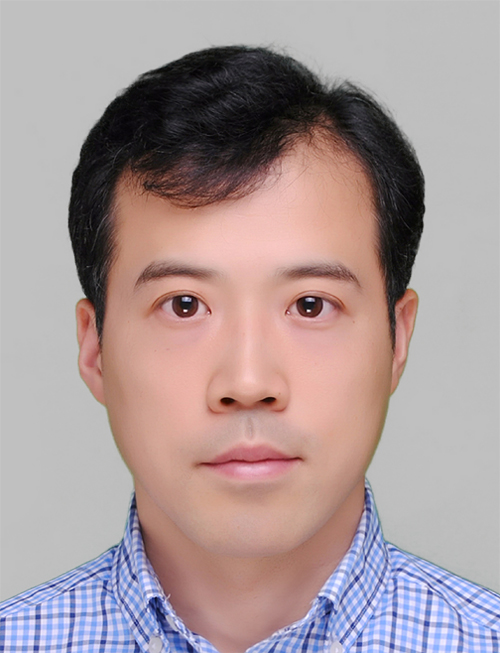 Li Liu (刘立)合作论文数School of Aerospace Science and Technology, Xidian University2
 Jing Hu (胡静)合作论文数School of Artificial Intelligence and Automation, Huazhong University of Science and Technology2Haicen Mao (毛海岑)合作论文数2
 Ying Zheng (郑瑛)合作论文数State Key Laboratory of Coal Combustion, School of Energy and Power Engineering, Huazhong University of Science and Technology2Wenhui Ma (马温惠)合作论文数2
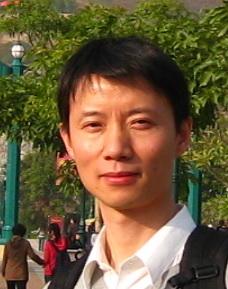 Zhiguo Cao (曹治国)合作论文数School of Artificial Intelligence and Automation, Huazhong University of Science and Technology2
 Luxin Yan (颜露新)合作论文数School of Artificial Intelligence and Automation, Huazhong University of Science and Technology2
 Dongyue Wu (吴东岳)合作论文数School of Artificial Intelligence and Automation, Huazhong University of Science and Technology1
 Guilin Zhu合作论文数School of Information Science and Engineering, Hunan Normal University1Jing Wang合作论文数1
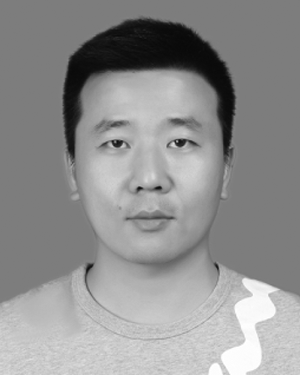 Shaojun Liang合作论文数1ziwei liu合作论文数1
 Xiang Li (李想)合作论文数National Center for Nanoscience and Technology,Chinese Academy of Sciences;University of Chinese Academy of Sciences1Ming Zhang合作论文数1
 Zhiwei Wang (王植炜)合作论文数Wuhan National Laboratory for Optoelectronics, Huazhong University of Science and Technology1




