In this paper,we propose a simple but efficient filter to effectively remove salt-and-pepper noise from highly corrupted images inspired by the corresponding limitations of existing filtering methods.After ensuring the location of ill pixels based on their intensity value,our method then utilizes the iterative processing framework to gradually restore the noisy images.When the useful information of one corrupted image is much enough,the proposed method can refine the results through particular designed criterion.The experiments from standard test images show that the proposed method can better recover the detail information and maintain the optimal performances qualitatively and quantitatively in the comparisons.Even the ratio of salt-and-pepper noise is as high as 95%,the advantage of our filter is still significant.
Correcting uneven intensity distribution from a single image has long been a challenging problem with remote sensing image. In this paper, an analysis-based sparse prior is employed in the retinex variational framework for the uneven intensity correction of remote sensing images. This sparse regularization model is used to adjust uneven intensity by regularizing the sparsity of the reflectance component under framelet transform. Furthermore, the alternating minimization algorithm and split Bregman method are adopted to solve the framelet-based sparse regularization model. The experiments, with both simulated images and real-life images, show that the proposed model can effectively correct the uneven intensity distribution.
Prediction is an important means of lossless compression decorrelation .For the sequence of satellite images , considering its relevance in space and time to improve the JPEG-LS algorithm which is only based on the spatial information , the image is divided into several blocks by taking into account different characteristics of different regions of the image .Each sub-block adaptively selects an optimal prediction template and prediction mode ,in which the accumulated absolute value of prediction error is the smallest .The higher compression ratio is obtained by using the optimal template and predictor .
Due to the increasing traffic cased by multimedia information and digitized form of representation of images; image compression has become a necessity. Wavelet transform which has the ability to analyze signals in different scales is widely used in lossy image compression, while more and more image detail will be thrown away with the increase of the compression ratio (CR). In order to overcome this drawback, in this paper we incorporate image restoration and coefficient fusion techniques into the decompression procedure, and propose a novel image decompression technique. We restore part of high-frequency coefficient by using image restoration with the low-frequency component, new high-frequency components are next retrieved by fusing the restored high-frequency and the corresponding original high-frequency, and then the reconstructed image is last obtained by applying the inverse wavelet transform to the new coefficient map which is generated through combing the original low-frequency with the retrievable high-frequency components. Finally, a set of experiments and performance evaluation are provided to assess the effectiveness of the proposed method.
Hospitals and medical centers produce an enormous amount of digital medical images every day, which are used for different purposes such as surgical and diagnostic plans. The ease of storing and transmission of digital medical images is a boon to patients and medical professionals. Due to the large volume of images, image compression is required to reduce the redundancies in image and represents it in shorter manner for efficient archiving and transmission of images. However, compressing digital medical images as the region of interest for diagnosis is generally small when compared to the whole image. Lossless compression techniques compress without loss of any information but have low compression rate, and lossy compression techniques can compress at high compression ratio but with a slight loss of data. Using lossless techniques in medical image does not give enough advantage in transmission and storage and lossy techniques may lose crucial data required for diagnosis. In this paper, an improved medical image compression technique based on region of interest (ROI) is proposed to maximize compression. The image is firstly divided into two parts: ROI regions and non-ROI regions. Lossless compression algorithm is then applied to the marked area of ROI, and image restoration technique and the wavelet-based lossy compression algorithm are utilized to the other area of the image. Finally, a set of experiments is designed to assess the effectiveness of the proposed compression method.
In this paper, a spatially adaptive retinex variational model for the uneven intensity correction of remote sensing images is proposed. In the model, the spatial information is used to constrain the TV regularization strength of the reflectance. In the edge pixels, a weak regularization strength is enforced to preserve detail, and in the homogeneous areas, a strong regularization strength is enforced to eliminate the uneven intensity. The relationship and the fidelity term between the illumination and reflectance are also considered. Moreover, the split Bregman optimization algorithm is employed to solve the proposed model. The experimental results with both simulated and real-life data demonstrate that the proposed method is effective, based on both the visual effect and quantitative assessment.
The maximum a posteriori (MAP) model is widely used in image processing fields, such as denoising, deblurring, segmentation, reconstruction, and others. However, the existing methods usually employ a fixed prior item and regularization parameter for the whole image and ignore the local spatial adaptive properties. Though the non-local total variation model has shown great promise because of exploiting the correlation in the image, the computation cost and memory load are the issues. In this paper, a content-based local spatial adaptive denoising algorithm is proposed. To realize the local spatial adaptive process of the prior model and regularization parameter, first the degraded image is divided into several same-sized blocks and the Tchebichef moment is used to analyze the local spatial properties of each block. Different property prior items and regularization parameters are then applied adaptively to different properties’ blocks. To reduce the computational load in denoising process, the split Bregman iteration algorithm is employed to optimize the non-local total variation model and accelerate the speed of the image denoising. Finally, a set of experiments and performance evaluation using recent image quality assessment index are provided to assess the effectiveness of the proposed method.
Image is ubiquitous in modern communication. However, during the process like image acquisition and transmission, blur will appear on the reproduced image. This paper presents a time dependent model for image restoration based on the non-local total variation (TV) operator, which is robust to the noise and makes full use of the spatial information distributed in the different image regions. Experiment results demonstrate that the proposed model produces results superior to some existing models in both visual image quality and quantitative measures. ? Springer-Verlag Berlin Heidelberg 2014.
Image restoration is an ill-posed problem that requires regularization to solve. Many existing regularization terms in the literature are the convex function. However, nonconvex nonsmooth regularization has advantages over convex regularization for restoring images, but its practical interest used to be limited by the difficulty of the computational stage which requires a nonconvex nonsmooth minimization. In this paper, an adaptive nonconvex nonsmooth regularization is proposed for image restoration by using the spatial information indicator. Moreover, an efficient numerical algorithm for solving the resulting minimization problem is provided by applying the variable splitting and the penalty techniques. Finally, its advantages are shown in deblurring edges and restoring fines of image simultaneously in experiments.
Total variation (TV) has been used as a popular and effective image prior model in regularization-based image restoration, because of its ability to preserve edges. However, as the total variation model favors a piecewise constant solution, the processing results in the flat regions of the image are poor, and the amplitude of the edges will be underestimated; the underlying cause of the problem is that the model is based on derivation which only considers the local feature of the image. In this paper, we first propose an adaptive non-local total variation image blind restoration algorithm for deblurring a single image via a non-local total variation operator, which exploits the correlation in the image, and then an extended split Bregman iteration is proposed to address the joint minimization problem. Second, the maximum average absolute difference (MAAD) method is employed to estimate the blur support and initialize the blur kernel. Extensive experiments demonstrate that the proposed approach produces results superior to most methods in both visual image quality and quantitative measures.
Images of outdoor scenes are usually degraded under bad weather conditions, which results in a hazy image. To date, most haze removal methods based on a single image have ignored the effects of sensor blur and noise. Therefore, in this paper, a three-stage algorithm for haze removal, considering sensor blur and noise, is proposed. In the first stage, we preprocess the degraded image and eliminate the blur/noise interference to estimate the hazy image. In the second stage, we estimate the transmission and atmospheric light by the dark channel prior method. In the third stage, a regularized method is proposed to recover the underlying image. Experimental results with both simulated and real data demonstrate that the proposed algorithm is effective, based on both the visual effect and quantitative assessment.
In this paper, a local scale measure is presented for the detection of homogeneous regions in an image. Then, based on region homogeneity, an adaptive nonlocal means filter (ANLMF) is proposed. In this method, the neighborhood window size for denoising varies adaptively, according to the local scale measure. Experiments show that the proposed filter (ANLMF) is better than the state-of-the-art nonlocal means filter (NLMF).
This paper firstly proposes an adaptive non-local switching median filter. Then, a two-phase scheme is presented to remove the random-valued impulse noise. In the first phase, the adaptive switching median filter or the adaptive non-local switching median filter is used to identify the pixels which are likely to be the noise candidates. In the second phase, only the noise candidates’ values are restored by a detail-preserving regularization method. Simulation results show that the proposed method is significantly superior to some of the state-of-the-art methods.
The amount of noise included in a hyperspectral image limits its application and has a negative impact on hyperspectral image classification, unmixing, target detection, and so on. In this paper, we propose a hyperspectral image denoising algorithm with a spatial and spectral fusion strategy. The idea is to denoise the noisy hyperspectral 3D cube using a given 2D denoising algorithm but applied from spatial and spectral views. A fusion algorithm is then designed to merge the resulting multiple-view denoised image into one, so that the visual quality of the fused hyperspectral image is improved. A number of experiments illustrate that the proposed approach can surprisingly produce a better denoising result than both spatial and spectral view denoising result, especially at high noise level.
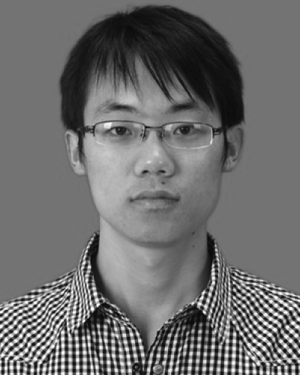 Zhiyong Zuo合作论文数9
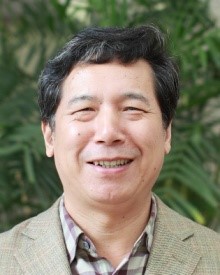 Liangpei Zhang (张良培)合作论文数State Key Laboratory of Information Engineering in Surveying, Mapping and Remote Sensing, Wuhan University6
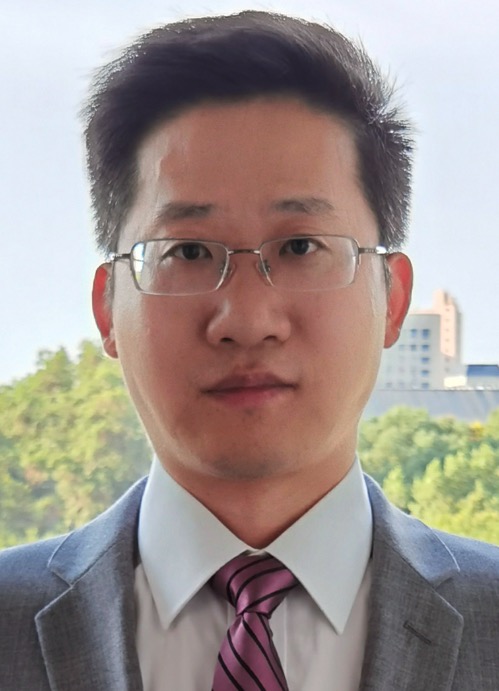 Huanfeng Shen (沈焕锋)合作论文数SENsed Data Intelligent-analytics, Merging and Applications in GEoscience, Wuhan University;School of Resource and Environmental Sciences, Wuhan University6
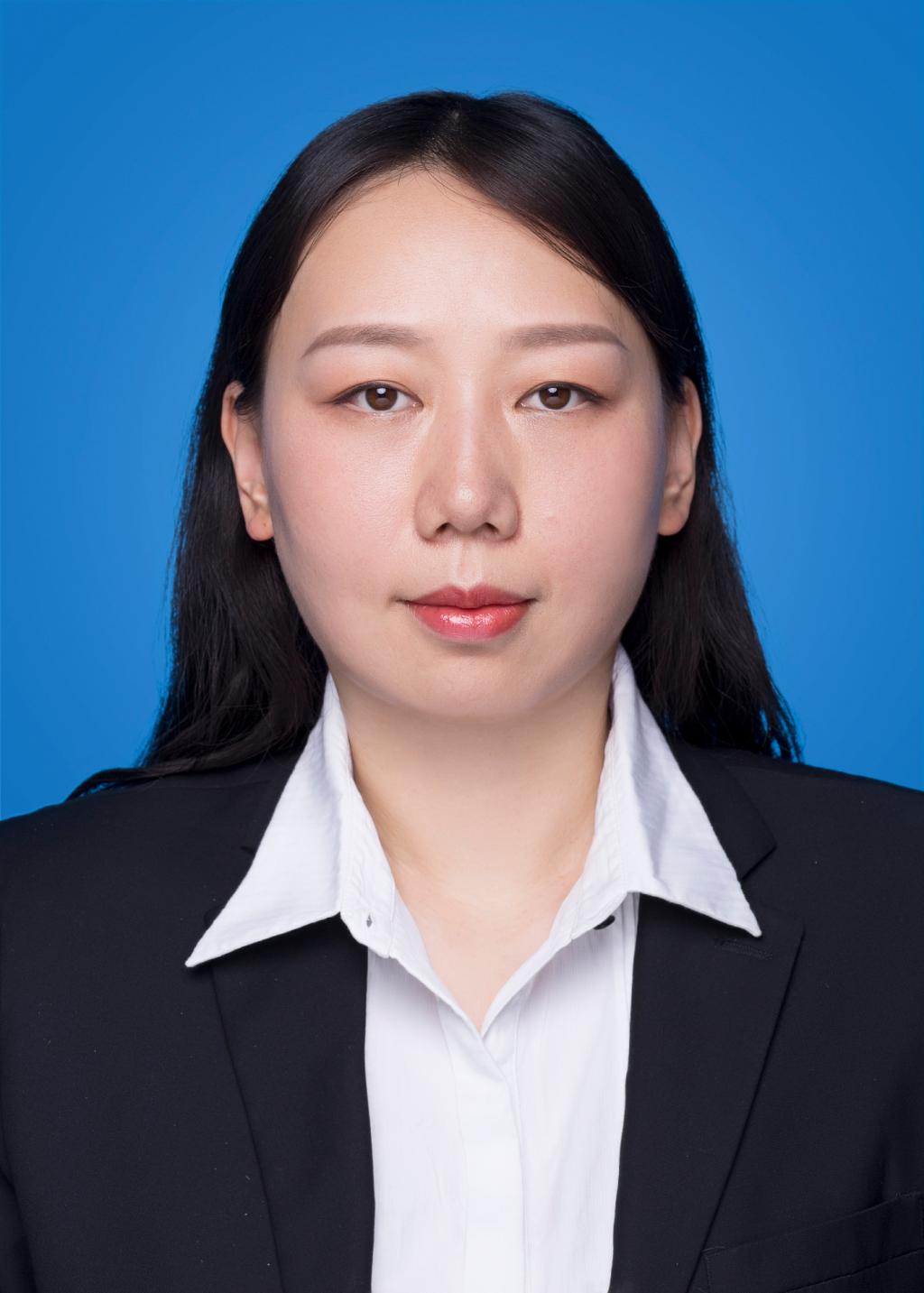 Jing Hu (胡静)合作论文数School of Artificial Intelligence and Automation, Huazhong University of Science and Technology4
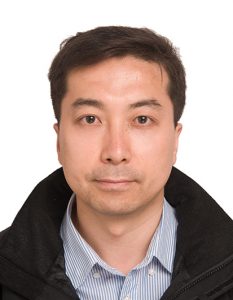 Qiangqiang Yuan (袁强强)合作论文数School of Geodesy and Geomatics, Wuhan University4
 lihua deng合作论文数3Shoukui Yao合作论文数2
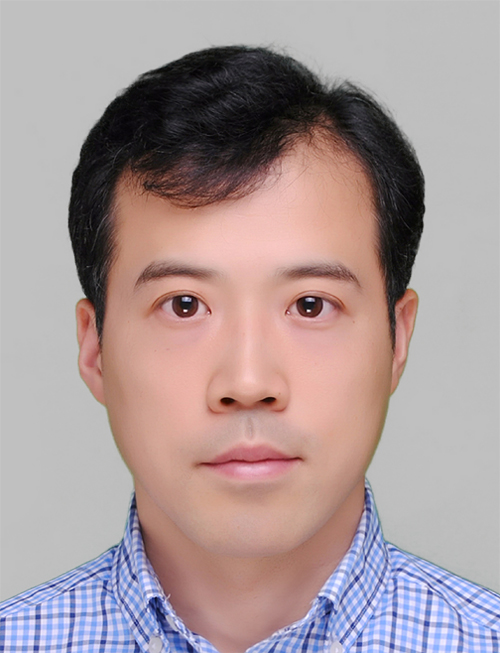 Li Liu (刘立)合作论文数School of Aerospace Science and Technology, Xidian University2
 Tianxu Zhang (张天序)合作论文数School of Artificial Intelligence and Automation, Huazhong University of Science and Technology2
 Weidong Yang (杨卫东)合作论文数School of Artificial Intelligence and Automation, Huazhong University of Science and Technology2
 Luxin Yan (颜露新)合作论文数School of Artificial Intelligence and Automation, Huazhong University of Science and Technology2Zhao Cheng合作论文数1ZHOU Yu-tian (周雨田)合作论文数1Xiaoping Wang合作论文数1
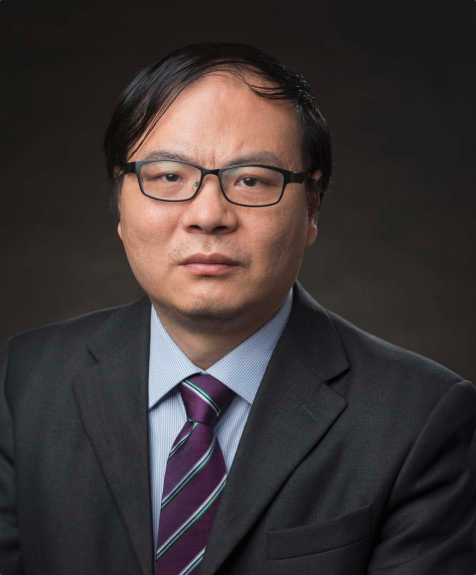 Gang Zhou (周刚)合作论文数Technical Institute of Physics and Chemistry, Chinese Academy of Sciences;University of Chinese Academy of Sciences1
 Xinxin Liu (刘欣鑫)合作论文数College of Electrical and Information Engineering, Hunan University1Xianwei Liu合作论文数1
 Huifang Li (李慧芳)合作论文数School of Resource and Environmental Sciences, Wuhan University1




