Emotion recognition is crucial to improve the human-computer interaction experience. Attention mechanisms have become a mainstream technique due to their excellent ability to capture emotion representations. Existing algorithms often employ self-attention and cross-attention for multimodal interactions, which artificially set specific attention patterns at specific layers of the model. However, it is uncertain which attention mechanism is more important indifferent layers of the model. In this paper, we propose a Coordination Attention based Transformers (CAT). Based on the dual attention paradigm, CAT dynamically infers the pass rates of self- attention and cross-attention layer by layer, coordinating the importance of intra-modal and inter-modal factors. Further, we propose a bidirectional contrastive loss to cluster the matching pairs between modalities and push the mismatching pairs farther apart. Experiments demonstrate the effectiveness of our method, and the state-of-the-art performance is achieved under the same experimental conditions.
Multi-modal emotion recognition is crucial for human-computer interaction. Many existing algorithms attempt to achieve multi-modal interactions through a cross-attention mechanism. Due to the problems of noise introduction and heavy computation in the original attention mechanism, window attention has become a new trend. However, emotions are presented asynchronously between different modalities, which makes it difficult to interact with emotional information between windows. Furthermore, multi-modal data are temporally misaligned, so single fixed window size is hard to describe cross-modal information. In this paper, we put these two issues into a unified framework and propose the multi-granularity attention based Transformers (MGAT). It addresses the emotional asynchrony and modality misalignment issues through a multi-granularity attention mechanism. Experimental results confirm the effectiveness of our method and the state-of-the-art performance is achieved on IEMOCAP.
Human language expression is based on the subjective construal of the situation instead of the objective truth conditions, which means that speakers' personalities and emotions after cognitive processing have an important influence on conversation. However, most existing datasets for conversational AI ignore human personalities and emotions, or only consider part of them. It's difficult for dialogue systems to understand speakers' personalities and emotions although large-scale pre-training language models have been widely used. In order to consider both personalities and emotions in the process of conversation generation, we propose CPED, a large-scale Chinese personalized and emotional dialogue dataset, which consists of multi-source knowledge related to empathy and personal characteristic. These knowledge covers gender, Big Five personality traits, 13 emotions, 19 dialogue acts and 10 scenes. CPED contains more than 12K dialogues of 392 speakers from 40 TV shows. We release the textual dataset with audio features and video features according to the copyright claims, privacy issues, terms of service of video platforms. We provide detailed description of the CPED construction process and introduce three tasks for conversational AI, including personality recognition, emotion recognition in conversations as well as personalized and emotional conversation generation. Finally, we provide baseline systems for these tasks and consider the function of speakers' personalities and emotions on conversation. Our motivation is to propose a dataset to be widely adopted by the NLP community as a new open benchmark for conversational AI research. The full dataset is available at https://github.com/scutcyr/CPED.
Speech emotion recognition plays an essential role in human-computer interaction. However, cross-individual representation learning and individual-agnostic systems are challenging due to the distribution deviation caused by individual differences. The existing related approaches mostly use the auxiliary task of speaker recognition to eliminate individual differences. Unfortunately, although these methods can reduce interindividual voiceprint differences, it is difficult to dissociate interindividual expression differences since each individual has its unique expression habits. In this paper, we propose an individual standardization network (ISNet) for speech emotion recognition to alleviate the problem of interindividual emotion confusion caused by individual differences. Specifically, we model individual benchmarks as representations of nonemotional neutral speech, and ISNet realizes individual standardization using the automatically generated benchmark, which improves the robustness of individual-agnostic emotion representations. In response to individual differences, we also propose more comprehensive and meaningful individual-level evaluation metrics. In addition, we continue our previous work to construct a challenging large-scale speech emotion dataset (LSSED). We propose a more reasonable division method of the training set and testing set to prevent individual information leakage. Experimental results on datasets of both large and small scales have proven the effectiveness of ISNet, and the new state-of-the-art performance is achieved under the same experimental conditions on IEMOCAP and LSSED.
Speech emotion recognition is a vital contributor to the next generation of human-computer interaction (HCI). However, current existing small-scale databases have limited the development of related research. In this paper, we present LSSED, a challenging large-scale english speech emotion dataset, which has data collected from 820 subjects to simulate real-world distribution. In addition, we release some pre-trained models based on LSSED, which can not only promote the development of speech emotion recognition, but can also be transferred to related downstream tasks such as mental health analysis where data is extremely difficult to collect. Finally, our experiments show the necessity of large-scale datasets and the effectiveness of pre-trained models. The dateset will be released on https://github.com/tobefans/LSSED.
Speech emotion recognition is an important but difficult task in human–computer interaction systems. One of the main challenges in speech emotion recognition is how to extract effective emotion features from a long utterance. To address this issue, we propose a novel spatiotemporal and frequential cascaded attention network with large-margin learning in this paper. Spatiotemporal attention selectively locates the targeted emotional regions from a long speech spectrogram. In these targeted regions, frequential attention captures the emotional features by frequency distribution. The cascaded attention assists the neural network to gradually extract effective emotion features from the long spectrogram. During training, large-margin learning is applied to improve intra-class compactness and enlarge inter-class distances. Experiments on four public datasets demonstrate that our proposed model achieves a promising performance in speech emotion recognition.
Speech emotion recognition is a crucial part in human-computer interaction. However, representation learning is challenging due to much variability from speech emotion signals across diverse domains, such as gender, age, languages, and social cultural context. Many approaches focus on domain-invariant representation learning which loses the domain-specific knowledge and results in unsatisfactory speech emotion recognition across domains. In this paper, we propose an adaptive domain-aware representation learning that leverages the domain knowledge to extract domain aware features. The proposed approach applies attention model on frequency to embed the domain knowledge in the emotion representation space. Experiments demonstrate that our approach on IEMOCAP achieves the state-of-the-art performance under the same experimental conditions with WA of 73.02% and UA of 65.86%.
Depression, a prevalent mental illness, is negatively impacting on individual and society. This paper targets the Depression Detection Challenge with AI Sub-challenge (DDS) task of Audio Visual Emotion Challenge (AVEC) 2019. Firstly, two task-specific features are proposed: 1) deep contextual text features, which incorporate global text features and sentiment scores estimated by fine-tuned Bidirectional Encoder Representations from Transformers (BERT); 2) span-wise dense temporal statistical features, in which multiple statistical functions are conducted in each continuous time span. Furthermore, we propose a multi-scale temporal dilated CNN to precisely capture the hidden temporal dependency in the data for automatic multi-modality depression detection. Our proposed framework achieves competitive performance with Concordance Correlation Coefficient (CCC) of 0.466 on development set and 0.430 on test set which is remarkably higher than the baseline result of 0.269 on development set and 0.120 on test set.
In this paper, we propose a novel hierarchical recall model fusing multiple modality (including audio, video and text) for bipolar disorder classification, where patients with different mania level are recalled layer-by-layer. To address the complex distribution on the challenge data, the proposed framework utilizes multi-model, multi-modality and multi-layer to perform domain adaptation for each patient and hard sample mining for special patients. The experimental results show that our framework achieves competitive performance with Unweighed Average Recall (UAR) of 57.41% on the test set, and 86.77% on the development set.
 Xiaofen Xing (邢晓芬)合作论文数School of Future Technology, South China University of Technology9
 Bolun Cai合作论文数Tencent Wechat5
 Zhiwei He合作论文数2
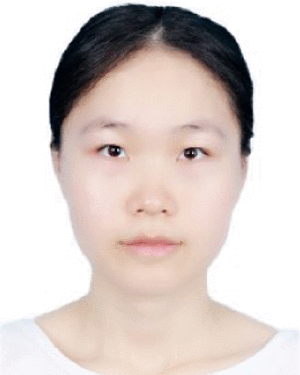 Shuzhen Li合作论文数South China University of Technology, Guangzhou, China2
 Dongyan Huang (黄东岩)合作论文数College of Biological and Agricultural Engineering, Jilin University2
 Xiangmin Xu (徐湘民)合作论文数Southern Medical University2
 Yirong Chen (陈艺荣)合作论文数School of Electronic and Information Engineering, South China University of Technology;Department of Information and Communication Engineering, South China University of Technology1Wenjing Han合作论文数1
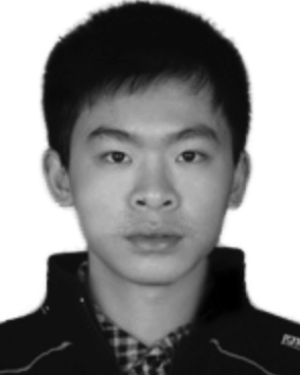 Weirui Lu合作论文数South China University of Technology, GuangZhou, China1
 Weidong Chen合作论文数1
 Yinhu Zhao合作论文数South China University of Technology, Guangzhou, China1
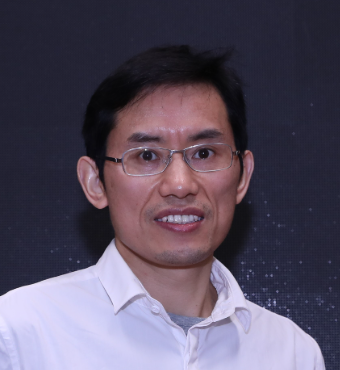 Minlie Huang (黄民烈)合作论文数Department of Computer Science and Technology, Tsinghua University1




