Laser cladding has shown significant potential for the localized repair of damaged railway wheels. In this study, Fe–based and 316L stainless steel coatings were fabricated on the surface of ER9 wheel steel, and the damage behavior of locally repaired wheel coatings was systematically investigated using a scaled tread braking simulation test. The results show that both coatings formed sound metallurgical bonding with the substrate, characterized by continuous elemental diffusion across the interface without obvious metallurgical defects. The Fe–based coating exhibited relatively high microhardness and superior wear resistance. However, under braking conditions, it was more susceptible to stress concentration at the coating–substrate interface and in the subsurface region, resulting in pronounced crack initiation and propagation. In contrast, the 316L stainless steel coating demonstrated enhanced plastic deformation capability and strain accommodation under coupled rolling–braking loading, which could effectively alleviate thermo-mechanical mismatch and suppress rapid crack propagation to a certain extent. Braking conditions significantly increased the friction coefficient and aggravated material loss, while the differences in coating properties played a critical role in determining the wear mechanisms. Comprehensive analyses of microstructure, hardness distribution, crack morphology, and plastic deformation characteristics indicate that thermo-mechanical fatigue damage induced by tread braking is a dominant factor leading to the rolling contact fatigue failure of laser–cladded repaired wheels. This study reveals the differences in fatigue damage and failure mechanisms between different laser-cladded materials under coupled rolling–braking conditions, providing valuable guidance for the rational selection and engineering application of laser cladding repair materials for railway wheels.
This study investigates how deionized water and artificial acid rain affect rolling contact fatigue (RCF) damage evolution in ER8 wheel steel. Using dry contact as the baseline, RCF tests were conducted with continuous supplies of deionized water and a pH 3.5 artificial acid rain solution. Damage evolution was evaluated using the friction coefficient, vibration velocity amplitude, mass loss, and surface and cross-sectional characterization. Both liquid media reduced friction compared with dry contact, while producing higher mass loss. The acid-rain condition exhibited the lowest average friction coefficient and the highest mass loss. These results show that although both liquid media reduced the friction coefficient, they were associated with higher mass loss and stronger late-stage vibration responses. Under the deionized-water condition, sheet-like delamination and surface peeling developed without marked O enrichment in representative delaminated regions. As cycling progressed, cross-sectional cracks propagated, deflected, branched, and coalesced to form C-shaped cracks and a subsurface crack network. Under the acid-rain condition, O-enriched roughened damage regions and localized spalling developed, while the cross-section was dominated by inward-propagating main cracks and deep branches, accompanied by crack-adjacent O-enriched dark bands. The acid-rain condition exhibited higher mass loss but smaller measured cross-sectional crack parameters. This contrast indicates that corrosion–wear interaction contributed to sustained removal of cracked subsurface material rather than suppressing crack propagation. Environmental media also influence damage initiation and evolution, so material properties and contact loading alone cannot fully explain RCF. The two liquid media therefore produced distinct surface material removal modes and cross-sectional crack evolution pathways.
This study introduces laser quenching (LQ) into the field of wheel surface strengthening, systematically investigating its applicability in suppressing polygonal wear on wheels. In Test 1, wheel specimens were subjected to various LQ methods. Rolling wear tests were conducted using the LGPJ-30C Wheel-Rail Friction and Wear Tester to analyse system vibration, wear morphology, circumferential profile, polygonal wear amplitude, order, and material damage, etc. Results indicate: unquenched wheels developed 38th-order polygons; 17-point LQ wheels developed 17th-order polygons; neither strip nor fishbone LQ produced polygons. Test 2 investigated the effect of LQ on eliminating polygonal wear already present in field-service components. First unquenched wheels were subjected to 100,000 revolutions of wear to induce polygonal deformation. Then three LQ treatments were applied, followed by a further 100,000 revolutions of wear. Results indicate that LQ at the trough, polygonal development exhibits a 'flattening-accelerated' trend, with the trough (quenched zone) transforming into the crest, ultimately developing into a 31st-order polygon. For strip LQ, polygonal development persists but at a reduced rate, ultimately evolving into a 33rd-order polygon. For fishbone LQ, the polygon exhibited a distinct 'decline-flattening' trend, with the final polygon wear amplitude only reaching 0.0088 mm, effectively eliminating the polygon feature. Regarding wear resistance, 17-point LQ promotes polygonal wear, leading to increased wear rates, while other LQ methods slow down wheel wear.
Liver tumor segmentation in computed tomography (CT) images is challenging due to diverse tumor morphologies, indistinct boundaries, and background noise, which hinder contextual understanding and boundary delineation. To address these issues, we propose DGT-MSB-Net, integrating a dynamically guided Transformer (DGT) with multiscale boundary supervision. The DGT module employs offset-guided deformable sampling and efficient channel modeling to capture complex and irregular tumor structures, while a multiscale spatial-channel attention (MSCA) mechanism leverages skip connections to fuse shallow boundary cues with deep semantic features. In addition, a boundary-aware (BA) module introduces explicit boundary supervision to refine edge prediction and enhance segmentation accuracy. Experiments on LiTS2017 and 3DIRCADb datasets show that DGT-MSB-Net outperforms existing methods, achieving consistent improvements in Dice, Precision, and Recall, validating its effectiveness and robustness. By combining dynamic feature modeling with BA strategies, DGT-MSB-Net effectively addresses the challenges of liver tumor segmentation and demonstrates strong potential for clinical decision support and automated analysis.
To address the lack of a clear classification basis for compiling stress spectra and the lack of a reasonable definition of the parameters of the traditional Corten-Dolan damage model in the current process of predicting structural fatigue life, a life prediction method based on non-equal-interval stress spectra and an improved Corten–Dolan damage model is investigated. By utilizing cluster analysis and support vector machine (SVM) theory, considering the characteristics of the stress cycle itself for spectral compilation, and comprehensively considering the load interaction and strength degradation effect, a systematic structural fatigue life prediction method is formed. Comparison of the obtained non-equal-interval stress spectra damage and improved Corten–Dolan model lifetimes with those obtained via other spectral methods and those obtained via other damage models. The analytical results confirm that the non-equal interval stress spectra and the improved Corten–Dolan damage model exhibit high accuracy.
The application of Ultrasonic Surface Rolling Process (USRP) to the surface strengthening of wheel materials can effectively inhibit the initiation and propagation of fatigue cracks under cyclic wheel-rail contact loading, thereby addressing the engineering challenge of premature wheel failure. This study systematically investigates the effects of USRP on the microstructure, mechanical properties, and rolling contact fatigue (RCF) behavior of wheel materials. Optical microscopy (OM), profilometry, scanning electron microscopy (SEM), microhardness testing, and X-ray diffractometry were employed to analyze the influence of static pressure and ultrasonic amplitude on surface microstructure, roughness, microhardness, and residual stress distribution. Furthermore, the wear performance and fatigue life of wheels before and after USRP treatment were evaluated using a rolling contact fatigue testing machine. The results demonstrate that the optimal process parameters are a static pressure of 900 N combined with an ultrasonic amplitude of 6 μm. Under these optimal parameters, surface roughness is significantly reduced, while surface residual compressive stress and microhardness are substantially enhanced. Compared with untreated specimens, USRP-treated wheels exhibit markedly reduced surface damage, minimized plastic deformation layer depth, significantly shortened fatigue crack length, and notably improved rolling contact wear resistance and fatigue life. By suppressing crack initiation and propagation, USRP effectively enhances the service performance of wheels, providing important engineering application references for extending the service life of railway wheels.
Temperature is one of the most important parameters for understanding reaction process in high-temperature reactive flows such as aeroengine combustion and plasma flows. CARS is an effective temperature measurement method, but significant challenges persist due to spectral distortions caused by intense spectral interference. Existing methods for non-resonant background suppression used in tracer imaging are fail to satisfy the stringent spectral reconstruction accuracy requirements essential for temperature retrieval. Therefore, an iterative variation-based simultaneous baseline correction and temperature inversion method is proposed, and corresponding accuracy is verified using measured CARS spectra with different type backgrounds at temperature ranging from 1000 K to 2300 K, indicating that the maximum relative deviation is 5.23%. The temperatures of combustion and plasma flows are measured using the proposed method. For combustion flow, the maximum temperature retrieval error is reduced from 28.57% to 2.56%. For plasma flow, the non-resonant background is separated, and a vibrational temperature of 1796 K and a rotational temperature of 846 K are obtained, indicating that the plasma is in thermal non-equilibrium state. The use of simultaneous baseline correction and temperature inversion method enables accurate thermometry for a wide range of high-temperature combustion and non-equilibrium plasma flows under significant spectral interference.
Structural fatigue life assessment involves compiling stress cycle data and applying damage theory for analysis and prediction. However, traditional equal interval compilation methods can introduce errors owing to improper stress grading, and conventional linear cumulative damage models often yield low prediction accuracy. To address these issues, this paper introduces a fuzzy clustering approach for unequal interval classification and demonstrates its superiority through damage error comparisons. Furthermore, an enhanced Manson‒Halford model that incorporates strength degradation and load interaction effects is employed to evaluate the remaining life of various materials. The accuracy of this improved model is confirmed via comprehensive comparative analyses across various loading conditions and damage models. Ultimately, by integrating the unequal interval stress range distribution with the refined Manson‒Halford cumulative damage model, this study achieves reliable and accurate structural fatigue life predictions, thus providing a robust framework for fatigue assessments in engineering applications.
To investigate the effects of end elbow slopes and current on the current-carrying tribological performance of the collector–conductor rail system, comparative tests were conducted. The synergistic effect of slope and current is found to significantly affect interfacial arc behavior, material transfer, and wear mechanisms. Under no-current conditions, the slope shows negligible influence with extremely low wear rates. When the current is 20 A, a gentler slope results in longer arc duration and suppressed metal transfer, leading to a higher friction coefficient and contact resistance, with the wear mechanism changing from adhesive wear to brittle spalling. At 40 A, the effect of the slope is reversed. The gentle slope (tanα = 1:60) achieves uniform arc distribution and the optimal contact resistance and wear rate. In contrast, the steep slope causes severe metal spattering. In addition, Raman analysis confirms that arc-induced high temperature promotes carbon graphitization, which is consistent with SEM observations.
In this study, MAO ceramic coatings were fabricated on AZ91D magnesium alloy using an alkaline electrolyte system based on sodium silicate nonahydrate, sodium hydroxide and potassium fluoride dihydrate, with varying concentrations of Ce(NO3)3.6H2O (0-3 g/L) introduced. The influence of Ce3+ concentration on the discharge behavior, surface morphology, phase composition, tribological properties, and corrosion resistance of the coatings was systematically investigated. The results demonstrated that the appropriate addition of Ce (NO3)3.6H2O significantly improved the microstructural integrity and service performance of the MAO coatings. At a Ce(NO3)3.6H2O concentration of 2 g/L, a dense and continuous ceramic layer with the lowest porosity (approximate to 7.26%) and reduced surface roughness (Ra approximate to 4.71 mu m) was obtained, indicating enhanced structural compactness. Tribological tests reveal that the Cxe-2 coating exhibits the lowest wear rate of 0.63 & times; 10-5 mm3 N- 1 m-1, accompanied by a smooth wear track and minimal debris formation, outperforming both the Ce-free and excessive-Ce coatings. Electrochemical polarization measurements further confirm that the Ce-2 coating shows the lowest corrosion current density of 4.73 & times; 10-7A/cm2, nearly two orders of magnitude lower than that of the uncoated substrate, which is consistent with its superior long-term immersion corrosion performance.
The anchor section joint is a critical weak point in the rigid catenary system, where pantograph carbon skateboards are prone to excessive wear, uneven abrasion, and arcing. This study explores how varying stagger values affect the current-carrying friction behavior and wear mechanisms within the overlap section. The stagger value is the lateral offset of the contact wire relative to the center of the pantograph carbon skateboard. The results showed that: Under non-current conditions, increasing stagger exacerbated mechanical wear, raising the friction coefficient from 0.35 to 0.41. Under current-carrying conditions, as the stagger value increased from 0 mm to 30 mm, the wear mechanism transitioned from adhesive wear to oxidative wear. At 30 mm, the friction coefficient, electrical contact resistance, and wear rate reached their minimum. Oxide film formation and destruction mainly drove tribological differences in friction pairs.
Are wind tunnels are crucial ground-based test facilities for simulating atmospheric re-entry and conducting thermal protection tests for hypersonic vehicles, Accurately obtaining the internal flow field temperature and enthalpy of are heater. which is the core component of an are wind tunnel, is the foundation for evaluating the flow field quality, performance and optimization design of are wind tunnels, as well as ensuring the effectiveness of wind tunnel tests. The composition and specific enthalpy characteristics of are plasma are theoretically analyzed, the contributions of internal energy, ionization energy and thermodynamic potential energy to the total specific enthalpy of the plasma are investigated. The results show that the contribution of internal energy increases with temperature and dominates at temperatures below 11 000 K. The contribution of ionization energy rapidly rises to become dominant around 11 000 K due to the ionization of argon atoms and tends to level off around 15 000 K. and increases again around 20 000 K due to the further ionization of Ar+ ions to form Ar(++ )ions. The contribution of thermodynamic potential energy is the smallest, and its growth pattern is strongly correlated with the changes in composition, both showing a significant in-crease with the formation of new ions through ionization, An optical emission spectra measurement system is established, and the temperature and enthalpy of the arc plasma are calculated based on the measured spectra, then the efficiency of the are heater is obtained. Under the experimental conditions, when the current increases from 60 to 120 A. the temperature and specific enthalpy of the arc plasma increase from 14 859 K and 48.89 MJ kg to 17 617 K and 55.96 MJ(-1) kg, respectively. However, due to the increase in the are constriction radius with increasing current, which led to an enhanced convective heat transfer with the wall, and the increase in padiative heat loss due to the elevated plasma temperatures with increasing current, both of which exceeded the increase in plasma enthalpy, resulting the efficiency of the are heater decreases from 0.73 to 0. 37.
In this study, different slip ratios are used to simulate the ER8 wheel polygon wear failure test under different braking conditions, and the effects of different slip ratios (0.7 %; 1.5 %; 2 %; 4.5 %; 9.5 %) on the wheel polygon wear failure are investigated, and the analyses include the wear and vibration characteristics of the wheel specimens during the rolling process, the hardening of the wheel polygon and the damage law of the wheel polygon after the test. The formation and development mechanism of wheel polygon failure and the difference of crest and trough damage mechanism are discussed with the test results. And the corresponding solution measures are proposed according to the actual engineering problems. The results show that: under low slip ratio (0.7 % and 1.5 %), there is no obvious vibration main frequency and polygonal wear of wheel-rail system, the surface damage is fatigue wear or abrasive wear, there is no obvious fluctuation of surface hardness after the test, and the thickness of the plastic deformation layer is small; under higher slip ratios (2 %, 4.5 %, and 9.5 %), the wheel-rail system produces a vibration main frequency close to the polygonal characteristic frequency, and this condition polygonal wear occurs under all the conditions, with the increase of the number of cycles, the amplitude of the vibration main frequency increases, the degree of polygonal wear increases, the crest is mainly dominated by oxidative wear, and the trough is dominated by severe fatigue wear, and the damage of the trough is gradually worsened with the increase of the slip ratio, moreover, the change of the hardness value at the crest and the trough is opposite to the change of the profile, while the thickness of the plastic deformation layer is inversely proportional to the size of the hardness value, and the closer the matrix region, the smaller the hardness value fluctuation.
Despite the significant performance improvement, lead halide perovskite solar cells (PSCs) still face serious environmental challenges due to possible leakage of water-dissolved lead (Pb2+) ions from perovskites into environment. Earlier studies mainly focus on tuning the chemical coordination between chelating molecules and Pb2+ ions, while the dissociation of Pb2+ ions is often initiated from breakage of relatively weak Pb-halide bonds. Herein, we report the chemical synergic lead fixation strategy via implanting in-situ polymerized pentafluorophenol acrylate (PFPA) networks into perovskites. The lead leakage is minimized by simultaneously strengthening Pb-halide bonds and enhancing chemical coordination of Pb2+ ions. Up to 85 % inhibition rate of Pb2+ dissolution is achieved upon directly immersing the unencapsulated device into water. Moreover, PFPA modification plays multifunctional roles in suppressing defect formation and phase impurities as well as releasing tensile stress. Consequently, the optimized CsMAFA-based PSC yields a power conversion efficiency (PCE) of 22.73 %, and a higher PCE of 24.53 % is achieved for the device assembled with a FA-based perovskite layer. Furthermore, these modified devices exhibit excellent stability under high humidity, light soaking, and long-term operation. Our work offers an insight into understanding multifunctional roles of polyfluoroaromatic compounds in impacting perovskite crystallization dynamics and mitigating Pb2+ leakage.
Based on epitaxial growth theory, a highly ordered 2D perovskite is necessary to boost the photoelectric performance of 2D/3D perovskite heterostructures. The strong NH...I hydrogen-bonding interaction between spacer cations and inorganic frameworks could be built by widely used dipolar aromatic amine spacer cations with single halogen (F or Cl) substitution, which is crucial to the stabilization of 2D perovskites. However, the effect of synergistic fluorination and chlorination on the octahedral tilt of 2D perovskites is relatively unexplored. Herein, halogen substituted meta, para-aniline iodide (3,4-AnI) salts, including 3-F-4-ClAnI, 3,4-FAnI, 3,4-ClAnI, and 3Cl-4-FAnI, were respectively added into 3D perovskite precursor solution. By contrast, the 3-F-4-ClAnI-treated n = 2 2D Ruddlesden-Popper (RP) perovskite exhibits the highest ordered crystalline structure. We find that 3-F-4ClAn+ spacer cations have both strong NH...I hydrogen interaction and Pb-halide interaction with [PbI6]4octahedron cages. Both are favorable for the stability of 2D perovskites and subsequent orientation growth of 3D perovskite crystals, thereby leading to reduced stack defects as well as improved carrier transport. Consequently, the optimized perovskite solar cell (PSC) with 3-F-4-ClAnI-treated 2D/3D Cs0.05MA0.16FA0.79Pb(I0.83Br0.17)3 perovskite yields a high power conversion efficiency (PCE) of 22.73 % compared with the control device without 2D perovskite (19.54 %). A higher PCE of 24.74 % is delivered for the device assembled with 3-F-4-ClAnI-treated 2D/3D FAPbI3 perovskite. The experimental results are of certain significance in guiding the design of the highly orientated 2D/3D perovskites.
This study employed an enhanced social force model to investigate the impact of bidirectional crowd load on the vertical vibration characteristics of pedestrian bridges. The research incorporated a two-step prejudgment approach to optimize agents' transcendental behavior and introduced a fan-shaped pedestrian perception area for bidirectional crowd movement simulation based on the social force model. The structural vibration response resulting from the evolution of these behaviors was numerically simulated and analyzed. Vertical crowd-structure coupling models were established using a pedestrian moving dynamics model with spring, mass, and damping. A real-time solution method for the structural acceleration response, varying with the moving pedestrian load entering the footbridge deck, was implemented in a numerical environment. Subsequently, the structural response under crowd load, considering multiple behavioral factors, was investigated on an interior steel footbridge. The results demonstrated that bidirectional crowd load generates a higher vertical acceleration response than unidirectional crowd load under the same pedestrian density conditions. The vertical peak acceleration reached its maximum when the number of left- and right-oriented pedestrians was the same, while the peak acceleration of the structure decreased as the difference between the left- and right-oriented pedestrian numbers increased, both in steady-state and transient-state conditions. Bidirectional crowd load poses a higher risk of inducing severe potential vertical resonance of the structure due to synchronization issues, highlighting its significance in the operation of the footbridge.
The nose rail of turnout is suffering from severe impact and sliding wear due to its irregular structure. As a surface repairing technology, laser cladding has an application possibility to improve the wear resistance. Furthermore, WC particles possess high hardness and good wettability with Fe-base alloys. Therefore, the laser cladding process of WC/Fe composite coating on nose rail is optimized and the wear behavior is explored. WC/Fe composite coatings with different WC contents (0-40 wt%) are produced on the nose rail material (high manganese steel) using a MMRO-2 fiber laser. It is found that with the increase in WC content, the microstructure size is reduced, the proportion of equiaxed dendrites is increased and the hardness is improved. When the WC content is increased to 40 wt%, cracks are formed during cladding. To solve this problem, three optimization methods are explored: adjustment of laser energy density, laser remelting and ultrasonic vibration assistance. The results show that the increase in the energy density, remelting power, vibration amplitude could reduce the number of cracks. Finally, impact and sliding tests are performed to study the wear behavior of WC/Fe composite coating. It is found that with the increase in WC content to 30 wt%, both the impact and sliding wear resistances of coating are enhanced. With the continuing increase to 40 wt%, the impact wear resistance is reduced but the sliding wear resistance is slightly increased. The impact damage form is predominated by spalling, and the sliding damage form is dominated by ploughing. Comparing the three optimization methods, laser remelting could reduce the wear resistant due to the decline of coating hardness. However, improving the vibration amplitude could increase the wear resistance due to the increased hardness and decreased microstructure size.
 DaoYun Chen (陈道云)合作论文数24
 Shuang Chen (陈爽)合作论文数China Aerodynamics Research and Development Center18Jinhe Mu合作论文数12Xin-long Liu合作论文数12XinHua Qi合作论文数11
 Jiangning Zhou (周江宁)合作论文数School of Life Sciences, Division of Life Sciences and Medicine, University of Science and Technology of China;Key Laboratory of Brain Function and Disease, Chinese Academy of Sciences9
 Haohao Ding (丁昊昊)合作论文数School of Mechanical Engineering, Southwest Jiaotong University7Che Qingfeng (车庆丰)合作论文数6Yimamu Maimaiti合作论文数5Tao Liu合作论文数5Li Shiyu (李仕宇)合作论文数5JianGuo Tang (唐建国)合作论文数5
 Wenjian Wang (王文健)合作论文数School of Mechanical Engineering, Southwest Jiaotong University5
 Yao Wang合作论文数5Linjun Huang (黄林军)合作论文数4Yi-ting Zheng合作论文数4Ming-sheng Gao合作论文数4LI Hai-xia合作论文数4Qiu Rong合作论文数4Yimin Yin合作论文数4Zhi-hao Li合作论文数4Dandan Li合作论文数4Qiankun Zhu合作论文数4
 Yanling Li (李艳玲)合作论文数School of Mathematics and Statistics, Shaanxi Normal University4
 Jianhua Wu (吴建华)合作论文数陕西师范大学数学与信息科学学院4
 Gang Li (李刚)合作论文数Department of Electronic and Information Engineering, Faculty of Engineering, The Hong Kong Polytechnic University;Research Institute for Smart Energy, The Hong Kong Polytechnic University4Laurence A. Belfiore合作论文数4
 Matt Kipper合作论文数Department of Chemical and Biological Engineering, Walter Scott, Jr. College of Engineering, Colorado State University4
 Ketul C. Popat合作论文数Department of Mechanical Engineering, Walter Scott, Jr. College of Engineering, Colorado State University/School of Biomedical Engineering, Colorado State University/Centre for Biomaterials Science and Technology, School of Mechanical and Building Sciences, Vellore Institute of Technology4
 Bo Tang (唐波)合作论文数School of Chemistry, Chemical Engineering and Materials Science, Shandong Normal University4Gao Yujing合作论文数3Wu-lue Zhang合作论文数3
 Jiewei Li合作论文数3Linsen Wang合作论文数3
 Cenqi Yan (严岑琪)合作论文数College of Polymer Science and Engineering, Sichuan University3Xinyu Wang合作论文数Shandong University3Shuaihua Wang合作论文数3
 Henry Yan (顏河)合作论文数Department of Chemistry, School of Science, The Hong Kong University of Science and Technology;Kaisa Joint Research Institute, The Hong Kong University of Science and Technology;Energy Institute, The Hong Kong University of Science and Technology3ShiChao Wang (王世超)合作论文数3ChunHui Yang (杨春辉)合作论文数3
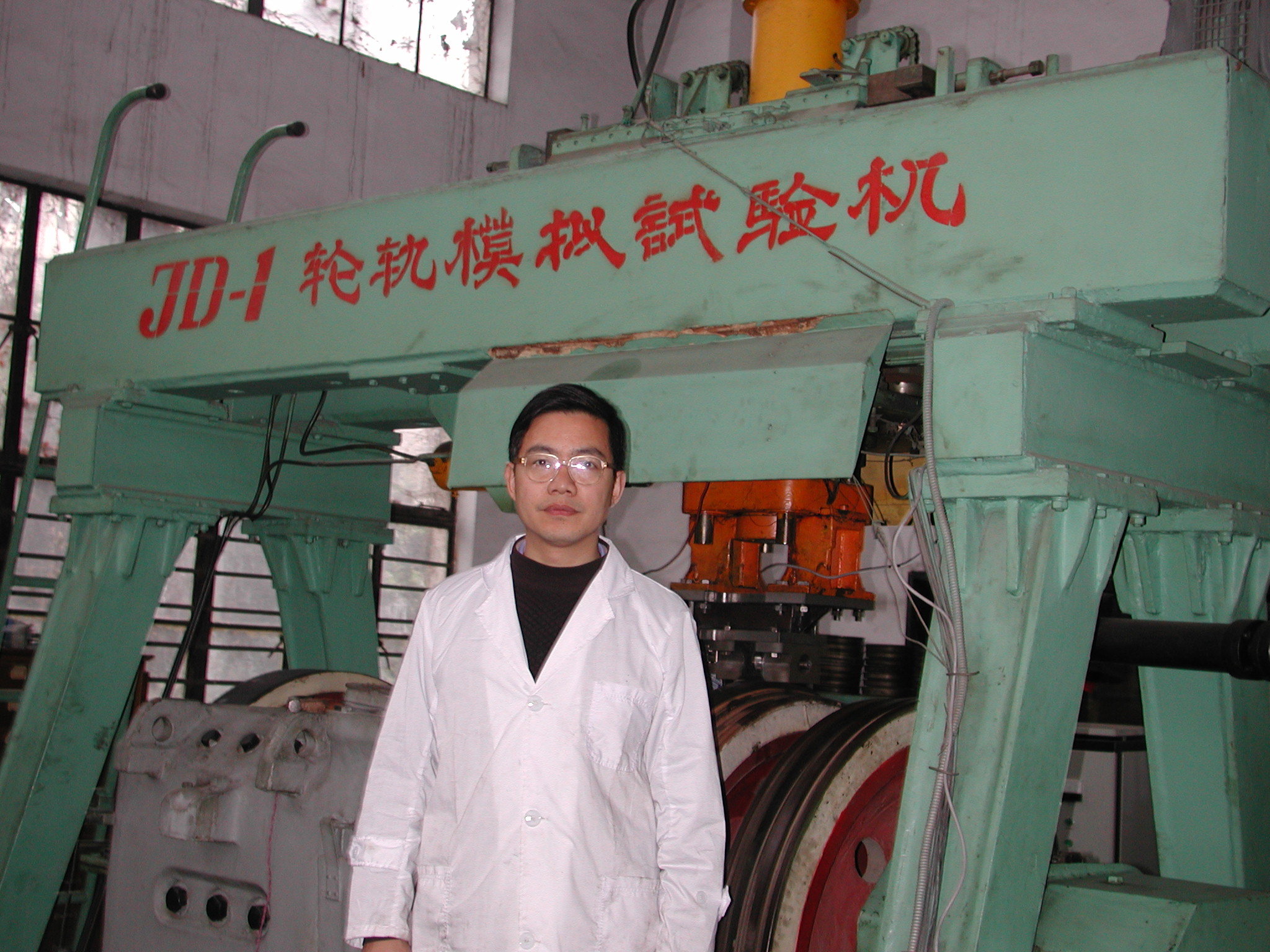 Qiyue Liu (刘启跃)合作论文数Tribology Research Institute, School of Mechanical Engineering, Southwest Jiaotong University3
 Guanwei Cui (崔官伟)合作论文数College of Chemistry, Chemical Engineering and Materials Science, Shandong Normal University3
 Qian Xiao (肖迁)合作论文数School of Electrical and Information Engineering, Tianjin University;School of Energy, Tianjin University3
 Lijun Huo (霍利军)合作论文数School of Chemistry, Beihang University3
 Song Zhang (张松)合作论文数School of Mechanical Engineering, Shandong University3
 Weimin Sun (孙伟民)合作论文数College of Physics and Optoelectronic Engineering, Harbin Engineering University3
 Jun Guo (郭俊)合作论文数State Key Laboratory of Traction Power,Southwest Jiaotong University3
 Yongfeng Du (杜永峰)合作论文数School of Civil Engineering, Lanzhou University of Technology;Institute of Earthquake Prevention and Disaster Mitigation, Lanzhou University of Technology3




