We present GLM-5V-Turbo, a step toward native foundation models for multimodal agents. As foundation models are increasingly deployed in real environments, agentic capability depends not only on language reasoning, but also on the ability to perceive, interpret, and act over heterogeneous contexts such as images, videos, webpages, documents, GUIs. GLM-5V-Turbo is built around this objective: multimodal perception is integrated as a core component of reasoning, planning, tool use, and execution, rather than as an auxiliary interface to a language model. This report summarizes the main improvements behind GLM-5V-Turbo across model design, multimodal training, reinforcement learning, toolchain expansion, and integration with agent frameworks. These developments lead to strong performance in multimodal coding, visual tool use, and framework-based agentic tasks, while preserving competitive text-only coding capability. More importantly, our development process offers practical insights for building multimodal agents, highlighting the central role of multimodal perception, hierarchical optimization, and reliable end-to-end verification.
Building general-purpose graphical user interface (GUI) agents has become increasingly promising with the progress in vision language models. However, developing effective mobile GUI agents with reinforcement learning (RL) remains challenging due to the heavy-tailed distribution of task difficulty and the inefficiency of large-scale environment sampling. We present an online agentic reinforcement learning framework MOBILERL to enhance GUI agents in mobile environments. Its core component is the Difficulty-Adaptive GRPO (ADAGRPO) algorithm. In ADAGRPO, we design difficulty-adaptive positive replay and failure curriculum filtering to adapt the model to different task difficulties. We introduce the shortest-path reward adjustment strategy to reshape rewards concerning the task length in multi-turn agentic tasks. Those strategies jointly stabilize RL training, improve sample efficiency, and generate strong performance across diverse mobile apps and tasks. We apply MOBILERL to two open models (Qwen2.5-VL-7B-Instruct and GLM-4.1V-9B-Base). The resultant MOBILERL-9B model achieves state-of-the-art results in terms of success rates on both AndroidWorld (80.2%) and Android-Lab (53.6%). The MOBILERL framework is open-sourced at https://anonymous.4open.science/r/MobileRL-iclr-4513.
We introduce ChatGLM, an evolving family of large language models that we have been developing over time. This report primarily focuses on the GLM-4 language series, which includes GLM-4, GLM-4-Air, and GLM-4-9B. They represent our most capable models that are trained with all the insights and lessons gained from the preceding three generations of ChatGLM. To date, the GLM-4 models are pre-trained on ten trillions of tokens mostly in Chinese and English, along with a small set of corpus from 24 languages, and aligned primarily for Chinese and English usage. The high-quality alignment is achieved via a multi-stage post-training process, which involves supervised fine-tuning and learning from human feedback. Evaluations show that GLM-4 1) closely rivals or outperforms GPT-4 in terms of general metrics such as MMLU, GSM8K, MATH, BBH, GPQA, and HumanEval, 2) gets close to GPT-4-Turbo in instruction following as measured by IFEval, 3) matches GPT-4 Turbo (128K) and Claude 3 for long context tasks, and 4) outperforms GPT-4 in Chinese alignments as measured by AlignBench. The GLM-4 All Tools model is further aligned to understand user intent and autonomously decide when and which tool(s) touse -- including web browser, Python interpreter, text-to-image model, and user-defined functions -- to effectively complete complex tasks. In practical applications, it matches and even surpasses GPT-4 All Tools in tasks like accessing online information via web browsing and solving math problems using Python interpreter. Over the course, we have open-sourced a series of models, including ChatGLM-6B (three generations), GLM-4-9B (128K, 1M), GLM-4V-9B, WebGLM, and CodeGeeX, attracting over 10 million downloads on Hugging face in the year 2023 alone. The open models can be accessed through https://github.com/THUDM and https://huggingface.co/THUDM.
We present AutoGLM, a new series in the ChatGLM family, designed to serve as foundation agents for autonomous control of digital devices through Graphical User Interfaces (GUIs). While foundation models excel at acquiring human knowledge, they often struggle with decision-making in dynamic real-world environments, limiting their progress toward artificial general intelligence. This limitation underscores the importance of developing foundation agents capable of learning through autonomous environmental interactions by reinforcing existing models. Focusing on Web Browser and Phone as representative GUI scenarios, we have developed AutoGLM as a practical foundation agent system for real-world GUI interactions. Our approach integrates a comprehensive suite of techniques and infrastructures to create deployable agent systems suitable for user delivery. Through this development, we have derived two key insights: First, the design of an appropriate "intermediate interface" for GUI control is crucial, enabling the separation of planning and grounding behaviors, which require distinct optimization for flexibility and accuracy respectively. Second, we have developed a novel progressive training framework that enables self-evolving online curriculum reinforcement learning for AutoGLM. Our evaluations demonstrate AutoGLM's effectiveness across multiple domains. For web browsing, AutoGLM achieves a 55.2 attempt) and 96.2 AutoGLM attains a 36.2 common tasks in popular Chinese APPs.
Large language models (LLMs) have shown excellent mastering of human language, but still struggle in real-world applications that require mathematical problem-solving. While many strategies and datasets to enhance LLMs' mathematics are developed, it remains a challenge to simultaneously maintain and improve both language and mathematical capabilities in deployed LLM systems.In this work, we tailor the Self-Critique pipeline, which addresses the challenge in the feedback learning stage of LLM alignment. We first train a general Math-Critique model from the LLM itself to provide feedback signals. Then, we sequentially employ rejective fine-tuning and direct preference optimization over the LLM's own generations for data collection. Based on ChatGLM3-32B, we conduct a series of experiments on both academic and our newly created challenging dataset, MathUserEval. Results show that our pipeline significantly enhances the LLM's mathematical problem-solving while still improving its language ability, outperforming LLMs that could be two times larger. Related techniques have been deployed to ChatGLM\footnote{\url{https://chatglm.cn}}, an online serving LLM. Related evaluation dataset and scripts are released at \url{https://github.com/THUDM/ChatGLM-Math}.
 Yifan Xu合作论文数Department of Computer Science and Technology, Tsinghua University5
 Xiao Liu (刘潇)合作论文数Department of Computer Science and Technology, Tsinghua University5
 Yuxiao Dong (东昱晓)合作论文数Institute of Computer Software, Department of Computer Science and Technology, Tsinghua University5Xinghan Liu合作论文数4Shudan Zhang合作论文数4
 Jie Tang (唐杰)合作论文数Department of Computer Science and Technology, Tsinghua University4Zehan Qi合作论文数3Hanyu Lai合作论文数Tsinghua University3
 Zhenyu Hou (侯振宇)合作论文数Department of Computer Science and Technology, Tsinghua University3
 Jiadai Sun合作论文数Northwestern Polytech Univ, Sch Elect & Informat, Xian 710129, Peoples R China3Zihan Wang (汪子涵)合作论文数Tsinghua University3Shuaiqi Duan合作论文数2Xinyue Yang合作论文数2
 Jiale Cheng合作论文数The Conversational Artificial Intelligence Group, Tsinghua University;Zhipu AI2Yueyan Li合作论文数Center of Intelligent Science and Technology, School of Artificial Intelligence, Beijing University of Posts and Telecommunications2Hanlin Zhao合作论文数2Mingdao Liu合作论文数Tsinghua Univ2Hanchen Zhang合作论文数2
 Dan Zhang (张丹)合作论文数School of Computing, National University of Singapore2
 Aohan Zeng (曾奥涵)合作论文数Knowledge Engineering Group, Department of Computer Science and Technology, Tsinghua University2
 Xiaohan Zhang (张笑涵)合作论文数Beijing Knowledge Atlas Technology Co., Ltd2
 Qinkai Zheng (郑勤锴)合作论文数CodeGeeX Team, Zhipu.AI2
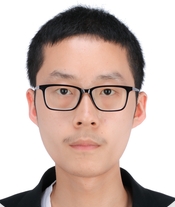 Zhengxiao Du (杜政晓)合作论文数Zhipu AI, Inc2
 Xiaotao Gu (顾晓韬)合作论文数Zhipu AI2
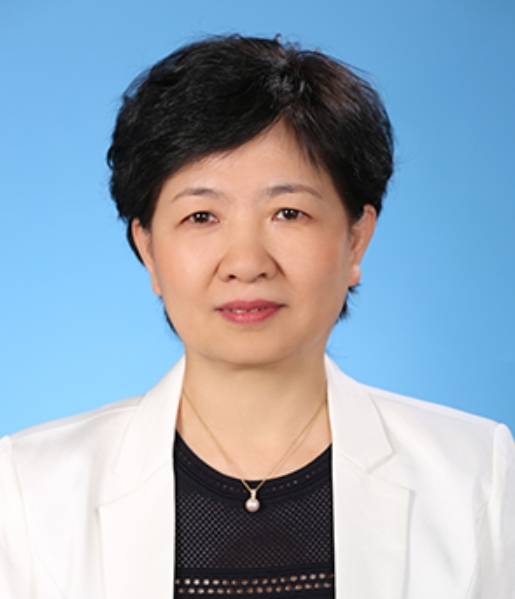 Juanzi Li (李涓子)合作论文数Department of Computer Science and Technology, Tsinghua University2Yuting Wang合作论文数2
 Zhen Yang (杨珍)合作论文数Department of Computer Science and Technology, Tsinghua University2
 Bin Xu (许斌)合作论文数Department of Computer Science and Technology, Tsinghua University2
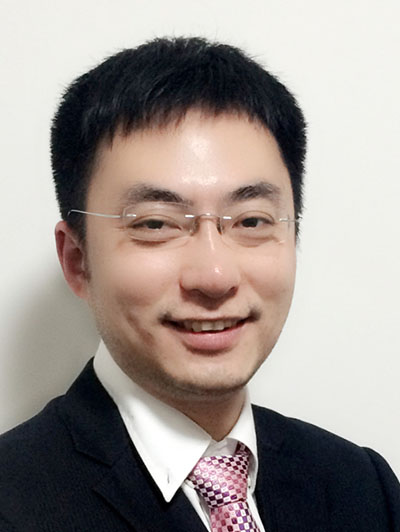 Yang Yu (俞扬)合作论文数National Key Laboratory for Novel Software Technology, School of Artificial Intelligence, Nanjing University2
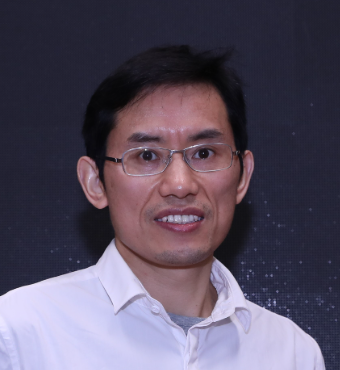 Minlie Huang (黄民烈)合作论文数Department of Computer Science and Technology, Tsinghua University2
 Peng Zhang (张鹏)合作论文数Beijing Knowledge Atlas Technology Co., Ltd2
 Da Yin (殷达)合作论文数ZhiPu AI2Yanxiao Zhao合作论文数1Bowen Lv合作论文数1Chuangxin Zhao合作论文数1Yijian Lu合作论文数1Boyan Shi合作论文数1Xijun Liu合作论文数1Jing Chen合作论文数1Yabo Xu合作论文数1Yusen Liu合作论文数1Yadong Xue合作论文数1Xinyu Zhang合作论文数1Sheng Yang合作论文数1Ziyang Pan合作论文数1Guobing Gan合作论文数1Xunkai Zhang合作论文数1Bohao Jing合作论文数Beijing University of Technology1Bin Chen合作论文数1




