We systematically investigate the mergers of neutron star–white dwarf binaries from beginning to end, with a focus on the properties of the inflows and outflows in accretion disks and their electromagnetic emissions. Using population synthesis models, we determine a subset of these binaries in which the white dwarf companion undergoes unstable mass transfer and complete tidal disruption, forming a large accretion disk around the neutron star. The material evolves according to a one-dimensional advection-dominated accretion-disk model with nuclear burning, neutrino emissions, and disk-surface wind ejection. The extreme dynamics of the entire process have proven difficult to analyze, and thus currently, the properties are poorly understood. The outflows from the mergers are iron- and nickel-rich, giving rise to optical and infrared emissions powered by the decay of the radioactive iron-type isotopes, calculated via the SuperNu light-curve code. We find these systems capable of powering bright, yet short-lived, optical transients with the potential to power gamma-ray bursts.
Studying compact-star binaries and their mergers is integral to determining progenitors for observable transients. Today, compact-star mergers are typically studied via state-of-the-art computational fluid dynamics codes. One such numerical technique, smoothed particle hydrodynamics (SPH), is frequently chosen for its excellent mass, energy, and momentum conservation. The natural treatment of vacuum and the ability to represent highly irregular morphologies make SPH an excellent tool for the study of compact-star binaries and mergers. For many scenarios, including binary systems, the outcome of simulations is only as accurate as the initial conditions. For SPH, it is essential to ensure that the particles are distributed regularly, representing the initial density profile but without long-range correlations. Particle noise in the form of high-frequency local motion and low-frequency global dynamics must be damped out. Damping the latter can be as computationally intensive as the actual simulation. We discuss a new and straightforward relaxation method, halted-pendulum relaxation (HPR), to remove global oscillation modes of SPH particle configurations. In combination with effective external potentials representing gravitational and orbital forces, we show that HPR has an excellent performance in efficiently relaxing SPH particles to the desired density distribution and removing global oscillation modes. We compare the method to frequently used relaxation approaches and test it on a white dwarf binary model at its Roche-lobe overflow limit. We highlight the importance of our method in achieving accurate initial conditions and its effect on achieving circular orbits and realistic accretion rates when compared with other general relaxation methods.
We present the first results of a comprehensive supernova (SN) radiative-transfer (RT) code-comparison initiative (StaNdaRT), where the emission from the same set of standardized test models is simulated by currently-used RT codes. A total of ten codes have been run on a set of four benchmark ejecta models of Type Ia supernovae. We consider two sub-Chandrasekhar-mass ($M_\mathrm{tot} = 1.0$ M$_\odot$) toy models with analytic density and composition profiles and two Chandrasekhar-mass delayed-detonation models that are outcomes of hydrodynamical simulations. We adopt spherical symmetry for all four models. The results of the different codes, including the light curves, spectra, and the evolution of several physical properties as a function of radius and time, are provided in electronic form in a standard format via a public repository. We also include the detailed test model profiles and several python scripts for accessing and presenting the input and output files. We also provide the code used to generate the toy models studied here. In this paper, we describe in detail the test models, radiative-transfer codes and output formats and provide access to the repository. We present example results of several key diagnostic features.
In this paper we propose a methodology to calculate the radiative properties of the diatomic molecular constituents of air, and utilize the present approach to model the radiative properties of nitrogen monoxide, NO. We also investigate the important physics involved in calculating accurate radiative quantities for air, such as the Planck and Rosseland mean opacities, and emission and absorption coefficients, as well as the couplings accounted for in rovibrational calculations. Complete active space self-consistent field multi-reference configuration interaction (CAS-MRCI) calculations were performed in order to model the NO X (2)pi, a (4)pi, b (4)sigma(-), 1(2)sigma(+), 2(2)sigma(+), 3(2)sigma(+), G (2)sigma(-), B '(2)Delta, (C, B) 2(2)pi, (H ', L) 3(2)pi, and 1(2)phi adiabatic states, and calculate the respective molecular data. The gamma X (2)pi - A (2)sigma(+), e X (2)pi - D (2)sigma(+), beta ' X (2)pi - B '(2)Delta, '11 000 angstrom' A (2)sigma(+) - D (2)sigma(+), 'infrared' X (2)pi - X (2)pi and X (2)pi - (C, B) 2(2)pi (delta and beta) band systems are investigated in monochromatic spectra calculations, as well as the Ogawa a (4)pi - b (4)sigma(-) band and several other band systems. Several conclusions are drawn, such as the importance of including the Ogawa band, which has not been included in previous air radiative models or comprehensive line-list calculations, as well as the importance of performing coupled rovibrational line-list calculations in order to accurately calculate the Rosseland means. We also found that the additional band systems modeled here contribute significantly to the total Planck and Rosseland means.
The detailed observations of GW170817 proved for the first time directly that neutron star mergers are a major production site of heavy elements. The observations could be fit by a number of simulations that qualitatively agree, but can quantitatively differ (e.g. in total r-process mass) by an order of magnitude. We categorize kilonova ejecta into several typical morphologies motivated by numerical simulations, and apply a radiative transfer Monte Carlo code to study how the geometric distribution of the ejecta shapes the emitted radiation. We find major impacts on both spectra and light curves. The peak bolometric luminosity can vary by two orders of magnitude and the timing of its peak by a factor of five. These findings provide the crucial implication that the ejecta masses inferred from observations around the peak brightness are uncertain by at least an order of magnitude. Mixed two-component models with lanthanide-rich ejecta are particularly sensitive to geometric distribution. A subset of mixed models shows very strong viewing angle dependence due to lanthanide "curtaining," which persists even if the relative mass of lanthanide-rich component is small. The angular dependence is weak in the rest of our models, but different geometric combinations of the two components lead to a highly diverse set of light curves. We identify geometry-dependent P Cygni features in late spectra that directly map out strong lines in the simulated opacity of neodymium, which can help to constrain the ejecta geometry and to directly probe the r-process abundances.
Smoothed particle hydrodynamics (SPH) is positioned as having ideal conservation properties. When properly implemented, conservation of total mass, energy, and both linear and angular momentum is guaranteed exactly, up to machine precision. This is particularly important for some applications in computational astrophysics, such as binary dynamics, mergers, and accretion of compact objects (neutron stars, black holes, and white dwarfs). However, in astrophysical applications that require the inclusion of gravity, calculating pairwise particle interactions becomes prohibitively expensive. In the Fast Multipole Method (FMM), they are, therefore, replaced with symmetric interactions between distant clusters of particles (contained in the tree nodes) Although such an algorithm is linear momentum-conserving, it introduces spurious torques that violate conservation of angular momentum. We present a modification of FMM that is free of spurious torques and conserves angular momentum explicitly. The new method has practically no computational overhead compared to the standard FMM.
The merger of neutron star binaries is believed to eject a wide range of heavy elements into the universe. By observing the emission from this ejecta, scientists can probe the ejecta properties (mass, velocity, and composition distributions). The emission (a.k.a. kilonova) is powered by the radioactive decay of the heavy isotopes produced in the merger and this emission is reprocessed by atomic opacities to optical and infrared wavelengths. Understanding the ejecta properties requires calculating the dependence of this emission on these opacities. The strong lines in the optical and infrared in lanthanide opacities have been shown to significantly alter the light curves and spectra in these wavelength bands, arguing that the emission in these wavelengths can probe the composition of this ejecta. Here we study variations in the kilonova emission by varying individual lanthanide (and the actinide uranium) concentrations in the ejecta. The broad forest of lanthanide lines makes it difficult to determine the exact fraction of individual lanthanides. Nd is an exception. Its opacities above 1 μ m are higher than other lanthanides and observations of kilonovae can potentially probe increased abundances of Nd. Similarly, at early times when the ejecta is still hot (first day), the U opacity is strong in the 0.2–1 μ m wavelength range and kilonova observations may also be able to constrain these abundances.
Though the neutrino-driven convection model for the core-collapse explosion mechanism has received strong support in recent years, there are still many uncertainties in the explosion parameters—such as explosion energy, remnant mass, and end-of-life stellar abundances as initial conditions. Using a broad set of spherically symmetric core-collapse simulations we examine the effects of these key parameters on explosive nucleosynthesis and final explosion yields. The post-bounce temperature and density evolution of zero-age main-sequence 15, 20, and 25 solar mass progenitors are post-processed through the Nucleosynthesis Grid nuclear network to obtain detailed explosive yields. In particular, this study focuses on radio isotopes that are of particular interest to the next generation of gamma-ray astronomical observations: 43 K, 47 Ca, 44 Sc, 47 Sc, 48 V, 48 Cr, 51 Cr, 52 Mn, 59 Fe, 56 Co, 57 Co, and 57 Ni. These nuclides may be key in advancing our understanding of the inner workings of core-collapse supernovae by probing the parameters of the explosion engine. We find that the isotopes that are strong indicators of explosion energy are 43 K, 47 Ca, 44 Sc, 47 Sc, and 59 Fe, those that are dependent on the progenitor structure are 48 V, 51 Cr, and 57 Co, and those that probe neither are 48 Cr, 52 Mn, 57 Ni, and 56 Co. We discuss the prospects of observing these radionuclides in supernova remnants.
A goal across many physics and engineering disciplines is to use radiation-hydrodynamics codes to accurately simulate systems that are expected to deviate from local thermodynamic equilibrium (LTE), such as laser-driven hohlraums, stellar coronae, and supernova ejecta. The computational expense of traditional non-LTE (NLTE) opacity calculations can dominate the cost of simulating these systems and render NLTE physics untenable in most cases. We present a new parallel implementation for NLTE opacity calculations that employs advanced load balancing, vectorization, and memory management to significantly reduce the computational costs of these calculations. Using the radiation-hydrodynamics code xRAGE, we demonstrate this new implementation on three test problems and present order-of-magnitude speed improvements.
The mergers of compact binaries with at least one neutron star component are the potential leading sites of the production and ejection ofr-process elements. Discoveries of galactic binary pulsars, short gamma-ray bursts, and gravitational-wave detections have all been constraining the rate of these events, while the gravitational wave plus broadband electromagnetic coverage of binary neutron star merger (GW170817) has also placed constraints on the properties (mass and composition) of the merger ejecta. But uncertainties and ambiguities in modeling the optical and infrared emission make it difficult to definitively measure the distribution of heavy isotopes in these mergers. In contrast, gamma rays emitted in the decay of these neutron-rich ejecta may provide a more direct measurement of the yields. We calculate the gamma production in remnants of neutron star mergers, considering two epochs: a kilonova epoch, lasting about two weeks, and a much later epoch of tens and hundreds of thousands of years after the merger. For the kilonova epoch, when the expanding ejecta is still only partially transparent to gamma radiation, we use 3D radiative transport simulations to produce the spectra. We show that the gamma-ray spectra associated with beta- and alpha-decay provide a fingerprint of the ejecta properties and, for a sufficiently nearby remnant, may be detectable, even for old remnants. We compare our gamma spectra with the potential detection limits of next generation detectors, including theLunar Occultation Explorer(LOX), theAll-sky Medium Energy Gamma-ray Observatory(AMEGO), and the Compton Spectrometer and Imager (COSI). We show that fission models can be discriminated via the presence of short-lived fission fragments in the remnant spectra.
FleCSPH is a smoothed particle hydrodynamics simulation tool, based on the compile-time configurable framework FleCSI. The asynchronous distributed tree topology combined with a fast multipole method allows FleCSPH to efficiently compute hydrodynamics and long range particle–particle interactions. FleCSPH provides initial data generators, particle relaxation techniques, and standard evolution drivers, which can be easily modified and extended to user-specific setups. Data input/output uses the H5part format, compatible with modern visualization software.
each star is exploded using a piston to give a specified final kinetic energy at infinity (typically 1.2 {times} 10{sup 51} erg), and the explosive modifications to the nucleosynthesis, including the effects of neutrino irradiation, determined. A single value of the critical {sup 12}C({sub {alpha},{gamma}}){sup 16}O reaction rate corresponding to S(300 keV) = 170 keV barns is used in all calculations. The synthesis of each isotope is discussed along with its sensitivity to model parameters. In each case, the final mass of the collapsed remnant is also determined and often found not to correspond to the location of the piston (typically the edge of the iron core), but to a ``mass cut`` farther out. This mass cut is sensitive not only to the explosion energy, but also to the presupernova structure, stellar mass, and the metallicity. Unless the explosion mechanism, for unknown reasons, provides a much larger characteristic energy in more massive stars, it appears likely that stars larger than about 30 M{sub {center_dot}} will experience considerable reimplosion of heavy elements following the initial launch of a successful shock. While such explosions will produce a viable, bright Type II supernova light curve, lacking the radioactive tail, they will have dramatically reduced yields of heavy elements and may leave black hole remnants of up to 10 and more solar masses.
Pair-instability supernovae (PISNe) may signal the deaths of extremely massive stars in the local Universe or massive primordial stars after the end of the Cosmic Dark Ages. Hydrodynamic simulations of these explosions, performed in 1D, 2D, and 3D geometry, have revealed the strong dependence of mixing in the PISN ejecta on dimensionality. This chemical rearrangement is mainly driven by Rayleigh–Taylor instabilities that start to grow shortly after the collapse of the carbon–oxygen core. We investigate the effects of such mixing on the spectroscopic evolution of PISNe by post-processing explosion profiles with the radiation diffusion-equilibrium code SNEC and the implicit Monte Carlo–discrete diffusion Monte Carlo radiation transport code SuperNu. The first 3D radiation transport calculation of a PISN explosion is presented, yielding viewing-angle-dependent synthetic spectra and light curves. We find that while 2D and 3D mixing does not significantly affect the light curves of PISNe, their spectroscopic and color evolution are impacted. Strong features of intermediate-mass elements dominated by silicon, magnesium, and oxygen appear at different phases and reach different intensities depending on the extent of mixing in the silicon/oxygen interface of the PISN ejecta. On the other hand, we do not find a significant dependence of PISN light curves and spectra on viewing angle. Our results showcase the capabilities of SuperNu to handle 3D radiation transport and highlight the importance of modeling time series of spectra in identifying PISNe with future missions.
We investigate Fe-60 in massive stars and core-collapse supernovae focussing on uncertainties that influence its production in 15, 20, and 25 M-circle dot stars at solar metallicity. We find that the Fe-60 yield is a monotonic increasing function of the uncertain Fe-59(n, gamma)Fe-60 cross-section and that a factor of 10 reduction in the reaction rate results in a factor of 8-10 reduction in the Fe-60 yield, while a factor of 10 increase in the rate increases the yield by a factor of 4-7. We find that none of the 189 simulations we have performed are consistent with a core-collapse supernova triggering the formation of the Solar system, and that only models using Fe-59(n, gamma)Fe-60 cross-section that is less than or equal to that from NON-SMOKER can reproduce the observed Fe-60/Al-26 line flux ratio in the diffuse interstellarmedium. We examine the prospects of detecting old core-collapse supernova remnants (SNRs) in the Milky Way from their gamma-ray emission from the decay of Fe-60, finding that the next generation of gamma-ray missions could be able to discover up to similar to 100 such old SNRs as well as measure the Fe-60 yields of a handful of known Galactic SNRs. We also predict the X-ray spectrum that is produced by atomic transitions in Co-60 following its ionization by internal conversion and give theoretical X-ray line fluxes as a function of remnant age as well as the Doppler and fine-structure line broadening effects. The X-ray emission presents an interesting prospect for addressing the missing SNR problem with future X-ray missions.
We explore the impact of pulsar electromagnetic dipole and fallback accretion emission on the luminosity of a suite of kilonova models. The pulsar models are varied over pulsar magnetic field strength, pulsar lifetime, ejecta mass, and elemental abundances; the fallback models are varied over fallback accretion rate and ejecta mass. For the abundances, we use Fe and Nd as representatives of the wind and dynamical ejecta, respectively. We simulate radiative transfer in the ejecta in either 1D spherical or 2D cylindrical spatial geometry. For the grid of 1D simulations, the mass fraction of Nd is 0, $10^{-4}$, or $10^{-3}$ and the rest is Fe. Our models that fit the bolometric luminosity of AT 2017gfo (the kilonova associated with the first neutron star merger discovered in gravitational waves, GW170817) do not simultaneously fit the B, V, and I time evolution. However, we find that the trends of the evolution in B and V magnitudes are better matched by the fallback model relative to the pulsar model, implying the time dependence of the remnant source influences the color evolution. Further exploration of the parameter space and model deficiencies is needed before we can describe AT 2017gfo with a remnant source.
We present a multiscale study examining the impact of a regional exchange of nuclear weapons on global climate. Our models investigate multiple phases of the effects of nuclear weapons usage, including growth and rise of the nuclear fireball, ignition and spread of the induced firestorm, and comprehensive Earth system modeling of the oceans, land, ice, and atmosphere. This study follows from the scenario originally envisioned by Robock, Oman, Stenchikov, et al. (2007, https://doi.org/10.5194/acp-7-2003-2007), based on the analysis of Toon et al. (2007, https://doi.org/10.5194/acp-7-1973-2007), which assumes a regional exchange between India and Pakistan of fifty 15 kt weapons detonated by each side. We expand this scenario by modeling the processes that lead to production of black carbon, in order to refine the black carbon forcing estimates of these previous studies. When the Earth system model is initiated with 5 × 10⁹ kg of black carbon in the upper troposphere (approximately from 9 to 13 km), the impact on climate variables such as global temperature and precipitation in our simulations is similar to that predicted by previously published work. However, while our thorough simulations of the firestorm produce about 3.7 × 10⁹ kg of black carbon, we find that the vast majority of the black carbon never reaches an altitude above weather systems (approximately 12 km). Therefore, our Earth system model simulations conducted with model‐informed atmospheric distributions of black carbon produce significantly lower global climatic impacts than assessed in prior studies, as the carbon at lower altitudes is more quickly removed from the atmosphere. In addition, our model ensembles indicate that statistically significant effects on global surface temperatures are limited to the first 5 years and are much smaller in magnitude than those shown in earlier works. None of the simulations produced a nuclear winter effect. We find that the effects on global surface temperatures are not uniform and are concentrated primarily around the highest arctic latitudes, dramatically reducing the global impact on human health and agriculture compared with that reported by earlier studies. Our analysis demonstrates that the probability of significant global cooling from a limited exchange scenario as envisioned in previous studies is highly unlikely, a conclusion supported by examination of natural analogs, such as large forest fires and volcanic eruptions.
 Chris Fryer合作论文数Center for Nonlinear Studies, Los Alamos National Laboratory41
 Ryan T. Wollaeger合作论文数Comp Computat & Stat Sci Div, Los Alamos Natl Lab18
 Daniel J. Whalen合作论文数16
 Oleg Korobkin合作论文数Center for Computation & Technology, LSU15
 Christopher Fontes合作论文数Computational Physics Division, Los Alamos National Laboratory15
 Aimee L. Hungerford合作论文数Los Alamos National Laboratory14
 Alexander Heger合作论文数Monash Centre for Astrophysics, School of Physics and Astronomy, Monash University11Joseph Smidt合作论文数11Lucille H. Frey合作论文数10
 Matthew Mumpower合作论文数Ctr Theoret Astrophys, Los Alamos Natl Lab8Brandon Wiggins合作论文数8
 Joel E. Tohline合作论文数Department of Physics & Astronomy, Louisiana State University8
 Massimo Stiavelli合作论文数Space Telescope Science Institute7
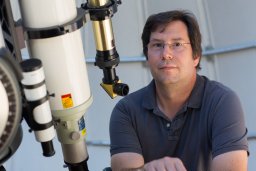 Patrick M. Motl合作论文数Department of Physics and Astronomy;Louisiana State University;Department of Physics and Astronomy, Louisiana State University7
 Geoffrey Clayton合作论文数Department of Physics & Astronomy, College of Science, Louisiana State University7
 Irina Sagert合作论文数Institut fur Theoretische;Physik / Astrophysik;Institut fur Theoretische|Physik / Astrophysik7
 Jonas Lippuner合作论文数6
 Mark Alexander Kaltenborn合作论文数Dept Phys & Astron, Texas A&M Univ Commerce5Chris L. Fryer合作论文数Los Alamos National Laboratory5
 Stephan Rosswog合作论文数Department of Astronomy, Stockholm University5
 Julien Loiseau合作论文数University of Reims Champagne-Ardenne4Christopher M. Mauney合作论文数HPC Environments Group, Los Alamos National Laboratory4G. Wendell Misch合作论文数Theoret Div, Los Alamos Natl Lab4
 Jonah M. Miller合作论文数Los Alamos Natl Lab, Computat Phys & Methods, CCS 2, Los Alamos, NM 87544 USA4
 Hyun Lim合作论文数Department of Internal Medicine, Hallym University College of Medicine4
 Stanford E. Woosley合作论文数Department of Astronomy and Astrophysics, Science Division, University of California at Santa Cruz;Lawrence Livermore National Laboratory4Jan Staff合作论文数4
 Marco Pignatari合作论文数Konkoly Observatory, Eötvös Loránd Research Network4
 Emmanouil Chatzopoulos合作论文数Department of Astronomy;University of Texas at Austin;Department of Astronomy, University of Texas at Austin4Patrick A. Young合作论文数4
 Jarrett L. Johnson合作论文数Department of Astronomy;University of Texas;Department of Astronomy, University of Texas , Austin4
 Amanda J. Bayless合作论文数4Andrews Sydney合作论文数3Samuel Jones合作论文数3
 Alexandra Kozyreva合作论文数Max Planck Inst Astrophys, Karl Schwarzschild Str 1, D-85748 Garching, Germany3
 Daniel R. van Rossum合作论文数Dept Astrophys, Radboud Univ Nijmegen3
 Daniel Holz合作论文数Department of Astronomy and Astrophysics, The University of Chicago;Enrico Fermi Institute, The University of Chicago;Kavli Institute for Cosmological Physics, The University of Chicago;University of Chicago Existential Risk Laboratory3
 Falk Herwig合作论文数Department of Physics and Astronomy, Faculty of Science, University of Victoria3
 James Colgan合作论文数Theoretical Division, Los Alamos National Laboratory3
 Ke-Jung Chen合作论文数Institute of Astronomy and Astrophysics, Academia Sinica3Joshua C. Dolence合作论文数Astronomy Department;University of Illinois;Astronomy Department, University of Illinois3
 Brian Grefenstette合作论文数Caltech3
 Peter Roming合作论文数Space Dynamics Laboratory3
 Raphael Hirschi合作论文数Digital Society Institute, Keele University3Candace C. Joggerst合作论文数3
 Steven Diehl合作论文数3
 Aaron Couture合作论文数Division of Physics, Los Alamos National Laboratory3P. D'Avanzo合作论文数2Janie de la Rosa合作论文数2




