Popular process models such as the Rational Unified Process or the V-Modell XT are by nature large and complex. Each time that a new release is published software development organizations are confronted with the big challenge of understanding the rationale behind the new release and the extent to which it affects them. Usually, there is no information about what has changed or most importantly why. This is because of the lack of a flexible approach that supports organizations responsible for evolving such large process models in documenting their decisions and that reflects the extent of the capabilities to which they can provide this information. This paper describes an approach to incrementally deploying rationale support as needed to match an organization’s needs, the capabilities and interests of the organization’s process engineering teams, and the organization’s willingness to support the effort required for the collection and application of the rationale information.
Improvement game plans-carefully defined, organized and managed sequences of process change activities based on standards, maturity models and best practices-are critical to a company's success. Also critical is the ability to evolve processes in response to precipitous, unpredictable changes to critical business-context factors such as financial goals, customer desires, personnel availability, and available process performance support technology. This chapter describes an approach-PERFECT-to process evolution resulting from many decades of experience in helping companies-of a variety of sizes and in many industry sectors-rationally, rapidly and incrementally evolve their processes, often but not necessarily in the context of an overall improvement game plan. The approach is based on a framework-PEDAL-identifying twelve categories of activities comprising process evolution. Three Case Studies introduce the framework and process evolution approach and show their application across a wide variety of situations to evolving a company's processes through narrowly focused, short, overlapping process evolution exercises each addressing a set of tightly inter-related processes. Several important lessons learned are discussed, followed by a description of a variety of simple techniques and tools allowing process change agents to rationally describe, understand, learn from, plan and manage process evolution exercises. The chapter ends with a discussion of various improvements that should be made to the PERFECT process evolution approach and its underlying PEDAL framework.
Series on Software Engineering and Knowledge EngineeringNew Trends in Software Process Modelling, pp. 121-179 (2006) No AccessPEOPLE-ORIENTED CAPTURE, DISPLAY, AND USE OF PROCESS INFORMATIONJens Heidrich, Jürgen Münch, William Riddle and Dieter RombachJens HeidrichFraunhofer Institute for Experimental Software Engineering, Sauerwiesen 6, 67661 Kaiserslautern, Germany, Jürgen MünchFraunhofer Institute for Experimental Software Engineering, Sauerwiesen 6, 67661 Kaiserslautern, Germany, William RiddleFraunhofer Institute for Experimental Software Engineering, Sauerwiesen 6, 67661 Kaiserslautern, Germany and Dieter RombachFraunhofer Institute for Experimental Software Engineering, Sauerwiesen 6, 67661 Kaiserslautern, Germanyhttps://doi.org/10.1142/9789812774460_0005Cited by:5 PreviousNext AboutSectionsPDF/EPUB ToolsAdd to favoritesDownload CitationsTrack CitationsRecommend to Library ShareShare onFacebookTwitterLinked InRedditEmail Abstract: Project success demands that process performers have accurate, up-todate information about the activities they should perform, any constraints upon activity performance, and guidance about how to effectively and efficiently perform their activities. The goal of this chapter is to describe support for people-oriented capture, display, and use of process information that experience has shown is highly beneficial. The chapter reviews several state-of-the-art approaches for supporting people-oriented process performance, illustrates challenges of providing this support, and presents experience from practice. We describe different kinds of process knowledge and discuss a method for collecting one kind of process knowledge – measurement data – in a goal-oriented way. We present different ways to display process information in order to satisfy information needs of people involved in a software development project, including the generation of process documentation, rolebased workspaces, and control centers for software development. Furthermore, we illustrate how process information can be used to support process performance through the use of not only workspaces and control centers but also process enactment and experience management. The approaches presented in this chapter can be seen as a contribution towards supporting people-oriented software development. FiguresReferencesRelatedDetailsCited By 5Integrating inspection and test processes based on context‐specific assumptionsFrank Elberzhager, Jürgen Münch, Dieter Rombach and Bernd Freimut30 August 2012 | Journal of Software: Evolution and Process, Vol. 26, No. 4A rule-based model for customized risk identification and evaluation of task assignment alternatives in distributed software development projectsAnsgar Lamersdorf, Jürgen Münch, Alicia Fernández- del Viso Torre, Carlos Rebate Sánchez and Markus Heinz et al.23 November 2011 | Journal of Software: Evolution and Process, Vol. 24, No. 6IntroductionJürgen Münch, Ove Armbrust, Martin Kowalczyk and Martín Soto15 March 2012Effective Data InterpretationJürgen MünchConnecting the Rationale for Changes to the Evolution of a ProcessAlexis Ocampo and Martín Soto New Trends in Software Process ModellingMetrics History PDF download
To survive, companies must rationally, rapidly and incrementally evolve their processes in response to changes in customer desires, market pressures, personnel availability and capability, business goals, and available technology as well as many other business-context factors. A Process Evolution Dynamics Framework allows process change agents to address this critical need by rationally describing, understanding, learning from, planning and managing process evolution efforts in a manner that addresses rapid, unpredictable changes to their company’s business context. The framework may be based on an experience-based categorization of process evolution-related activities highlighting their collaborative maturation of a company’s process knowledge base. In addition to clarifying and facilitating a company’s process evolution efforts, the framework suggests several topics which should be addressed by the process research and empirical-study communities.
The reference model described in this paper is a conceptual framework with which we hope to characterize and categorize the field of process technology. We have chosen to partition and decompose the domain in question into a set of defined, related sub-fields. The reference model allows discussion of both the component concepts and the many relationships that exist between those concepts. From a practical perspective, the model also potentially provides a structure through which process technology information and assets can be rapidly retrieved. Currently this model is a work-in-progress. It is hoped that feedback from the process-technology community will help both with its organizational structure and its content.
This paper provides an overview of the rationale for, and direction of the process technology work being pursued at the Software Engineering Institute. The paper then describes some of the activities that the SEI has recently been involved in: process definition, process simulation, and technology for collaborative process support.
article Free Access Share on Software reuse processes Authors: S. S. Redwine Software Productivity Consortium, Reston, Virginia Software Productivity Consortium, Reston, VirginiaView Profile , W. E. Riddle Software Productivity Consortium, Reston, Virginia Software Productivity Consortium, Reston, VirginiaView Profile Authors Info & Claims ACM SIGSOFT Software Engineering NotesVolume 14Issue 4June 1989 pp 133–135https://doi.org/10.1145/75111.75135Online:01 April 1988Publication History 9citation307DownloadsMetricsTotal Citations9Total Downloads307Last 12 Months17Last 6 weeks1 Get Citation AlertsNew Citation Alert added!This alert has been successfully added and will be sent to:You will be notified whenever a record that you have chosen has been cited.To manage your alert preferences, click on the button below.Manage my AlertsNew Citation Alert!Please log in to your account Save to BinderSave to BinderCreate a New BinderNameCancelCreateExport CitationPublisher SiteeReaderPDF
Creating and enhancing a software engineering work force requires several different types of continuing education for software professionals, including: task-oriented education, enhancement-oriented education and selection-oriented education. In this paper, we focus on the important, but often neglected, category of selection-oriented education. We begin with a discussion of technology selection, indicating what it involves, how it contributes to improving the state of practice, and why it is key to technology improvement in general. This is followed by a discussion of some criteria for selection-oriented education programs. We then describe the selection-oriented education activities at the Rocky Mountain Institute of Software Engineering and relate some problems encountered in establishing these activities.
A recent workshop identified a variety of issues fundamental to advancing the state-of-the-art in software environments. In addition, activities were specified to address these issues and provide incremental improvement in the near and medium term. Even though the sets of issues and activities are incomplete, they are reported here to seed the community's thinking about what is needed to advance the state-of-the-art for software environments and assist in establishing long-range goals, identifying and defining specific projects, and identifying the coordination needed among the projects.
article Free Access Share on Stars methodology area summary: volume II: preliminary views on the software life cycle and methodology selection Authors: Catherine W. McDonald Institute for Defense Analyses, 1801 N. Beauregard St., Alaxandria, VA Institute for Defense Analyses, 1801 N. Beauregard St., Alaxandria, VAView Profile , William Riddle Institute for Defense Analyses, 1801 N. Beauregard St., Alaxandria, VA Institute for Defense Analyses, 1801 N. Beauregard St., Alaxandria, VAView Profile , Christine Youngblut Institute for Defense Analyses, 1801 N. Beauregard St., Alaxandria, VA Institute for Defense Analyses, 1801 N. Beauregard St., Alaxandria, VAView Profile Authors Info & Claims ACM SIGSOFT Software Engineering NotesVolume 11Issue 2April 1986 pp 58–85https://doi.org/10.1145/382248.382822Online:01 April 1986Publication History 4citation149DownloadsMetricsTotal Citations4Total Downloads149Last 12 Months9Last 6 weeks2 Get Citation AlertsNew Citation Alert added!This alert has been successfully added and will be sent to:You will be notified whenever a record that you have chosen has been cited.To manage your alert preferences, click on the button below.Manage my Alerts New Citation Alert!Please log in to your account Save to BinderSave to BinderCreate a New BinderNameCancelCreateExport CitationPublisher SiteeReaderPDF
We have reviewed the growth and propagation of a variety of software technologies in an attempt to discover natural characteristics of the process as well as principles and techniques useful in transitioning modern software technology into widespread use. What we have looked at is the technology maturation process, the process by which a piece of technology is first conceived, then shaped into something usable, and finally “marketed” to the point that it is found in the repertoire of a majority of professionals.A major interest is the time required for technology maturation — and our conclusion is that technology maturation generally takes much longer than popularly thought, especially for major technology areas. But our prime interest is in determining what actions, if any, can accelerate the maturation of technology, in particular that part of maturation that has to do with transitioning the technology into widespread use. Our observations concerning maturation facilitators and inhibitors are the major subject of this paper.
 Jack C. Wileden合作论文数Department of Computer Science
University of Massachusetts5Lloyd G. Williams合作论文数4John H. Sayler合作论文数3
Jack C. Wileden合作论文数Department of Computer Science
University of Massachusetts5Lloyd G. Williams合作论文数4John H. Sayler合作论文数3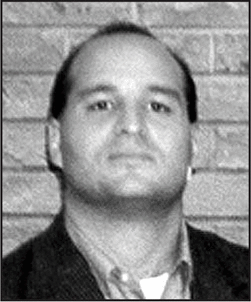 Brian A. Nejmeh合作论文数3Maria H. Penedo合作论文数2Alan Christie合作论文数2Alan R. Segal合作论文数2
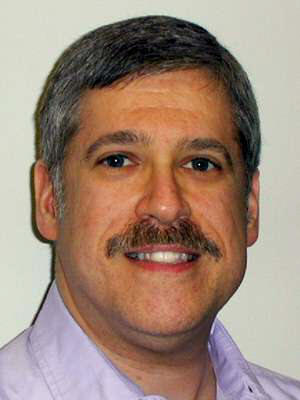 Marc I. Kellner合作论文数Duquesne University; Pittsburgh, Pennsylvania.2
 Jürgen Münch合作论文数Reutlingen University2Samuel T. Redwine Jr.合作论文数2Christine Youngblut合作论文数1Catherine W. McDonald合作论文数1Mark Dowson合作论文数1G. Bristow合作论文数1B. Edwards合作论文数1Kouichi Kishida合作论文数1C. Drey合作论文数1Allan M. Stavely合作论文数New Mexico Tech;Computer Science Department1
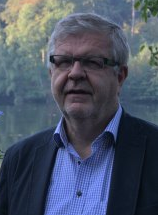 Hans Dieter Rombach合作论文数Technische Universitat Kaiserslautern1
 Harry Saal合作论文数1
 William F. Ogden合作论文数Granite Capital Partners, LLC1
 William C. Rounds合作论文数Department of Electrical Engineering and Computer Science, University of Michigan1
 Alexis Ocampo合作论文数Fraunhofer Institute for Experimental Software Engineering1
 Jens Heidrich合作论文数Fraunhofer-Institut für Experimentelles Software Engineering;TU Kaiserslautern1




