Collaborative Developmental Action Inquiry (CDAI) bridges first-, second-, and third-person research to integrate scientific inquiry and timely action. It describes four territories of awareness that are crucial for effective action and provides a developmental stage theory of how individuals, organizations, and scientific paradigms gradually come to embrace full fourfold awareness. These progressive action-logics each herald distinct capabilities and qualitative shifts in understanding. In practice, the developmental action-logic of both a leader and an organization will shape the success (or failure) of organizational change efforts. Transitions between action-logics are significant opportunities for change, as well as points of increased fragility. CDAI presents important implications for transformational efforts in organizations, social science, and the world at large. This chapter presents an overarching view of the philosophy, developmental stages, methods and practices, and empirical findings of CDAI from the past 50 years through descriptions, frameworks, and case studies of CDAI in action.
The Handbook of Methods in Organizational Change Research, a volume in Edward Elgar’s series of research methods handbooks, will be published in the Summer of 2023. Each chapter in the handbook addresses unique frameworks, theories, approaches, ontologies, epistemologies, and values that researchers can adopt. The methods are particularly suited for studying organizational change, highlighting current trends while presenting ideas about the future of research within the field of Organizational Development and Change. A natural next step is to convene an opportunity where contributors can not only situate their work and thoughts within the broader themes of the book but also interact in real-time with fellow thought leaders – scholars and practitioners– to participate in dialogue that can further the discussion on the future of organizational change research. We plan to create this space through a symposium at the 2023 Academy of Management Conference in Boston, MA, where the editors, authors, and participants can engage with one another. Jennifer Y. Kim (Tufts University) will, along with fellow editors David Szabla (Western Michigan University), Bill Pasmore (Teachers College, Columbia University), and David Coghlan (Trinity College Dublin) will share how the handbook was conceived, how contributing authors were engaged to participate, and how these chapters emerged. Selected contributing authors will be featured on the panel and asked to share their experience crafting and writing their chapters while discussing current and future trends of organizational change research. Importantly, in light of the 2023 conference theme Putting the Worker Front and Center, the discussion will feature how research methods can be adapted to center on employee experience and voice and what can be done to humanize the worker in the face of recent events, including COVID-19 and recent social and political unrest.
The symposium brings together global scholar-practitioners to discuss and illustrate action research as a contemporary scholarly practice. Over the past decade, action research for transformations (ART) illustrates a growing capacity for grappling with and achieving global sustainability goals. Participants will learn of its key conceptual underpinnings, namely constructivist pragmatism and adult development. These in turn are shown to animate a meta-model that combines concern for relational, conceptual and experimental spaces, guided and assessed by seven quality choicepoints. Key in the transformations support by ART is researchers’ integrating objective perspectives with subjective reflexivity. As an expression of contemporary constructivist pragmatism, action research for transformations thereby illustrates and works with a deeper emphasis and respect for the relational nature of people within change contexts. In this integration ART may offer a revitalization of social science itself. The discussion of how concepts as well as objectivity, intersubjectivity, and subjectivity combine will be brought alive with two impactful cases from worlds of i) policy makers in government in Spain and ii) work of JEDI (justice, equity, diversity, and inclusion) with thousands of employees in Vancouver Canada. The symposium will be of interest to change leaders and educators concerned with transformative social change, as well as social scientists interested in new paradigms of social science.
Collaborative Developmental Action Inquiry (CDAI) is introduced as a meta- paradigmatic approach to social science and social action that encompasses seven other more familiar paradigms (e.g., behaviorism, empirical positivism, and postmodern interpretivism) and that triangulates among third-person, objectivity-seeking social scientific inquiry, second-person, transformational, mutuality-seeking political inquiry, and first-person, adult, spiritual inquiry and consciousness development in the emerging present. CDAI tests findings, not only against third-person criteria of validity as do quantitative, positivist studies and qualitative, interpretive studies, but also against first- and second-person criteria of validity, as well as criteria of efficacy in action. CDAI introduces the possibility of treating, not just formal third-person studies, but any and all activities in one's daily life in an inquiring manner. The aim of this differently-scientific approach is not only theoretical, generalizable knowledge, but also knowledge that generates increasingly timely action in particular cases in the relationships that mean the most to the inquirer. To illustrate and explain why the CDAI approach can explain unusually high percentages of the variance in whether or not organizations actually transform, all three types of validity-testing are applied to a specific study of intended transformation in ten organizations. The ten organization study found that adding together the performance of each organization's CEO and lead consultant predicted 59% of the variance, beyond the .01 level, in whether and how the organization transformed (as rated by three scorers who achieved between .90 and 1.0 reliability). The essay concludes with a comparison between the empirical positivist paradigm of inquiry and the Collaborative Developmental Action Inquiry paradigm.
Academy of Management Annual Meeting Proceedings includes abstracts of all papers and symposia presented at the annual conference, plus 6-page abridged versions of the “Best Papers” accepted for inclusion in the program (approximately 10%). Papers published in the Proceedings are abridged because presenting papers at their full length could preclude subsequent journal publication. Please contact the author(s) directly for the full papers. Waking Up at Work--Collaborative Research on Mindfulness and AwarenessSkjei, Susan, Torbert, William, Goldman Schuyler, Kathryn, Sankaran, Shankar, Sanzgiri, Jyotsna, Sedgmore, Lynne, Tan, Gilbert, Cortes, Lorna, Lee, Yih-teen and Stanley, KathrynSkjei, SusanNaropa U., Torbert, WilliamBoston College, Goldman Schuyler, KathrynAlliant International U., Sankaran, ShankarU. of Technology, Sydney, Sanzgiri, JyotsnaAlliant International U., Sedgmore, Lynne157 Group of FE Colleges UK, Tan, GilbertSingapore Management U., Cortes, LornaAlliant International U., Lee, Yih-teenIESE Business School and Stanley, KathrynMassachusetts School of Professional PsychologyPublished Online:16 Nov 2018https://doi.org/10.5465/AMBPP.2012.10528symposiumAboutSections ToolsDownload CitationsAdd to favoritesTrack Citations ShareShare onFacebookTwitterLinkedInRedditEmail AbstractThis symposium focuses on a collaborative research project, launched last year at the Academy meetings, that is a qualitative, first-person study of "moments of waking up" in connection with work. Now in process, the project is intended to further several goals simultaneously: 1) to enrich our understanding of how people bring mindfulness (contemplative practices) into their work; 2) to deepen the participants contemplative practice; 3) to develop a global community of practice among people interested in these first two goals. Roughly seventeen scholars, a chief executive, and consultants from three continents have contributed to shaping the project. We have collected initial data, and by the time of the conference will have completed the initial data analysis and begun drafting a scholarly paper. We intend to develop further research based on this experience and to include additional participants from the 2012 Meetings. The intent is to forge an ongoing scholarly and practice "collaboratory" of people interested in exploring the impact of contemplative practices on their consulting, coaching, leadership, and teaching, and to encourage publications based on our research. The symposium will feature several brief presentations by panelists about their experiences doing the reflective research; comments on first person research, collaboration, and this project from William Torbert, noted scholar of transformational action research; and planning for the next stages of research in which new participants can join.FiguresReferencesRelatedDetails Vol. 2012, No. 1 Permissions Metrics in the past 12 months History Published online 16 November 2018 Published in print 1 July 2012 InformationCopyright of Academy of Management Proceedings is the property of Academy of Management and its content may not be copied or emailed to multiple sites or posted to a listserv without the copyright holder's express written permission. The Academy of Management does not maintain the full text version of papers presented at the Academy's meetings. Please contact the author(s) directly to obtain access to the full text content.KeywordsAOM Annual Meeting Proceedings 2012AOM Boston 2012contemplative practicesfirst person researchmindfulness
My story about the early years of my career leads to the advice: make big mistakes early and often, just be sure you reap some rewards from them later. More specifically, if we wish social science to make a transforming contribution to humankind, we will seek to triangulate among: 1) the third-person, objectified research of virtually all of today's scholarly journals; 2) the first-person research/practices of researchers studying ourselves in action; and 3) the divergent second-person voices of intersubjective, interactive teams, families, and other meetings. I recommend that young scholars create their own changing/enduring communities of inquiry as developmental sites for improving their first-, second-, and third-person research research methods and teaching practices, especially methods for engaging in double-loop, transforming learning and change. Finally, I invite the field to give itself a real kick in the pants in terms of third-person research standards by requiring that principal variables in quantitative studies explain at least 25% of the variance, and that we treat non-parametric rather than parametric statistics as most meaningful.
Since 1980, Loevinger's Sentence.CoMpletion Test has been used to explore the relationship between.ego development and managerial effectiveness in the context of.Boston College's Masters of Business Administration (MBA) program. According to the theory-of ego_ development developed byLoevinger dnd others, most adults either inhabitone of four distinct' worldviews or are in transition between them. The four worldviews, in ascending order of maturity, are .(1) opportunistic, (2) social, (3) goal-oriented,. and (4) integrative. In contrast to the first three, all of which are to some extent blind to opposing worldviews, the integrative worldview recognizes the partial validity of each of the other three. The two most ,frequent transiionsthe research has documented are the."analytic6--between socialand goal-oriented worldviews-and the'nrdlifivistic"--4tween the goal-oriented and fhe integrative. Although recent research indicate* that persons with .relativistic and integrate0 worldviews. make the best managers, most MBA students fall into other categories: The results of individual and group feedback sesSiond--as illustrated by the detailed presentationkin this document of four separate cases involving four Aifferent worldviews--tend to confirm the 'internal validity" of the Loevinger measure in predicting the relation 9f worldview to behavior.74JSM)
In this paper, we describe how the Harthill Leadership Development Profile(LDP), a language-based instrument has evolved from Jane Loevinger’s WashingtonUniversity Sentence Completion Test (WUSCT), and has been redesigned to assess andoffer feedback about adults’ action logics in work or educational settings, in the contextof Developmental Action Inquiry (DAI) theory, practice, and method (Torbert, 1972,1976, 1987, 1991; Torbert & Associates, 2004).Next, we challenge a recent critique of the LDP as a soft measure unsupported bypublished, quantitative psychometric reliability and validity studies (Stein & Heikkinen,2009) and present both previously unpublished and previously published-but-notaggregatedstudies illustrating Harthill LDP as a well-calibrated measure of adult egodevelopment.Because the DAI approach to social inquiry and social practice invites us all tointerweave first-, second-, and third-person inquiry and everyday action, the validitystudies reported tend to concern field-based experiments seeking to generatedevelopmentally transforming change in adults, including the researchers and/orinterventionists, as well as in the organizations in which they participate.In our conclusion, we briefly consider what a social science and a social practice basedon the developmentally late action-logics will look like, once social science is recognizedas embracing, not just 3rd-person empirical positivist research “on” subjects, but also 1st-,2nd-, and 3rd-person research and action with co-participants in live settings.
We will first describe and demonstrate three distinctive features of Developmental Action Inquiry: 1) its basis in an ontology and epistemology that distinguish among four possible territories of experience; 2) its injunction to interweave 1st-, 2nd-, and 3rd-person research in the midst of one’s practice with others; and 3) its recognition of three different types of research findings (single-, double-, and triple-loop feedback) and their impact on subsequent practices. We will follow this introductory section by describing the 3rd-person, psychometric instrument called the Harthill Leadership Development Profile and the ongoing validity-testing research we are performing on it in the fields of our practices. Then we will share some of the more provocative findings from recent research. In this section we focus on the potentials and limitations we observe in the Expert and Strategist action logics. We also introduce a few of the findings from two doctoral dissertations just completed this spring. (In the context of our “in action” presentation at the conference itself, we will be interrupting the presentation at several points in order to invite the audience into some 1stand 2nd-person research exercises together.)
Most developmental psychologists agree that what differentiates one leader from another is not so much philosophy of leadership, personality, or style of management. Rather, it's internal "action logic"--how a leader interprets the surroundings and reacts when his or her power or safety is challenged. Relatively few leaders, however, try to understand their action logic, and fewer still have explored the possibility of changing it. They should, because leaders who undertake this voyage of personal understanding and development can transform not only their own capabilities but also those of their companies. The authors draw on 25 years of consulting experience and collaboration with psychologist Susanne Cook-Greuter to present a typology of leadership based on the way managers personally make sense of the world around them. Rooke and Torbert classify leaders into seven distinct actionlogic categories: Opportunists, Diplomats, Experts, Achievers, Individualists, Strategists, and Alchemists-the first three associated with below-average performance, the latter four with medium to high performance. These leadership styles are not fixed, the authors say, and executives who are willing to work at developing themselves and becoming more self-aware can almost certainly move toward one of the more effective action logics. A Diplomat, for instance, can succeed through hard work and self-reflection at transforming himself into a Strategist. Few people may become Alchemists, but many will have the desire and potential to become Individualists and Strategists. Corporations that help their executives and leadership teams to examine their action logics can reap rich rewards.
 david rooke合作论文数8Dalmar Fisher合作论文数3
 Joy E. Beatty合作论文数Management Studies;University of Michigan-Dearborn;Management Studies, University of Michigan-Dearborn3francine t sherman合作论文数2D. Fisher合作论文数2
 Reut Livne-Tarandach合作论文数2Jennifer K Hartwell合作论文数2
 Keith Merron合作论文数2Susanne R. Cook-Greuter合作论文数2Peter Reason合作论文数2RLM DUNBAR合作论文数1Ram Tenkasi合作论文数1Donna Ogle合作论文数1John B. McGuire合作论文数1David B. Szabla合作论文数1A.B. Rami Shani合作论文数1Jyotsna Sanzgiri合作论文数1
 Susan Skjei合作论文数1Kent Glenzer合作论文数1l cortes urrutia合作论文数1Dana Carman合作论文数1xi shangjiu (尚久 西)合作论文数1
 Miren Larrea合作论文数Orkestra Basque Inst Competitiveness, Univ Deusto1
 Johanna E. Pregmark合作论文数Corresponding author.1
 Regina Kim合作论文数Fairfield Univ1
 Julie Bayle-Cordier合作论文数1Kathryn Goldman Schuyler合作论文数1
 William Pasmore合作论文数1
 David Jarrett合作论文数1
 Marc Bonnet合作论文数1J. Dutton合作论文数1
 Jennifer Gahee Kim (Jennifer G. Kim)合作论文数School of Interactive Computing, College of Computing, Georgia Institute of Technology1
 Hilary Bradbury合作论文数1
 Chris Riedy合作论文数INSTITUTE FOR SUSTAINABLE;FUTURES University of Technology;University of Technology1
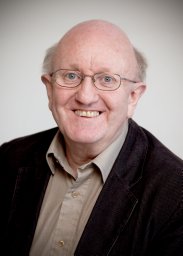 David Coghlan合作论文数Sch Business, Trinity Coll Dublin1Sandra M. Martinez合作论文数1
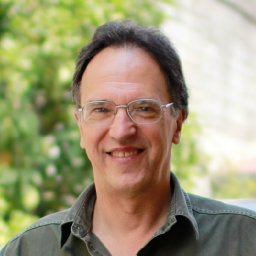 Charles J. Palus合作论文数Center for Creative Leadership1
 Cynthia Mitchell合作论文数Institute for Sustainable;University of Technology;Institute for Sustainable, University of Technology1Kenneth J. Gergen合作论文数Department of Psychology, Swarthmore College1
 Steven S. Taylor合作论文数Worcester Polytechnic Institute1
 Victor J Friedman合作论文数1Henri Savall合作论文数1
 Tobias Fredberg合作论文数Dept Technol Management & Econ, Chalmers Univ Technol1
 Howard Silverman合作论文数Department of Medicine, Johns Hopkins Medical Institutions;Department of Medicine, Johns Hopkins Medical Institutions1




