Kidney volume measurement is critical for managing polycystic kidney disease and monitoring transplants, but computed tomography involves radiation and conventional ultrasound has 20–30
3D point cloud analysis has recently garnered significant attention due to its capacity to provide more comprehensive information compared to 2D images. To confront the inherent irregular and unstructured properties of point clouds, recent research efforts have introduced numerous well-designed set abstraction blocks. However, few of them address the issues of information loss and feature mismatch during the sampling process. To address these problems, we have explored the Markov process to revisit point clouds analysis, wherein different-scale point sets are treated as states, and information updating between these point sets is modeled as the probability transition. In the framework of Markov analysis, our encoder can be shown to effectively mitigate information loss in downsampled point sets, while our decoder can accurately recover corresponding features for the upsampled point sets. Furthermore, we introduce a difference-wise attention mechanism to specifically extract discriminative point features, focusing on informative point feature distillation within the states. Extensive experiments demonstrate that our method equipped with Markov process consistently achieves superior performance across a range of tasks including object classification, pose estimation, shape completion, part segmentation, and semantic segmentation. The code is publicly available at https://github.com/ssr0512/Markov-Process-Analysis-on-Point-Cloud.git.
This paper focuses on Weakly Supervised 3D Point Cloud Semantic Segmentation (WS3DSS), which involves annotating only a few points while leaving a large number of points unlabeled in the training sample. Existing methods roughly force point-to-point predictions across different augmented versions of inputs close to each other. While this paper introduces a carefully-designed approach for learning class agnostic and specific consistency, based on the teacher-student framework. The proposed class-agnostic consistency learning, to bring the features of student and teacher models closer together, enhances the model robustness by replacing the traditional point-to-point prediction consistency with the group-to-group consistency based on the perturbed local neighboring points' features. Furthermore, to facilitate learning under class-wise supervisions, we propose a class-specific consistency learning method, pulling the feature of the unlabeled point towards its corresponding class-specific memory bank feature. Such a class of the unlabeled point is determined as the one with the highest probability predicted by the classifier. Extensive experimental results demonstrate that our proposed method surpasses the SOTA method SQN (Huet al., 2022) by 2.5% and 8.3% on S3DIS dataset, and 4.4% and 13.9% on ScanNetV2 dataset, on the 0.1% and 0.01% settings, respectively. Code is available at https://github.com/jasonwjw/CASC.
The prominence of 3D molecular property prediction arises from its ability to provide insights into the drug discovery and design, material science and chemical synthesis. Transformer-based models have been widely adopted to autonomously learn long-range atom-to-atom interactions on a global scale, resulting in significant success. However, these models may struggle to capture intricate substructure details (e.g., covalent bond and functional group). In this work, topological simplices defined on nodes, links, triangles are extracted from the atoms' 3D positional information to provide comprehensive representations of the local substructure information, such as atoms, covalent bonds and functional groups. We then propose a topological fusion network, which enhances each atom's features not only through global atom-to-atom interactions but also by incorporating the fine-grained topological substructure information. In comparison to existing popular methods, our proposed method outperforms the state-of-the-art (SOTA) method by 1.2%, 3.0%, 2.4%, 2.7% on BBBP, BACE, ClinTox, MUV datasets for classification task and 0.048, 0.022, 3.8 on FreeSolv, Lipo and QM7 datasets for regression task, respectively. The code will be released soon.
The objective of point cloud place recognition is to convert a point cloud into a global descriptor that can be utilized in autonomous driving applications to identify the best-matched road scene from an extensive dataset. However, capturing a point cloud from an arbitrary view by robots or self-driving vehicles often involves scene rotations, making existing deep learning-based methods susceptible to errors. To quantify this performance degradation, we introduce a novel metric: Average Recall@N under arbitrary rotations, denoted as “R-AR@N.” To address this issue, we propose a geometrical transformation module designed to convert rotation-sensitive coordinates into rotation-invariant representations. Additionally, we observe that the design of overly complex networks may not be crucial for effective point cloud analysis. In line with the straightforward architectural design of PointMLP [20], we introduce a local feature transformation module that utilizes statistical representations to transform local point features within a reasonable range. This enables the network to capture diverse geometric structures and generate a robust global descriptor. Our proposed method undergoes extensive evaluation on the Oxford outdoor dataset and three in-house datasets, demonstrating an improvement of at least 2 https://github.com/jasonwjw/RI-PointMLP .
Small object detection is a critical challenge in Unmanned Aerial Vehicles (UAVs) due to the limited pixel representation of small objects and the impact of successive pooling operations, which frequently results in the disappearance of small objects within intricate backgrounds. To tackle this issue, we propose the Small Object Enhancement Pyramid (SOEP) module, which first transforms feature representations (i.e., in the spatial domain) into the frequency domain to better capture small objects typically characterized by high -frequency components. These feature representations are then fused in the spatial domain using a frequency -based attention map, enhancing small object representations by integrating information from both complementary domains. Furthermore, we introduce a Task Aligned Head (TAH) that integrates classification and localization tasks interactively, reducing the misalignment that occurs when these tasks are learned independently, particularly in the context of small objects. Experimental results on the Visdrone dataset verify that our proposed method (D2FTA) outperforms the baseline method by 12.7%, 14.19% on mAP0.5 and mAPo.5:o.95"
3D point clouds have gained much research attention because of their ability to represent the spatial information of real-world environments in a detailed manner. Despite recent progress in point cloud processing with deep neural networks, most of them either implement sophisticated local feature aggregation methods or imitate 2D convolution operations in the range of K nearest neighbors with limited local context information. These methods may struggle to distinguish between similar geometric shapes within the local region of K nearest neighbors, such as doors and walls. To address this issue, we propose a novel local–global fusion network that captures the diverse local geometric shapes with global structure information. The proposed local–global fusion network comprises two main modules. Firstly, we have developed an effective approach for local context learning using incremental dilated KNN (IDKNN) as the neighbor selecting mechanism to enlarge the receptive field and incorporate more reliable points for local geometric shape learning. Secondly, a three-direction region-wise spatial attention (TRSA) algorithm has been developed to explore the global contextual dependencies. For global context learning, we first split the entire 3D space into regions with equal numbers of points, and, then, intra-region context features are extracted to learn the inter-region relations from three orthogonal directions, taking global structural knowledge into account. By fusing the local context information and global contextual dependencies, we establish a Local-Global Fusion Network, end-to-end framework, called LGFNet. Extensive experimental results on several benchmark datasets clearly demonstrate our approach can achieve state-of-the-art (SOTA) performance on point cloud classification, part segmentation, and indoor semantic segmentation. In addition, TRSA and IKDNN can be easily used in a plug-and-play fashion with various existing SOTA networks to substantially improve their performance. Our code is available at https://github.com/jasonwjw/IDKNN
Voice recognition and command technology for applications with industrial robots is a relatively new field in the intelligent manufacturing industry. It offers a number of advantages over other methods of communication with robots, as it requires fewer specialized skills to manipulate the robot workstation. Additionally, using voice commands can help reduce the number of industrial injuries caused by contact with machinery, thus potentially save operators' lives in emergency situations where external assistance is not immediately available. This study presents a design of a Cartesian robot workstation which is equipped with a voice recognition system controlled by audio commands, as well as a vision perception system. The vision perception system uses the Real Sense depth camera that captures information about the coordinates of the work pieces, which is processed by SSD algorithm. The voice recognition system has been developed with an algorithm which combines both LSTM and HMM, and it has good performance in term of both efficiency and accuracy in controlling normal operation as well as emergency stop for our robot grasping workstation.
Directly processing 3D point cloud data becomes dominant in classification and segmentation tasks. Present mainstream point based methods usually focus on learning in either geometric space (i.e. PointNet++) or semantic space (i.e. DGCNN). Owing to the irregular and unordered data property of point cloud, these methods still suffer from drawbacks of either ambiguous local features aggregation in geometric space or poor global features extraction in semantic space. While few prior works address these two defects simultaneously by fusing information from the dual spaces, we make a first attempt to develop a synergistic framework, called PointGS. Leveraging both the strength of geometric structure and semantic representation, PointGS establishes a mutual supervision mechanism that can bridge the two spaces and fuse complementary information for better analyzing 3D point cloud data. Compared with existing popular networks, our work attains obvious performance improvement on all three mainstream tasks without any sophisticated operations.
 Chenru Jiang合作论文数Xi'an Jiaotong-Liverpool University, Suzhou, China6
 Quan Zhang合作论文数5
 Mingjie Sun (孙铭杰)合作论文数School of Computer Science and Technology, Soochow University5Wuwei Ma合作论文数4Haotian Xu合作论文数2
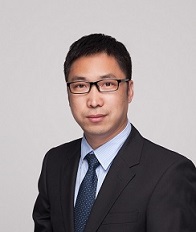 Kaizhu Huang (黄开竹)合作论文数Data Science Research Center, Duke Kunshan University2
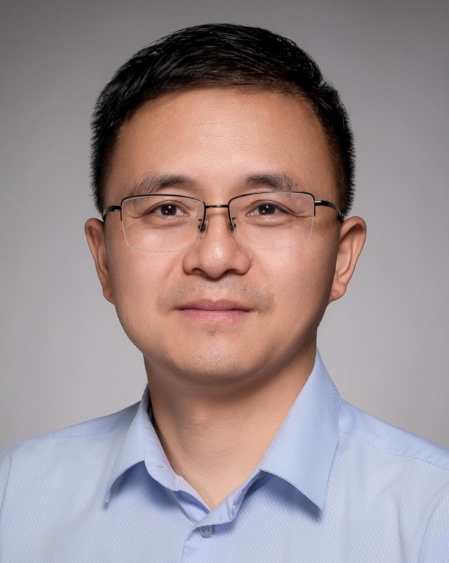 Jimin Xiao (肖继民)合作论文数Department of Intelligent Science, School of Advanced Technology, Xi'an Jiaotong-Liverpool University;MMT Lab, Xi'an Jiaotong-Liverpool University2
 Xinheng Wang合作论文数Department of Mechatronics and Robotics, School of Advanced Technology, Xi'an Jiaotong-Liverpool University2
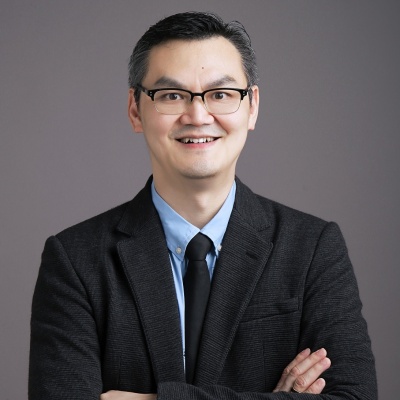 Eng Gee Lim (林永义)合作论文数Department of Communications and Networking, School of Advanced Technology, Xian Jiaotong-Liverpool University2
 Jeremy Smith合作论文数University of Liverpool, University of Liverpool2Fangrui Guo合作论文数1Muhuan Wu合作论文数1
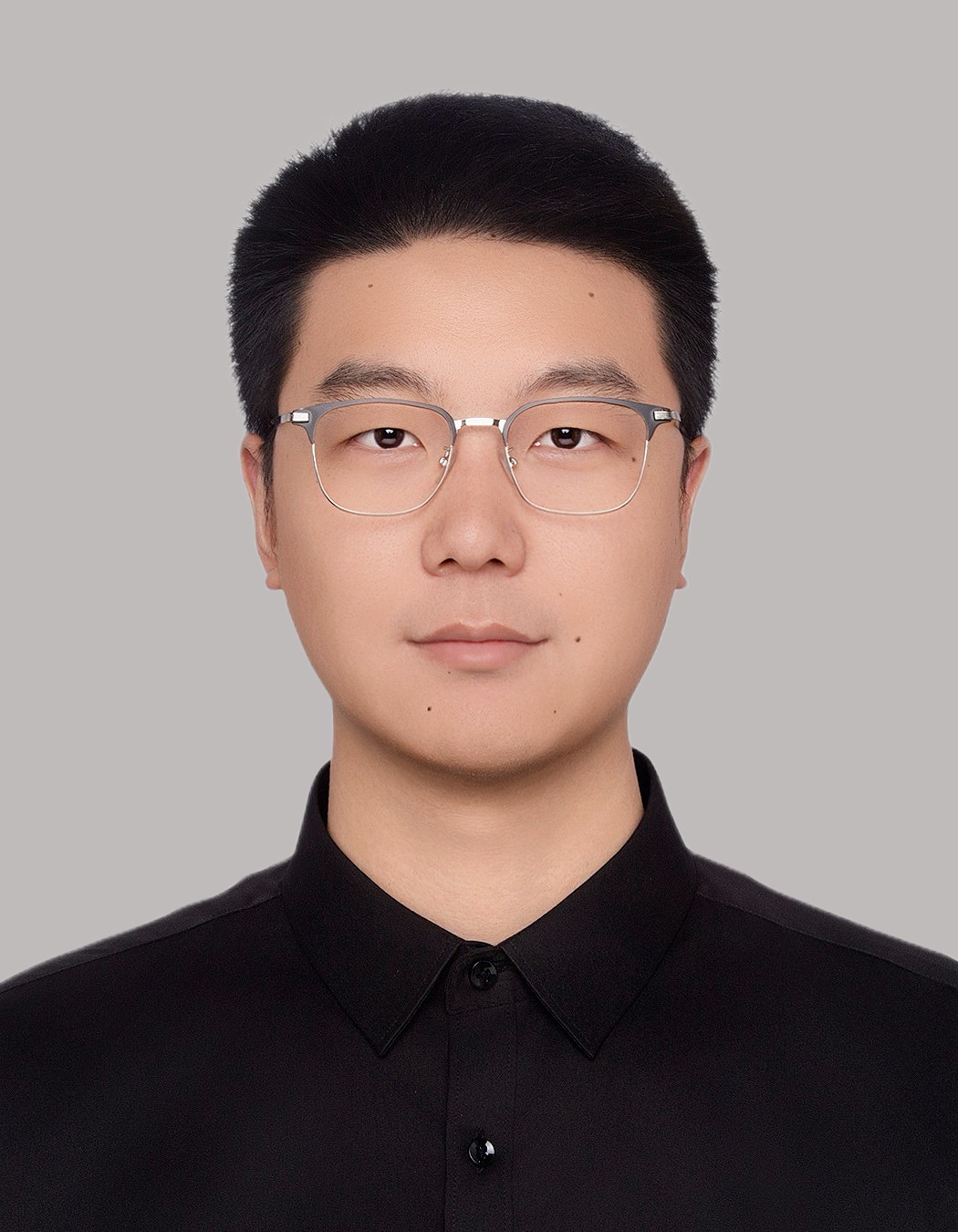 Weiguang Zhao (赵伟光)合作论文数School of Mathematics and Physics, Xi'an Jiaotong-Liverpool University;Duke Kunshan University;Computer Science Department, University of Liverpool1
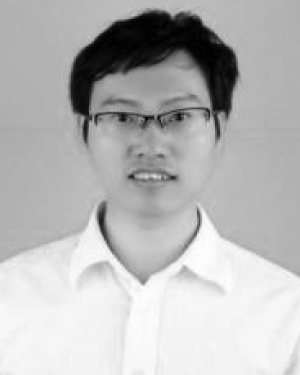 Menglin Wu合作论文数1
 Xi Yang合作论文数1
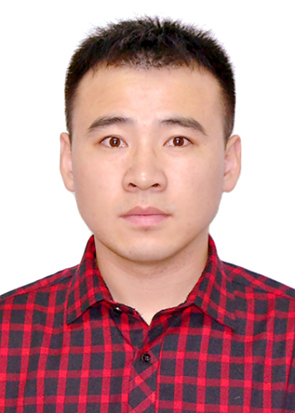 Fei Ma (马飞)合作论文数College of Information Science and Technology, Beijing University of Chemical Technology1
 Amir Hussain合作论文数School of Computing, Engineering and The Built Environment, Edinburgh Napier University1
 Qiufeng Wang (王秋峰)合作论文数Department of Intelligent Science, School of Advanced Technology, Xi'an Jiaotong-Liverpool University1
 Zhenxing Niu (牛振兴)合作论文数School of Computer Science and Technology, Xidian University1




