Monocular visual SLAM enables 3D reconstruction from internet video and autonomous navigation on resource-constrained platforms, yet suffers from scale drift, i.e., the gradual divergence of estimated scale over long sequences. Existing frame-to-frame methods achieve real-time performance through local optimization but accumulate scale drift due to the lack of global constraints among independent windows. To address this, we propose SCE-SLAM, an end-to-end SLAM system that maintains scale consistency through scene coordinate embeddings, which are learned patch-level representations encoding 3D geometric relationships under a canonical scale reference. The framework consists of two key modules: geometry-guided aggregation that leverages 3D spatial proximity to propagate scale information from historical observations through geometry-modulated attention, and scene coordinate bundle adjustment that anchors current estimates to the reference scale through explicit 3D coordinate constraints decoded from the scene coordinate embeddings. Experiments on KITTI, Waymo, and vKITTI demonstrate substantial improvements: our method reduces absolute trajectory error by 8.36m on KITTI compared to the best prior approach, while maintaining 36 FPS and achieving scale consistency across large-scale scenes.
Scribble-supervised semantic segmentation is a weakly supervised paradigm based on sparse annotations, which has attracted increasing attention due to its low labeling cost, high annotation flexibility, and promising performance. Existing methods primarily employ perturbation techniques such as noise injection, feature mixing, or channel dropout to foster diverse feature representations through consistency learning. However, they often overlook perturbation of hierarchical semantic-aware, which are vital for ensuring robust consistency learning. To address these issues, we propose a dual-path mutual guidance consistency learning framework with hierarchical neighborhood perturbation, termed DCNP. First, the hierarchical neighborhood random perturbation (HNRP) module implements pixel-level semantic-aware feature perturbation through locally-constrained neighborhood sampling around each target position. This hierarchical design aligns with the multi-scale structure of the encoder, enhancing feature stability under semantic-varying perturbation. In conjunction with HNRP, the dual-path mutual guidance consistency learning (DPMG) module incorporates a consistency loss that enforces bidirectional prediction consistency between the perturbed features branch and the original features branch through cross-branch pseudo-label supervision, effectively alleviating the problem of insufficient supervision caused by sparse annotations. Experimental results show that the proposed method achieves outstanding performance on five scribble-annotated datasets, offering meaningful insights into the design of efficient and architecturally simple frameworks for sparse annotation. The source code is available at https://github.com/chenller/ScribbleDCNP.
Surface reconstruction with differentiable rendering has achieved impressive performance in recent years, yet the pervasive photometric ambiguities have strictly bottlenecked existing approaches. This paper presents AmbiSuR, a framework that explores an intrinsic solution upon Gaussian Splatting for the photometric ambiguity-robust surface reconstruction with high performance. Started by revisiting the foundation, our investigation uncovers two built-in primitive-wise ambiguities in representation, while revealing an intrinsic potential for ambiguity self-indication in Gaussian Splatting. Stemming from these, a photometric disambiguation is first introduced, constraining ill-posed geometry solution for definite surface formation. Then, we propose an ambiguity indication module that unleashes the self-indication potential to identify and further guide correcting underconstrained reconstructions. Extensive experiments demonstrate our superior performance in surface reconstruction compared to existing methods across various challenging scenarios, while excelling in broad compatibility. Our code will be made open-source upon acceptance.
Zero-shot Object Navigation demands the agent to explore unfamiliar environments and navigate to certain objects. In this paper, we propose a new framework that combines Explicit and Implicit Knowledge Navigation (EIK-Nav) to facilitate the overall zero-shot object navigation from both the exploration and detection process. The implicit knowledge is derived from the pre-trained vision-language model (VLM) that measures the semantic distance between the textual target category and RGB images, and thus provides a baseline value for determining the exploration potential of a specific area. The explicit knowledge is provided by the large language model (LLM), consisting of the co-occurrence relation among the target, the room, and other objects. EIK-Nav uses explicit knowledge as an extra constraint over the implicit value to decide where the most valuable area to explore is. In the detection process, the explicit co-occurrence relation can further offer additional evidence for determining the confidence of the detected target, which can elevate the detection process from being independent to considering the surrounding context. The experimental results on photo-realistic environments, including Matterport 3D (MP3D), Habitat-Matterport 3D (HM3D), and Gibson demonstrate that our proposed method achieves state-of-the-art results even compared with training-based methods.
Embodied Question Answering (EQA) requires agents to explore the environment actively and gather reasonable visual information to answer the questions raised by users. Despite the significant progress attained, previous works lack a comprehensive understanding of the observed environment. Particularly, in the question answering task, little attention is paid to the temporal context in multiple observations and the semantic understanding of the environment. Meanwhile, the navigator struggles when combining global spatial context and individual observations to comprehend the geometric environment. In this paper, we propose Context-aware Embodied Question Answering (CaEQA) to address the issues from two aspects. Firstly, to integrate temporal context into image embeddings obtained from the local observations at the navigation endpoint, we propose a local temporal context-aware visual question answering module (LTC-VQA). Specifically, we utilize the large language model in the question answering module to enhance the temporal and semantic understanding of complex unseen environments by introducing general knowledge obtained in the pretraining stage. Secondly, to model the complex interdependence within the overall navigation procedure, we propose a global-geometric-guided navigation module (G3-Nav), facilitating the interpretation of global historical information. In G3-Nav, we use a transformer that incorporates RGB images, depth maps and actions from all past positions to provide geometric hints from inter-image and intra-image perspectives. Experimental results on the Matterport3D and House3D datasets demonstrate that our method outperforms the SoTA methods in terms of navigation, question answering and the overall EQA system.
Absolute Pose Regression (APR) encompasses a spectrum of visual localization methods that directly regress the 6-DoF camera pose from input images. Previous APR methods typically rely on 3DGS rendered features that smooth out structural details, leading to ambiguous scene descriptors. To address this limitation, we introduce surface curvature as explicit multi-view epipolar geometric cues that capture stable, detailed variations across viewpoints and provide structurally reliable cues for pose estimation. Specifically, we adopt a 3D Gaussian Splatting (3DGS) representation equipped with surface curvature for the scene, and introduce a novel refinement framework termed CurvLoc. Within this framework, a Surface Curvature Extractor is designed to capture curvature information from rendered features along epipolar line directions. Additionally, we propose a Curvature-aware Sampling Strategy that prioritizes regions exhibiting the largest curvature, effectively exploiting multi-view information. This approach significantly enhances geometric detail awareness and delineates clear boundaries in complex regions, facilitating precise visual localization. Extensive experiments on indoor and outdoor visual localization benchmarks demonstrate that the proposed CurvLoc framework surpasses existing state-of-the-art methods in accuracy and robustness.
Unmanned Aerial Vehicles (UAVs) typically rely on Global Navigation Satellite Systems (GNSS) for localization. When GNSS signals are unreliable, UAV visual localization offers an effective alternative to determine the UAV's position. This method matches and aligns UAV images with a satellite map to calculate the absolute localization result. However, the discrepancies between the UAV images and the satellite map present significant challenges to accurate matching and alignment, which can lead to localization inaccuracies or failures. To address these challenges, we propose RARFLoc, which fuses the relative localization process between UAV adjacent frames into the above absolute localization process to achieve precise localization even under challenging conditions. Notably, RARFLoc does not require prior knowledge of the initial position and incorporates mechanisms for failure detection and re-localization, greatly enhancing its robustness. Moreover, in the matching stage, we introduce a self-training boosted matching method that improves the matching model's performance for remote sensing. During the alignment stage, a Depth-Guided Alignment (DGA) strategy is proposed to ensure accurate alignment between UAV images and the satellite map. Localization experiments were conducted to evaluate the performance of RARFLoc. The average localization errors of RARFLoc on the MSDI and Nanchang datasets are 3.73 m and 4.38 m, respectively, representing reductions of 40.4% and 23.9% compared with the baseline. The results show that it consistently delivers accurate and robust localization, even in environments with significant discrepancies between UAV images and the satellite map.
We present FoundationSLAM, a learning-based monocular dense SLAM system that addresses the absence of geometric consistency in previous flow-based approaches for accurate and robust tracking and mapping. Our core idea is to bridge flow estimation with geometric reasoning by leveraging the guidance from foundation depth models. To this end, we first develop a Hybrid Flow Network that produces geometry-aware correspondences, enabling consistent depth and pose inference across diverse keyframes. To enforce global consistency, we propose a Bi-Consistent Bundle Adjustment Layer that jointly optimizes keyframe pose and depth under multi-view constraints. Furthermore, we introduce a Reliability-Aware Refinement mechanism that dynamically adapts the flow update process by distinguishing between reliable and uncertain regions, forming a closed feedback loop between matching and optimization. Extensive experiments demonstrate that FoundationSLAM achieves superior trajectory accuracy and dense reconstruction quality across multiple challenging datasets, while running in real-time at 18 FPS, demonstrating strong generalization to various scenarios and practical applicability of our method.
Scene Coordinate Regression (SCR) has emerged as a memory-efficient paradigm for visual localization.While SCR has demonstrated performance comparable to classic feature matching based approaches in small-scale scenes, it has consistently underperformed in large-scale environments.Large-scale localization is hampered by two challenges: sparse co-visibility and local appearance ambiguity.In this work, we propose CoLoR , a novel training framework tailored for large-scale SCR.First, we explicitly and efficiently partition scene points into multi-view and single-view sets and introduce a two-stage bootstrapping paradigm to provide complete and strong supervision for all points.Second, we propose a multi-granularity retrieval feature, which unifies the conventional global and local features as retrieval-oriented representations at the image and pixel levels, respectively, to enforce feature consistency.Our method achieves state-of-the-art performance on multiple challenging large-scale datasets and significantly narrows the accuracy gap with classical feature matching based approaches while retaining a compact map size.
Recent advances in Large Visual Language Models (LVLMs) have demonstrated impressive performance across various vision-language tasks by leveraging large-scale image-text pretraining and instruction tuning. However, the security vulnerabilities of LVLMs have become increasingly concerning, particularly their susceptibility to backdoor attacks. Existing backdoor attacks focus on single-target attacks, i.e., targeting a single malicious output associated with a specific trigger. In this work, we uncover multi-target backdoor attacks, where multiple independent triggers corresponding to different attack targets are added in a single pass of training, posing a greater threat to LVLMs in real-world applications. Executing such attacks in LVLMs is challenging since there can be many incorrect trigger-target mappings due to severe feature interference among different triggers. To address this challenge, we propose MTAttack, the first multi-target backdoor attack framework for enforcing accurate multiple trigger-target mappings in LVLMs. The core of MTAttack is a novel optimization method with two constraints, namely Proxy Space Partitioning constraint and Trigger Prototype Anchoring constraint. It jointly optimizes multiple triggers in the latent space, with each trigger independently mapping clean images to a unique proxy class while at the same time guaranteeing their separability. Experiments on popular benchmarks demonstrate a high success rate of MTAttack for multi-target attacks, substantially outperforming existing attack methods. Furthermore, our attack exhibits strong generalizability across datasets and robustness against backdoor defense strategies. These findings highlight the vulnerability of LVLMs to multi-target backdoor attacks and underscore the urgent need for mitigating such threats.
Weakly supervised person search aims to train an effective network for joint person detection and re-identification (re-id) without identity labels. Existing works perform self-training which alternates between unsupervised clustering for generating pseudo labels and supervised representation learning with the labels, neglecting the underlying misguidance induced by the label noise. In this work, we propose to suppress training samples with noisy labels and reduce unreliable pseudo labels to tackle this problem. Specifically, we present Dual-label Noise Filtering Network (DNFNet), the first noise-resistant weakly supervised person search network. Hybrid fea ture similarity and global feature similarity are calculated to perform parallel clustering and produce dual pseudo labels for each person. By estimating the confidence of training samples through dual-label consistency, we filter out persons with low confidence to resist noisy labels. A Context-aided Hierarchical Clustering (CHC) algorithm is proposed for generating reliable pseudo identities. CHC fully exploits the contextual prior knowledge and hierarchical relationship between data clusters to refine the generated labels during clustering. Experimental re sults demonstrate that DNFNet significantly outperforms previous works on PRW and CUHK-SYSU person search datasets. The code will be available on the project website: https://github.com/JackFlying/DNFNet_release/
Class incremental learning (CIL) aims to learn a model that can not only incrementally accommodate new classes, but also maintain the learned knowledge of old classes. Out-of-distribution (OOD) detection in CIL is to retain this incremental learning ability, while being able to reject unknown samples that are drawn from different distributions of the learned classes. This capability is crucial to the safety of deploying CIL models in open worlds. However, despite remarkable advancements in the respective CIL and OOD detection, there lacks a systematic and large-scale benchmark to assess the capability of advanced CIL models in detecting OOD samples. To fill this gap, in this study we design a comprehensive empirical study to establish such a benchmark, named OpenCIL, offering a unified protocol for enabling CIL models with different OOD detectors using two principled OOD detection frameworks. One key observation we find through our comprehensive evaluation is that the CIL models can be severely biased towards the OOD samples and newly added classes when they are exposed to open environments. Motivated by this, we further propose a novel approach for OOD detection in CIL, namely Bi-directional Energy Regularization (BER), which is specially designed to mitigate these two biases in different CIL models by having energy regularization on both old and new classes. Extensive experiments show that BER can substantially improve the OOD detection capability across a range of CIL models, achieving state-of-the-art performance on the OpenCIL benchmark. All codes and datasets are open-source at https://github.com/mala-lab/ OpenCIL.
Image editing aims to restore missing regions in images while maintaining visual consistency and aesthetic appeal. Existing text-guided editing methods often struggle with semantic mismatches between local image content and global text descriptions, causing incorrect content generation. Similarly, exemplar-guided restoration methods relying solely on global embeddings miss the shared semantic space with text-based representations. To address these limitations, we propose HybridEditDif, a model that integrates text and exemplar conditions using a dynamic, decoupled cross-attention mechanism for collaborative image restoration. A self-supervised training scheme for exemplar conditioning reduces annotation needs while ensuring diverse data representation. Additionally, reference image and mask shape augmentation enhance model performance. Experiments demonstrate that HybridEditDif achieves superior results on diverse real-world images. By adjusting two cross-attention parameters (lambda 1 and lambda 2), the model supports independent editing with either text or exemplars, enabling greater editing flexibility.The code is available at https://github.com/LQQME/HybridEditDif.
Synthesizing novel views from sparse views has achieved impressive advances with radiance fields, yet prevailing methods suffer from high consumption or insufficient refinement capability. This paper introduces DNGaussian, a depth-regularized framework based on 3D Gaussian Splatting, offering real-time and high-quality few-shot novel view synthesis at low costs. Our motivation stems from the remarkable advancement of recent 3D Gaussian Splatting, despite it will encounter a geometry degradation when input views decrease. In the Gaussian radiance fields, we find this degradation in scene geometry primarily lined to the positioning of Gaussian primitives and can be mitigated by depth constraint. Consequently, we propose a Hard and Soft Depth Regularization to restore accurate scene geometry under coarse monocular depth supervision while maintaining a fine-grained color appearance. To further refine detailed geometry, we introduce Global-Local Depth Normalization, enhancing the focus on small local depth changes. Although DNGaussian shows impressive performance, its patch-wise regularization obscures the inconsistency in cross-patch errors. Additionally, primitives can still be irreversibly trapped in local minima under sparse views, even if depth regularization is applied. In this paper, we propose an extended version, DNGaussian++. First, a Geometry Instance Regularizer is developed to enable depth regularization for continuous consistency by exploiting reliable instance-level depth cues. Leveraging the depth gradient guidance, we then propose a Depth-Guided Geometry Reorganization to address the aforementioned local minima problem with high representation efficiency. Extensive experiments show that DNGaussian++ exhibits state-of-the-art performance in multiple datasets and scenarios with high efficiency, and the broad applicability and effectiveness are verified on various backbones and tasks.
Feed-forward Gaussian reconstruction has recently emerged as an efficient approach for driving scene reconstruction. However, prevailing LiDAR-based methods preserve the initial correspondence between observed points and Gaussian primitives, treating the initialized primitive set as the final representation. Unlike optimization-based 3DGS, these methods cannot accumulate gradients during training to determine how the scenes representation should be densified. Meanwhile, the shared sparse backbone only fuses observations from different timestamps implicitly, without explicitly aggregating cross-time evidence for individual primitives. In this paper, we present Learning Gaussian Structure (LGS), a framework that enhances both Gaussian structure and primitive attributes. Our key observation is that changes in local gradient responses induced by a prune or add intervention reveal whether the corresponding structural adjustment benefits reconstruction. Based on this observation, our Gaussian Densify Policy learns a Densify Map comprising Prune and Addition Scores from controlled interventions, and directly adjusts the Gaussian structure during inference. We further develop a compact Cross-Time Point Query that explicitly retrieves and aggregates neighboring features from Gaussian primitives at other timestamps for reliable attribute prediction. Extensive experiments on the Waymo Open Dataset and PandaSet demonstrate that LGS consistently outperforms existing methods.
Generative models like Diffusion Models and Flow Matching have demonstrated remarkable capabilities in synthesizing high-fidelity driving videos, but are severely constrained by high inference latency due to the requirement of extensive sampling steps. We argue that this inefficiency stems from the prevailing reliance on a standard Gaussian source distribution, where consecutive frames are initialized as independent Gaussian noise. This paradigm disregards the rich spatiotemporal correlations inherent in driving videos, compelling the model to regenerate deterministic scene structures existing in previous frames from noise, which is both computationally redundant and prone to geometric inconsistency. To address this problem, we propose GeoFlow, a novel framework designed to achieve efficient driving video generation by harnessing explicit geometric priors. Instead of sampling from standard Gaussian noise, we leverage multi-view geometry and spatially-adaptive noise injection to construct a Geometry-Aligned Prior (GAP) distribution as starting point. This initialization bridges the gap between source distribution and data distribution, yielding a significantly straighter and shorter sampling trajectory. Extensive experiments demonstrate that GeoFlow can achieve remarkable efficiency of both training and inference: merely several hours of fine-tuning on baseline models can significantly boost few-step generation quality, while fully converged training drastically reduces number of inference steps required for state-of-the-art video generation.
Multimodal Large Language Models (MLLMs) are increasingly used as automated judges, e.g., for image quality and safety assessment. However, their adversarial robustness remains largely unexplored, threatening the fairness and reliability of automated judging. To bridge this gap, we introduce RobustMLLMJudge, the first general framework for evaluating the adversarial robustness of general-purpose MLLMs when functioning as judges. It covers diverse attacks against popular judge approaches across quality and safety evaluation scenarios. Using RobustMLLMJudge, we reveal that i) different MLLM judges are highly vulnerable to score-inflating adversarial attacks; and ii) although effective, these attack methods face a critical challenge due to unique constraints in the evaluation protocols of MLLM judges. We further propose MGSIA, namely Manifold-Guided Semantic Induction Attack, a novel method that bypasses these constraints to enable more effective and transferable attacks on MLLM judges. The core idea of MGSIA is to combine affirmative semantic induction with high-score manifold alignment: it maximizes the probability that judges yield affirmative responses (e.g., "Yes") to binary semantic queries, while regularizing adversarial representations toward high-score centers estimated from proxy protocols. Together, these objectives yield transferable score-inflating perturbations. Extensive experiments demonstrate the superiority and generalizability of MGSIA in deceiving advanced MLLM judges under different evaluation scenarios, highlighting the need for robust MLLM judges. Code and data will be made available at https://github.com/mala-lab/RobustMLLMJudge.
Recent advances in optimizing Gaussian Splatting for scene geometry have enabled efficient reconstruction of detailed surfaces from images. However, when input views are sparse, such optimization is prone to overfitting, leading to suboptimal reconstruction quality. Existing approaches address this challenge by employing flattened Gaussian primitives to better fit surface geometry, combined with depth regularization to alleviate geometric ambiguities under limited viewpoints. Nevertheless, the increased anisotropy inherent in flattened Gaussians exacerbates overfitting in sparse-view scenarios, hindering accurate surface fitting and degrading novel view synthesis performance. In this paper, we propose SparseSurf, a method that reconstructs more accurate and detailed surfaces while preserving high-quality novel view rendering. Our key insight is to introduce Stereo Geometry-Texture Alignment, which bridges rendering quality and geometry estimation, thereby jointly enhancing both surface reconstruction and view synthesis. In addition, we present a Pseudo-Feature Enhanced Geometry Consistency that enforces multi-view geometric consistency by incorporating both training and unseen views, effectively mitigating overfitting caused by sparse supervision. Extensive experiments on the DTU, BlendedMVS, and Mip-NeRF360 datasets demonstrate that our method achieves the state-of-the-art performance.
With advancements in robust stereo matching and optical flow estimation networks, models pre-trained on synthetic data demonstrate strong robustness to unseen domains. However, their robustness can be seriously degraded when fine-tuning them in real-world scenarios. This paper investigates fine-tuning stereo matching and optical flow estimation networks without compromising their robustness to unseen domains. Specifically, we divide the pixels into consistent and inconsistent regions by comparing Ground Truth (GT) with Pseudo Label (PL) and demonstrate that the imbalance learning of consistent and inconsistent regions in GT causes robustness degradation. Based on our analysis, we propose the DKT framework, which utilizes PL to balance the learning of different regions in GT. The core idea is to utilize an exponential moving average (EMA) teacher to measure what the student network has learned and dynamically adjust the learning regions. We further propose the DKT++ framework, which improves target-domain performances and network robustness by applying slow-fast update teachers to generate more accurate PL, introducing the unlabeled data and synthetic data. We integrate our frameworks with state-of-the-art networks and evaluate their effectiveness on several real-world datasets. Extensive experiments show that our method effectively preserves the robustness of stereo matching and optical flow networks during fine-tuning.
 Jun Zhou合作论文数School of Information and Communication Technology, Griffith University;Institute for Integrated and Intelligent Systems, Griffith University;ARC Research Hub for Driving Farming Productivity and Disease Prevention, Griffith University65
 Jin Zheng (郑锦)合作论文数School of Computer Science & Engineering, Beihang University55
 Edwin Hancock合作论文数Department of Computer Science, University of York;Beijing Advanced Innovation Centre for Big Data and Brain Compuring, Beihang University47
 宁欣合作论文数Institute of Semiconductors , Chinese Academy of Sciences29
 Xiaohan Yu合作论文数Griffith University27
 Jiahe Li (李嘉禾)合作论文数School of Computer Science and Engineering, Beihang University23
 Lei Zhou (周雷)合作论文数School of Health Science and Engineering, University of Shanghai for Science and Technology21
 Lin Gu (谷林)合作论文数Center for Advanced Intelligence Project, RIKEN19
 Jiawei Zhang (张家伟)合作论文数School of Computer Science and Engineering, Beihang University19
 Guansong Pang合作论文数School of Computing and Information Systems, Singapore Management University15Pengcheng Zhang合作论文数13
 Chen Wang合作论文数Jiangxi Research Institute, Beihang University13
 Peng Ren (任鹏)合作论文数College of Oceanography and Space Informatics, China University of Petroleum12
 Xiang Wang (王翔)合作论文数School of Cyber Science and Technology, University of Science and Technology of China;School of Data Science, University of Science and Technology of China11
 Lu Bai (白璐)合作论文数School of Artificial Intelligence, Beijing Normal University11
 Liang Zhang (张亮)合作论文数School of Computer Science and Engineering, Beihang University11
 Haichuan Yang合作论文数Department of Computer Science, University of Rochester11
 Richard Wilson合作论文数Department of Computer Science, Faculty of Sciences, University of York10
 Haonan Luo (罗皓楠)合作论文数School of Computing and Artificial Intelligence, Southwest Jiaotong University9
 Jian Cheng (程健)合作论文数National Laboratory of Pattern Recognition, Institute of Automation, Chinese Academy of Sciences;University of Chinese Academy of Sciences9
 Xianglong Liu (刘祥龙)合作论文数State Key Laboratory of Software Development Environment, School of Computer Science and Engineering, Beihang University9
 Wenjun Miao (缪文俊)合作论文数School of Computer Science and Engineering, Beihang University8
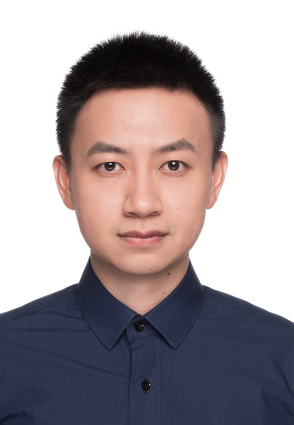 Zhihong Zhang (张志宏)合作论文数School of Informatics, Xiamen University8
 Wenzhong Tang (唐文忠)合作论文数School of Computer Science and Engineering, Beihang University;National Engineering Research Center For Science And Technology Resources Sharing Service7
 Weijun Li (李卫军)合作论文数Laboratory of High Speed Circuits and Neural Networks, Institute of Semiconductors, Chinese Academy of Sciences;Shenzhen Dapu Microelectronics Co.Ltd7
 Huijie Zhao (赵慧洁)合作论文数School of Instrumentation and Optoelectronic Engineering, Beihang University7
 Huigang Zhang合作论文数7
 Yang Liu合作论文数6
 Cheng Yan (闫成)合作论文数School of Aerospace Engineering, Xiamen University6
 Jian Wang (王健)合作论文数College of Science, China University of Petroleum6
 Hanqing Lu (卢汉清)合作论文数National Laboratory of Pattern Recognition, Institute of Automation, Chinese Academy of Sciences;University of Chinese Academy of Sciences6
 Yongsheng Gao合作论文数School of Engineering and Built Environment, Griffith University;Institute for Integrated and Intelligent Systems, Griffith University5
 Lei Huang (黄雷)合作论文数State Key Laboratory of Software Development Environment, Institute of Artificial Intelligence, Beihang University5
 Shuai Wang (王帅)合作论文数School of Computer Science and Engineering, Beihang University5Hang Yu合作论文数5
 Yuntao Qian (钱沄涛)合作论文数College of Computer Science and Technology, Zhejiang University5Xueni Zhang (张雪妮)合作论文数北京航空航天大学5
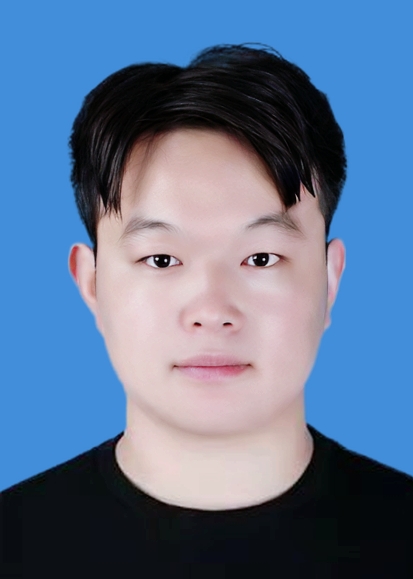 Changshuo Wang (王昌硕)合作论文数Department of Computer Science, Faculty of Engineering, University College London4
 Yun Liu (刘云)合作论文数4
 Tao Gao合作论文数4
 Youmin Zhang合作论文数University of Bologna4
 Weiwei Cai合作论文数School of Artificial Intelligence and Computer Science, Jiangnan University;Graduate School, Northern Arizona University4
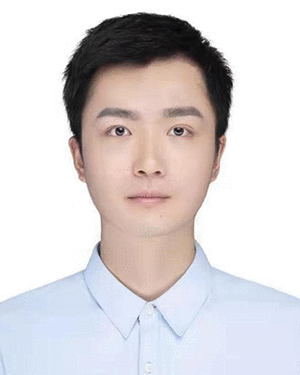 Yanzhen Liu合作论文数4
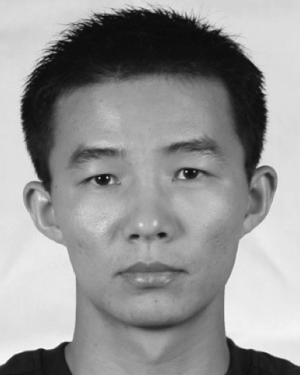 Dong Wang合作论文数4
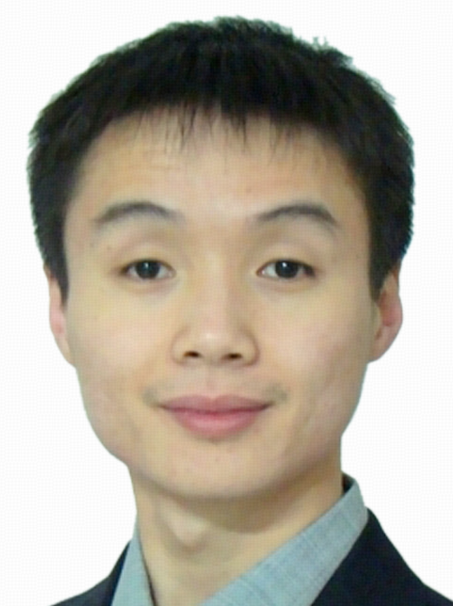 Peng Lei (雷鹏)合作论文数Electronic Information Engineering, Beihang University4
 LiPing Zhang合作论文数China University of Petroleum, University of Petroleum4
 Chunhua Shen (沈春华)合作论文数College of Computer Science and Technology, Zhejiang University4




