Planning for a team of agents to pursue an evader is a challenging issue. The setting of partial observability in many real-world applications further increases the complexity. This paper presents a belief state based Monte Carlo Tree Search (MCTS) algorithm which is capable of generating online pursuing policy in the multi-agent visibility-based pursuit evasion scenario. The algorithm, Belief State UCT Consider Durations (BS-UCTCD) search, extends the basic MCTS on two main aspects: 1) it forms the tree model considering the uncertainty of forward transitions as well as the ability to reason concurrent and durative moves of involved agents; 2) it employs particle filtering to approximate the belief and combine the tree search to track the belief changes. We evaluate BS-UCTCD in a scenario where the algorithm is used to plan for two patrollers to search and capture one intruder. The comparative results demonstrate that our approach is effective and can perform better than fixed strategies and searching without belief tracking. Some domain specific configurations also enable its use under real-time constraints.
Modeling human behaviors considering the dynamic environment caused by toxic gas release, and its impact on the moving human in risk assessment of emergency incident are very important. Though, a plenty of researches have been done to analyze the impact of toxic gas, under whose influence, human evacuation behavior has not been thoroughly analyzed, especially, the dynamic path planning behavior considering the diffusion of toxic gas and human movement behavior after breathing in toxic gas. The two-layer evacuation modeling framework is extended by integrating toxic gas dispersion and its lethal damage model to give a more real representation of evacuation behavior under the influence of toxic gas dispersion. Then, a hypothetical scenario of sarin toxic gas release on a square is used as the case study to compare the results of “threat-aware” strategy (the proposed approach) and “threat-unaware” strategy (a previous dynamic approach) with regard to the individual-centered indices and spatial-centered indices. The simulation results show that there are significant differences between above two indices, which suggests that the proposed model serve to improve the process of risk assessment of the impact of toxic gas on the moving humans.
In this paper, the desired speed is figured out as an important parameter for ordinary differential equation (ODE) based pedestrian simulation models. However, there lacks a thorough study on the optimal way of assigning the desired speed for ODE based pedes-trian simulation models to achieve reliable performance. To gain a deep understanding of the role of the desired speed and its influence on the performances of the ODE based pedestrian simulation models, a total of nine assigning strategies of the desired speed are conducted a comparison study. Specifically, the performances of the ODE based models equipped with such desired speed assigning strategies are compared with regard to reference data from both the uni-and bi-directional pedestrian flow scenarios using a fair model comparison framework. Then, the performances are compared across several dimensions, including different assigning strategies of the desired speed, the different pedestrian simulation models, different experiments for the same motion base, and different motion base scenarios. Based on these results, four findings are summarized. Firstly, the desired speed is quantitatively verified to be an important role in the performance of ODE based pedestrian simulation models. Secondly, pedestrian density level is verified to be an effective indicator for the complexity of pedestrian crowd dynamics. Thirdly, the performance of the ODE based models is dependent on the extent to which the heterogeneity of desired speed is considered. Lastly, the performance of the social force model (SF) is suggested to be more predictable than optimal reciprocal collision avoidance model (ORCA) regarding the stability and optimality. Finally, based on the above findings, recommendations on assigning the desired speed for ODE based pedestrian simulation models are given.(c) 2022 Elsevier B.V. All rights reserved.
Cloud computing is attracting an increasing number of simulation applications running in the virtualized cloud data center. These applications are submitted to the cloud in the form of simulation jobs. Meanwhile, the management and scheduling of simulation jobs are playing an essential role to offer efficient and high productivity computational service. In this paper, we design a management and scheduling service framework for simulation jobs in two-tier virtualization-based private cloud data center, named simulation execution as a service (SimEaaS). It aims at releasing users from complex simulation running settings, while guaranteeing the QoS requirements adaptively. Furthermore, a novel job scheduling algorithm named adaptive deadline-aware job size adjustment (ADaSA) algorithm is designed to realize high job responsiveness under QoS requirement for SimEaaS. ADaSA tries to make full use of the idle fragmentation resources by tuning the number of requested processes of submitted jobs in the queue adaptively, while guaranteeing that jobs' deadline requirements are not violated. Extensive experiments with trace-driven simulation are conducted to evaluate the performance of our ADaSA. The results show that ADaSA outperforms both cloud-based job scheduling algorithm KCEASY and traditional EASY in terms of response time (up to 90%) and bounded slow down (up to 95%), while obtains approximately equivalent deadline-missed rate. ADaSA also outperforms two representative moldable scheduling algorithms in terms of deadline-missed rate (up to 60%).
High energy consumption in large-scale cloud data centers has become a burning issue, and efficient task and resource scheduling is an attractive way to cut down their energy consumption while providing satisfactory services for the customers. Unfortunately, existing scheduling approaches do not fully exploit the heterogeneity of real-tasks and physical hosts for maximum energy savings, while guaranteeing the timing requirements of real-time tasks. To solve the above problem, in this paper, we firstly develop a novel scheduling architecture that transforms the dynamic scheduling problem into multiple static schedules. Then, we propose an energy-efficient reactive scheduling algorithm, namely ERECT, to schedule the real-time tasks and computing resources in virtualized clouds. The proposed algorithm ERECT fully consider the heterogeneity of the real-time tasks and the hosts. In addition, when adding and deleting the virtual machines (VMs), the optimal operating frequencies and energy efficiencies of heterogeneous hosts are exploited to achieve energy conservation. Finally, in order to demonstrate the effectiveness of our approach, extensive experiments are conducted to compare ERECT with two baseline scheduling algorithms in the context of Google traces. The experimental results show that ERECT outperforms those two existing algorithms in terms of guaranteeing tasks’ deadlines (up to 14.06%) and energy saving (up to 9.81%).
Cloud Computing has emerged as a powerful and promising way for running high performance computing (HPC) jobs. Most HPC jobs are designed under multi-processes paradigm and involve frequent communication and synchronization among parallel processes. However, as the underlying resources of cloud data centers are always shared among multiple tenants, the competition of jobs for limited bandwidth resources lead to unpredictable completion times for jobs in the cloud, which may lead to QoS violation and inefficient utilization of resources when scheduling parallel jobs in the cloud. To tackle the issue, it is essential to provide bandwidth guarantees for parallel jobs running in the cloud. Offering a dedicated virtual cluster (VC) for running applications in the cloud is a popular way to guarantee bandwidth demands. Motivated by these problems, in this paper, we firstly design a time-aware virtual cluster (TVC) request model for parallel jobs and consider how to embed requested TVCs of jobs into cloud efficiently under parallel job scheduling framework. An adaptive bandwidth-aware heuristic algorithm, which is denoted as AdaBa, is proposed to improve the job accept rate by adjusting the priorities of servers to accommodate the VMs of TVC adaptively according to the relative size of requested bandwidth demand. Then, a bandwidth-guaranteed migration and backfilling scheduling algorithm, which is denoted as BgMBF, is designed to schedule parallel jobs and the bandwidth demands are guaranteed by AdaBa. To obtain high job responsiveness performance, a bandwidth-reserved job backfilling strategy is designed when the requested TVC for current scheduled job cannot be allocated in the cloud. The migration cost of BgMBF is also considered and an enhanced version BgMBFSDF is then proposed to minimize the number of migration when the execution time of jobs are known. Through extensive simulation experiments on popular parallel workloads, our proposed TVC embedding algorithm AdaBa achieves up to 15 percent of improvement on accept rate compared with existing algorithms such as Oktupus and greedy algorithm. Our proposed BgMBF and BgMBFSDF also significantly outperform other popular scheduling algorithms integrated with AdaBa on average response time and average bounded slow down.
模型体系框架决定着仿真系统的模型构成与功能,其构建是仿真系统建设的难点.综合国内外典型仿真系统模型体系框架构建经验和建模技术最新发展,提炼了一套模型体系框架构建的基本原则,提出了一种以评估指标为中心的模型体系框架构建指导性方法,给出了一些关键技术及辅助支持工具.该方法通过两个阶段八个步骤逐步给出了模型体系框架的迭代构建过程,目前已经在多个大型仿真系统建设过程中得到了运用,具有一定的可操作性.
Cloud computing is attracting an increased number of researches in delivering modeling and simulation abilities as a service. Among which, simulation execution as a service (EaaS) is a hot spot. It aims at releasing users from complex running configurations and meanwhile guaranteeing the QoS requirements. Under the motivation, focusing on EaaS for parallel and distributed simulation (PADS) application, the paper proposes a QoS-aware job scheduling framework in two-tier virtualization-based private cloud data center. In PADS EaaS, an adaptive job size adjustment component is designed to realize intelligent and adaptive job size setting for PADS instead of assigning by users. Furthermore, an adaptive deadline-aware job size adjustment algorithm, named ADaSA, is designed in the adjustment component to realize efficient job scheduling with high job responsiveness. ADaSA algorithm firstly computes a minimum processor requested that leads to maximum runtime stretch. It makes sure that more jobs can be scheduled at the same time while satisfying current job's deadline requirements. On other hand, ADaSA tries to pick up all possible idle CPU time in background virtual machines and reserved ones for other jobs. Through that way, more chances are generated to response more jobs in waiting queue. Finally, we conduct extensive experiments with trace-driven simulation. The results show that ADaSA outperforms both cloud-based job scheduling algorithm KCEASY and traditional EASY in terms of response time (up to 90%) and bounded slow down (up to 95%), and at the same time guarantees approximately equivalent deadline-missed rate. ADaSA also outperforms two representative moldable scheduling algorithms in terms of deadline-missed rate (up to 60%).
Modeling how military commanders carry out operations is considered complicated, requiring the capability of not only planning for multiple subordinates but also responding to unexpected events during execution. This paper presents an Hierarchical Task Network (HTN) embedded planning and execution control architecture for small unit commander agents. To be adaptive to dynamic world state changes, the architecture employs a partial planning mechanism and generates actions only applicable to current situations. It is also able to coordinate subordinates’ actions and handle execution failures at runtime. We demonstrate the architecture’s use with an infantry company scenario, where the commander orders three platoons assaulting a defined hill. Our approach shows the effectiveness to control multiple entities in dynamic environments, making the architecture well-suited to represent small unit commanders’ behavior.
The command and control behavior modeling is an important part of military analytical simulation. However, weaknesses including hard modeling, poor expansibility and little flexibility still exist in current command and control behavior models. In this paper, a mission-based command and control behavior model is designed, which consists of a Compound Mission Module as well as a General Mission Management Module. The Compound Mission Module based on improved hierarchical task network (HTN) not only supports hierarchical mission structuring but further extends HTN's ability of describing temporal and logical relations among sub-missions. This module helps to improve the expansibility and flexibility of the behavior model to some extent. The General Mission Management Module provides uniform mission management method and compound mission inner controlling method for combat entities. It spares the effort of developers to design specific logics for mission management and thus makes them more concentrating on detailed lower level mission modeling. Experiment results show that this mission-based command and control behavior model not only reduces the difficulty of modeling but also improves its expansibility and flexibility.
Since the success of cloud computing, more and more high performance computing parallel applications run in the cloud. Carefully scheduling parallel jobs is essential for cloud providers to maintain their quality of service. Existing parallel job scheduling mechanisms do not take the parallel workload consolidation into account to improve the scheduling performance. In this paper, after introducing a prioritized two-tier virtual machines architecture for parallel workload consolidation, we propose a consolidation-based parallel job scheduling algorithm. The algorithm employs tentative run and worldoad consolidation under such a two-tier virtual machines architecture to enhance the popular FCFS algorithm. Extensive experiments on well-known traces show that our algorithm significantly outperforms FCFS, and it can even produce comparable performance to the runtime-estimation-based EASY algorithm, though it does not require users to provide runtime estimation of the job. Moreover, our algorithm allows inaccurate CPU usage estimation and only requires trivial modification on FCFS. It is effective and robust for scheduling parallel workload in the cloud. (C) 2015 Elsevier Inc. All rights reserved.
Heterogeneous multiprocessor systems, where commodity multicore processors are coupled with graphics processing units (GPUs), have been widely used in high performance computing (HPC). In this work, we focus on the design and optimization of Computational Fluid Dynamics (CFD) applications on such HPC platforms. In order to fully utilize the computational power of such heterogeneous platforms, we propose to design the performance-critical part of CFD applications, namely the linear equation solvers, in a hybrid way. A hybrid linear solver includes both one CPU version and one GPU version of code for solving a linear equations system. When a hybrid linear equation solver is invoked during the CFD simulation, the CPU portion and the GPU portion will be run on corresponding processing devices respectively in parallel according to the execution configuration. Furthermore, we propose to build functional performance models (FPMs) of processing devices and use FPM-based heterogeneous decomposition method to distribute workload between heterogeneous processing devices, in order to ensure balanced workload and optimized communication overhead. Efficiency of this approach is demonstrated by experiments with numerical simulation of lid-driven cavity flow on both a hybrid server and a hybrid cluster.
Improving simulation performance using activity tracking has attracted attention in the modeling field in recent years. The reference to activity has been successfully used to predict and promote the simulation performance. Tracking activity, however, uses only the inherent performance information contained in the models. To extend activity prediction in modeling, we propose the activity enhanced modeling with an activity meta-model at the meta-level. The meta-model provides a set of interfaces to model activity in a specific domain. The activity model transformation in subsequence is devised to deal with the simulation difference due to the heterogeneous activity model. Finally, the resource-aware simulation framework is implemented to integrate the activity models in activity-based simulation. The case study shows the improvement brought on by activity-based simulation using discrete event system specification (DEVS).
Emergency management is crucial to finding effective ways to minimize or even eliminate the damage of emergent events, but there still exists no quantified method to study the events by computation. Statistical algorithms, such as susceptible-infected-recovered (SIR) models on epidemic transmission, ignore many details, thus always influencing the spread of emergent events. In this paper, we first propose an agent-based modeling and experiment framework to model the real world with the emergent events. The model of the real world is called artificial society, which is composed of agent model, agent activity model, and environment model, and it employs finite state automata (FSA) as its modeling paradigm. An artificial campus, on which a series of experiments are done to analyze the key factors of the acute hemorrhagic conjunctivitis (AHC) transmission, is then constructed to illustrate how our method works on the emergency management. Intervention measures and optional configurations (such as the isolation period) of them for the emergency management are also given through the evaluations in these experiments.
Energy conservation is a major concern in cloud computing systems because it can bring several important benefits such as reducing operating costs, increasing system reliability, and prompting environmental protection. Meanwhile, power-aware scheduling approach is a promising way to achieve that goal. At the same time, many real-time applications, e.g., signal processing, scientific computing have been deployed in clouds. Unfortunately, existing energy-aware scheduling algorithms developed for clouds are not real-time task oriented, thus lacking the ability of guaranteeing system schedulability. To address this issue, we first propose in this paper a novel rolling-horizon scheduling architecture for real-time task scheduling in virtualized clouds. Then a task-oriented energy consumption model is given and analyzed. Based on our scheduling architecture, we develop a novel energy-aware scheduling algorithm named EARH for real-time, aperiodic, independent tasks. The EARH employs a rolling-horizon optimization policy and can also be extended to integrate other energy-aware scheduling algorithms. Furthermore, we propose two strategies in terms of resource scaling up and scaling down to make a good trade-off between task's schedulability and energy conservation. Extensive simulation experiments injecting random synthetic tasks as well as tasks following the last version of the Google cloud tracelogs are conducted to validate the superiority of our EARH by comparing it with some baselines. The experimental results show that EARH significantly improves the scheduling quality of others and it is suitable for real-time task scheduling in virtualized clouds.
Playing an important role in security patrol, invader hunting and space exploration, formation control is the typical problem of multi-agent cooperation control system. In order to solve the problem of fixed position assignment and long time to reach the target in traditional artificial force model, a formation control method is proposed based on artificial force with exponential form. Agents' positions are assigned using the global objective function which considers the position, velocity and angular velocity and maneuver procedures are controlled by artificial force with exponential form. Meanwhile, in order to overcome the problem of local minima in obstacle circumstance, an obstacle avoidance model with tangential force is proposed which considers the target goal. Simulation results show, applying the control algorithm of artificial force model with exponential form the agent assigns position naturally and consumes short time to reach the target goal.
In robotics, Generalized Voronoi Diagrams (GVDs) are widely used by mobile robots to represent the spatial topologies of their surrounding area. In this paper we consider the problem of constructing GVDs on discrete environments. Several algorithms that solve this problem exist in the literature, notably the Brushfire algorithm and its improved versions which possess local repair mechanism. However, when the area to be processed is very large or is of high resolution, the size of the metric matrices used by these algorithms to compute GVDs can be prohibitive. To address this issue, we propose an improvement on the current algorithms, using pointerless quadtrees in place of metric matrices to compute and maintain GVDs. Beyond the construction and reconstruction of a GVD, our algorithm further provides a method to approximate roadmaps in multiple granularities from the quadtree based GVD. Simulation tests in representative scenarios demonstrate that, compared with the current algorithms, our algorithm generally makes an order of magnitude improvement regarding memory cost when the area is larger than 210×210. We also demonstrate the usefulness of the approximated roadmaps for coarse-to-fine pathfinding tasks.
Along with modern infrared camouflage technique developed, it is hard to distinguish target and background by using traditional infrared intensity imaging in general because infrared feature of target and background are tending to consistent. To address this issue, a thought that utilizes infrared polarization imaging technique to detect target is proposed in this paper based on analyzing of the principle of infrared polarization imaging. The experiments are carried out for detecting of infrared low-contrast target imaging. Comparing with the infrared intensity images, the average gradient of the infrared polarization image has been improved 155% and the contrast of target and background has been improved 120% in infrared polarization images. The effective experimental data and imaging law between infrared polarization images and infrared intensity images are obtained that, the technology of infrared polarization imaging can detect details of infrared target more clearly than the infrared intensity imaging, and it can obviously increase the contrast between target and background. Therefore, it is more helpful to detecting details and features of target.
The interoperability and reusability of the complex system simulation model is one of most popular and difficult problems in the research field of simulation technology. The popular simulation technology high level architecture (HLA) suffers a great challenge because of the limitation of federation object model and the version of runtime infrastructure (RTI). It is an effective and popular way to solve the problem by the utilization of service oriented modeling and simulation (SOMS). The main SOMS techniques, such as HLA/service oriented architecture (SOA), discrete events systems specification (DEVS)/SOA, model driven architecture (MDA)/SOA, cloud simulation/SOA, are systemically introduced. Towards the timeliness and effectiveness problem of SOA, the real-time SOA research is analyzed. Besides, the real-time SOA based modeling and simulation is put forward as an attractive research field.
This experiment adopted supersound and polymeric aluminum ferric chloride (PAFC) dewatering excess sludges. Firstly, aluminum chloride and ferric chloride were synthetized to a novel inorganic flocculant -PAFC and the optimal molar ratio of A1 and Fe was 7:3. Secondly, PAFC singly dewatered excess sludges. The optimum technological conditionwas the optimum dosage of 120mg/L and pH of 8. As a result, the sludge water content decreased from 87.48% to 70.87%. Thirdly, supersound singly dewatered excess sludges. The optimum technological condition was the optimum power of 150W and time of 2.5min. Lastly, the combination of supersound and PAFC sludge dewatered excess sludges and moisture content was reduced to 70.01%.
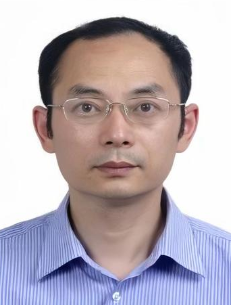 Xiaogang Qiu (邱晓刚)合作论文数National University of Defense Technology13
 Bin Chen合作论文数Anhui University11Kedi Huang (黄柯棣)合作论文数9ChunGuang Peng (彭春光)合作论文数5Ziming Zhong合作论文数4Tao-fang Sun合作论文数4Yabing Zha合作论文数National University of Defense Technology4Xu Xie合作论文数National University of Defense Technology4
 Wenshan Guo (郭文善)合作论文数Agricultural College, Yangzhou University4
 Quan-Jun Yin合作论文数4Dandan Ning合作论文数3
 Albert Y. Zomaya合作论文数School of Computer Science, Faculty of Engineering, The University of Sydney;Centre for Distributed and High-Performance Computing, The University of Sydney;The Net Zero Institute, The University of Sydney3
 Zhen Li合作论文数3Yunfei Liu合作论文数3
 Jianxing Gong合作论文数3Kazhuhiko Kobayashi合作论文数2
 Huangke Chen合作论文数2
 Zhaozhong Feng合作论文数2
 Laobing Zhang合作论文数Safety and Security Science Group (S3G), Faculty of Technology, Policy and Management, TU Delft, 2628 BX Delft, Netherlands2Si-kai LIU (刘思恺)合作论文数2Xiaoping Xu合作论文数2HU Xiao-kang (胡小康)合作论文数2
 Chen Wang合作论文数CSIRO, Data61, Sydney, NSW, Australia2Wei Duan (段伟)合作论文数College of Information Systems and Management, National University of Defense Technology;University of Amsterdam2
 Jianguo Zhu (朱建国)合作论文数Institute of Engineering Thermophysics, Chinese Academy of Sciences2
 Xiao Xu合作论文数2
 Ma Liang合作论文数2
 Jian Huang (黄健)合作论文数School of Materials Science and Engineering, Shanghai University2
 Jianyi Chen (陈建义)合作论文数College of Mechanical and Transportation Engineering, China University of Petroleum2
 Xinkai Zhu (朱新开)合作论文数Department of Agronomy, Agricultural College, Yangzhou University2
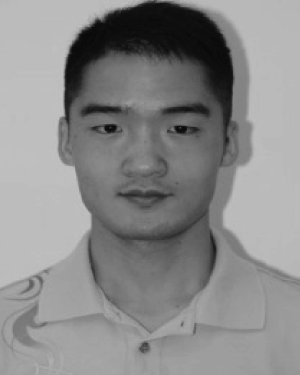 Long Qin合作论文数2
 Kazuhiko Kobayashi合作论文数Faculty of Agriculture, Ibaraki University/Graduate School of Agricultural and Life Sciences, The University of Tokyo2Xinye Zhao合作论文数2
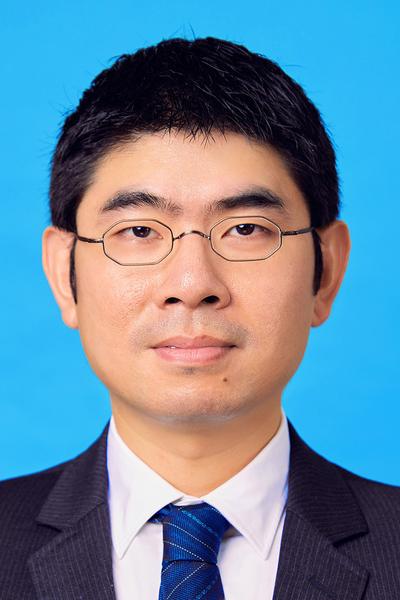 Shu Yin (殷树)合作论文数School of Information Science and Technology, ShanghaiTech University2Ying Cai合作论文数2Yaodong Wei合作论文数2Rusheng Ju合作论文数2
 Yong Peng合作论文数2K. D. Huang合作论文数1
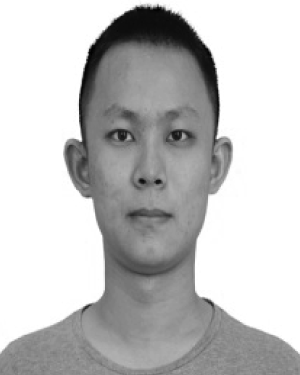 Kai Xu合作论文数1ZHONG Rong-hua (钟容华)合作论文数1Ru-Biao Zhang合作论文数1Cao feng-jiang (曹凤江)合作论文数1Mingxin Zhang合作论文数Coll Polit, Natl Def Univ1
 Peng Jiao合作论文数1Lei Huang合作论文数1




