The demand for electron coolers operating at much higher energies than previously achieved necessitates the use of radio-frequency (RF) fields for electron acceleration resulting in the bunched electron beams. Differences in the time structure of ion and electron bunches and variations in their relative timing significantly affect the cooling process. Experiments on ion beam cooling with a short electron bunch have been carried out in the CSRm storage ring at IMP (Lanzhou). Longitudinal painting by the electron bunch phase modulation is found leading to a significant ion beam loss. We show that the space charge field variations of the bunched electron beam play a major role in the ion beam emittance growth while cooling. In this paper, we study the dependency of the ion beam emittance growth on the electron beam parameters and present results of numerical simulation which support experimental observations.
The electron cooling technology is applied in the spectrometer ring (SRing) to improve the luminosity of ion beam for the High Intensity heavy-ion Accelerator Facility (HIAF). The electron cooler consists of a gun section, two 90-degree toroids, a cooling section and a collector section. There are four kinds of main coils used to provide longitudinal magnetic fields along the path of the electron beam. In this paper, we present the modeling and analyzing of the electron cooler magnets by three-dimension software. The optimizing of the magnetic field of cooling section is completed to achieve the required effective cooling length. The magnetic fields along the electron beam path and ion beam path are calculated and the beam trajectory of typical ion is also simulated to offer data for correcting the orbit.
Electron cooling method is used for the High Intensity heavy-ion Accelerator Facility (HIAF), in order to reduce the beam emittance and momentum spread of heavy ion beams, hence to improve the accuracy and luminosity of nuclear physics and atomic physics experiments. The magnetic field homogeneity of the cooling section is the key parameter related to the cooling effect. A new type of cooling section solenoid composed of several coils was used in the HIAF electron cooling device to produce a high parallelism magnetic field. In this paper, a device for the magnetic field axis measurement of high-precision coils is presented. The geometric symmetrical axis of the coil is measured by a positioning device. The radial and axial magnetic field distribution in the center plane of the coil is measured by the rotating Hall probes. Finally, the relative angle between the coil magnetic field axis and the geometric symmetrical axis is calculated by the measurement results. The accuracy of the measured angle is within ±0.10 mrad. The measured angle of the prototype coil is (1.28±0.10) mrad, which satisfies the physics requirement.
Significant beam loss caused by the charge exchange processes and ion impact-induced outgassing may restrict the maximum number of accelerated heavy ions during the high intensity operation of an accelerator. In order to control beam loss due to charge exchange processes and confine the generated desorption gas, tracking of the beam loss distribution and installation of absorber blocks with low-desorption rate material at appropriate locations in the main Cooler Storage Ring(CSRm) at the Institute of Modern Physics, Lanzhou, will be performed. The loss simulation of uranium ions with electron-loss is presented in this report and the conclusion is that most charge changed particles are lost in the second dipole of the super-period structure. The calculation of the collimation efficiency of the CSRm ring will be continued in the future.
Several solenoids are usually installed in electron cooler device to guide the motion of the electron beam in the cooler. However, the solenoids also have influence to the ion beam in the cooler storage ring. The transverse motion of the ion beam in storage ring will become coupled, if the solenoids installed in the electron cooler are not compensated perfectly. In this paper, the coupled transverse motion due to the uncompensated cooler's solenoids of CSRm (The main storage ring in the IMP, Lan Zhou, China) is studied, and the coupled beam envelopes are calculated by a new method.
An electron cooler is used to improve the quality of the ion beam in a synchrotron;however it also introduces a nonlinear electromagnetic field to the accelerator,which causes tune shift,tune spread and may drive resonances leading to ion beam loss.In this paper the tune shift and the tune spread caused by the nonlinear electromagnetic field of a hollow electron beam is investigated,and the resonance driving terms of the nonlinear electromagnetic field are analysed.The differences are presented compared with a solid electron beam.Calculations are performed for 238 U 32+ ion of energy 1.272 MeV stored in the main Cooler Storage Ring(CSRm) at the Institute of Modern Physics,Lanzhou.It is found that in this situation the nonlinear field caused by the hollow electron beam does not lead to serious resonances.
The feasibility of attaining nanosecond pulse length heavy ion beam is studied in the main ring (CSRm) of the Heavy Ion Research Facility in Lanzhou. Such heavy ion beam can be produced by non-adiabatic compression, and it is implemented by a fast rotation in the longitudinal phase space. In this paper, the possible beam parameters during longitudinal bunch compression are studied with the envelope model and Particle in Cell simulation, and the results are compared. The result shows that the short bunch 238 U 28+ with the pulse duration of about 50 ns at the energy of 200 MeV/u can be obtained which can satisfy the research of high density plasma physics experiment.
 Meitang Tang合作论文数5Xiaoming Ma合作论文数4
 Jiancheng Yang (杨建成)合作论文数Institute of Modern Physics, Chinese Academy of Sciences;University of Chinese Academy of Sciences4Lijun Mao (冒立军)合作论文数4
 Xiaodong Yang (杨晓冬)合作论文数Suzhou Institute of Biomedical Engineering and Technology, Chinese Academy of Sciences3Wenheng Zheng合作论文数3
 He Zhao (赵赫)合作论文数Institute of process Engineering, Chinese Academy of Sciences;University of Chinese Academy of Sciences3Haijiao Lu合作论文数2MA Fu (马伏)合作论文数2Peng Li合作论文数2
 Shuang Ruan合作论文数2
 Bo Wu (吴波)合作论文数中国科学院大气物理研究所2Wen-Wen Ge (葛文文)合作论文数1Ming-bang LV (吕明邦)合作论文数1Xiang Zhang合作论文数1Yuquan Chen合作论文数1Peng Shang (商鹏)合作论文数1
 王耿合作论文数西南科技大学1
 Youjin Yuan (原有进)合作论文数Institute of Modern Physics, Chinese Academy of Sciences1
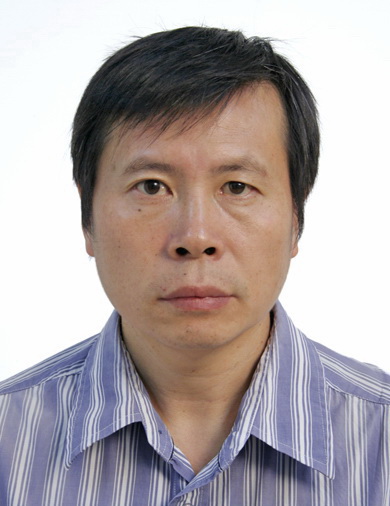 Jiawen Xia (夏佳文)合作论文数Institute of Modern Physics, Chinese Academy of Sciences;University of Chinese Academy of Sciences1
 Lizhen Ma (马力祯)合作论文数中国科学院大学近代物理研究所1Youjing Yuan合作论文数1Yang Yanbing合作论文数1
 Geng Wang (汪耕)合作论文数上海汽轮发电机有限公司1
 Weiping Chai (柴伟平)合作论文数Institute of Modern Physics, Chinese Academy of Sciences;University of Chinese Academy of Sciences1
 Yong Liu合作论文数Institute of Information Engineering, Chinese Academy of Sciences1
 Jie Li (李杰)合作论文数School of Mathematics and Physics, University of Science and Technology Beijing1
 Lixia Zhao (赵丽霞)合作论文数School of Electronics & Information Engineering, Tiangong University1
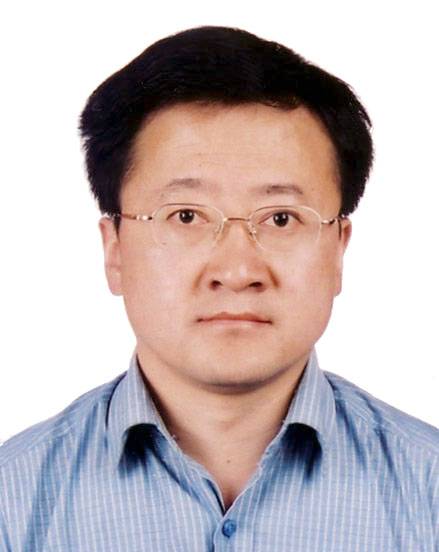 Hongwei Zhao (赵红卫)合作论文数Institute of Modern Physics, Chinese Academy of Sciences;University of Chinese Academy of Sciences1
 Qinggao Yao (姚庆高)合作论文数Institute of Modern Physics, Chinese Academy of Sciences;University of Chinese Academy of Sciences1Dayu Yin (殷达钰)合作论文数1Tailai Yan (严泰来)合作论文数College of Information and Electrical Engineering, China Agricultural University1




