Fault-tolerant quantum computation requires logical operations that manipulate encoded information while preserving quantum error-correction protection. In planar surface-code architectures, code deformation and lattice surgery provide a local, measurement-based route to such operations. Here we experimentally realize key elements of patch-based surface-code logical processing on a 107-qubit superconducting quantum processor. We first implement a reusable primitive layer comprising merge and split, patch expansion and shrinkage, and deformations mediated by domain walls and twist defects. We then compose these primitives to realize logical state routing, the logical controlled-NOT gate, and the single-qubit Hadamard and phase gates, which together form a Clifford-generating set. All operations are implemented on distance-three rotated surface-code patches with multi-round syndrome extraction and neural-network decoding, without post-selection. Our results advance superconducting surface-code experiments from protected logical memory to active, patch-based fault-tolerant logical operations.
Characterizing quantum phases-of-matter at finite-temperature is essential for understanding complex materials and large-scale thermodynamic phenomena. Here, we develop algorithmic protocols for simulating quantum thermodynamics on quantum hardware through quantum kernel function expansion (QKFE), producing the free energy as an analytic function of temperature with uniform convergence. These protocols are demonstrated by simulating transverse field Ising and XY models with superconducting qubits. In both analogue and digital implementations of the QKFE algorithms, we exhibit quantitative agreement of our quantum simulation experiments with the exact results. Our approach provides a general framework for computing thermodynamic potentials on programmable quantum devices, granting access to key thermodynamic properties such as entropy, heat capacity and criticality, with far-reaching implications for material design and drug development.
Quantum error correction (QEC) enables practical quantum computing by encoding logical qubits in many physical qubits, which can exponentially suppress the logical error rate with increasing code size provided that the physical error rate is below a critical threshold. However, the leakage of quantum information from the computational subspace presents a critical challenge to the development of scalable QEC, which creates long-lived, correlated errors that spread across space and time. Here, we demonstrate a quantum memory operating below the threshold by implementing an all-microwave leakage suppression architecture on a distance-7 surface code. We achieve a logical error suppression factor of Λ=1.40(6), definitively reversing the above-threshold scaling (Λ<1) caused by unmitigated leakage. This scheme integrates a hardware-efficient leakage reduction unit for data qubits with a fast, unconditional reset for ancilla qubits, suppressing the average leakage population after 40 cycles by a factor of 72 to 6.4(5)×10^{-4}. Our results demonstrate the viability of all-microwave control architectures for suppressing critical errors at scale, paving the way for more advanced quantum error correction implementations.
Symmetry-protected topological (SPT) phases are fundamental features of cluster states, serving as key resources for measurement-based quantum computation (MBQC). Generating large-scale cluster states and verifying their SPT phases are essential steps toward practical MBQC, which however still presents significant experimental challenges. In this work, we address these challenges by utilizing advanced superconducting hardware with optimized gate operations, enhanced readout fidelity, and error mitigation techniques. We successfully generate and verify 95-qubit one-dimensional and 72-qubit two-dimensional genuine entangled cluster states, achieving fidelities of 0.5603 ± 0.0084 and 0.5519 ± 0.0054, respectively. Leveraging these high-fidelity cluster states, we investigate SPT phases through quantum teleportation across all 95 qubits and demonstrate input-state-dependent robustness against symmetry-breaking perturbations, highlighting the practicality and intrinsic robustness of MBQC enabled by the SPT order. Our results represent a significant advancement in large-scale entanglement generation and topological phase simulation, laying the foundation for scalable and practical MBQC using superconducting quantum systems.
In the relentless pursuit of quantum computational advantage, we present a significant advancement with the development of Zuchongzhi 3.0. This superconducting quantum computer prototype, comprising 105 qubits, achieves high operational fidelities, with single-qubit gates, two-qubit gates, and readout fidelity at 99.90%, 99.62%, and 99.13%, respectively. Our experiments with an 83-qubit, 32-cycle random circuit sampling on the Zuchongzhi 3.0 highlight its superior performance, achieving 1×10^{6} samples in just a few hundred seconds. This task is estimated to be infeasible on the most powerful classical supercomputers, Frontier, which would require approximately 5.9×10^{9} yr to replicate the task. This leap in processing power places the classical simulation cost 6 orders of magnitude beyond Google's SYC-67 and SYC-70 experiments [Morvan et al., Nature 634, 328 (2024)10.1038/s41586-024-07998-6], firmly establishing a new benchmark in quantum computational advantage. Our work not only advances the frontiers of quantum computing but also lays the groundwork for a new era where quantum processors play an essential role in tackling sophisticated real-world challenges.
The development of high-fidelity two-qubit quantum gates is essential for digital quantum computing. Here, we propose and realize an all-microwave parametric controlled-Z (CZ) gates by coupling strength modulation in a superconducting Transmon qubit system with tunable couplers. After optimizing the design of the tunable coupler together with the control pulse numerically, we experimentally realized a 100 ns CZ gate with high fidelity of 99.38% ± 0.34% and the control error being 0.1%. We note that our CZ gates are not affected by pulse distortion and do not need pulse correction, providing a solution for the real-time pulse generation in a dynamic quantum feedback circuit. With the expectation of utilizing our all-microwave control scheme to reduce the number of control lines through frequency multiplexing in the future, our scheme draws a blueprint for the high-integrable quantum hardware design.
To ensure a long-term quantum computational advantage, the quantum hardware should be upgraded to withstand the competition of continuously improved classical algorithms and hardwares. Here, we demonstrate a superconducting quantum computing systems Zuchongzhi 2.1, which has 66 qubits in a two-dimensional array in a tunable coupler architecture. The readout fidelity of Zuchongzhi 2.1 is considerably improved to an average of 97.74%. The more powerful quantum processor enables us to achieve larger-scale random quantum circuit sampling, with a system scale of up to 60 qubits and 24 cycles, and fidelity of FXEB=(3.66±0.345)×10-4. The achieved sampling task is about 6 orders of magnitude more difficult than that of Sycamore [Nature 574, 505 (2019)] in the classic simulation, and 3 orders of magnitude more difficult than the sampling task on Zuchongzhi 2.0 [arXiv:2106.14734 (2021)]. The time consumption of classically simulating random circuit sampling experiment using state-of-the-art classical algorithm and supercomputer is extended to tens of thousands of years (about 4.8×10⁴ years), while Zuchongzhi 2.1 only takes about 4.2 h, thereby significantly enhancing the quantum computational advantage.
Yangsen Ye,1, 2, 3 Sirui Cao,1, 2, 3 Yulin Wu,1, 2, 3 Xiawei Chen,2 Qingling Zhu,1, 2, 3 Shaowei Li,1, 2, 3 Fusheng Chen,1, 2, 3 Ming Gong,1, 2, 3 Chen Zha,1, 2, 3 He-Liang Huang,1, 2, 3, 4 Youwei Zhao,1, 2, 3 Shiyu Wang,1, 2, 3 Shaojun Guo,1, 2, 3 Haoran Qian,1, 2, 3 Futian Liang,1, 2, 3 Jin Lin,1, 2, 3 Yu Xu,1, 2, 3 Cheng Guo,1, 2, 3 Lihua Sun,1, 2, 3 Na Li,1, 2, 3 Hui Deng,1, 2, 3 Xiaobo Zhu,1, 2, 3, ∗ and Jian-Wei Pan1, 2, 3 Hefei National Laboratory for Physical Sciences at the Microscale and Department of Modern Physics, University of Science and Technology of China, Hefei 230026, China Shanghai Branch, CAS Center for Excellence in Quantum Information and Quantum Physics, University of Science and Technology of China, Shanghai 201315, China Shanghai Research Center for Quantum Sciences, Shanghai 201315, China Henan Key Laboratory of Quantum Information and Cryptography, Zhengzhou 450000, China
High-fidelity two-qubit gates are essential for the realization of large-scale quantum computation and simulation. Tunable coupler design is used to reduce the problem of parasitic coupling and frequency crowding in many-qubit systems and thus thought to be advantageous. Here we design an extensible 5-qubit system in which center transmon qubit can couple to every four near-neighboring qubits via a capacitive tunable coupler and experimentally demonstrate high-fidelity controlled-phase (CZ) gate by manipulating central qubit and one near-neighboring qubit. Speckle purity benchmarking and cross entropy benchmarking are used to assess the purity fidelity and the fidelity of the CZ gate. The average purity fidelity of the CZ gate is 99.69±0.04% and the average fidelity of the CZ gate is 99.65±0.04%, which means that the control error is about 0.04%. Our work is helpful for resolving many challenges in implementation of large-scale quantum systems.
Scaling up to a large number of qubits with high-precision control is essential in the demonstrations of quantum computational advantage to exponentially outpace the classical hardware and algorithmic improvements. Here, we develop a two-dimensional programmable superconducting quantum processor, Zuchongzhi, which is composed of 66 functional qubits in a tunable coupling architecture. To characterize the performance of the whole system, we perform random quantum circuits sampling for benchmarking, up to a system size of 56 qubits and 20 cycles. The computational cost of the classical simulation of this task is estimated to be 2-3 orders of magnitude higher than the previous work on 53-qubit Sycamore processor [Nature 574, 505 (2019)NATUAS0028-083610.1038/s41586-019-1666-5. We estimate that the sampling task finished by Zuchongzhi in about 1.2 h will take the most powerful supercomputer at least 8 yr. Our work establishes an unambiguous quantum computational advantage that is infeasible for classical computation in a reasonable amount of time. The high-precision and programmable quantum computing platform opens a new door to explore novel many-body phenomena and implement complex quantum algorithms.
Quantum key distribution (QKD) uses individual light quanta in quantum superposition states to guarantee unconditional communication security between distant parties. However, the distance over which QKD is achievable has been limited to a few hundred kilometres, owing to the channel loss that occurs when using optical fibres or terrestrial free space that exponentially reduces the photon transmission rate. Satellite-based QKD has the potential to help to establish a global-scale quantum network, owing to the negligible photon loss and decoherence experienced in empty space. Here we report the development and launch of a low-Earth-orbit satellite for implementing decoy-state QKD-a form of QKD that uses weak coherent pulses at high channel loss and is secure because photon-number-splitting eavesdropping can be detected. We achieve a kilohertz key rate from the satellite to the ground over a distance of up to 1,200 kilometres. This key rate is around 20 orders of magnitudes greater than that expected using an optical fibre of the same length. The establishment of a reliable and efficient space-to-ground link for quantum-state transmission paves the way to global-scale quantum networks.
In the process of the quantum key distribution based on the polarization coding of photons, the polarization state will be affected strongly and randomly by the birefringence effect of the single-mode fibers, which will lead to decrease the final secure key rate. Fortunately, this undesirable effect of single-mode fibers can be corrected by the combination of two quarter-wave plates and a half-wave plate. Utilizing the combination of three wave plates as the actuator, we build a simulation model of real-time polarization compensation based on stochastic parallel gradient descent algorithm. We study the relationship among the amplitude of the random disturbance, the gain factor and the convergent rate. Furthermore, we implement an experiment to demonstrate the algorithm we proposed. The results of the experiment show that the polarization extinction ratio of the simulation system can be corrected well after a certain number of iterations.
 Jian-Wei Pan (潘建伟)合作论文数Division of Quantum Physics and Quantum Information, University of Science and Technology of China11
 Yangsen Ye合作论文数10
 Sirui Cao合作论文数10Haoran Qian合作论文数10
 Chen Zha合作论文数Hefei Natl Lab Phys Sci Microscale, Univ Sci & Technol China10
 Qingling Zhu合作论文数10Shaowei Li合作论文数10Fusheng Chen合作论文数10Jin Lin合作论文数10
 Xiaobo Zhu (朱晓波)合作论文数Division of Quantum Physics and Quantum Information, University of Science and Technology of China;Shanghai Institute for Advanced Studies, University of Science and Technology of China10
 Hui Deng (邓辉)合作论文数Division of Quantum Physics and Quantum Information, University of Science and Technology of China10
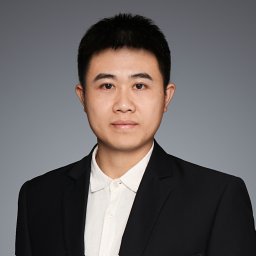 He-Liang Huang (黄合良)合作论文数Henan Key Laboratory of Quantum Information and Cryptography, Information Engineering University9Futian Liang合作论文数9
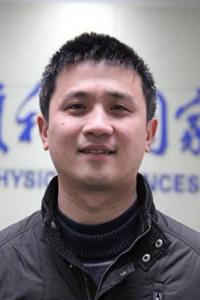 Chengzhi Peng (彭承志)合作论文数Shanghai Institute for Advanced Studies, University of Science and Technology of China9Yu Xu合作论文数9Youwei Zhao合作论文数9Kai Yan合作论文数8Chong Ying合作论文数8Hao Rong合作论文数8Na Li合作论文数8
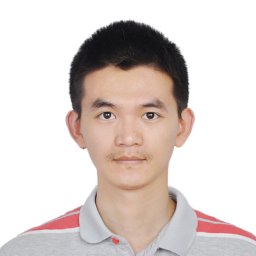 Cheng Guo合作论文数Peking University, Peking University8
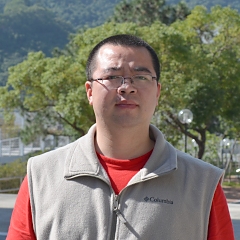 Ming Gong (龚明)合作论文数School of Physical Sciences, University of Science and Technology of China;CAS Key Laboratory of Quantum Information, University of Science and Technology of China8
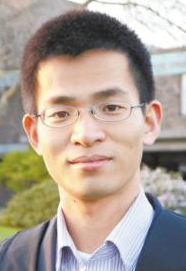 Chao-Yang Lu (陆朝阳)合作论文数Division of Quantum Physics and Quantum Information, University of Science and Technology of China;Shanghai Institute for Advanced Studies, University of Science and Technology of China8
 Haibin Zhang合作论文数7Daojin Fan合作论文数Univ Sci & Technol China, Hefei Natl Lab Phys Sci Microscale, Hefei 230026, Peoples R China7
 Yiming Zhang合作论文数Shanghai Res Ctr Quantum Sci7
 Yongheng Huo (霍永恒)合作论文数Shanghai Institute for Advanced Studies, University of Science and Technology of China7
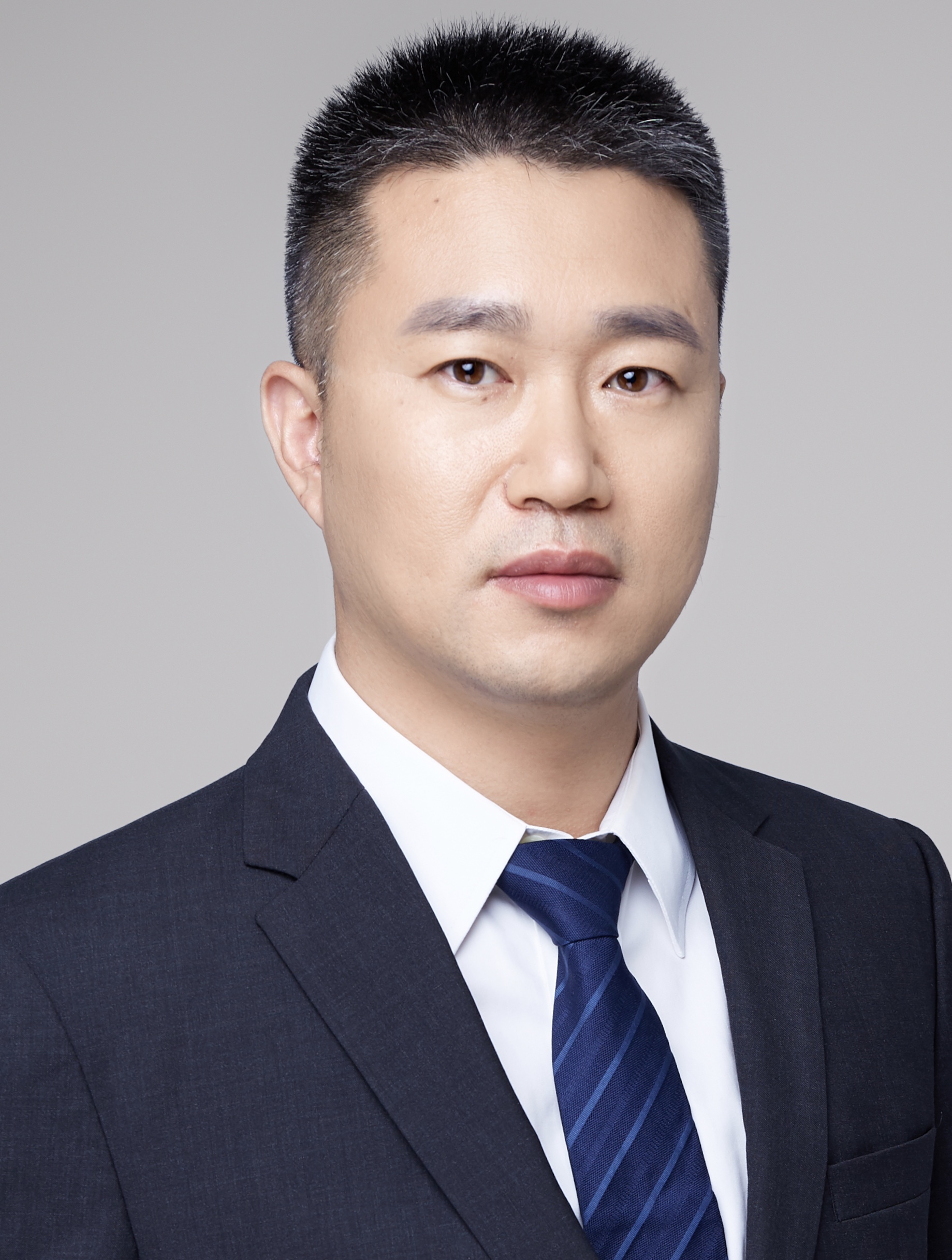 Shaojun Guo (郭少军)合作论文数School of Materials Science and Engineering, Peking University7
 Jiale Yu合作论文数7Hong Su合作论文数6Lihua Sun合作论文数6Dachao Wu合作论文数Univ Sci & Technol China, Hefei Natl Lab Phys Sci Microscale, Hefei 230026, Peoples R China5Shiyu Wang合作论文数5
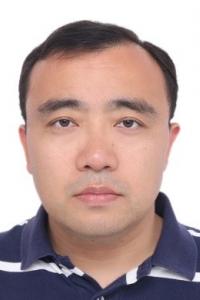 Qiang Zhang (张强)合作论文数Division of Quantum Physics and Quantum Information, University of Science and Technology of China5Zuolin Wei合作论文数4Tan He合作论文数4Yuwei Ma合作论文数4Dong-Dong Li合作论文数4
 Yu-Huai Li (李宇怀)合作论文数Division of Quantum Physics and Quantum Information, Shanghai Institute for Advanced Studies, University of Science and Technology of China4Lianchen Han合作论文数3
 Su Feifan合作论文数3Dan Qiao合作论文数2Yajie Du合作论文数2Jianghan Yin合作论文数2Linyin Hong合作论文数2
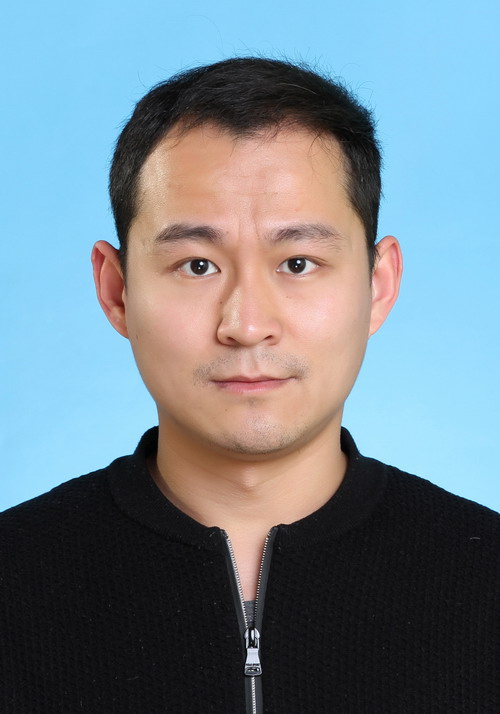 Liang Zhang (张亮)合作论文数Key Laboratory of Space Active Optical-Electro Technology, Shanghai Institute of Technical Physics, Chinese Academy of Sciences;University of Chinese Academy of Sciences2
 Fei Zhou (周飞)合作论文数Innovation Academy for Precision Measurement Science and Technology, Chinese Academy of Sciences;University of Chinese Academy of Sciences;Wuhan Institute of Physics and Mathematics, Chinese Academy of Sciences2LIU Wei-yue合作论文数2
 Mingcheng Chen (陈明城)合作论文数Shanghai Institute for Advanced Studies, University of Science & Technology of China;Division of Quantum Physics and Quantum Information, University of Science & Technology of China2




