This paper provides an in-depth analysis of the software overheads in the MPI performance-critical path and exposes mandatory performance overheads that are unavoidable based on the MPI-3.1 specification. We first present a highly optimized implementation of the MPI-3.1 standard in which the communication stack---all the way from the application to the low-level network communication API---takes only a few tens of instructions. We carefully study these instructions and analyze the root cause of the overheads based on specific requirements from the MPI standard that are unavoidable under the current MPI standard. We recommend potential changes to the MPI standard that can minimize these overheads. Our experimental results on a variety of network architectures and applications demonstrate significant benefits from our proposed changes.
MPI one-sided or remote memory access (RMA) communication provides a different execution model from traditional two-sided or group communication and is better suited for some classes of applications. However, current implementations of MPI RMA are notorious for their inability to scale to large systems or problem sizes. In this paper, we present a study of the RMA infrastructure in popular open-source MPI implementations. Our objective is to identify critical scalability limitations with respect to memory usage in these implementations. We then perform a thorough evaluation on two cluster computers to demonstrate those scalability limitations, and we provide suggestions on how they can be alleviated.
In recent years more and more applications have been using irregular computation models in various domains such as bioinformatics and social network analysis. Traditional data movement approaches are not well suited for such applications because of the irregular communication patterns, sparse data structures, fast growth rate of data movement as system size or problem size rises, and so forth. Active Messages (AM) is an alternative programming paradigm that is more suitable for irregular computations. It allows small pieces of data to be dynamically moved to the remote process and certain computation to be triggered, and the remote process does not need to explicitly receive the data. In this paper, an outline of the first author's Ph.D. thesis, focusing on runtime support for irregular computation, is presented. In the first part, we combine the capability of AM with traditional MPI data movement patterns; and we propose a generalized MPI-interoperable AM framework (MPI-AM). In the second part, we extend the MPI-AM framework to provide a model of dynamic task parallelism for data-driven computation. In each part we describe critical issues, demonstrate the current status of the work and performance gain, and discuss remaining challenges to be solved.
The synchronization model of the MPI one-sided communication paradigm can lead to serialization and latency propagation. For instance, a process can propagate non-RMA communication-related latencies to remote peers waiting in their respective epoch-closing routines in matching epochs. In this work, we discuss six latency issues that were documented for MPI-2.0 and show how they evolved in MPI-3.0. Then, we propose entirely nonblocking RMA synchronizations that allow processes to avoid waiting even in epoch-closing routines. The proposal provides contention avoidance in communication patterns that require back to back RMA epochs. It also fixes the latency propagation issues. Moreover, it allows the MPI progress engine to orchestrate aggressive schedulings to cut down the overall completion time of sets of epochs without introducing memory consistency hazards. Our test results show noticeable performance improvements for a lower-upper matrix decomposition as well as an application pattern that performs massive atomic updates.
 song zhong (重松)合作论文数16tian wu (武田)合作论文数12tian jiao (角田)合作论文数11dao zhong (中島)合作论文数11
 William D. Gropp合作论文数Siebel School of Computing and Data Science, The Grainger College of Engineering, University of Illinois, Urbana-Champaign;National Center for Supercomputing Applications, University of Illinois, Urbana-Champaign8shan zhu (築山)合作论文数7ben gang (岡本)合作论文数6dai ya (雅代)合作论文数5zhi zhi (智之)合作论文数5hu ba (八戸)合作论文数4gu xiong (熊谷)合作论文数4shang jing (井上)合作论文数4
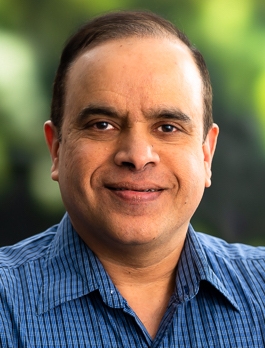 Rajeev Thakur合作论文数University of Chicago;Data Science and Learning Division ,Argonne National Laboratory4
 Pavan Balaji合作论文数Mathematics and Computer Science Division,;Argonne National Laboratory4da yi (伊達)合作论文数3ze teng (藤沢)合作论文数3kou gu (谷口)合作论文数3song ping (平松)合作论文数3shui quan (泉水)合作论文数3tian shi (石田)合作论文数3li sheng (勝利)合作论文数2kou ban (坂口)合作论文数2qiao tu (土橋)合作论文数2ben mu (木本)合作论文数2teng zuo (佐藤)合作论文数2mu ling (鈴木)合作论文数2zhong tian (田中)合作论文数2Ahmad Afsahi合作论文数2David Goodell合作论文数2
 Judicael A. Zounmevo合作论文数Queen's University2Masamichi Takagi合作论文数1
 Jithin Jose合作论文数1zhihong man (满志弘)合作论文数1fu ze (則夫)合作论文数1sen da (大森)合作论文数1er kang (康二)合作论文数1Tomislav Janjusic合作论文数1xia shan (山下)合作论文数1sheng yi li song (昇一 立松)合作论文数1mu huang (荒木)合作论文数1




