Anchor-based multi-view clustering models are widely adopted for its efficiency with large-scale data. However, the prevalent view-specific anchor generation often causes semantic inconsistency in anchors sharing the same index across views. Moreover, existing solutions that employ permutation matrices lack guidance from anchor similarity. To address this fundamental problem, we propose a novel Collaborative Anchor Graph Learning with Similarity-Guided Alignment (CAGL-SGA) model through three collaboratively designed modules: 1) An Anchor-wise Adaptive Graph Learning (AAGL) module that jointly learns anchor graphs and their similarity graphs via a bidirectional objective while uncovering the underlying manifold structure of the data; 2) A Rearrange Anchor Similarities (RAS) module that mitigates cross-view semantic inconsistencies through the introduction of permutation matrices and a consensus anchor graph, thereby achieving structural alignment of anchor similarity graphs; and 3) An Anchor Representation Alignment (ARA) module that leverages the learned permutation matrices to guide anchor graphs into a coherent semantic space. These modules are systematically integrated into a unified optimization framework. An algorithm is designed to solve the proposed model. Comprehensive experiments on ten benchmark datasets against nine state-of-the-art baselines demonstrate that the proposed model delivers outstanding clustering performance with high efficiency. The source code is available on https://github.com/guowei1314/CAGL-SGA.
Multimodal image fusion integrates complementary information from different modalities. However, large cross-modal discrepancies and local conflicts often introduce uncertainty into fusion decisions. This uncertainty can bias modality allocation in inconsistent regions, leading to information loss or the propagation of artifacts. Therefore, we address this problem by formally casting image fusion as an integrated probabilistic decision system that couples prior decision-making with posterior risk minimization. Based on this view, we propose a dIfference-aware Decision-lEArning muLtimodal image fusion paradigm (IDEAL). It treats cross-modal differences as decision triggers and learns contribution policies conditioned on local conditions. Specifically, we use a difference-attention module to generate multi-scale difference maps as spatial decision conditions. We also obtain spectral conditions by projecting features into the frequency domain, where power-spectrum energy, complementary spectra, and spectral-entropy reliability characterize modality discrepancy and reliability. We then employ a symmetric Beta prior to map these decision conditions to gating weights, yielding explicit and interpretable modality contribution policies. To improve robustness, we introduce an uncertainty modulation mechanism that reverts the policy to conservative mixing when conditions is insufficient. Extensive experiments demonstrate stable and competitive performance.
Traditional multi-view clustering (MVC) methods typically assume that all views are static and simultaneously available, which severely limits their applicability in dynamic streaming environments. While a few studies have extended MVC to streaming settings, effective knowledge guidance is often lacking. Under these conditions, previously learned prototype knowledge is continuously disturbed by newly arriving views, making prototypes from different categories increasingly similar and weakening category distinctions. This degradation ultimately leads to knowledge collapse, where categories can no longer be reliably distinguished. To address this issue, we propose a CLIP-driven lifelong multi-view clustering framework, termed CLIP-Driven Lifelong Multi-view Clustering (CLIP-LMC), to alleviate knowledge collapse. In lifelong multi-view learning, CLIP-LMC first constructs reliable prototypes through a CLIP-driven Prototype Generation module and uses them as stable prototype knowledge distributions to guide subsequent updates. Then, a Knowledge Adaptation module performs knowledge alignment while enabling the prototypes to better adapt to distributional changes in the current view data. Finally, a Knowledge Guidance module conducts knowledge alignment and periodic calibration during the updating process, thereby suppressing knowledge collapse throughout iterative learning. Extensive experimental results demonstrate that CLIP-LMC yields a more stable clustering process and achieves superior overall performance in both static and streaming multi-view clustering tasks.
In semi‑supervised multi‑view classification (SMVC), scarce labels and noisy unlabeled data impair feature aggregation and compromise prediction reliability, while existing methods lack principled guidance and interpretability. To overcome these limitations, we propose a novel unified SMVC framework, Neural Collapse Priors Driven Trust Semi-Supervised Multi-View Classification (NCPD-TSMVC), building upon neural collapse–derived prototype priors and evidential opinion fusion. Concretely, we rigorously prove under neural collapse theory that normalized classifier weights from the labeled‑data pre‑training stage coincide with class centroids in feature space, conferring maximal inter‑class separation and optimal within‑class compactness. These prototype priors permeate the entire learning pipeline, calibrating the representation learning of unlabeled samples to obtain highly discriminative embeddings. Simultaneously, our evidential learning module quantifies epistemic uncertainty and fuses view‑level opinions at the evidence level, yielding robust and transparent decision making. Extensive evaluations across diverse benchmarks demonstrate that NCPD‑TSMVC surpasses state‑of‑the‑art SMVC approaches in performance, robustness and interpretability.
Multimodal Summarization (MMS) targets the generation of concise and semantically coherent summaries by synergistically exploiting textual and visual inputs, which has emerged as a pivotal task in cross-modal learning and neural network-based information processing. However, existing methodologies still face significant challenges in fully unlocking the potential of cross-modal information fusion. Specifically, we identify two core limitations: (1) The inherent representational and semantic discrepancies between textual and visual modalities impede the fine-grained alignment of task-relevant content, undermining the integrity of cross-modal reasoning; (2) The relatively explicit and structured nature of textual information leads models to over-rely on the textual stream, resulting in systematic underutilization of discriminative visual cues. To address these issues, we propose BiMaskSum, a novel Bidirectional Masking framework tailored for multimodal summarization that enables symmetric vision-language masking. BiMaskSum introduces a dual-modal masked modeling paradigm, which incentivizes the model to reconstruct masked textual tokens or visual regions under the supervision of the complementary modality, enhancing cross-modal semantic grounding and abstractive representation learning. Furthermore, we design a vision-centric summarization objective that enforces the model to generate semantically complete summaries solely from visual sequences, establishing a direct mapping between visual content and summary semantics while mitigating textual dominance during training. Extensive experiments conducted on the MMSS benchmark demonstrate that BiMaskSum achieves state-of-the-art (SOTA) performance, with ROUGE-1/2/L scores of 54.97/31.97/51.09, which consistently outperforms a suite of strong baselines.
Anchor-based multi-view clustering has advanced significantly due to its accuracy and computational efficiency. However, it relies on the assumption that data across views are fully paired, which is often violated in practice due to asynchronous data collection. This hampers the ability to capture inter-view consistency and complementarity. Few studies have addressed this via bipartite graph alignment, but the challenges about energy disharmony and loss between bipartite graphs caused by unpaired and unbalanced anchors remain unexplored. To address this challenge, this study develops a novel framework named Energy-preserving Shifted Bipartite Graph Learning (ESBGL) for unpaired large-scale multi-view clustering to ensure energy harmony and preservation. Specifically, ESBGL simultaneously proposes anchor alignment learning and bipartite graph learning techniques to align anchors and bipartite graphs across views, which could avoid energy disharmony between bipartite graphs. Subsequently, a shifted bipartite graph learning paradigm is designed to preserve the cluster information and significant energy of the final consensus bipartite graph. Extensive experiments and evaluations have proved the effectiveness and superiority of our ESBGL.
Stream View Clustering (SVC) aims to handle view data that is continuously acquired over time. Existing SVC methods align and update the knowledge of newly arrived views with the historical knowledge repository to promote consistency of different view data. However, in streaming scenarios, the arrival sequence of views is unpredictable and continuously evolving. Consequently, early-arriving views tend to dominate the training process, while the subsequently collected views struggle to refine the existing clustering results, resulting in performance bias across different sequences, i.e. Sequential Dependency Problem (SDP). Additionally, the collected data inevitably suffer from the Partial Sample-missing Problem (PSP), which leads to significant biases in the knowledge learned from different views, thereby further exacerbating the SDP. To address these challenges, we propose Adaptive hardness-Driven dictionary distillAtion for incomPlete streaming view clusTering (ADAPT), which is designed to mitigate the adverse effects caused by SDP and PSP. Specifically, we designate the first collected complete view as the teacher view and construct the initial teacher knowledge base through dictionary learning. During subsequent view learning, we employ the teacher prompting imputation strategy to address the PSP problem and ensure the completeness of the collected data. To mitigate the SDP, we propose adaptive hardness-driven dictionary distillation, which can dynamically adjust the distillation strategy according to view quality, thereby enabling robust knowledge learning under different sequences of views. Finally, we introduce cluster guidance learning to further enhance the compactness of the clustering structure, while updating the teacher knowledge base through teacher knowledge summarization. Extensive experiments demonstrate that ADAPT significantly outperforms state-of-the-art methods.
Infrared and visible image fusion (IVIF) technology has become a frontier of great interest due to the ability to integrate information from multiple sources. However, the progressive slowdown of weight updates in deep networks (i.e., “network laziness” phenomenon), makes existing methods far from realizing the full characterization potential. To this end, we propose a lightweight fusion method for IVIF, Anti-Inert Dynamic Fusion (AIDFusion), to fully utilize the potential of the network at all levels. Specifically, by progressively regulating the collaborative Learning process of multi-level prediction in the network, Dynamic Inertia Inhibition Learning Strategy (DIILS) is proposed to adaptively and efficiently inhibit inertia accumulation. Subsequently, to deeply explore the representation potential while breaking through the performance threshold, lightweight Multi-dimensional modulation fusion module (MMFM) is specifically proposed to capture comprehensive multi-view and multi-scale features efficiently. Finally, considering the semantic bias between the prediction maps of DIILS and the fusion feature of MMFM, Fourier Analysis Convolution (FAConv) is designed in feature recovery as a bridge between prediction and fusion to accomplish the implicit periodic modeling. Based on the above study, extensive experiments on three public IVIF datasets demonstrate the dual advantages of AIDFusion in terms of fusion performance and computational overhead compared to state-of-the-art baseline methods.
Audio-Visual Question Answering (AVQA) necessitates the synergistic analysis of visual entities, auditory cues, and their inherent spatio-temporal interactions for robust question answering, serving as a critical benchmark for evaluating next-generation multimodal perception and cross-modal understanding enabled by audio-visual generative paradigms. This task confronts two critical challenges: (i) facilitating effective spatio-temporal reasoning across heterogeneous multimodal data, and (ii) realizing fine-grained cross-modal alignment to underpin precise semantic understanding. To address these challenges, we propose a novel Adaptive Spatio-Temporal Reasoning Model (ASTRM). Specifically, ASTRM incorporates a Contextual Spatio-Temporal Reasoning (CSTR) component, which adaptively localizes question-aware audiovisual segments and visual entities. Furthermore, a Fine-Grained Information Reasoning (FGIR) module enhances visual representations by encoding multi-granular semantic details and fusing them with query-driven audio-visual dynamics. Finally, an answer generation decoder produces predictions leveraging learnable query embeddings. Extensive experiments demonstrate that our model delivers state-of-the-art (SOTA) performance on three benchmark datasets: MUSIC-AVQA (77.04%), MUSIC-AVQA-R (72.27%), and AVQA (91.3%). These results validate the efficacy of the proposed model in addressing complex multimodal reasoning challenges inherent to AVQA tasks, while highlighting its potential to inform generative audio-visual architectures for enhanced pattern recognition and cross-modal perception.
Multi-modal image fusion aims to enhance scene interpretation by integrating complementary cues from heterogeneous sources. Achieving high-quality fusion relies on maintaining a balanced contribution from each modality to preserve their respective informative content. However, variations in semantic distributions and data quality across modalities often lead to fusion imbalance, causing asymmetric suppression of cross-modal features and the omission of low-contrast, yet essential details, ultimately undermining scene comprehension. To address this challenge, we propose a Related pixel Aware Intensity-guided Network for balanced multi-modal image fusion (RAIN), tailored for generalized multi-modal image fusion. RAIN enables fine-grained semantic-level balancing under varying conditions by modeling the intrinsic link between pixel intensity and semantic information, allowing it to dynamically derive optimal fusion strategies from inherently imbalanced modalities. Concretely, we introduce a specially designed loss function that leverages prior-aware pixel intensity statistics, guiding adaptive modality contribution by simultaneously considering both the fused output and semantic predictions. Additionally, we present the Intensity-Aware Modality Balancing Unit (IMBU), which narrows the quality gap between modalities and mitigates semantic loss. To further refine fusion quality and cross-modal semantic encoding, RAIN incorporates a Spatial-Channel Attention (SCA) module and a Modality Interaction and Complementation (MIC) mechanism. Experimental results across diverse benchmarks demonstrate that RAIN achieves superior fusion quality and effective modality balancing.
Anchor-based strategies have become the dominant paradigm for large-scale multi-view clustering, where the quality and representational capacity of anchors are crucial to clustering performance. Existing methods typically learn anchors adaptively, focusing only on dynamically selecting anchors from the original data. However, these methods often lack an information-theoretic metric to evaluate how effectively the selected anchors capture the intrinsic characteristics of their respective clusters. Moreover, few approaches attempt to enhance the internal structure of anchor matrix to further improve clustering performance. To address these challenges, we propose a novel Anchor-Driven High-Throughput Encoding (ADHTE) framework that optimizes anchors by maximizing their throughput encoding capacity. In this method, the High-Throughput Encoding rate serves as a metric for anchor effectiveness, and we employ a deep neural network to optimize the anchor matrix. In addition, we predefine a clustering indicator matrix to construct a consistent anchor matrix across views, thereby ensuring anchor alignment. Furthermore, we propose an edge-alignment learning scheme to produce a bipartite graph with consistent edges across views. Extensive experiments on eight benchmark datasets demonstrate that the proposed ADHTE framework exhibits superior effectiveness and robustness compared to other state-of-the-art methods. The code of this paper is released on https://github.com/enjoypiker/ADHTE.
In recent years, anchor and hash-based multi-view clustering methods have gained attention for their efficiency and simplicity in handling large-scale data. However, existing methods often overlook the interactions among multi-view data and higher-order cooperative relationships during projection, negatively impacting the quality of hash representation in low-dimensional spaces, clustering performance, and sensitivity to noise. To address this issue, we propose a novel approach named Tensor-Interacted Projection and Cooperative Hashing for Multi-View Clustering(TPCH). TPCH stacks multiple projection matrices into a tensor, taking into account the synergies and communications during the projection process. By capturing higher-order multi-view information through dual projection and Hamming space, TPCH employs an enhanced tensor nuclear norm to learn more compact and distinguishable hash representations, promoting communication within and between views. Experimental results demonstrate that this refined method significantly outperforms state-of-the-art methods in clustering on five large-scale multi-view datasets. Moreover, in terms of CPU time, TPCH achieves substantial acceleration compared to the most advanced current methods.
Image set classification (ISC) has obtained extensive attention with the continuous development of information technology. Different from the traditional single image classification, ISC mainly utilizes image set to improve classification performance instead of an individual image, which could effectively utilize more information from the set to mitigate various appearance variations. Most existing ISC methods learn effective real-value latent discriminative representation, which could suffer from large computational complexity, thereby directly affecting the practical applications for large-scale data scenes. Recently, image hashing has emerged as an effective solution due to its low computational requirements. However, existing hashing based ISC methods often ignore consistency and specificity properties in image sets, which makes it difficult to explore the relationship information from different sets. To overcome the above limitation, we propose a novel Consistent and Specific Hashing (CSH) for ISC, which can effectively excavate semantic information from different sets. Specifically, we first construct Hadamard matrix as pre-computed set-consistent hash codes for each gallery set, thereby maximizing the Hamming distance between different sets. Then, we learn sample-specific hash codes for all images in whole gallery sets. Finally, we propose a hashing aggregation strategy to preserve intra-set semantic information well, thereby endowing sample-specific hash codes intra-set compactness and inter-set separability. Plenty of experiment results show that the promising performance of our proposed CSH compared with these comparison methods in the classification results and running time.
Relying on the assumption of view pairing, anchor-based multi-view clustering has been highly effective in handling large-scale datasets. Whereas, during data collection and transmission of many real-world applications, various issues such as asynchronous Internet of Things sensors and surveillances or asynchronous Alzheimer diagnosis data can disrupt the pairing assumption in multi-view data, causing Sample Unpaired Problem (SUP). This SUP escalates into an even greater challenge in large-scale clustering tasks. To overcome this challenge, we propose a Scalable Unpaired Multi-view Clustering with Bipartite Graph Matching (SUMC-BGM). SUMC-BGM has devised a novel bipartite graph matching framework to learn a consistent structure bipartite graph for clustering from large-scale unpaired data. This framework primarily addresses two challenges: 1) To solve anchor misalignment, we first propose the desired anchor alignment learning paradigm to ensure the alignment, fairness, compactness, and diversity of anchors. 2) To address edge misalignment, we further propose an edge alignment learning scheme to ensure consistency in the bipartite graph structure of the learned view-specific edges. To the best of our knowledge, SUMC-BGM represents the pioneering endeavor to address the less-touched large-scale unpaired challenge. Extensive experiments verify the superiority, validity, and efficiency of SUMC-BGM compared with 22 state-of-the-art competitors on the 13 benchmark datasets.
In recent years, multi-view clustering (MVC) has become a promising approach for analyzing heterogeneous multi-source data. However, during the collection of multi-view data, factors such as environmental interference or sensor failure often lead to the loss of view sample data, resulting in incomplete multi-view clustering (IMVC). Graph contrastive IMVC has demonstrated promising performance as an effective solution, which typically utilizes in-graph instances as positive pairs and outof-graph instances as negative pairs. However, the construction of positive and negative pairs in this paradigm inevitably leads to graph noise Correspondence (GNC). To this end, we propose a new IMVC framework, namely robust graph contrastive learning (RGCL). Specifically, RGCL first completes the missing data by using a multi-view consistency transfer relationship graph. Then, to mitigate the impact of false negative pairs from graph contrastive, we propose noise-robust graph contrastive learning to mine intra-view consistency accurately. Finally, we present cross-view graph-level alignment to fully exploit the complementary information across different views. Experimental results on the six multi-view datasets demonstrate that our RGCL exhibits superiority and effectiveness compared with 9 state-of-the-art IMVC methods. The source code is available at https://github.com/DYZ163/RGCL.git.
Existing deep multi-view clustering methods have demonstrated excellent performance, which addressing issues such as missing views and view noise. But almost all existing methods are within a static framework, which assumes that all views have already been collected. However, in practical scenarios, new views are continuously collected over time, which forms the stream of views. Additionally, there exists the data imbalance of quality and distribution between different view streams, i.e., concept drift problem. To this end, we propose a novel Deep Streaming View Clustering (DSVC) method, which mitigates the impact of concept drift on streaming view clustering. Specifically, DSVC consists of a knowledge base and three core modules. Through the knowledge aggregation learning module, DSVC extracts representative features and prototype knowledge from the new view. Subsequently, the distribution consistency learning module aligns the prototype knowledge from the current view with the historical knowledge distribution to mitigate the impact of concept drift. Then, the knowledge guidance learning module leverages the prototype knowledge to guide the data distribution and enhance the clustering structure. Finally, the prototype knowledge from the current view is updated in the knowledge base to guide the learning of subsequent views. Extensive experiments demonstrate that, even in dynamic environments, the clustering performance of DSVC outperforms 12 state-of-the-art DMVC methods under static frameworks.
In recent years, multi-view learning has aroused extensive research passion. Most existing multi-view learning methods often rely on well-annotations to improve decision accuracy. However, noise labels are ubiquitous in multi-view data due to imperfect annotations. To deal with this problem, we propose a novel noisy label calibration method (NLC) for multi-view classification to resist the negative impact of noisy labels. Specifically, to capture consensus information from multiple views, we employ max-margin rank loss to reduce the heterogeneous gap. Subsequently, we evaluate the confidence scores to enrich predictions associated with noise instances according to all reliable neighbors. Further, we propose Label Noise Detection (LND) to separate multi-view data into a clean or noisy subset, and propose Label Calibration Learning (LCL) to correct noisy instances. Finally, we adopt the cross-entropy loss to achieve multi-view classification. Extensive experiments on six datasets validate that our method outperforms eight state-of-the-art methods.
Compared to static anchor selection, existing dynamic anchor learning could automatically learn more flexible anchors to improve the performance of large-scale multi-view clustering. Despite improving the flexibility of anchors, these methods do not pay sufficient attention to the alignment and fairness of learned anchors. Specifically, within each cluster, the positions and quantities of cross-view anchors may not align, or even anchor absence in some clusters, leading to severe anchor misalignment and imbalance issues. These issues result in inaccurate graph fusion and a reduction in clustering performance. Besides, in practical applications, missing information caused by sensor malfunctions or data losses could further exacerbate anchor misalignment and imbalance. To overcome such challenges, a novel Incomplete Multi-view Clustering with Paired and Balanced Dynamic Anchor Learning (PBDAL) is proposed to ensure the alignment and fairness of anchors. Unlike existing unsupervised anchor learning, we first design a paired and balanced dynamic anchor learning scheme to supervise dynamic anchors to be aligned and fair in each cluster. Meanwhile, we develop an enhanced bipartite graph tensor learning to refine paired and balanced anchors. Our superiority, effectiveness, and efficiency are all validated by performing extensive experiments on multiple public datasets.
Recently, tensor Schatten p-norm has achieved impressive performance for fast multi-view clustering [57]. This primarily ascribes the superiority of tensor Schatten p-norm in exploring high-order structure information among views. Whereas, 1) tensor Schatten p-norm treats different singular values equally, such that the larger singular values corresponding to certain significant feature information (i.e., prior information) have not been utilized fully; 2) tensor Schatten p-norm also ignore ranking the core entries of core tensor, which may contain noise information; 3) existing methods select fixed anchors or averagely update anchors to construct the neighbor bipartite graphs, greatly limiting the flexibility and expression of anchors. To break these limitations, we propose a novel Improved Weighted Tensor Schatten p-Norm for Fast Multi-view Graph Clustering (IWTSN-FMGC). Specifically, to eliminate the interference of the first two limitations, we propose an improved weighted tensor Schatten p-norm to dynamically rank core tensor and automatically shrink singular values. To this end, improved weighted tensor Schatten p-norm has the potential to more effectively leverage low-rank structures and prior information, thereby enhancing robustness compared to current tensor Schatten p-norm methods. Further, the designed adaptive neighbor bipartite graph learning can more flexibly and expressively encode the local manifold structure information than existing anchor selection and averaged anchor updating. Extensive experiments validate our effectiveness and superiority across multiple benchmark datasets.
In practical data collection processes, certain views may become partially unavailable due to sensor failures or equipment issues, leading to the problem of incomplete multi-view clustering (IMVC). While some IMVC methods employing prototype completion achieve satisfactory performance, almost all of them implicitly assume correct alignment of prototypes across all views. However, during prototype generation, different networks could generate different cluster centers, thereby leading to the produced prototypes from different views may be misaligned, i.e., prototype noisy correspondence. To address this issue, we propose Robust Prototype Completion for Incomplete Multi-view Clustering (RPCIC), which mitigates the impact of noisy correspondence in prototypes. Specifically, RPCIC initially utilizes cross-view contrastive learning module to obtain consistent feature representations across different views. Subsequently, we devise robust contrastive loss for the produced prototypes, aiming to alleviate the influence of noisy correspondence within them. Finally, we employ prototype fusion-based strategy to complete the missing data. Comprehensive experiments demonstrate that RPCIC outperforms 11 state-of-the-art methods in terms of both performance and robustness. The code is available at https://github.com/hl-yuan/RPCIC.
 Zhenwen Ren (任珍文)合作论文数Innovation Center of Nuclear Environmental Safety Technology, China Atomic Energy Authority29
 Quansen Sun (孙权森)合作论文数School of Computer Science and Engineering, Nanjing University of Science and Technology17
 Yuan Sun (孙元)合作论文数College of Computer Science, Sichuan University15
 Yinghui Sun合作论文数9
 YuQing Huang (黄玉清)合作论文数5
 Jian Dai合作论文数5
 Yuangang Pan合作论文数Univ Technol Sydney3
 Ivor Tsang合作论文数Agency for Science, Technology and Research3Han Ling合作论文数NJUST2
 Mithun Mukherjee (米森)合作论文数School of Artificial Intelligence, Nanjing University of Information Science and Technology2Jiawei Peng合作论文数1Junyu Chen合作论文数1Zheng Liu合作论文数1Deyin Zhuang合作论文数1Shiyun Lai合作论文数1Honglin Yuan合作论文数1Jia Dai合作论文数1Yufeng Chen合作论文数School of Information Engineering, Southwest University of Science and Technology1
 Taotao Guo合作论文数School of information and Control Engineering, Southwest University of Science and Technology1
 Siyuan Duan (段思远)合作论文数College of Computer Science, Sichuan University1
 Zhongwen Wang合作论文数School of Computer Science and Engineering, Nanjing University of Science and Technology1Shilin Xu合作论文数Sichuan University1Haoyun Lei合作论文数1LI Yihong (李毅红)合作论文数1
 Jiali You合作论文数1
 Xujian Zhao合作论文数Southwest Univ Sci & Technol, Sch Comp Sci & Technol, Mianyang 621010, Sichuan, Peoples R China1Liwan Chen合作论文数1
 Haoran Li合作论文数1Zhen Huang合作论文数University of Science and Technology of China, Hefei, China1
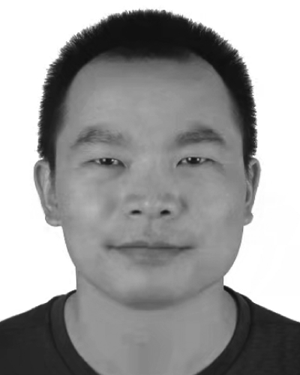 Zhi Xu合作论文数Guilin Univ Elect Technol, Guangxi Key Lab Images & Graph Intelligent Proc, Guilin 541000, Peoples R China1
 Xi Wu (吴锡)合作论文数School of Computer Science, Chengdu University of Information Technology1
 Dezhong Peng (彭德中)合作论文数College of Computer Science, Sichuan University1
 Min-Ling Zhang (张敏灵)合作论文数School of Computer Science and Engineering, Southeast University1Xiaojian You合作论文数University of Science and Technology of China, Univ. of Sci. and Technol. of China1




