Understanding and reasoning about the physical world is the foundation of intelligent behavior, yet state-of-the-art vision-language models (VLMs) still fail at causal physical reasoning, often producing plausible but incorrect answers. To address this gap, we introduce CausalPhys, a benchmark of over 3,000 carefully curated video- and image-based questions spanning four domains: Perception, Anticipation, Intervention, and Goal Orientation. Each question is paired with an expert-annotated causal graph capturing object-attribute-event dependencies, enabling interpretable and fine-grained evaluation of causal understanding. Building on this, we formulate a causal-graph-grounded metric that quantitatively measures how well a model's chain-of-thought reasoning aligns with the correct causal relations, moving beyond answer-only accuracy and enabling systematic diagnosis of VLMs' causal reasoning failures. Using this metric, we conduct a comprehensive analysis of leading VLMs, revealing systematic gaps in capturing causal dependencies and underscoring the need for causality-aware learning. To address these limitations, we further propose Causal Rationale-informed Fine-Tuning (CRFT), which explicitly aligns VLM reasoning with causal structures. Extensive experiments demonstrate that CRFT substantially enhances both reasoning accuracy and interpretability across multiple model backbones. By unifying dataset curation, causal evaluation, and causality-informed learning, CausalPhys establishes a strong foundation for advancing modern VLMs toward causally grounded physical reasoning.
Learning from demonstrations in embodied control is often cast as behavioral cloning, and recent diffusion or flow-matching policies improve this paradigm by modeling multi-modal expert actions. Yet these methods remain offline supervised learners: the policy is trained only on expert states and receives no corrective signal on the states it actually visits. On-policy distillation (OPD) offers a natural remedy, but standard OPD assumes a strong fixed teacher, which is unavailable in demonstration-only control. We propose FA-OPD, an adversarial dual on-policy distillation method in which a Flow Matching (FM) teacher is learned from demonstrations and co-trained with a lightweight MLP student. The teacher provides two complementary signals on student rollouts. The reward channel learns an expert-likeness objective over state-action pairs and drives online exploration through long-horizon policy optimization. The action channel supplies dense local targets at student-visited states, stabilizing exploitation. FA-OPD couples them so that reward distillation enables generalization beyond point-wise demonstrations, while action distillation keeps exploration anchored near expert-like behavior. Across six robot navigation, manipulation, and locomotion benchmarks, FA-OPD beats strong baselines and shows much stronger robustness under noisy or limited demonstrations. Source code: https://github.com/vanzll/FA-OPD.
Neural operators have achieved significant success in modern scientific computing due to their flexibility and strong generalization capabilities. Existing models, however, primarily rely on first-order kernel integral approximations, which severely limit their expressivity. To address this, we propose the Infinite-order Kernel Neural Operator (IKNO), which constructs neural operators via infinite-order kernel integrals and admits an elegant closed-form finite approximation. We develop two complementary infinite-order neural operator constructions: IKNO-Vanilla, which applies the full-kernel resolvent on the product grid via Kronecker eigendecomposition, and IKNO-TP, an alternative tensor-product operator that composes per-axis resolvents. Furthermore, we develop fast computation schemes for both variants of IKNO, which achieve outstanding global information aggregation while maintaining high computational efficiency. Empirically, we evaluate our IKNO on both time-dependent and time-independent benchmarks with arbitrary input shapes, including large-scale industrial datasets. Extensive experiments demonstrate that the IKNO method consistently achieves the SOTA accuracy with significant improvements on nearly all benchmark datasets while maintaining scalability to very large point clouds.
Visual information helps resolve ambiguity in coreference resolution, leading to notable performance gains. However, existing Multi-modal Coreference Resolution (MCR) methods require training with (partially) annotated data from the target dataset before they can be applied, preventing their direct usability and raising concerns about generalization. While Vision-Language Large Models (VLLMs) with billions of parameters offer promising zero-shot capabilities, they remain largely inaccessible. Their massive size limits deployability, and many are only accessible through paid APIs. In this paper, we propose a plug-and-adapt method that strategically adapts a carefully pre-trained \emph{alignment model} for immediate use in MCR tasks, designed to eliminate the need for training on scarce benchmark datasets or relying on resource-intensive VLLMs. Specifically, we first pre-train a fine-grained alignment model between textual and visual contextual information using vision-language alignment datasets. We then repurpose the alignment model to MCR through similarity aggregation by fusing visual and categorical cues with evidence theory, thereby enhancing effectiveness. Experiments on the Coreference Image Narratives (CIN) benchmark dataset demonstrate the effectiveness of our method, achieving a 5.31\% and 2.12\% improvement in CoNLL F1 over SOTA dedicated methods and popular VLLMs, respectively. We further evaluate our method on a masked CIN dataset for robustness testing and on a specially constructed VCR-MCR dataset for generalization assessment, with results confirming both capabilities.
Large-scale image datasets are fundamental to deep learning, but their high storage demands pose challenges for deployment in resource-constrained environments. While existing approaches reduce dataset size by discarding samples, they often ignore the significant redundancy within each image—particularly in the color space. To address this, we propose Dataset Color Quantization (DCQ), a unified framework that compresses visual datasets by reducing color-space redundancy while preserving information crucial for model training. DCQ achieves this by enforcing consistent palette representations across similar images, selectively retaining semantically important colors guided by model perception, and maintaining structural details necessary for effective feature learning. Extensive experiments across CIFAR-10, CIFAR-100, Tiny-ImageNet, and ImageNet-1K show that DCQ significantly improves training performance under aggressive compression, offering a scalable and robust solution for dataset-level storage reduction.
Sentence-level semantics plays a key role in language understanding. There exist subtle relations and dependencies among sentence-level samples, which is to be exploited. For example, in relational triple extraction (RTE), existing models overemphasize extraction modules, ignoring the sentence-level semantics and relation information, which causes (1) the semantics fed to extraction modules is relation-unaware; (2) each sample is trained individually without considering inter-sample dependency. To address these issues, we first propose the model-agnostic multi-relation detection task, which incorporates relation information into text encoding to generate the relation-aware semantics. Then we propose the model-agnostic multi-relation supervised contrastive learning, which leverages the relation-derived inter-sample dependencies as a supervised signal to learn discriminative semantics via drawing together or pushing away the sentence-level semantics regarding whether they share the same/similar relations. Besides, we design the reverse label frequency weighting and hierarchical label embedding mechanisms to alleviate label imbalance and integrate relation hierarchy. Our method can be applied to any RTE model and we conduct extensive experiments on five backbones by augmenting them with our method. Experimental results on four public benchmarks show that our method can bring significant and consistent improvements to various backbones and model analysis further verify the effectiveness of our method.
In this work, we focus on a novel and practical task, i.e., Time-vAriant iMage inPainting (TAMP). The aim of TAMP is to restore a damaged target image by leveraging the complementary information from a reference image, where both images capture the same scene but with a significant time gap in between, i.e., time-variant images. Different from conventional reference-guided image inpainting, the reference image under TAMP setup presents significant content distinction to the target image and potentially also suffers from damages. Such an application frequently happens in our daily life to restore a damaged image by referring to another reference image, where there is no guarantee of the reference image's source and quality. In particular, our study finds that even SOTA reference-guided image inpainting methods fail to achieve plausible results due to the chaotic image complementation. To address such an ill-posed problem, we propose a novel Interactive Distribution Transition Estimation (InDiTE) module which interactively complements the time-variant images with appropriate semantics thus facilitate the restoration of damaged regions. To further boost the performance, we propose our TAMP solution, namely Interactive Distribution Transition Estimation-driven Diffusion (InDiTE-Diff), which integrates InDiTE with SOTA diffusion model and conducts latent cross-reference during sampling. Moreover, considering the lack of benchmarks for TAMP task, we newly assembled a dataset, i.e., TAMP-Street, based on existing image and mask datasets. We conduct experiments on the TAMP-Street datasets under two different time-variant image inpainting settings, which show our method consistently outperform SOTA reference-guided image inpainting methods for solving TAMP.
Physical adversarial attacks in driving scenarios can expose critical vulnerabilities in visual perception models. However, developing such attacks remains non-trivial due to diverse real-world environmental influences. Existing approaches either struggle to generalize to dynamic environments or fail to achieve consistent physical attack performance. To address these challenges, we propose MAGIC (Mastering Physical Adversarial Generation In Context), a novel framework powered by multi-modal LLM agents to automatically understand the scene context during testing time and generate adversarial patches through synergistic interaction of language and vision understanding. Specifically, MAGIC orchestrates three specialized LLM agents: the adv-patch generation agent masters the creation of deceptive patches via strategic prompt manipulation for text-to-image models; the adv-patch deployment agent ensures contextual coherence by determining optimal deployment strategies based on scene understanding; and the self-examination agent completes this trilogy by providing critical oversight and iterative refinement of both processes. We validate our approach with both digital and physical scenarios, i.e., nuImage and real-world scenes, where both statistical and visual results demonstrate that our MAGIC is powerful and effective for attacking widely applied object detection systems, such as YOLO and DETR series.
Gradient descent with momentum has been widely applied in various signal processing and machine learning tasks, demonstrating a notable empirical advantage over standard gradient descent. However, momentum-based distributed Riemannian algorithms have been only scarcely explored. In this article, we propose Riemannian momentum tracking (RMTracking), a decentralized optimization algorithm with momentum over a compact submanifold. Given the nonconvex nature of compact submanifolds, the objective function, composed of a finite sum of smooth (possibly nonconvex) local functions, is minimized across agents in an undirected and connected network graph. With a constant step-size, we establish an O(1-beta/K) convergence rate of the Riemannian gradient average for any momentum weight beta is an element of[0,1). Especially, RMTracking can achieve a convergence rate of O(1-beta/K) to a stationary point when the step-size is sufficiently small. To the best of the authors' knowledge, RMTracking is the first decentralized algorithm to achieve exact convergence that is 1/1-beta times faster than other related algorithms. Finally, we verify these theoretical claims through numerical experiments on eigenvalue problems.
Learning with high-resource data has demonstrated substantial success in artificial intelligence (AI); however, the costs associated with data annotation and model training remain significant. A fundamental objective of AI research is to achieve robust generalization with limited-resource data. This survey employs agnostic active sampling theory within the Probably Approximately Correct (PAC) framework to analyze the generalization error and label complexity associated with learning from low-resource data in both model-agnostic supervised and unsupervised settings. Based on this analysis, we investigate a suite of optimization strategies tailored for low-resource data learning, including gradient-informed optimization, meta-iteration optimization, geometry-aware optimization, and LLMs-powered optimization. Furthermore, we provide a comprehensive overview of multiple learning paradigms that can benefit from low-resource data, including domain transfer, reinforcement feedback, and hierarchical structure modeling. Finally, we conclude our analysis and investigation by summarizing the key findings and highlighting their implications for learning with low-resource data.
Training-free guidance enables pre-trained diffusion and flow models to optimize application-specific objectives using feedback from external black-box reward functions. However, existing methods are feedback-inefficient because reward feedback is used only transiently to inform a localized gradient approximation or a discrete search decision, and is subsequently discarded. To address this limitation, we propose Flow-Direct, a framework that guides the generation process via a persistent guidance field. Theoretically, this guidance field is analytically derived from the log-density ratio between the base and reward-weighted target distributions; it transports the pre-trained distribution to the target distribution. In practice, the field is implemented as a non-parametric estimator constructed from all accumulated reward-evaluated samples. As more samples are collected during optimization, this empirical guidance field becomes increasingly accurate. This persistent formulation yields two major advantages. First, Flow-Direct is highly feedback-efficient: because every evaluated sample is used to refine the global guidance field, no reward information is wasted. Second, the framework is naturally reusable: once optimization is complete, the collected dataset defines a reusable guidance field for generating novel target samples without additional reward evaluations, and distinct guidance fields can be combined to generate samples that simultaneously satisfy multiple objectives.
Universum learning exploits an auxiliary dataset, whose samples lie within the same domain as the target classes but are not labeled as either, thereby injecting valuable prior knowledge into the learning process. In high-dimensional settings, however, a significant challenge arises regarding whether the Universum has positive effects on effectively constraining the space of admissible models. To settle this problem, this paper introduces an ℓ0-norm penalty into the Universum support vector machine, enabling the classifier to implement Universum in an essentially lower-dimensional space constituted by the most relevant variables. To derive practical solutions of the prosed NP-hard problem, we establish the existence of an optimal solution and subsequently formulate necessary and sufficient optimality conditions by introducing two types of stationary points. These optimality conditions facilitate a practical approach for solving the proposed model. Accordingly, we develop an effective alternating direction method of multipliers algorithm. The convergence of this algorithm is demonstrated under specific conditions in both theory and practice. Numerical experiments across various datasets demonstrate the effectiveness of our proposed method.
Scaling action-controllable world models is limited by the scarcity of action labels. While latent action learning promises to extract control interfaces from unlabeled video, learned latents often fail to transfer across contexts: they entangle scene-specific cues and lack a shared coordinate system. This occurs because standard objectives operate only within each clip, providing no mechanism to align action semantics across contexts. Our key insight is that although actions are unobserved, their semantic effects are observable and can serve as a shared reference. We introduce Seq$Δ$-REPA, a sequence-level control-effect alignment objective that anchors integrated latent action to temporal feature differences from a frozen, self-supervised video encoder. Building on this, we present Olaf-World, a pipeline that pretrains action-conditioned video world models from large-scale passive video. Extensive experiments demonstrate that our method learns a more structured latent action space, leading to stronger zero-shot action transfer and more data-efficient adaptation to new control interfaces than state-of-the-art baselines.
Classical models of opinion dynamics assume human participants with bounded rationality and limited coordination. The rise of LLM-based agents introduces a qualitative shift: agents can now participate in online discussions at scale, maintain consistent persuasion strategies, and coordinate systematically. This paper argues that LLM agents make collective belief dynamics programmable, enabling deliberate steering of population-level beliefs. We term this emerging problem programmable collective belief control. Through controlled multi-agent simulations, we provide proof-of-concept evidence that coordinated AI agents can induce measurable belief shifts that stabilize within a few interaction rounds. We identify four structural properties (indistinguishability, persistence, contextuality, and configurability) that make detection and defense fundamentally difficult. Based on these findings, we outline a research agenda spanning theoretical foundations for adversarial belief dynamics, operational methods for system-level detection and intervention, and simulation infrastructure for scalable experimentation. Our goal is not to present a complete solution, but to articulate why this problem demands urgent attention and to provide a conceptual foundation for future work.
Web search is a cornerstone for deep research agents, enabling them to acquire and reason over knowledge beyond static corpora. Yet most existing systems follow rigid ReAct-style tool chains locked into fixed workflow structures, which hinders their ability to flexibly handle diverse query types and tool-use strategies. We introduce $\textbf{FlowSearcher}$, a novel web search framework built on agentic workflow synthesis. FlowSearcher decomposes queries into sub-goals, each orchestrated by a tailored workflow graph that adapts the depth and order of tool use, giving the system structural flexibility to handle diverse sub-goals ranging from simple lookups and focused navigation to multi-hop information synthesis. Complementing this, a hierarchical memory distills past workflows into structured experience, providing reusable context that improves orchestration and guides tool use on new queries. This shift from reactive tool calls to memory-driven workflow design and execution marks a principled step toward deliberative web research. Empirical results on GAIA, BrowseComp, and GPQA show that our memory-driven, training-free workflow synthesis consistently matches or exceeds the performance of RLHF-trained systems, pointing toward a new direction of agent design grounded in memory-enhanced structural planning rather than parameter fine-tuning.
We have been witnessing remarkable success led by the power of neural networks driven by a significant scale of training data in handling various computer vision tasks. However, less attention has been paid to monitoring the camouflaged animals, the masters of hiding themselves in the background. Robust and precise segmentation of camouflaged animals is challenging even for domain experts due to their similarity to the environment. Although several efforts have been made in camouflaged animal image segmentation, to the best of our knowledge, limited work exists on camouflaged animal video understanding (CAVU). Biologists often prefer videos for monitoring and understanding animal behaviors, as videos provide redundant information and temporal consistency. However, the scarcity of labeled video data significantly hinders progress in this area. To address these challenges, we present CamoVid60K, a diverse, large-scale, and accurately annotated video dataset of camouflaged animals. This dataset comprises 218 videos with 62,774 finely annotated frames, covering 70 animal categories, which surpasses all previous datasets in terms of the number of videos/frames and species included. CamoVid60K also offers more diverse downstream tasks in computer vision, such as camouflaged animal classification, detection, and task-specific segmentation (semantic, referring, motion),etc.We have benchmarked several state-of-the-art algorithms on the proposed CamoVid60K dataset, and the experimental results provide valuable insights for future research directions. Our dataset serves as a novel and challenging benchmark to stimulate the development of more powerful camouflaged animal video segmentation algorithms, with substantial room for further improvement.
Test-time adaptation enables models to adapt to evolving domains. However, balancing the tradeoff between preserving knowledge and adapting to domain shifts remains challenging for model adaptation methods, since adapting to domain shifts can induce forgetting of task-relevant knowledge. To address this problem, we propose FOCUS, a novel frequency-based conditioning approach within a diffusion-driven input-adaptation framework. Utilising learned, spatially adaptive frequency priors, our approach conditions the reverse steps during diffusion-driven denoising to preserve task-relevant semantic information for dense prediction. FOCUS leverages a trained, lightweight, Y-shaped Frequency Prediction Network (Y-FPN) that disentangles high and low frequency information from noisy images. This minimizes the computational costs involved in implementing our approach in a diffusion-driven framework. We train Y-FPN with FrequencyMix, a novel data augmentation method that perturbs the images across diverse frequency bands, which improves the robustness of our approach to diverse corruptions. We demonstrate the effectiveness of FOCUS for semantic segmentation and monocular depth estimation across 15 corruption types and three datasets, achieving state-of-the-art averaged performance. In addition to improving standalone performance, FOCUS complements existing model adaptation methods since we can derive pseudo labels from FOCUS denoised images for additional supervision. Even under limited, intermittent supervision from the derived pseudo labels, we show that FOCUS mitigates catastrophic forgetting for recent model adaptation methods. Source code is available at https://github.com/gabriel-tjio/FOCUS .
The state-of-the-art zero-shot cross-lingual spoken language understanding (SLU) model utilizes cross-lingual unsupervised contrastive learning to achieve multilingual semantics alignment. While existing methods have achieved promising results, they still have two issues limiting cross-lingual knowledge transfer: (1) dual-task correlative knowledge is not explicitly modeled and transferred to target languages; (2) the semantics differences among samples are ignored, and the contrastive semantics knowledge is not transferred to target languages. In this paper, we propose a dual-task cross-lingual alignment network (DXA-Net), which makes the first attempt to tackle zero-shot cross-lingual SLU based on the prompt-tuning paradigm. To solve the first issue, we propose the co-guiding prompt, which allows the model to conditionally generate one task's label based on another one's. To solve the second issue, we propose the intent/slot contrastive prompt to teach the model to discriminate whether a pair of samples have the same or similar labels. Additionally, we propose multilingual semantics contrastive prompt to enhance multilingual semantics alignment. Experiments on the benchmark show that our model achieves new state-of-the-art performance on nine languages.
 Yew-Soon Ong合作论文数College of Computing and Data Science, Nanyang Technological University;School of Computer Science and Engineering, Nanyang Technological University;Centre for Frontier Al Research, Agency for Science, Technology and Research54
 Yuangang Pan合作论文数Univ Technol Sydney43
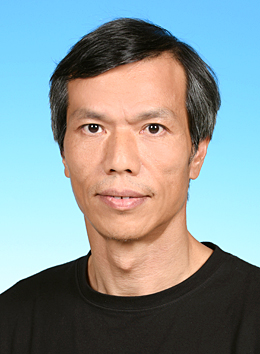 James Tin-Yau KWOK (郭天佑)合作论文数Department of Computer Science and Engineering, School of Engineering, Hong Kong University of Science and Technology41
 XXX合作论文数 30Yueming Lyu合作论文数26
 Jiangchao Yao (姚江超)合作论文数Cooperative Medianet Innovation Center, School of Integrated Circuits, Shanghai Jiao Tong University;Shanghai Artifcial Intelligence Laboratory24
 Qing Guo (郭青)合作论文数College of Computer Science, Nankai University24
 Dong Xu合作论文数Department of Computer Science, The University of Hong Kong24
 Bo Han (韓波)合作论文数Department of Computer Science, Faculty of Science, Hong Kong Baptist University23
 Xingrui Yu合作论文数Australian Artificial Intelligence Institute, University of Technology Sydney22
 Ya Zhang (张娅)合作论文数School of Artificial Intelligence, Shanghai Jiao Tong University;Cooperative Medianet Innovation Center, School of Electronic Information and Electrical Engineering, Shanghai Jiao Tong University21
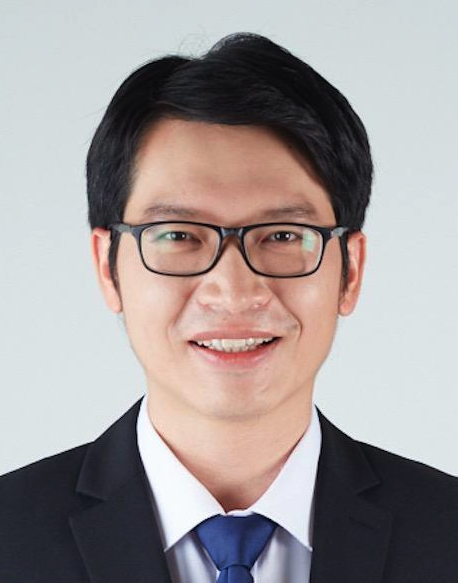 Joey Tianyi Zhou (周天異)合作论文数Institute of High Performance Computing, Agency for Science, Technology and Research;Centre for Frontier AI Research, Agency for Science, Technology and Research21
 Weiwei Liu (刘威威)合作论文数School of Computer Science, Wuhan University18
 Lixin Duan (段立新)合作论文数School of Computer Science and Engineering, University of Electronic Science and Technology of China18
 Mingkui Tan (谭明奎)合作论文数School of Software Engineering, South China University of Technology18
 Bowen Xing (邢博文)合作论文数School of Computer and Communication Engineering, University of Science and Technology Beijing16
 Li Wang合作论文数Department of Mathematics, University of Texas at Arlington;Department of Computer Science and Engineering, University of Texas at Arlington15
 Masashi Sugiyama (杉山将)合作论文数Department of Complexity Science and Engineering, Graduate School of Frontier Sciences, The University of Tokyo;Department of Computer Science, Graduate School of Information Science and Technology, The University of Tokyo;RIKEN Center for Advanced Intelligence Project15
 Shudong Huang (黄树东)合作论文数College of Computer Science, Sichuan University15
 Gang Niu (牛罡)合作论文数RIKEN Center for Advanced Intelligence Project13
 Jiancheng Lv (吕建成)合作论文数College of Computer Science, Sichuan University13
 Xiaobo Shen (沈肖波)合作论文数School of Computer Science and Engineering, Nanjing University of Science and Technology12
 Zenglin Xu (徐增林)合作论文数School of Computer Science and Technology, Harbin Institute of Technology (Shenzhen);Shenzhen & Peng Cheng Lab12Guang Dai合作论文数12
 Sinno Jialin Pan合作论文数Department of Computer Science and Engineering, Faculty of Engineering, The Chinese University of Hong Kong12
 Jing Li (李晶)合作论文数A*STAR - Agency for Science, Technology and Research11
 Xu Chen (陈旭)合作论文数Alibaba Group10
 Yinghua Yao合作论文数Center for Frontier AI Research, Agency for Science, Technology and Research;Institute of High Performance Computing, Technology and Research10
 Shenghua Gao (高盛华)合作论文数Department of Computer Science, School of Computing and Data Science, The University of Hong Kong10
 Yi Yang (杨易)合作论文数College of Computer Science and Technology, Zhejiang University9
 Qi Mao合作论文数9
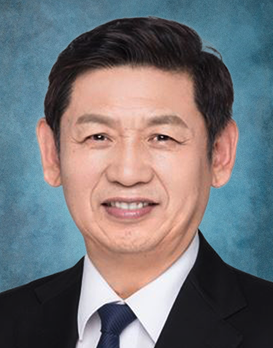 Chengqi Zhang (张成奇)合作论文数Academy for Artificial Intelligence, The Hong Kong Polytechnic University;Department of Data Science and Artificial Intelligence, Faculty of Computer and Mathematical Sciences, The Hong Kong Polytechnic University;The Hong Kong Polytechnic University Shenzhen Research Institute9
 Haiyan Yin合作论文数Sea AI Lab9
 Yaxin Shi合作论文数8
 Haishan Ye (叶海杉)合作论文数The Third Affiliated Hospital of Fujian University of Traditional Chinese Medicine8
 Wen Li (李文)合作论文数School of Computer Science and Engineering, University of Electronic Science and Technology of China8
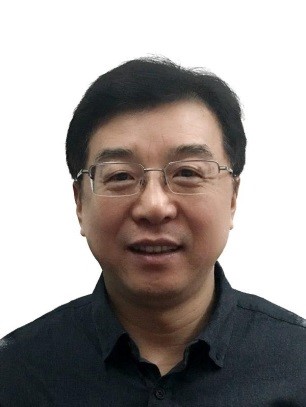 Quansen Sun (孙权森)合作论文数School of Computer Science and Engineering, Nanjing University of Science and Technology8
 Jiebo Luo (罗杰波)合作论文数Department of Computer Science, Hajim School of Engineering & Applied Sciences, University of Rochester8
 Yi Chang (常毅)合作论文数School of Artificial Intelligence, Jilin University;Research & Development Affairs Office, Jilin University8
 Yang Liu合作论文数Energy Research Institute, School of Computer Science and Engineering, Nanyang Technological University8
 Ling Chen合作论文数Centre for Artificial Intelligence, School of Computer Science, University of Technology Sydney8
 Jinliang Deng合作论文数Hong Kong University of Science and Technology7
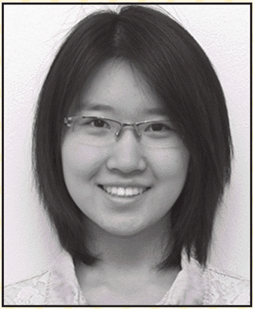 Donna Xu合作论文数7
 Chia Liang Tien合作论文数School of Computer Science and Engineering, Nanyang Technological University;Division of Computer Communications, Nanyang Technological University7
 Xin Yao (姚新)合作论文数Department of Computer Science and Engineering, Southern University of Science and Technology;Centre of Excellence for Research in Computational Intelligence and Applications, University of Birmingham;School of Computer Science, University of Birmingham;School of Artificial Intelligence, Xidian University7
 Miao Xu合作论文数School of Information Technology and Electrical Engineering, Faculty of Engineering, Architecture and Information Technology, The University of Queensland7
 Chun Wei Seah合作论文数DSO National Laboratories7
 Xuan Song (宋轩)合作论文数School of Artificial Intelligence, Faculty of Interdisciplinary Studies, Jilin University7Zhenglin Wan合作论文数6