Mesh-agnostic models have advantages in processing flow field data with various topologies and densities, and they can easily incorporate partial differential equations. Beyond physics-informed neural networks, mesh-agnostic models have been studied for data-driven predictions of simple flows. In this study, a data-driven mesh-agnostic model is proposed to predict the transonic flow field of various supercritical airfoils. The model consists of two subnetworks, i.e., ShapeNet and HyperNet. ShapeNet is an implicit neural representation used to predict spatial bases of the flow field. HyperNet is a simple neural network that determines the weights of these bases. The input of ShapeNet is extended to ensure accurate prediction for different airfoil geometries. To reduce overfitting while capturing shock waves and boundary layers, a multi-resolution ShapeNet combining two activation functions is proposed. Additionally, a physics-guided loss function is proposed to enhance accuracy. The proposed model is trained and tested on various supercritical airfoils under different free-stream conditions. Results show that the model can effectively utilize airfoil samples with different grid sizes and distributions, and it can accurately predict the shock wave and boundary layer velocity profile. The proposed mesh-agnostic model can be used as a decoder in any conventional models, contributing to their application in complex and three-dimensional geometries.
Neural surrogates offer a promising route to accelerating computationally expensive simulations governed by partial differential equations across science and industry. Their practical deployment, however, is limited by unreliable predictions under out-of-distribution (OOD) conditions. We develop a solver-coupled surrogate-Newton framework that uses surrogate predictions as high-quality initial guesses for Newton-Krylov iterations, thereby combining rapid global flow-field prediction with high-accuracy numerical convergence at the terminal stage. On an OOD benchmark comprising geometries sampled from actual transonic airfoil optimization trajectories, the framework lowers the median residual L_2 ratio by over seven orders of magnitude while substantially reducing field and aerodynamic errors. In practical supercritical airfoil optimization, it improves online prediction reliability while achieving a 15.5-fold generation-level speedup over CFD. We further test the framework's extension to three dimensions using a flying-wing dataset. Together, these studies demonstrate the potential of surrogate-Newton coupling to deliver accurate, efficient and scalable steady CFD across industrial workflows.
Machine-learning surrogate models have shown promise in accelerating aerodynamic design, yet progress toward generalizable predictors for three-dimensional wings has been limited by the scarcity and restricted diversity of existing datasets. Here, we present SuperWing, a comprehensive open dataset of transonic swept-wing aerodynamics comprising 4,239 parameterized wing geometries and 28,856 Reynolds-averaged Navier-Stokes flow field solutions. The wing shapes in the dataset are generated using a simplified yet expressive geometry parameterization that incorporates spanwise variations in airfoil shape, twist, and dihedral, allowing for an enhanced diversity without relying on perturbations of a baseline wing. All shapes are simulated under a broad range of Mach numbers and angles of attack covering the typical flight envelope. To demonstrate the dataset's utility, we benchmark two state-of-the-art Transformers that accurately predict surface flow and achieve a 2.5 drag-count error on held-out samples. Models pretrained on SuperWing further exhibit strong zero-shot generalization to complex benchmark wings such as DLR-F6 and NASA CRM, underscoring the dataset's diversity and potential for practical usage.
Reducing the sonic boom intensity and increasing the cruise lift-to-drag ratio are pivotal technologies for the successful development of supersonic civil aircraft. To address the limitation that sonic boom research primarily focuses on characteristics directly beneath the flight track, a full-carpet sonic boom and aerodynamic characteristics prediction software (AERO-BOOM) was independently developed. This software is based on the Panel Method, Modified Linearized Theory, the Waveform Parameter Method, and the Stevens Perceived Noise Evaluation Method. AERO-BOOM can efficiently assess the lift-to-drag ratio and the full-carpet sonic boom characteristics of supersonic civil aircraft. Building upon this software, a Multidisciplinary Optimization design platform for full-carpet sonic boom and aerodynamic characteristics of supersonic civil aircraft was established, utilizing an in-house hybrid surrogate-aided differential evolution optimization algorithm. For a supersonic civil aircraft, both fuselage optimization and overall aircraft optimization were conducted. The optimization objectives were the lift-to-drag ratio and the full-carpet sonic boom loudness (FBL). The optimization results demonstrate that fuselage optimization (e.g., employing a downward-cambered nose) increased the lift-to-drag ratio by 0.26 and reduced the FBL by 0.62 PLdB. Furthermore, the overall aircraft optimization (involving modifications to the wing planform and increasing the tail sweep angle) yielded a 1.51 increase in the lift-to-drag ratio and a 1.09 PLdB reduction in the FBL.
Data-based optimization (DBO) offers a promising approach for efficiently optimizing shape for better aerodynamic performance by leveraging a pretrained surrogate model for offline evaluations during iterations. However, DBO heavily relies on the quality of the training database. Samples outside the training distribution encountered during optimization can lead to significant prediction errors, potentially misleading the optimization process. Therefore, incorporating uncertainty quantification into optimization is critical for detecting outliers and enhancing robustness. This study proposes an uncertainty-aware data-based optimization (UA-DBO) framework to monitor and minimize surrogate model uncertainty during DBO. A probabilistic encoder-decoder surrogate model is developed to predict uncertainties associated with its outputs, and these uncertainties are integrated into a model-confidence-aware objective function to penalize samples with large prediction errors during DBO process. The UA-DBO framework is evaluated on two multipoint optimization problems aimed at improving airfoil drag divergence and buffet performance. Results demonstrate that UA-DBO consistently reduces prediction errors in optimized samples and achieves superior performance gains compared to original DBO. Moreover, compared to optimization based on full computational simulations, UA-DBO offers comparable optimization effectiveness while significantly accelerating optimization speed.
Morphing aircraft, recognized as key enablers of future multi-role aerial platforms, have attracted considerable research interest. This paper investigates the aerodynamics-driven Monoplane–Biplane Morphing (MBM) aircraft, with particular focus on the abnormal buffeting–rolling phenomenon observed in the movable wing during the docking process. Flight and ground-based experiments indicate that this phenomenon is induced by the unsteady slipstream of the front-mounted propeller. However, existing morphing aircraft studies have not addressed the unsteady slipstream–wing interactions that govern such oscillatory responses during docking. To quantify this influence, a slipstream model was developed using the Lattice Boltzmann Method (LBM), and the unsteady aerodynamic effects on the movable wing were analyzed. The periodic slipstream provides the excitation, and vortex breakdown at a critical 3° angle of attack amplifies the aerodynamic loads by about 40%, producing control-critical angular accelerations. A simulation framework incorporating the slipstream model was further established to reproduce the buffeting–rolling phenomenon observed in flight tests. Control-oriented analysis demonstrates that moderately increasing the control system frequency enhances disturbance rejection, with an optimal range effectively suppressing slipstream-induced oscillations. These findings provide new insights into slipstream effect in morphing systems and offer guidance for the safe and reliable operation of MBM aircraft.
Monoplane-Biplane Morphing (MBM) aircraft switch between monoplane and biplane configurations by deflecting their ailerons to generate the necessary aerodynamic forces. The control algorithm determines the required lift and moment based on the morphing motion and allocates these demands into the corresponding aileron deflections to regulate the morphing. However, the aerodynamic characteristics of MBM aircraft undergo rapid and significant variations during morphing, necessitating much larger aileron deflections for trim compared to conventional aircraft. These challenges are further compounded when the aircraft features an unsymmetrical trapezoidal wing, as opposed to the rectangular wing configuration examined in our previous work. The resulting aerodynamic behavior is more complex, making it difficult to establish an accurate mapping between aerodynamic forces/moments and control surface deflections. To address this trim problem, this paper proposes an approach that incorporates high-order morphing motion information into an Incremental Sliding Mode Control (ISMC) framework.
Fixed-wing long-endurance aircraft play an important role in many fields. However, to reduce drag, these aircraft often have an enormous aspect ratio and wingspan, leading to challenges such as high requirements for takeoff and landing sites and poor wind resistance. Morphing may be able to solve this problem, but conventional morphing aircraft often employ complex actuation mechanisms and actuators to drive the morphing process. The associated costs in terms of structural weight increase and space occupancy are prohibitively high. First, this article develops a high-aspect-ratio aircraft with aerodynamic-driven morphing and validates the rationality and feasibility of this concept through flight tests. Then, focusing on the RQ-4 ‘‘Global Hawk” as the design baseline, the article explores multidisciplinary overall design methods for the aircraft, analyzing the comprehensive impact of morphing on aerodynamic, structural, and flight control design.Finally, the article elaborates on the benefits and costs associated with aerodynamic-driven morphing.
Mesh generation is a critical but time-consuming process for stable and accurate numerical simulations. Although multi-layer perceptron-based meshing methods can be effective, they suffer from slow training convergence and heavy reliance on prior datasets. To overcome these problems, we propose the Kolmogorov-Arnold Network-based meshing network, an efficient data-free method for structured mesh generation. The proposed method takes the meshing task as an optimization problem and embeds meshing-related differential equations into the loss function of Kolmogorov-Arnold Networks. It employs two parts to generate meshes efficiently. The Kolmogorov-Arnold Network part introduces learnable activation functions on the edges of the network, which enables the network to learn meshing rules between parametric and computational domains. The physics-informed learning part provides meshing-related information to guide the network training. Finally, the proposed method can produce high-quality structured meshes with a user-defined number of quadrilateral or hexahedral cells through feed-forward prediction. Experiments on different geometries show that the proposed method achieves up to three orders of magnitude improvement in meshing efficiency compared to traditional methods. It also outperforms state-of-the-art multi-layer perceptron-based methods, yielding high-quality meshes in both two-dimensional and three-dimensional cases without prepared data.
The transonic buffet is a critical phenomenon that limits the flight envelope of commercial aircraft. For years, RANS-based criteria like the lift-curve-break method have been applied to predict the buffet onset, but it requires flowfield simulations under multiple angles of attack, which is still too time-consuming for optimization. This paper presents a prior-based neural network model to predict pressure profiles under different angles of attack with reference to the one at cruise condition. The model is utilized to replace the off-design CFD simulations in the lift-curve-break criterion so that only one simulation is needed to predict the buffet onset of an airfoil. It is then employed in a multi-objective genetic algorithm to optimize the buffet onset and the cruise lift-drag ratio simultaneously. To test the optimization procedure, the model is trained on an airfoil database and applied to optimize four airfoils not similar to the training database. The results show that all the optimizations receive positive gains of buffet onset, which affirm that the proposed model and optimization procedure can be reliably employed in search for airfoils with better buffet performance.
Fluidic injection offers a promising solution to improve the performance of the overexpanded single expansion ramp nozzles (SERNs) during vehicle acceleration. However, determining the injection parameters that yield the best overall performance across multiple nozzle operating conditions remains a challenge. The gradient-based optimization method requires gradients of injection parameters at each design point, which can lead to high computational costs when using computational fluid dynamics (CFD) simulations. This paper uses a pretrained neural network to replace CFD during optimization, enabling quick calculation of the nozzle flow field at multiple design points. Considering the physical characteristics of the nozzle flow field, a prior-based prediction strategy is adopted to enhance the model's accuracy. In addition, the neural network's back-propagation algorithm computes gradients quickly by running the computation only once, thereby greatly reducing gradient computation time compared to the finite difference method. As a test case, the average nozzle thrust coefficient of an SERN at seven design points is optimized, resulting in a 1.14% improvement. The time cost is greatly reduced compared with traditional optimization methods, even when the time required to establish the training database is included.
Mesh-agnostic models have advantages in terms of processing unstructured spatial data and incorporating partial differential equations. Recently, they have been widely studied for constructing physics-informed neural networks, but they need to be trained on a case-by-case basis and require long training times. On the other hand, fast prediction and design tools are desired for aerodynamic shape designs, and data-driven mesh-based models have achieved great performance. Therefore, this paper proposes a data-driven mesh-agnostic decoder that combines the fast prediction ability of data-driven models and the flexibility of mesh-agnostic models. The model is denoted by an implicit decoder, which consists of two subnetworks, i.e., ShapeNet and HyperNet. ShapeNet is based on implicit neural representation, and HyperNet is a simple neural network. The implicit decoder is trained for the fast prediction of supercritical airfoils. Different activation functions are compared, and a spatial constraint is proposed to improve the interpretability and generalization ability of the model. Then, the implicit decoder is used together with a mesh-based encoder to build a generative model, which is used for the inverse design of supercritical airfoils with specified physical features.
With their development, machine learning models can be used instead of computational fluid dynamics simulations to predict flow fields in aerodynamic optimization. However, it is difficult to construct a prediction model for swept wings with various planform geometries because too many samples are required to cover the parameter space. In the present paper, a new model framework is proposed to predict wing surface pressure and friction distributions with fewer samples. The distributed geometry parameters along spanwise are used as model inputs instead of the global planform parameters, and processors are designed to help the model better learn the local effect of geometric variation. The model is trained and tested on simple swept wings with single segment and linear twist distribution, where it outperforms the global input model by 57.6% in terms of lift coefficient prediction errors on small dataset sizes. The distributed input also enables the model to be transferred from single wings to more engineering-practical yet complex kink wings. After fine-tuning with a few samples, model accuracy for kink wings can be similar to that of simple wings, which proves the model for wings with complex planform geometries can be efficiently built with the proposed method.
Computational Fluid Dynamics (CFD) plays a crucial role in investigating new physical phenomena and exploring the principles of fluid mechanics. However, CFD numerical methods often face the challenges of long research cycles, high costs, and extensive human-computer interactions due to the growing complexity of computational tasks. To meet the burgeoning requirements of contemporary physical sciences, in recent years, the coupling of traditional scientific computing techniques with promising deep learning techniques well-known from computer science have emerged as a new research paradigm. This paradigm aims to create automated, intelligent tools for obtaining valuable insights as well as being able to categorize, predict, and make evidence-based decisions in novel ways. These tools can be used to reduce the reliance on expert experience and laborious computations inherent in existing numerical theories and methods. In this paper, we delve into the essence of science paradigms, the evolution of computing intelligence, and provide a comprehensive overview of the key applications driving the development of a new intelligence paradigm in CFD simulations. In addition, we outline a prototype platform for CFD simulations within this new paradigm. Based on this platform, three intelligent workflows are proposed, anticipating to serve as a reference source for future research and foster the emergence of innovative applications in the field of CFD.Highlights Deep learning techniques emerged as a new method to create automated, intelligent tools for CFD simulations.A review of deep learning methods for mesh pre-processing.A review of deep learning methods for numerical solving.A review of deep learning methods for post-processing visualization.A prototype platform for CFD simulations within the new paradigm.Perspectives on challenges and future directions.
Machine-learning-based models provide a promising way to rapidly acquire transonic swept wing flow fields but suffer from large computational costs in establishing training datasets. Here, a physics-embedded transfer-learning framework is proposed to efficiently train the model by leveraging the idea that a three-dimensional flow field around wings can be analyzed with two-dimensional flow fields around cross-sectional airfoils. An airfoil aerodynamics prediction model is pretrained with airfoil samples. Then, an airfoil-to-wing transfer model is fine-tuned with a few wing samples to predict three-dimensional flow fields based on two-dimensional results on each spanwise cross section. Sweep theory is embedded when determining the corresponding airfoil geometry and operating conditions, and to obtain the sectional airfoil lift coefficient, which is one of the operating conditions, the low-fidelity vortex lattice method and data-driven methods are proposed and evaluated. Compared to a nontransfer model, introducing the pretrained model reduces the error by 30%, whereas introducing sweep theory further reduces the error by 9%. When reducing the dataset size, less than half of the wing training samples are need to reach the same error level as the nontransfer framework, which makes establishing the model much easier.
Morphing technology is considered a crucial direction for the future development of aircraft. However, conventional morphing aircraft often employ complex actuation mechanisms and actuators to drive the morphing process. The associated costs in terms of structural weight increase and space occupancy are prohibitively high, even exceeding the benefit of morphing. Especially for high aspect ratio aircraft with large root bending moments, it is very difficult for actuators to directly drive wing deformation. To address this issue, aerodynamic forces generated by control surface deflection can be utilized as an alternative to actuator-driven morphing. This approach reduces the overall cost of morphing while enhancing its benefits. This novel aerodynamic-driven morphing technique imposes new requirements and challenges on the aerodynamic design of aircraft. With a combination of flight experiments and numerical simulations, this article analyzes the variations in aerodynamic forces during the aerodynamic-driven process. Using a high aspect ratio long-endurance UAV as the design baseline, the design method of the control surface for aerodynamic-driven morphing is also discussed.
With the development of intelligent computing technology, deep learning methods have provided an efficient solution for rapid flow field prediction in computational fluid dynamics (CFD) problems. However, existing methods have limitations in handling interference among physical variables due to different data distributions, leading to a decline in prediction performance. In this paper, we propose MH-DCNet, an improved flow field prediction framework that couples a neural network with a physics solver. Specifically, to address the data distribution problem, we design a multi-head deep convolutional neural network that decouples the prediction of physical variables through multiple encoders and decoders. We also develop a hybrid loss function by introducing the mean structural similarity to better capture the complex spatial structures and distribution features of flow fields. We evaluate MH-DCNet with unseen geometries and various flow conditions. Experimental results show that MH-DCNet outperforms other advanced models in efficiency and generalization capability. It accelerates the prediction process by 2.35 times compared to the CFD method while meeting the convergence constraints.
A transonic buffet is a detrimental phenomenon that occurs on supercritical airfoils and limits the aircraft operating envelope. Traditional methods for predicting buffet onset rely on multiple computational fluid dynamics simulations to assess a series of airfoil flowfields and then apply criteria to them, which is slow and hinders optimization efforts. This study introduces an innovative approach for rapid buffet-onset prediction. A machine-learning flowfield prediction model was pretrained on a large database and then deployed offline to replace the simulations in the buffet prediction process for new airfoil designs. Unlike using a model to directly predict buffet onset, the proposed technique offers better visualization capabilities by providing users with intuitive flowfield outputs. It also demonstrates superior generalization ability, as evidenced by a 32.5% reduction in the average buffet-onset prediction error on the testing dataset. This method was used to optimize the buffet performance of 11 distinct airfoils within and outside the training dataset. The optimization results were verified with simulations and proved to yield improved samples across all cases. It was affirmed that the pretrained flowfield prediction model can be applied to accelerate aerodynamic shape optimization, but further work is still needed to raise its reliability for this safety-critical task.
 Yufei Zhang (张宇飞)合作论文数104
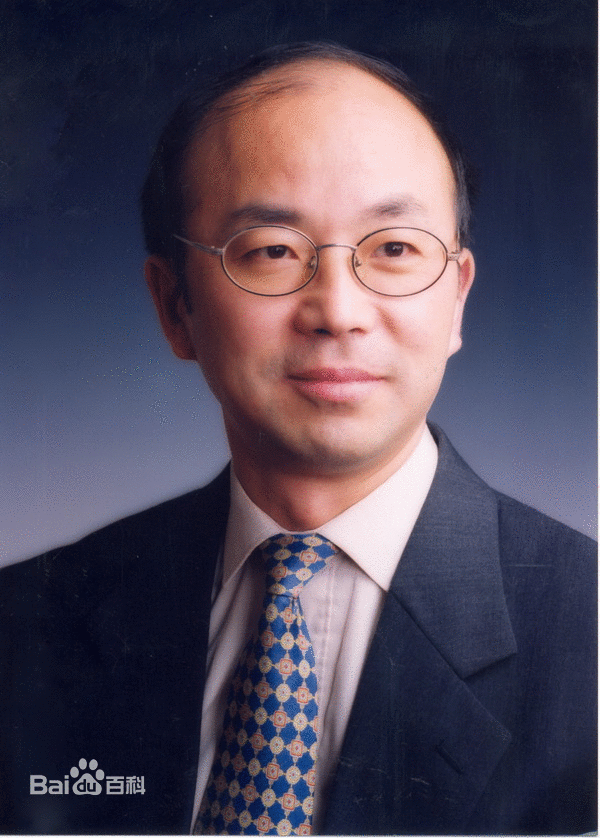 Song Fu (符松)合作论文数Laboratory for Advanced Simulation of Turbulence, School of Aerospace Engineering, Tsinghua University58Fengwei Li合作论文数12
 Zhixiang Xiao (肖志祥)合作论文数School of Aerospace Engineering, Tsinghua University12Miáo Zhang合作论文数9
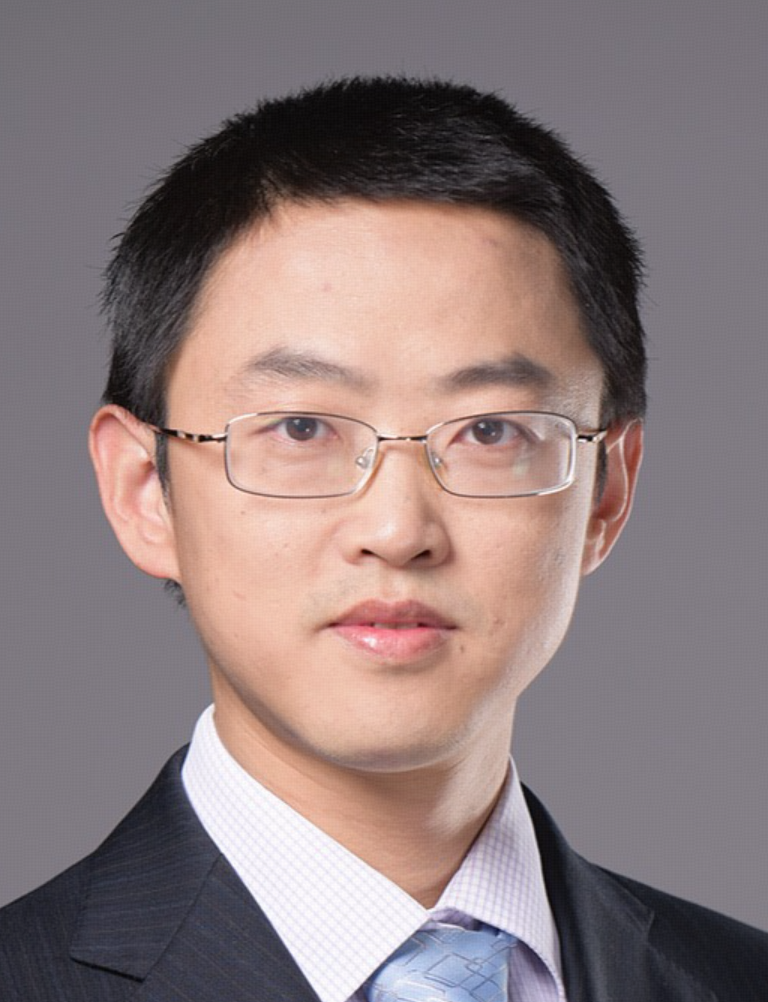 Xudong Huang (黄旭东)合作论文数School of Aerospace Engineering, Tsinghua University9Yunjia Yang (杨韫加)合作论文数7Haoran Li合作论文数7Kaiwen Deng合作论文数7MeiHong Zhang (张美红)合作论文数7
 Ke Shi合作论文数7Qin E (鄂秦)合作论文数6
 Yingchun Chen (陈迎春)合作论文数Science and Technology Committee, Commercial Aircraft Corporation of China Ltd.6Chongyang Yan合作论文数5Yuhui Yin合作论文数5Miao Zhang合作论文数5
 Zhao Li合作论文数5Liangtao Feng合作论文数4Chenhua Zhu合作论文数4Tingyu Guo合作论文数4Jingbo Huang合作论文数4
 Scott Morris合作论文数University of Notre Dame, University of Notre Dame4Mark H. Ross合作论文数University of Notre Dame, University of Notre Dame4Mengyu Shen (沈孟育)合作论文数清华大学航天航空学院4
 Jie Liu合作论文数4Jinwen Yang合作论文数3Shaoguang Jing合作论文数3Baohong Bai合作论文数3Xiaoming Fang (方晓明)合作论文数Shanghai Entry-Exit Inspection and Quarantine Bureau3
 Maochao Xiao合作论文数Graduate student, School of Aerospace Engineering.3
 Shaoguang Zhang合作论文数3Wen-sheng ZHANG (张文升)合作论文数3Tiejun Liu合作论文数3
 Qing Wang (王青)合作论文数School of Automation Science and Electrical Engineering, Beihang University;Hangzhou International Innovation Institute of Beihang University3
 Erming He (贺尔铭)合作论文数School of Aeronautics, Northwestern Polytechnical University3Junjun Yan合作论文数2Chen Zhai合作论文数2Humin Lei合作论文数2jianguo chen (陈建国)合作论文数2Zhenchang LIU (刘真畅)合作论文数2Zhichao Wang合作论文数Laboratory of Digitizing Software for Frontier Equipment, National University of Defense Technology2Jialiu Gu (顾家柳)合作论文数2Li,Zhao合作论文数2
 Liang Deng合作论文数College of Computer, National University of Defense Technology, Changsha, China2
 Pu Yang合作论文数2
 Angxiu Ni合作论文数2guanghua zhang (章光华)合作论文数2Yunke Yang (杨云柯)合作论文数2FengQi Zhou (周凤歧)合作论文数2




