We describe Dual-Route Top-K Retrieval with 1v1 VLM Reranking for the CoVR-R challenge. The method treats composed video retrieval as two coupled problems: finding a sufficiently complete top-k candidate set, and then safely deciding whether any candidate should replace a strong current top-1. We first improve the reasoning/text seed with a VLM slot selector over existing candidates, without introducing DFN visual retrieval. We then add a visual route from contact-sheet embeddings using DFN-H/DFN-L. The routes are merged into a top-10 candidate set, after which a VLM final reranker performs conservative 1v1 comparisons between the current top-1 and each challenger. On the hidden test split, the final system reaches 95.28 R@1, 97.47 R@5, 98.48 R@10, and 99.66 R@50. The main lesson is that CoVR-R benefits more from recall-selection decoupling than from broad text reranking or direct multi-candidate VLM classification.
In this work, we present a simple yet theoretically motivated improvement to Supervised Fine-Tuning (SFT) for the Large Language Model (LLM), addressing its limited generalization compared to reinforcement learning (RL). Through mathematical analysis, we reveal that standard SFT gradients implicitly encode a problematic reward structure that may severely restrict the generalization capabilities of model compared to RL. To rectify this, we propose Dynamic Fine-Tuning (DFT), stabilizing gradient updates for each token by dynamically rescaling the objective function with the probability of this token. With just a single-line change, the method outperforms standard SFT on multiple difficult benchmarks and base models, from math reasoning to code generation and multi-modal tasks, demonstrating improved generalization. Additionally, DFT achieves competitive results in offline RL settings, and further boosts the effectiveness of subsequent RL training, providing an effective yet streamlined alternative. The experiments further demonstrate that DFT not only strengthens SFT performance but also consistently improves the effectiveness of subsequent RL training. By bridging theoretical insights with practical solutions, this work advances the state of SFT. The source code will be publicly released.
Vision-Language-Action (VLA) models, as large foundation models for embodied control, have shown strong performance in manipulation tasks. However, their performance comes at high inference cost. To improve efficiency, recent methods adopt action chunking, which predicts a sequence of future actions for open-loop execution. Although effective for reducing computation, open-loop execution is sensitive to environmental changes and prone to error accumulation due to the lack of close-loop feedback. To address this limitation, we propose Speculative Verification for VLA Control (SV-VLA), a framework that combines efficient open-loop long-horizon planning with lightweight closed-loop online verification. Specifically, SV-VLA uses a heavy VLA as a low-frequency macro-planner to generate an action chunk together with a planning context, while a lightweight verifier continuously monitors execution based on the latest observations. Conditioned on both the current observation and the planning context, the verifier compares the planned action against a closed-loop reference action and triggers replanning only when necessary. Experiments demonstrate that SV-VLA combines the efficiency of chunked prediction with the robustness of closed-loop control, enabling efficient and reliable VLA-based control in dynamic environments. Code is available: https://github.com/edsad122/SV-VLA.
We propose a novel Transformer-based image-to-text generation model termed as ACF that adaptively clusters vision patches into object regions and language words into phrases to implicitly learn object-phrase alignments for better visual-text coherence. To achieve this, we design a novel self-attention layer that applies self-attention over the elements in a local cluster window instead of the whole sequence. The window size is softly decided by a clustering matrix that is calculated by the current input data and thus this process is adaptive. By stacking these revised self-attention layers to construct ACF, the small clusters in the lower layers can be grouped into a bigger cluster, e.g.,vision/language. ACF clusters small objects/phrases into bigger ones. In this gradual clustering process, a parsing tree is generated which embeds the hierarchical knowledge of the input sequence. As a result, by using ACF to build the vision encoder and language decoder, the hierarchical object-phrase alignments are embedded and then transferred from vision to language domains in two popular image-to-text tasks: Image captioning and Visual Question Answering. The experiment results demonstrate the effectiveness of ACF, which outperforms most SOTA captioning and VQA models and achieves comparable scores compared with some large-scale pre-trained models.
Chain-of-Thought (CoT) prompting has emerged as a powerful approach to enhancing the reasoning capabilities of Large Language Models (LLMs). However, existing implementations, such as in-context learning and fine-tuning, remain costly and inefficient. To improve CoT reasoning at a lower cost, and inspired by the task vector paradigm, we introduce CoT Vectors, compact representations that encode task-general, multi-step reasoning knowledge. Through experiments with Extracted CoT Vectors, we observe pronounced layer-wise instability, manifesting as a U-shaped performance curve that reflects a systematic three-stage reasoning process in LLMs. To address this limitation, we propose Learnable CoT Vectors, optimized under a teacher–student framework to provide more stable and robust guidance. Extensive evaluations across diverse benchmarks and models demonstrate that CoT Vectors not only outperform existing baselines but also achieve performance comparable to parameter-efficient fine-tuning methods, while requiring fewer trainable parameters. Moreover, by treating CoT Vectors as a probe, we uncover how their effectiveness varies due to latent space structure, information density, acquisition mechanisms, and pre-training differences, offering new insights into the functional organization of multi-step reasoning in LLMs. The source code will be released.
Supervised fine-tuning (SFT) is computationally efficient but often yields inferior generalization compared to reinforcement learning (RL). This gap is primarily driven by RL’s use of on-policy data. We propose a framework to bridge this chasm by enabling On-Policy SFT. We first present , which explains and quantifies the alignment between data and the model-induced distribution. Leveraging DDT, we introduce two complementary techniques: (i) , a loss-level method to enhance generalization ability of SFT, and (ii) , a data-level technique that can re-align the training corpus to the model’s distribution. Extensive experiments demonstrate that our framework achieves generalization performance on par with prominent offline RL algorithms, including DPO and SimPO, while maintaining the efficiency of an SFT pipeline. The proposed framework thus offers a practical alternative in domains where RL is infeasible. We will open-source the code and data on GitHub.
Model ensembling is a well-established technique for improving the performance of machine learning models. Conventionally, this involves averaging the output distributions of multiple models and selecting the most probable label. This idea has been naturally extended to large language models (LLMs), yielding improved performance but incurring substantial computational cost. This inefficiency stems from directly applying conventional ensemble implementation to LLMs, which require a separate forward pass for each model to explicitly compute the ensemble distribution. In this paper, we propose the Mixture-model-like Ensemble (ME). By reinterpreting the ensemble as a mixture model, ME stochastically selects a single model at each step to generate the next token, thereby avoiding the need to explicitly compute the full ensemble distribution. ME is mathematically equivalent to sampling from the ensemble distribution, but requires invoking only one model, making it 1.78×-2.68× faster than conventional ensemble. Furthermore, this perspective connects LLM ensembling and token-level routing methods, suggesting that LLM ensembling is a special case of routing methods. Our findings open new avenues for efficient LLM ensembling and motivate further exploration of token-level routing strategies for LLMs. Our code is available at https://anonymous.4open.science/r/Mixture-model-like-Ensemble/.
Large Vision-Language Models (LVLMs) have advanced multimodal understanding, yet their reliability is limited by hallucination, where generated content conflicts with visual facts. Existing mitigation methods either rely on costly external interventions, such as instruction tuning and retrieval, or use internal mechanisms that remain limited by flawed attention weights and entangled hidden representations. We propose Adversarial Orthogonal Disentanglement (AOD), a latent geometric framework for mitigating LVLM hallucinations. AOD learns a hallucination-related direction through a minimax objective: a classifier concentrates hallucination signals into the projected component, while an adversary removes them from the orthogonal residual space via a Gradient Reversal Layer. The learned direction enables a training-free dual-forward-pass contrastive decoding strategy that suppresses hallucinations while preserving general capabilities. Experiments on three LVLMs across four hallucination and four utility benchmarks show that AOD consistently outperforms strong baselines. It improves POPE accuracy by over 6% on average, boosts AMBER by 6%, and maintains strong performance on utility tasks such as MMMU. Further analysis shows robust transfer across datasets, suggesting that AOD captures general hallucination-related biases rather than dataset-specific artifacts. Our source code and datasets are available at https://github.com/Hunter-Wrynn/AOD.
Large language models (LLMs) with Mixture-of-Experts (MoE) architectures achieve strong performance under sparse activation. However, their expertise is often fragmented across experts and redundant across layers. Prior studies primarily diagnosed redundancy or parameter importance, revealing overlaps but lacking mechanisms to transform them into reusable knowledge. In contrast, human learning succeeds not by memorizing isolated facts but by reusing shared strategies across domains, which motivates the question: do MoE models similarly encode universal knowledge that can be systematically extracted and reused? We propose Universal kNowledge Integration from Task-specific Experts (UNITE), a framework that consolidates experts through Fisher-weighted fusion and then applies Tucker decomposition to disentangle shared low-rank input/output subspaces as universal knowledge from layer-specific variations. This universal component provides a compact basis for reconstructing target models with flexible depth, enabling lightweight yet competitive adaptation across tasks. To assess effectiveness, we evaluate data efficiency, convergence speed, and generalization across multiple MoE-based LLMs and diverse datasets. The results show that UNITE not only extracts universal knowledge, but also flexibly recomposes it into once-for-all target models that generalize across domains.
Text-to-image (T2I) models have substantially improved image fidelity and prompt adherence, yet their creativity remains constrained by reliance on discrete natural language prompts. When presented with fuzzy prompts such as “a creative vinyl record-inspired skyscraper”, these models often fail to infer the underlying creative intent, leaving creative ideation and prompt design largely to human users. Recent reasoning- or agent-driven approaches iteratively augment prompts but incur high computational and monetary costs, as their instance-specific generation makes “creativity” costly and non-reusable, requiring repeated queries or reasoning for subsequent generations. To address this, we introduce CAT, a framework for Creative Agent Tokenization that encapsulates agents' intrinsic understanding of “creativity” through a Creative Tokenizer. Given the embeddings of fuzzy prompts, the tokenizer generates a reusable token template that can be directly concatenated with them to inject creative semantics into T2I models without repeated reasoning or prompt augmentation. To enable this, the tokenizer is trained via creative semantic disentanglement, leveraging relations among partially overlapping concept pairs to capture the agent's latent creative representations. Extensive experiments on Architecture Design, Furniture Design, and Nature Mixture tasks demonstrate that CAT provides a scalable and effective paradigm for enhancing creativity in T2I generation, achieving a 3.7× speedup and a 4.8× reduction in computational cost, while producing images with superior human preference and text-image alignment compared to state-of-the-art T2I models and creative generation methods.
Diffusion-based large language models (dLLMs), despite their promising performance, still suffer from inferior inference efficiency. This is because dLLMs rely on bidirectional attention and cannot directly benefit from the standard key-value (KV) cache as autoregressive models (ARMs) do. To tackle this issue, we introduce \textit{Dual aDaptive Cache} (d$^2$Cache), which is a training-free approximate KV cache framework for accelerating dLLM inference. d$^2$Cache features a two-stage fine-grained selection strategy to identify tokens and adaptively update their KV states at each decoding step, while caching the KV states of the remaining tokens for reuse. Furthermore, d$^2$Cache naturally offers a more reliable decoding alternative, which can enable quasi left-to-right generation and mitigate premature overconfidence in tokens at the end of the sequence. Extensive experimental results on two representative dLLMs (\ie, LLaDA and Dream) demonstrate that d$^2$Cache not only achieves substantial inference speedups, but also yields consistent improvements in generation quality. The anonymous evaluation codes are available at \url{https://anonymous.4open.science/r/d2Cache-5538}.
Video highlight detection aims to identify the most engaging segments in long-form videos, supporting content editing and recommendation, especially for movies and TV dramas. However, existing methods are ill-suited to cinematic content due to its narrative complexity, while the scarcity of annotated data and the high cost of manual labeling further hinder progress. To bridge this gap, we introduce TVHighlights , the first large-scale dataset tailored for video highlight detection in movies and TV dramas, with 1,721 carefully curated videos covering diverse genres. Built on community-driven behaviors, it provides realistic and diverse annotations without human labeling. Based on TVHighlights, we propose LTV-HD : a LLM-guided, human-free collaborative training framework for video highlight detection in cinematic content. LTV-HD operates in two stages: (1) weakly supervised pre-training of a lightweight model using video-level labels, followed by (2) iterative refinement through collaboration between large language models (LLMs) and the lightweight model. LLMs generate noisy clip-level pseudo-labels, which the lightweight model learns from under a noise-robust strategy, and its high-confidence predictions are then fed back to guide the LLM in distilling genre-specific highlight patterns through a self-improving loop. Experiments demonstrate that LTV-HD achieves state-of-the-art performance on TVHighlights, validating its effectiveness in real-world, annotation-free scenarios.
We propose a novel embedding-based captioning metric termed as L-CLIPScore that can be used for efficiently evaluating caption quality and training captioning model. L-CLIPScore is calculated from a lightweight CLIP (L-CLIP), which is a dual-encoder architecture compressed and distilled from CLIP. To compress, we apply two powerful techniques which are weight multiplexing and matrix decomposition for reducing the parameters of encoders and word embedding matrix, respectively. To distill, we design a novel multi-modal Similarity Regulator (SR) loss to transfer more vision-language alignment knowledge. Specifically, SR loss amplifies the multi-modal embedding similarity if the given image-text pair is matched and diminishes the similarity if the pair is non-matched. By compressing and distilling by this novel SR loss, our L-CLIP achieves comparable multi-modal alignment ability to the original CLIP while it requires fewer computation resources and running time. We carry out exhaustive experiments to validate the efficiency and effectiveness of L-CLIPScore when using it as the judge to evaluate caption quality. We also discover that when using L-CLIPScore as the supervisor to train the captioning model, it should be mixed up by an n-gram-based metric and meanwhile analyze why using L-CLIPScore only will cause fail training.
In-context learning (ICL) enhances large language models (LLMs) by incorporating demonstration examples, yet its effectiveness heavily depends on the quality of selected examples. Current methods typically use text embeddings to measure semantic similarity, which often introduces bias in multi-step reasoning tasks. This occurs because text embeddings contain irrelevant semantic information and lack deeper reasoning structures. To address this, we propose GraphIC, a graph-based retrieval model that leverages reasoning-aware representation and specialized similarity metric for in-context example retrieval. GraphIC first constructs thought graphs-directed, node-attributed graphs that explicitly model reasoning steps and their dependencies-for candidate examples and queries. This approach filters out superficial semantics while preserving essential reasoning processes. Next, GraphIC retrieves examples using a novel similarity metric tailored for these graphs, capturing sequential reasoning patterns and asymmetry between examples. Comprehensive evaluations across mathematical reasoning, code generation, and logical reasoning tasks demonstrate that GraphIC outperforms 10 baseline methods. Our results highlight the importance of reasoning-aware retrieval in ICL, offering a robust solution for enhancing LLM performance in multi-step reasoning scenarios.
Text-to-image (T2I) diffusion models effectively produce semantically aligned images, but their reliance on training distributions constrains their capacity for synthesizing truly novel, out-of-distribution concepts. Existing methods attempt to enhance creativity through semantic exploration, such as fusing known concept pairs, but the resulting images remain linguistically describable and confined to familiar semantic spaces. Inspired by the soft probabilistic outputs of classifiers on novel or out-of-distribution inputs, we propose Distribution-Conditional Generation, a paradigm that models novel concepts as image synthesis conditioned on class distributions, enabling controllable yet semantically unconstrained creative generation. Building on this, we propose DisTok, an encoder–decoder framework that unifies conditional and unconditional creative generation by decoding latent representations—either randomly sampled or mapped from conditions (e.g., class distributions)—into tokens representing novel concepts. DisTok is trained by iteratively sampling and fusing concept pairs from a dynamic pool to model progressively complex distributions, while enforcing semantic consistency through a vision-language model that aligns the class distributions of generated images with the input distributions. Extensive experiments demonstrate that DisTok enables efficient and flexible semantic exploration for token-level creative synthesis, achieving state-of-the-art text–image alignment and human preference.
TimeLogicQA evaluates whether video question answering systems can reason over temporal relations such as event existence, ordering, persistence, boundary conditions, and overlap. We address this task with a visual evidence routing pipeline that separates perception from symbolic temporal reasoning. The system first parses each question into event targets, answer mode, candidate options, and temporal operators. It then routes videos according to duration and operator difficulty, using ordered full-frame evidence for short clips and event-focused candidate windows for long videos. A multimodal large language model produces structured visual evidence for the relevant events, while programmatic verifiers recover dense action intervals and a deterministic reducer applies operator-specific temporal rules to produce the final answer. Conservative fusion accepts an answer only when the visual evidence, temporal program, and confidence checks agree, reducing noisy answer flips. On the official test evaluation, our final system achieves an AvgAcc of 81.8.
Class-agnostic segmentation is of great importance for generalizing the localization of semantically-consistent regions from limited training data to unseen domains and categories. It has benefited numerous applications, such as human-interaction-assisted image editing. Despite their success, existing class-agnostic methods (e.g., SAM2 and entity segmentation) still struggle with boundary-accurate masks and semantic understanding. To address these issues, we propose ESG, a pipeline for high-quality entity segmentation and grounding supported by a new dataset EntitySeg. At first, the proposed dataset naming EntitySeg contains images spanning various image domains and entities, along with plentiful high-resolution images and high-quality mask annotations for training and testing. Then, the ESG mainly consists of two modules: CropFormer for high-quality entity segmentation whereas GELLA for accurate noun extraction from sentences and semantic matching between language and visual regions. Unlike existing grounding methods that jointly train a segmentation and a large language model, ESG adopts a two-stage decoupled design, preserving high-quality masks and grounding robustness without the trade-offs often introduced by joint training. CropFormer ensures high-quality entity segmentation results, which can then be encoded into the GELLA model for effective grounding. Extensive experimental results demonstrate the effectiveness of our proposed pipeline across five tasks, including entity segmentation, panoptic segmentation, open-vocabulary segmentation, referring segmentation, and panoptic localized narratives. Furthermore, GELLA module of ESG pipeline is highly flexible and capable of processing mask inputs from any segmentation framework, thanks to its lightweight colormap/vision encoder, language/mask decoder, and association module. The entity segmentation dataset and grounding code will be released at https://github.com/qqlu/Entity.
Diffusion-based large language models (dLLMs) have shown promising performance across various reasoning tasks, establishing themselves as an alternative to autoregressive large language models (LLMs). Unlike autoregressive LLMs that generate one token per step based on all previous tokens, dLLMs theoretically enable parallel generation of multiple tokens at each decoding step. However, recent dLLMs still favor one-token-per-step generation in practice, as directly decoding multiple masked tokens often leads to degraded generation quality and stability. This reveals a substantial gap between the theoretical parallelism and practical performance of dLLMs. To bridge this gap, we introduce an adaptive parallel decoding approach, namely DiCo, which features a three-phase divide-and-conquer paradigm to unleash the inherent parallelism of dLLMs. During the Divide phase, DiCo first explores the input masked sequence and identifies masked tokens as seed tokens, which are then expanded to construct a set of local clusters. During the Conquer phase, DiCo performs parallel decoding across different local clusters constructed in the Divide phase. The divide-and-conquer process repeatedly alternates between the Divide and Conquer phases until convergence. During the Finalize phase, DiCo decodes the remaining few masked tokens using an effective fine-grained compound decoding scheme to finalize the generation. Extensive experiments demonstrate that DiCo can achieve significant inference speedups while maintaining competitive generation quality.
Recent advances in image editing have enabled models to handle complex instructions with impressive realism. However, existing evaluation frameworks lag behind: current benchmarks suffer from narrow task coverage, while standard metrics fail to adequately capture visual consistency, i.e., the preservation of identity, structure and semantic coherence between edited and original images. To address these limitations, we introduce GEditBench v2, a comprehensive benchmark with 1,200 real-world user queries spanning 23 tasks, including a dedicated open-set category for unconstrained, out-of-distribution editing instructions beyond predefined tasks. Furthermore, we propose PVC-Judge, an open-source pairwise assessment model for visual consistency, trained via two novel region-decoupled preference data synthesis pipelines. Besides, we construct VCReward-Bench using expert-annotated preference pairs to assess the alignment of PVC-Judge with human judgments on visual consistency evaluation. Experiments show that our PVC-Judge achieves state-of-the-art evaluation performance among open-source models and even surpasses GPT-5.1 on average. Finally, by benchmarking 16 frontier editing models, we show that GEditBench v2 enables more human-aligned evaluation, revealing critical limitations of current models, and providing a reliable foundation for advancing precise image editing.
VRR-QA evaluates whether video-language systems can infer spatial, temporal, viewpoint, depth, and visibility relations that are not always resolved by a single frame. We present an inference-only system built around adaptive test-time computation. The system first answers each question with a direct video-language model pass, then uses multiple lightweight views to find unstable questions. Only these difficult questions are routed to a high-budget dense evidence module that constructs timestamped frame observations, relation-specific probes, candidate verification, and conservative temporal aggregation. This design separates two problems that are often confused in video question answering: finding plausible alternative answers and deciding when a current answer should actually be changed. On the test split, the final system obtains 90.07 average accuracy and 87.81 macro average accuracy. The report focuses on the final test system and the implementation settings required to reproduce the adaptive dense verifier.
 Xin Geng (耿新)合作论文数School of Computer Science and Engineering, Southeast University20
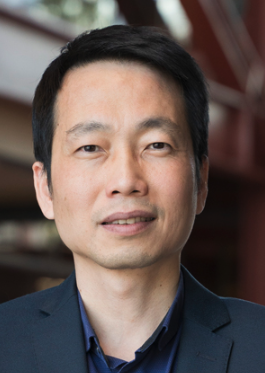 Jianfei Cai合作论文数Department of Data Science & AI, Faculty of Information Technology, Monash University;Monash Data Futures Institute, Monash University;School of Artificial Intelligence, Xidian University14
 Hanwang Zhang (张含望)合作论文数College of Computing and Data Science, Nanyang Technological University;School of Computer Science and Engineering, Nanyang Technological University14
 Yingzhe Peng合作论文数School of Computer Science and Engineering, Southeast University9
 Jing Wang (王靖)合作论文数Pattern Learning and Mining Lab, School of Computer Science and Engineering, Southeast University9
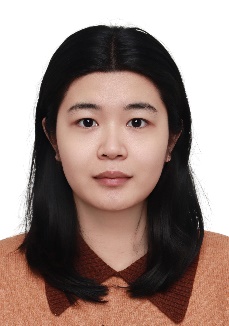 Xinting Hu (胡心亭)合作论文数School of Artificial Intelligence and Data Science, University of Science and Technology of China7
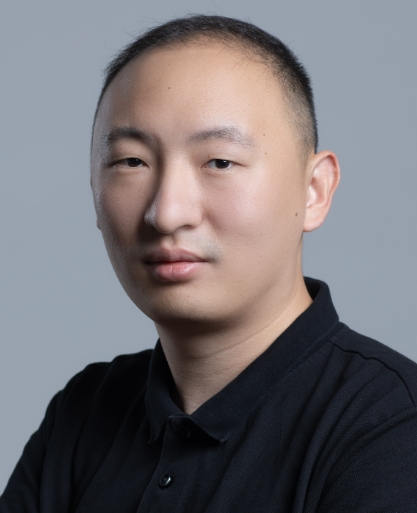 Chi Zhang (张驰)合作论文数AGI Lab, Westlake University;School of Engineering, Westlake University6
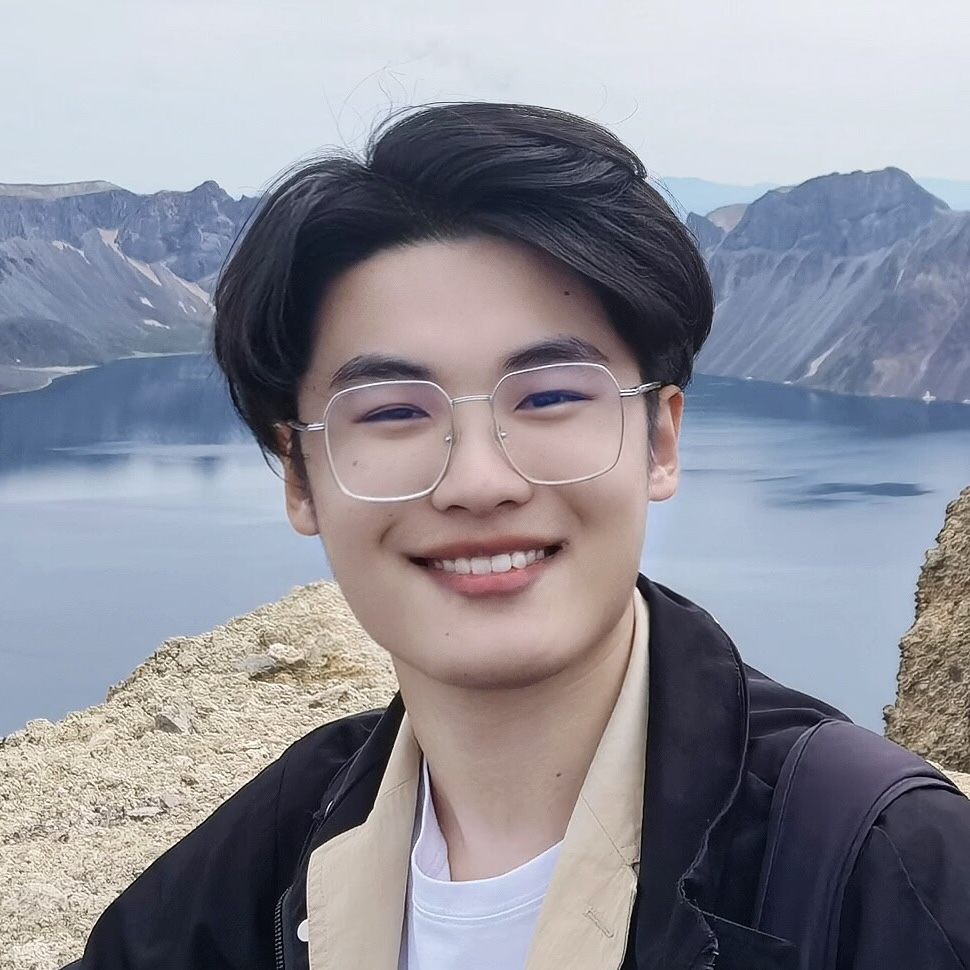 Fu Feng (封赋)合作论文数School of Computer Science and Engineering, Southeast University;PALM Lab, Department of Computer Science, Southeast University5
 Haiyang Xu合作论文数Alibaba Group, DAMO Academy5
 Qiu-Feng Wang (王秋锋)合作论文数PAttern Learning and Mining Lab, School of Computer Science and Engineering, Southeast University5
 Kaihua Tang (汤凯华)合作论文数Institute of AI for Engineering, Tongji University4
 Yu Zhang (张宇)合作论文数School of Computer Science and Engineering, Southeast University4
 Fei Huang (黄非)合作论文数Language Technologies Lab, DAMO Academy, Alibaba Group4
 Feng Fu (伏锋)合作论文数Department of Biomedical Data Science, Mathematics, Arts & Sciences Faculty, Dartmouth College4Xingyu Zhu合作论文数National University of Singapore3
 Yucheng Han合作论文数Nanyang Technological University3Yongliang Wu合作论文数3Jiawei Peng合作论文数3
 Chongyang Gao合作论文数The State Key Lab of Fluid Power and Mechatronic Systems College of Mechanical Engineering, Zhejiang University3
 Jian Zhao (赵健)合作论文数School of Artificial Intelligence, Optics and Electronics, Northwestern Polytechnical University;Evolutionary Visione+x Oriented Learning Lab, TeleAI of China Telecom3
 Ming Yan合作论文数Alibaba Group3
 Lei Jin (金磊)合作论文数School of Electronic Engineering, Beijing University of Posts and Telecommunications3
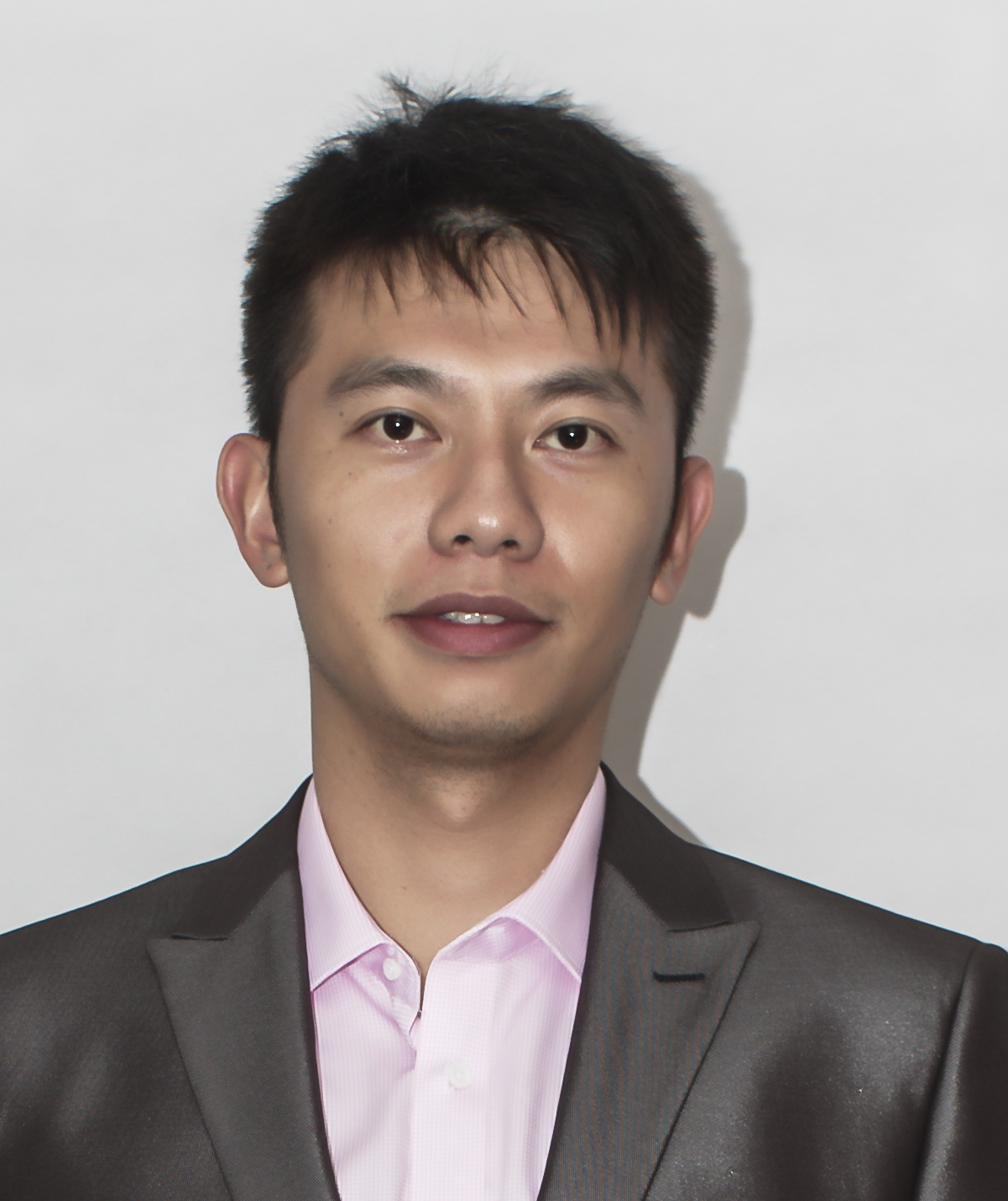 Gang Yu (俞刚)合作论文数StepFun3
 Bernt Schiele合作论文数Max Planck Institute for Informatics;Saarland University3
 Ming-Hsuan Yang合作论文数Vision and Learning Lab, University of California, Merced;Google DeepMind3Jiale Fu合作论文数Pattern Learning and Mining Lab, Southeast University2Yuchu Jiang合作论文数PALM Lab, Department of Computer Science, Southeast University2Haolin Zheng合作论文数2Bozheng Li合作论文数2
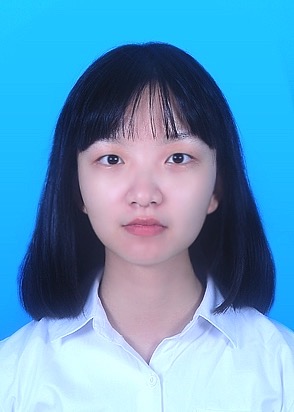 Shuxia Lin (林淑霞)合作论文数PAttern Learning and Mining Lab, School of Computer Science and Engineering, Southeast University2Weiheng Chi合作论文数2Jiawang Cao合作论文数2Jay Wu合作论文数2Mingzhuo Yang合作论文数2
 Zhang-Qi Jiang (姜璋琪)合作论文数College of Science, National University of Defense Technology;PAttern Learning and Mining Lab, Southeast University2
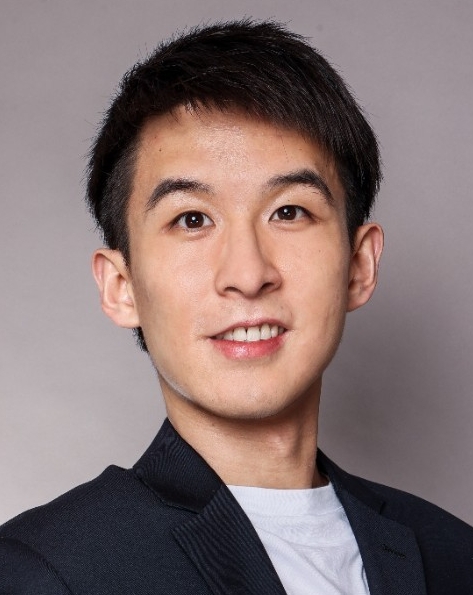 Haokun Chen合作论文数Amazon2
 Jiaming Chu合作论文数School of Electronic Engineering, Beijing University of Posts and Telecommunications2
 Zeng-Wei Huo合作论文数Southeast Univ, Sch Comp Sci & Engn, Nanjing, Jiangsu, Peoples R China2
 Xianfang Zeng合作论文数Tencent PCG2
 Siya Mi (米思娅)合作论文数School of Cyber Science and Engineering, Southeast University2
 Xing Chao合作论文数2
 Lu Qi (亓鲁)合作论文数Insta360;Wuhan University2
 Tat Jen Cham合作论文数College of Computing and Data Science, Nanyang Technological University Singapore2
 Guo-Jun Qi (齐国君)合作论文数Laboratory for Machine Perception and Learning, School of Engineering, Westlake University;Seattle Research Center, OPPO;Futurewei Technologies, Inc.2
 Keyu Chen合作论文数Shanghai Artificial Intelligence Laboratory2
 Jiuxiang Gu (顾久祥)合作论文数Document Intelligence Lab, Adobe Research2
 Ying Zhou合作论文数PengCheng Laboratory2
 Yizhou Zhou合作论文数WeChat2




