Theory of Mind (ToM), the ability to attribute mental states to others, is a hallmark of social intelligence. While large language models (LLMs) demonstrate promising performance on standard ToM benchmarks, we observe that they often fail to generalize to complex task-specific scenarios, relying heavily on prompt scaffolding to mimic reasoning. The critical misalignment between the internal knowledge and external behavior raises a fundamental question: Do LLMs truly possess intrinsic cognition, and can they externalize this internal knowledge into stable, high-quality behaviors? To answer this, we introduce CoSToM (Causal-oriented Steering for ToM alignment), a framework that transitions from mechanistic interpretation to active intervention. First, we employ causal tracing to map the internal distribution of ToM features, empirically uncovering the internal layers' characteristics in encoding fundamental ToM semantics. Building on this insight, we implement a lightweight alignment framework via targeted activation steering within these ToM-critical layers. Experiments demonstrate that CoSToM significantly enhances human-like social reasoning capabilities and downstream dialogue quality.
Code summarization plays a vital role in program comprehension and software maintenance by generating natural language descriptions to summarize the semantics of code. While Large Language Models (LLMs) have shown remarkable performance in this area, recent empirical studies reveal a critical limitation: LLMs are prone to hallucinations, producing summaries that are factually inaccurate or unfaithful to the source code, potentially misleading developers. In this paper, we propose to unveil, detect, and mitigate hallucinations in LLM-based code summarization. First, we construct Hallu-Eval, a novel dataset for unveiling hallucination phenomena and rigorously evaluating the effectiveness of hallucination detection and mitigation in LLM-based code summarization. It comprises both original code snippets to capture naturally occurring hallucinations and their semantically perturbed counterparts, which are designed to systematically induce challenging logical hallucinations, all complemented with manual hallucination annotations on a curated testbed of 800 code-summary pairs. Next, we propose Hallu-Det, a synergistic approach that combines direct entity-level detection to identify explicit hallucinations with a synonymous mutation-based refinement to reliably confirm or refute more ambiguous cases. Finally, we introduce Hallu-Shield, an inference-time mitigation approach that leverages an external value model to guide LLMs toward producing more faithful summaries without costly retraining of the LLM itself. Extensive experiments show that Hallu-Eval effectively triggers hallucinations, increasing the hallucination rate of models such as Qwen2.5-Coder-7B from 17% to 97% on perturbed code. Our detection approach, Hallu-Det, achieves the best performance among baselines, reaching an F1-score of 0.95 for summaries generated by Qwen2.5-Coder-7B. Moreover, our mitigation method, Hallu-Shield, reduces hallucination rates. For example, it lowers the rate from 66% to 59%, a 10.6% relative reduction, on DeepSeek-Coder-6.7B, while simultaneously improving summary quality, achieving a 74.0% win rate evaluated by an LLM-as-a-judge majority vote ensemble.
Coding remains one of the most fundamental modes of interaction between humans and machines. With the rapid advancement of Large Language Models (LLMs), code generation capabilities have begun to significantly reshape programming practices. This development prompts a central question: Have LLMs transformed code style, and how can such transformation be characterized? In this paper, we present a pioneering study that investigates the impact of LLMs on code style, with a focus on naming conventions, complexity, maintainability, and similarity. By analyzing code from over 20,000 GitHub repositories linked to arXiv papers published between 2020 and 2025, we identify measurable trends in the evolution of coding style that align with characteristics of LLM-generated code. For instance, the proportion of snake_case function names in Python code increased from 40.7
Efficient retrieval of sparse embeddings, a critical task in modern information systems, is fundamentally challenged by the memory-bound nature of Top-K sparse matrix-vector multiplication (SpMV). Existing solutions often pursue full computation for absolute accuracy, which is not Pareto-optimal and results in excessive memory transfers and redundant work. We propose ParetoES, an FPGA-accelerated retrieval system that adopts a selective computation strategy to optimize the trade-off between recall and throughput. ParetoES integrates algorithmic and architectural co-design, featuring: (1) a Spherical K-means++ Refine algorithm that combines clustering, low-bit quantization, and unstructured pruning to reduce the candidate search space and memory access overhead; (2) a Hierarchical HotspotBalancing $(H^{2}$ Balance) strategy to mitigate workload skew in multicore environments; and (3) a lightweight Adaptive Cluster Probing Engine (ACPE) architecture with distributed microsorters to enable flexible, high-throughput retrieval. Experiments on five datasets show that when maintaining Recall@100 > 0.8, ParetoES achieves up to $\mathbf{5 4 0} \times$ and $\mathbf{7 9} \times$ higher Queries Per Second (QPS) than CPU and GPU baselines, respectively. It also demonstrates an average throughput improvement of $2.27 \times$ over the state-of-the-art FPGA accelerator.
The Number Theoretic Transform (NTT) is a fundamental primitive with increasingly critical applications in privacy-preserving protocols such as Zero Knowledge Proofs (ZKP) and Fully Homomorphic Encryption (FHE). Despite substantial progress in GPU-accelerated NTT, existing designs still suffer from severe memory stalls caused by inefficient data movement across the memory hierarchy. In this paper, we present HieraNTT, a memory hierarchy-aware data access architecture for high-performance NTT on GPUs. Our key contribution is to holistically model and optimize the end-to-end data access, spanning global memory, through the cache hierarchy from L2 cache to L1 cache (shared memory), and finally to registers. First, we introduce a novel memory layout alignment that ensures every memory transaction fully utilizes cache lines, thereby maximizing bandwidth utilization when moving data from global memory to L2 cache. Second, we reorganize the computation order of butterfly operations to fundamentally reshape the shared memory access pattern, significantly reducing bank conflicts and wavefront serialization when transferring data from shared memory to registers. Experimental results show that, for standalone NTT computation, HieraNTT improves performance by up to 77
Zero-knowledge proofs (ZKPs) are increasingly used in blockchain systems, privacy-preserving applications, and verifiable cloud computation, but their practical deployment is still constrained by the cost of proof generation. This cost is especially important when proof generation is provided as a cloud-side service, where prover latency directly affects service throughput and resource efficiency. Existing heterogeneous provers mainly follow an operator-centric design, offloading selected GPU-friendly kernels while leaving the overall proving pipeline fragmented across fine-grained execution boundaries. This approach is effective at reducing the cost of major operators, but it also changes the bottleneck structure of modern proving: once dominant kernels are accelerated, end-to-end inefficiency increasingly arises from fragmented cross-stage execution, including host-device transitions, intermediate-state materialization, and CPU-side coordination overhead. In this paper, we argue that the key systems problem is no longer simply which operator to accelerate next, but what the right runtime execution unit should be for heterogeneous ZKP proving. To this end, we propose region-centric execution, a locality-aware runtime abstraction that groups tightly dependent computations into larger execution units based on dependency locality, state continuity, and boundary cost. Building on this abstraction, we design execution mechanisms that preserve deviceresident state, delay unnecessary materialization, coordinate dependent computations within a region, and reduce excessive boundary crossings. We implement our design on top of a Plonky2-based GPU prover and evaluate it on four representative workloads. Region-centric execution improves end-to-end proving performance by $1.36 \times$ on average and up to $1.52 \times$ over an operator-centric baseline, with the gains coming primarily from lower coordination overhead and reduced host-device transfer cost rather than uniformly faster GPU kernels.
Pipeline parallelism is a crucial paradigm for large-scale model training. However, imbalances in memory footprint across stages can lead to significant GPU memory wastage, limiting the model sizes that pipeline parallelism can effectively support. In this paper, we introduce DawnPiper, a memory-scalable pipeline parallel training framework. Firstly, we develop a DL compilation-based profiling method that transforms the model into a fine-grained computation graph. This refinement gives us a finer granularity of model partitioning and memory optimization while facilitating automatic code generation. Based on observed memory usage characteristics, we derive a performance-optimal theorem for pipeline parallel partitioning that substantially reduces the partition search space. Secondly, we propose a binary pipeline partitioning algorithm and utilize a cost-model based memory optimization approach to efficiently identify nearly optimal pipeline parallel strategy. DawnPiper achieves up to a 4x and 11x increase in trainable maximum batch size compared to vPipe and PipeDream, respectively, and provides up to a 1.5x performance speedup compared to vPipe.
While Code Language Models (CLMs) have demonstrated superior performance in software engineering tasks such as code generation and summarization, recent empirical studies reveal a critical privacy vulnerability: these models exhibit unintended memorization of sensitive training data, enabling verbatim reproduction of confidential information when specifically prompted. To address this issue, several approaches, including training data de-duplication and differential privacy augmentation, have been proposed. However, these methods require full-model retraining for deployed CLMs, which incurs substantial computational costs. In this paper, we aim to answer the following research question: Can sensitive information memorized by CLMs be erased effectively and efficiently? We conduct a pioneering investigation into erasing sensitive memorization in CLMs through machine unlearning - a post-hoc modification method that removes specific information from trained models without requiring full retraining. Specifically, we first quantify the memorization risks of sensitive data within CLM training datasets and curate a high-risk dataset of 50,000 sensitive memorized samples as unlearning targets. We study two widely used gradient ascent-based unlearning approaches: the vanilla and constraint-based methods, and introduce CodeEraser, an advanced variant that selectively unlearns sensitive memorized segments in code while preserving the structural integrity and functional correctness of the surrounding code. Extensive experiments on three families of CLMs, i.e., CodeParrot, CodeGen-Mono, and Qwen2.5-Coder, validate the effectiveness and efficiency of CodeEraser in erasing targeted sensitive memorization while maintaining model utility.
Language Models (LMs) are increasingly used for type inference, aiding in error detection and software development. Some real-world deployments of LMs require the model to run on local machines to safeguard the intellectual property of the source code. This setting often limits the size of the LMs that can be used. We present Nester, the first neuro-symbolic approach that enhances LMs for type inference by integrating symbolic learning without increasing model size. Nester breaks type inference into sub-tasks based on the data and control flow of the input code, encoding them as a modular high-level program. This program executes multi-step actions, such as evaluating expressions and analyzing conditional branches of the target code, combining static typing with LMs to infer potential types. Evaluated on the ManyTypes4Py dataset in Python, Nester outperforms two state-of-the-art type inference methods (HiTyper and TypeGen), achieving 70.7\% Top-1 Exact Match, which is 18.3\% and 3.6\% higher than HiTyper and TypeGen, respectively. For complex type annotations like typing.Optional and typing.Union, Nester achieves 51.0\% and 16.7\%, surpassing TypeGen by 28.3\% and 5.8\%.
Large Language Models (LLMs) have exhibited exceptional performance in software engineering yet face challenges in adapting to continually evolving code knowledge, particularly the frequent updates of third-party library APIs. This limitation, rooted in the static pre-training datasets, often results in non-executable code or implementations with suboptimal safety and efficiency. To this end, we introduce CodeSync, a data engine to identify outdated code patterns and collect real-time code knowledge updates from Python third-party libraries. Building upon CodeSync, we develop CodeSyncBench, a comprehensive benchmark for assessing LLMs' ability to stay synchronized with code evolution, which covers real-world updates for 220 APIs from six Python libraries. Our benchmark offers 3,300 test cases spanning three evaluation tasks and an update-aware instruction tuning dataset of 2,200 training samples. Extensive experiments on 14 LLMs reveal that they struggle with dynamic code evolution, even with the support of advanced knowledge updating methods (e.g., DPO, ORPO, and SimPO). Our CodeSync lays a strong foundation for developing more effective and robust methods for real-time code knowledge updating in the future. The experimental code is available at: https://github.com/CGCL-codes/naturalcc/tree/main/examples/codesync.
Knowledge Graphs (KGs) are pivotal for effectively organizing and managing structured information across various applications. Financial KGs have been successfully employed in advancing applications such as audit, anti-fraud, and anti-money laundering. Despite their success, the construction of Chinese financial KGs has seen limited research due to the complex semantics. A significant challenge is the overlap triples problem, where entities feature in multiple relations within a sentence, hampering extraction accuracy – more than 39% of the triples in Chinese datasets exhibit the overlap triples. To address this, we propose the Entity-type-Enriched Cascaded Neural Network (E 2CNN), leveraging special tokens for entity boundaries and types. E 2CNN ensures consistency in entity types and excludes specific relations, mitigating overlap triple problems and enhancing relation extraction. Besides, we introduce the available Chinese financial dataset FINCORPUS.CN, annotated from annual reports of 2,000 companies, containing 48,389 entities and 23,368 triples. Experimental results on the DUIE dataset and FINCORPUS.CN underscore E 2CNN’s superiority over state-of-the-art models.
Elliptic Curve Cryptography (ECC) is an encryption method that provides security comparable to traditional techniques like Rivest–Shamir–Adleman (RSA) but with lower computational complexity and smaller key sizes, making it a competitive option for applications such as blockchain, secure multi-party computation, and database security. However, the throughput of ECC is still hindered by the significant performance overhead associated with elliptic curve (EC) operations, which can affect their efficiency in real-world scenarios. This paper presents gECC, a versatile framework for ECC optimized for GPU architectures, specifically engineered to achieve high-throughput performance in EC operations. To maximize throughput, gECC incorporates batch-based execution of EC operations and microarchitecture-level optimization of modular arithmetic. It employs Montgomery’s trick [40] to enable batch EC computation and incorporates novel computation parallelization and memory management techniques to maximize the computation parallelism and minimize the access overhead of GPU global memory. Furthermore, we analyze the primary bottleneck in modular multiplication by investigating how the user codes of modular multiplication are compiled into hardware instructions and what these instructions’ issuance rates are. We identify that the efficiency of modular multiplication is highly dependent on the number of Integer Multiply-Add (IMAD) instructions. To eliminate this bottleneck, we propose novel techniques to minimize the number of IMAD instructions by leveraging predicate registers to pass the carry information and using addition and subtraction instructions (IADD3) to replace IMAD instructions. Our experimental results show that, for ECDSA and ECDH, the two commonly used ECC algorithms, gECC can achieve performance improvements of 5.56 × and 4.94 ×, respectively, compared to the state-of-the-art GPU-based system. In a real-world blockchain application, we can achieve performance improvements of 1.56 ×, compared to the state-of-the-art CPU-based system. gECC is completely and freely available at https://github.com/CGCL-codes/gECC.
Optimizing the parallel training of large models requires exploring intra-operator parallelism plans for a computation graph that typically contains tens of thousands of primitive operators. While the optimization of parallel data processing graphs has been extensively researched in database systems, the vast search space makes it challenging to apply traditional database query optimization methods and algorithms. This paper introduces CFP, an optimization system for intra-operator parallelism that significantly reduces the complexity of searching for parallelism plans by leveraging two structural patterns found in large models. First, we identify parallel-preserving subgraphs, which ensure that the optimal global plan assigns the same parallel strategy to all operators within the subgraph. This approach allows us to avoid enumerating all possible combinations of parallel strategies for these operators. Second, we recognize repetitive subgraph patterns within the large computational graph, enabling us to profile a moderate number of representative subgraphs and accurately estimate the cost of parallelism plans with low overhead. With the significantly reduced search space, we can employ dynamic programming to search for the optimized parallelism plan. In our experiments, we demonstrate that CFP achieves significant speedups compared to the state-of-the-art framework for large models like GPT and LLAMA.
Code summarization facilitates program comprehension and software maintenance by converting code snippets into natural-language descriptions. Over the years, numerous methods have been developed for this task, but a key challenge remains: effectively evaluating the quality of generated summaries. While human evaluation is effective for assessing code summary quality, it is labor-intensive and difficult to scale. Commonly used automatic metrics, such as BLEU, ROUGE-L, METEOR, and BERTScore, often fail to align closely with human judgments. In this paper, we explore the potential of Large Language Models (LLMs) for evaluating code summarization. We propose CODERPE (Role-Player for Code Summarization Evaluation), a novel method that leverages role-player prompting to assess the quality of generated summaries. Specifically, we prompt LLM-based evaluators to take on diverse roles, such as code reviewer, code author, code editor, and system analyst. Each role evaluates the quality of code summaries across key dimensions, including coherence, consistency, fluency, and relevance. We further explore the robustness of LLMs as evaluators by employing various prompting strategies, including chain-of-thought reasoning, incontext learning, and tailored rating form designs. The results demonstrate that LLMs serve as effective evaluators for code summarization. Notably, our LLM-based evaluator, CODERPE , achieves an 80.18% Spearman correlation with human evaluations, outperforming the existing BERTScore metric by 10.39%.
This is a corrigendum for the article “gECC: A GPU-based high-throughput framework for Elliptic Curve Cryptography” published in ACM Trans. Arch. Code Optim. 22, 3, Article 84 (September 2025), 27 pages.
Converting webpage designs into code (design-to-code) plays a vital role in User Interface (UI) development for front-end developers, bridging the gap between visual design and functional implementation. While recent Multimodal Large Language Models (MLLMs) have shown significant potential in design-to-code tasks, they often fail to accurately preserve the layout during code generation. To this end, we draw inspiration from the Chain-of-Thought (CoT) reasoning in human cognition and propose LaTCoder, a novel approach that enhances layout preservation in webpage design during code generation with Layout-as-Thought (LaT). Specifically, we first introduce a simple yet efficient algorithm to divide the webpage design into image blocks. Next, we prompt MLLMs using a CoT-based approach to generate code for each block. Finally, we apply two assembly strategies-absolute positioning and an MLLM-based method-followed by dynamic selection to determine the optimal output. We evaluate the effectiveness of LaTCoder using multiple backbone MLLMs (i.e., DeepSeek-VL2, Gemini, and GPT-4o) on both a public benchmark and a newly introduced, more challenging benchmark (CC-HARD) that features complex layouts. The experimental results on automatic metrics demonstrate significant improvements. Specifically, TreeBLEU scores increased by 66.67% and MAE decreased by 38% when using DeepSeek-VL2, compared to direct prompting. Moreover, the human preference evaluation results indicate that annotators favor the webpages generated by LaTCoder in over 60% of cases, providing strong evidence of the effectiveness of our method.
This paper proposes Redox, a training data management system designed to achieve high I/O efficiency. The key insight is a new observation of file redirection: for model training, when training data in one file is requested, the system has the flexibility to return the data of another file. Based on this property, Redox starts with a bold design principle that chunks of data files are always read from disk in batch, and once loaded, all files in the chunk will be consumed without being loaded again. We propose efficient local and distributed file read protocol based on this principle that both minimizes the wasted data read and enables opportunistic prefetch from remote node. Moreover, we analyze file redirection's impact on randomness, and show that it has little effects on training efficiency. Experimental results indicate that Redox significantly accelerates data fetching in training, achieving up to a 4.57x improvement in end-to-end training compared to PyTorch.
Current supercomputers use an SSD-based storage layer called Burst Buffer (BB) to provide I/O-intensive applications with accelerated storage access. However, efficiently utilizing this limited and expensive storage remains a critical issue, creating an urgent need for implementing Quality of Service (QoS) in BB. To address this, we propose RuYi, a QoS-aware method to provide applications with bandwidth guarantees in the BB file system. RuYi tackles two main issues. First, it quantitatively profiles available bandwidth resources in BB to ensure reliable QoS, a crucial aspect seldom studied in the literature. Second, RuYi offers fine-grained process-level QoS via an innovative process-to-BB mapping, maximizing resource utilization—something not achievable with conventional coarse-grained compute-to-BB mapping. We evaluated RuYi on a subsystem of the leading exascale supercomputer Sunway, consisting of 4,000 compute nodes and 200 BB nodes. The experimental results demonstrate that RuYi achieves an impressive end-to-end bandwidth control accuracy of 97%, while improving BB utilization by up to 116% compared to conventional coarse-grained compute-to-BB mapping.
Temporal knowledge graph (TKG) reasoning, has seen widespread use for modeling real-world events, particularly in extrapolation settings. Nevertheless, most previous studies are embedded models, which require both entity and relation embedding to make predictions, ignoring the semantic correlations among different entities and relations within the same timestamp. This can lead to random and nonsensical predictions when unseen entities or relations occur. Furthermore, many existing models exhibit limitations in handling highly correlated historical facts with extensive temporal depth. They often either overlook such facts or overly accentuate the relationships between recurring past occurrences and their current counterparts. Due to the dynamic nature of TKG, effectively capturing the evolving semantics between different timestamps can be challenging. To address these shortcomings, we propose the recurrent semantic evidenceaware graph neural network (RE-SEGNN), a novel graph neural network that can learn the semantics of entities and relations simultaneously. For the former challenge, our model can predict a possible answer to missing quadruples based on semantics when facing unseen entities or relations. For the latter problem, based on an obvious established force, both the recency and frequency of semantic history tend to confer a higher reference value for the current. We use the Hawkes process to compute the semantic trend, which allows the semantics of recent facts to gain more attention than those of distant facts. Experimental results show that RE-SEGNN outperforms all SOTA models in entity prediction on 6 widely used datasets, and 5 datasets in relation prediction. Furthermore, the case study shows how our model can deal with unseen entities and relations.
 Hai Jin (金海)合作论文数School of Computer Science & Technology, Huazhong University of Science and Technology;Zhengzhou University188
 Song Wu (吴松)合作论文数School of Computer Science and Technology, Huazhong University of Science and Technology;Parallel and Distributed Computing Institute, Huazhong University of Science and Technology;Service Computing Technology and System Lab, Huazhong University of Science and Technology63
 Ligang He (何黎刚)合作论文数Department of Computer Science,University of Warwick21
 Weizhong Qiang (羌卫中)合作论文数School of Cyber Science and Engineering, Huazhong University of Science and Technology20
 Deqing Zou (邹德清)合作论文数School of Nursing, Tongji Medical College, Huazhong University of Science and Technology;School of Cyber Science and Engineering, Huazhong University of Science and Technology17
 Yao Wan (万瑶)合作论文数Huazhong University of Science and Technology12
 Yong Chen合作论文数Data-Intensive Scalable Computing Laboratory, Department of Computer Science, Texas Tech University11
 Qiangsheng Hua (华强胜)合作论文数School of Computer Science & Technology, Huazhong University of Science and Technology11
 Qian Xiong合作论文数9
 Li Qi合作论文数9
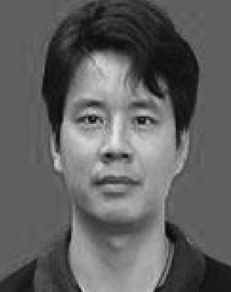 Yongcai Tao (陶永才)合作论文数School of Computer and Artificial Intelligence, Zhengzhou University;High Performance Computing Laboratory, Zhengzhou University9
 Xuan Peng合作论文数School of Computer Science and Technology, Huazhong University of Science and Technology8Li Deng合作论文数Wuhan Univ Sci & Technol, Sch Comp Sci & Technol, Wuhan 430065, Peoples R China8Hong Huang (黄宏)合作论文数8
 Teng Zhang (张腾)合作论文数School of Computer Science & Technology, Huazhong University of Science and Technology8
 Bingsheng He (何丙胜)合作论文数Department of Computer Science, School of Computing, National University of Singapore7
 Like Zhou合作论文数School of Computer Science and Technology, Huazhong University of Science and Technology7
 Dongxiao Yu (于东晓)合作论文数School of Computer Science and Technology, Shandong University7
 Hongyu Zhang (张洪宇)合作论文数School of Big Data & Software Engineering, Chongqing University6
 Jean-Louis Pazat合作论文数IRISA6Gao Wei合作论文数5Zhixiang Ke合作论文数5
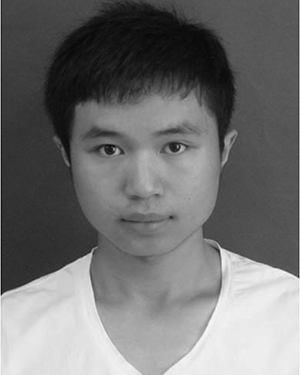 Hulin Dai合作论文数5Lixiang Qian合作论文数5Ming Ai合作论文数5
 Wenbin Jiang (蒋文斌)合作论文数School of Computer Science and Technology, Huazhong University of Science and Technology5
 Xia Xie (谢夏)合作论文数School of Computer Science and Technology, Hainan University5
 Sheng Di合作论文数Mathematics and Computer Science Division, Argonne National Laboratory5
 Wei Liu (刘伟)合作论文数Wuhan University of Technology5
 Yongluan Zhou合作论文数Department of Mathematics and Computer Science
University of Southern Denmark5
Yongluan Zhou合作论文数Department of Mathematics and Computer Science
University of Southern Denmark5 Shadi Ibrahim合作论文数INRIA5
 Mengfan Li合作论文数School of Computer Science and Technology, Huazhong University of Science and Technology4
 Zhaoyang Chu (储朝阳)合作论文数School of Computer Science and Technology, Huazhong University of Science and Technology4Zhenyu Hu合作论文数4
 Yusheng Hua合作论文数4
 Zhiqiang Liu合作论文数4
 Zhigao Zheng合作论文数School of Computer Science, Wuhan University, Wuhan, China4
 Laurence Tianruo Yang (杨天若)合作论文数School of Computer and Artificial Intelligence, Zhengzhou University;School of Computer Science and Technology, Huazhong University of Science and Technology4
 Ching-Hsien Hsu (許慶賢)合作论文数Department of Computer Science & Information Engineering, College of Information and Electric Engineering, Asia University4
 Hongbo Jiang (蒋洪波)合作论文数College of Computer Science and Electronic Engineering, Hunan University4
 Xiaofei Liao (廖小飞)合作论文数School of Computer Science and Technology, Huazhong University of Science and Technology4
 Xuehai Qian (钱学海)合作论文数清华大学计算机科学与技术系高性能计算研究所4Jinjie Ge合作论文数4Rui Wu合作论文数4Weifang Hu合作论文数3
 Dongping Chen (陈东平)合作论文数Huazhong University of Science and Technology;University of Washington3Weiliang Ma合作论文数3




